
What older adults and their caregivers need to know — before mosquito season hits.
Introduction to West Nile Virus Neuroinvasive Disease Risks in Old Age Groups
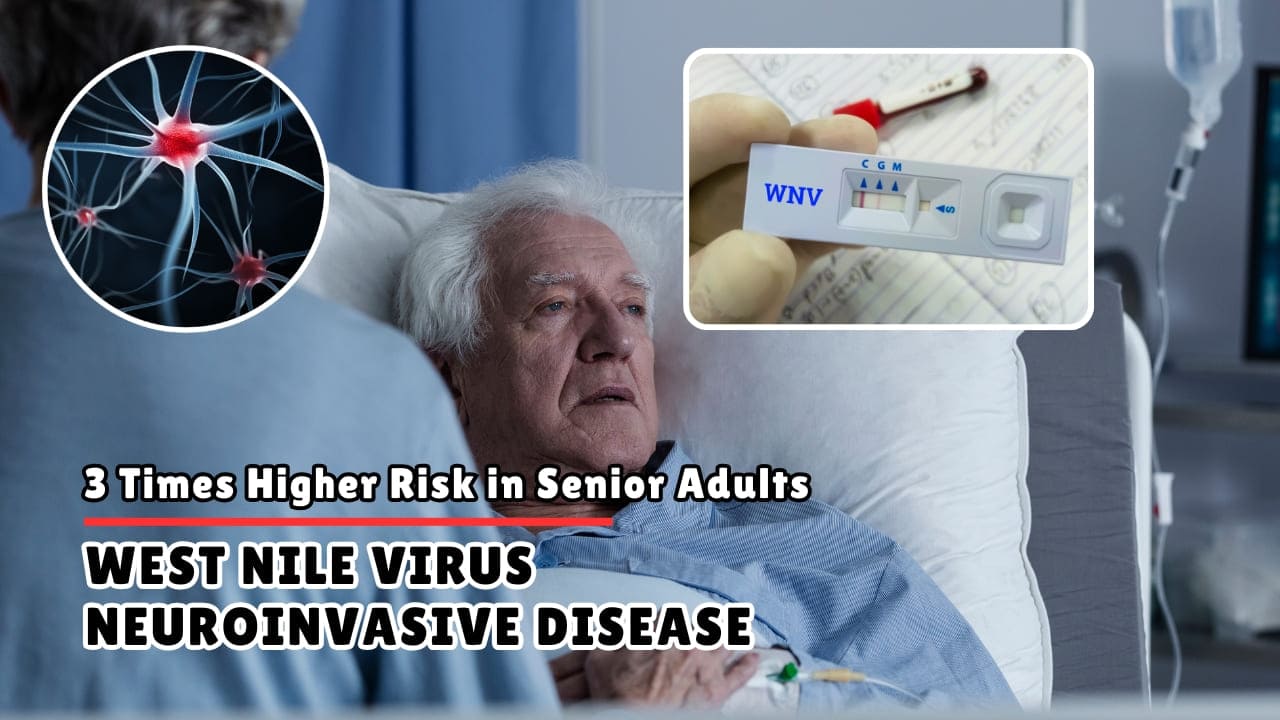
West Nile virus doesn’t make headlines every year. But it kills people every year — and the ones it kills most often are older adults. West Nile virus in elderly or senior adults is more dangerous because aging immune systems struggle to contain the infection before it reaches the brain and spinal cord.
Most people who contract West Nile virus feel nothing at all — or maybe a headache that lasts a day or two. That’s the version the public knows. What gets talked about less is the neuroinvasive form: encephalitis, meningitis, acute flaccid paralysis. That version can leave someone permanently disabled. Or it can kill them.
According to the CDC, adults 65 and older face a significantly higher risk of developing neuroinvasive West Nile disease compared to younger populations — and case-fatality rates in this group are substantially elevated. The gap isn’t subtle. It’s one of the starkest age-related disparities in any mosquito-borne illness circulating in the continental United States.
If you’re over 65, or caring for someone who is, this article is worth reading before the first mosquito of the season shows up.
What West Nile Virus Actually Does — A Brief Primer
West Nile virus (WNV) is a flavivirus, part of the same family as Zika, dengue, and yellow fever. It spreads primarily through the bite of infected Culex mosquitoes — the kind that breed in standing water and are active from dusk to dawn.
The CDC estimates that roughly 80% of infected people never develop any symptoms. About 20% experience West Nile fever: fatigue, body aches, fever, and headache. Most recover in a few weeks.
But about 1 in 150 infected people — roughly 0.7% — develop neuroinvasive disease. That’s the serious stuff. That’s where the virus crosses the blood-brain barrier.
Neuroinvasive West Nile Disease: Three Forms
- West Nile meningitis — inflammation of the membranes surrounding the brain and spinal cord
- West Nile encephalitis — inflammation of the brain itself; can cause cognitive impairment, tremors, seizures, and coma
- West Nile poliomyelitis (acute flaccid paralysis) — an often permanent limb weakness or paralysis, resembling the effects of polio
Why Are Older Adults Over 65 at Higher Risk for Severe West Nile Virus?
This is the question that doesn’t get asked enough. It isn’t just about having “weaker” immune systems. The biology is more layered than that.
Reasons Why Old Age Group Are At the Highest Risk for West Nile Virus Neuroinvasive Diseases
1. Immunosenescence: The Aging Immune System
As we age, the immune system undergoes a gradual process called immunosenescence. T-cells and B-cells — the troops the body deploys against viral infections — become less responsive. Naive T-cell production drops. Inflammatory signaling gets dysregulated.
The result: the body is slower to recognize West Nile virus, slower to mount a defense, and more likely to allow the virus to replicate before it’s contained. By the time symptoms become neurological, the viral load may already be significant.
2. Blood-Brain Barrier Vulnerability
Research has shown that aging is associated with increased permeability of the blood-brain barrier. This structural change may make it easier for West Nile virus to reach the central nervous system in older adults — even when viremia (virus in the blood) is at similar levels to younger patients.
3. Comorbidities That Compound the Risk
Many older adults carry comorbid conditions that interact poorly with neuroinvasive disease:
- Diabetes mellitus — associated with more severe WNV outcomes in multiple studies
- Hypertension and cardiovascular disease — may worsen cerebrovascular complications
- Immunosuppressive medications (e.g., post-transplant drugs, corticosteroids) — directly blunt the antiviral response
- Chronic kidney disease — linked to poorer neurological recovery post-WNV
- Cancer and active chemotherapy — dramatically reduces capacity to fight viral infection
The CDC Data: What Surveillance Reports Actually Show
The CDC’s ArboNET surveillance system tracks West Nile virus cases nationally. Across multiple years of data, a consistent pattern emerges: older adults are overrepresented among both neuroinvasive cases and fatalities.
In years with significant West Nile activity, adults 65 and older have consistently accounted for a disproportionate share of deaths. The CDC notes that the median age of fatal WNV cases has typically fallen in the 60s and 70s. This pattern has held across outbreak years in California, Texas, Illinois, and other endemic states.
According to CDC surveillance data, the case-fatality ratio for neuroinvasive West Nile disease is substantially higher in older adults. Adults 70 and over have shown fatality rates multiple times higher than those in younger age brackets in documented outbreak years.
(Source: CDC West Nile Virus Disease Cases and Deaths Reported to CDC by Year and Clinical Presentation)
State-level agencies reinforce this. The California Department of Public Health (CDPH) has identified age 50+ as a risk factor in its WNV advisories, with the highest risk concentrated in the 65+ cohort. Texas DSHS data from outbreak years similarly shows elderly Texans accounting for a majority of serious outcomes.
Recognizing West Nile Virus Symptoms in Older Adults
This is where it gets tricky. Neuroinvasive West Nile symptoms can mimic conditions common in older adults — which means delays in diagnosis are frustratingly common.
Early Warning Signs to Watch For
- Sudden onset of high fever (often 103°F or above)
- Severe headache — not a typical tension headache
- Confusion or disorientation (may be mistaken for dementia onset)
- Muscle weakness, especially in one limb
- Tremors or involuntary movements
- Neck stiffness with sensitivity to light
- Loss of coordination or difficulty walking
Important: If an older adult develops confusion and fever in late summer — mosquito season — West Nile encephalitis should be on the differential until ruled out. Don’t wait for it to “get better on its own.” Seek emergency care.
West Nile Virus Prevention for Seniors: Expert-Backed Strategies
There’s no approved vaccine for West Nile virus in humans as of 2025. Prevention is entirely behavioral and environmental. The CDC and state health departments consistently recommend the following:
Personal Protection Measures
- Use EPA-registered insect repellents — DEET (20–30% concentration), picaridin, IR3535, or oil of lemon eucalyptus. Apply to exposed skin before going outdoors, especially at dusk.
- Wear long sleeves and pants during peak mosquito hours (dusk to dawn). Lightweight, light-colored clothing works well in summer heat.
- Ensure window screens are intact and properly fitted. Culex mosquitoes are small and will find gaps.
- Avoid outdoor evening activities during local WNV transmission alerts. Check your local health department’s website or county mosquito abatement district for current activity levels.
Eliminating Breeding Sites Around the Home
- Empty and refresh birdbaths, pet water dishes, and flower pot saucers at least twice per week.
- Clear gutters and downspouts — clogged gutters are prime Culex nurseries.
- Cover or properly store wheelbarrows, tarps, pool covers, and any container that holds water.
- Use Bti (Bacillus thuringiensis israelensis) dunks in ornamental ponds or standing water that can’t be drained — it kills larvae without harming wildlife.
For Caregivers and Family Members
If you manage care for an older adult, mosquito protection probably isn’t your first priority — but it should be on the list. A few practical notes:
- Apply repellent for them if they have difficulty with coordination or memory.
- Schedule outdoor activities (gardening, walks) for mid-morning, not evening.
- Keep a list of local WNV activity — most counties publish weekly updates during peak season.
West Nile Neuroinvasive Disease in Older Adults: Diagnosis and Treatment
There is currently no specific antiviral treatment for West Nile virus in humans. This is frustrating, but it doesn’t mean medical care is pointless — hospitalized patients receive supportive care: IV fluids, respiratory support if needed, management of brain swelling and seizures, and rehabilitation.
Diagnosis is confirmed through blood or cerebrospinal fluid (CSF) testing — specifically an IgM antibody test for WNV. MRI imaging is often used to assess the extent of neurological involvement.
Recovery from neuroinvasive West Nile disease in older adults can be prolonged — months, not weeks. Fatigue, cognitive fog, and muscle weakness may persist long after the acute illness resolves. This is sometimes referred to informally as “West Nile fatigue syndrome.” Rehabilitation services (physical, occupational, speech therapy) can be critical for quality of life.
High-Risk Regions and Seasonal Timing in the U.S.
West Nile virus has been detected in all 48 contiguous states. But transmission is concentrated in specific regions and windows.
- Peak season: Late July through September in most of the U.S., though parts of Texas, Arizona, and California see activity as early as June
- Highest-burden states historically: California, Texas, Colorado, Arizona, Illinois, and Nebraska have consistently reported high case counts
- Urban heat islands: Culex mosquitoes thrive in warm urban environments where standing water is abundant
- Climate trends: Warmer winters and extended summers are expanding the effective transmission window in northern states, per climate and public health research
Check the CDC’s West Nile Virus Maps and your local county health department before and throughout the summer months. Many counties have mosquito abatement districts that publish weekly trap data — genuinely useful if you want to know actual risk in your ZIP code.
When to Seek Emergency Care: A Clear Decision Guide
For adults 65 and older, the threshold for seeking care should be lower than for younger populations. Don’t apply the “wait and see” approach that might be appropriate for a 30-year-old.
Go for emergency care — do not wait — if you observe any of the following:
- Sudden confusion, disorientation, or personality change alongside fever
- Weakness or paralysis in any limb
- Seizures (first-time or increased frequency)
- High fever (above 103°F) that doesn’t respond to acetaminophen or ibuprofen
- Difficulty breathing or swallowing
- Loss of consciousness, even briefly
The Bottom Line: West Nile Virus and Age 65+ Is a Serious Pairing
West Nile virus is not equally dangerous to everyone. For most people, it passes unnoticed. For adults over 65 — especially those with diabetes, kidney disease, heart conditions, or compromised immunity — it carries genuine, documented risk of neurological catastrophe.
The age-related risk isn’t something to be alarmed about in a way that paralyzes you. It’s something to act on. Wear repellent. Fix your screens. Move the evening cocktail hour indoors during peak weeks. Know the symptoms. Don’t dismiss a sudden fever with confusion as “just a bug.”
West Nile virus in the elderly remains one of the more underappreciated public health threats of the American summer. It doesn’t get the press that COVID or flu gets. But it shows up every year, in every region, and it disproportionately takes the lives of older adults.
That’s worth paying attention to.
Have you or a family member been affected by West Nile virus? Does your county track and share local mosquito activity data? Share your experience in the comments — it helps other families know what to look for and what to expect.
Sources & Further Reading
- CDC West Nile Virus — westnilevirus.cdc.gov
- CDC ArboNET Surveillance Data — West Nile Virus Disease Cases and Deaths by Year and Clinical Presentation
- California Department of Public Health (CDPH) — West Nile Virus Surveillance
- Texas Department of State Health Services (DSHS) — West Nile Virus Resources
- Lindsey NP, et al. (2012). “West Nile Virus Disease in the United States, 1999–2010: Vector-Borne and Zoonotic Diseases.”
- Murray K, et al. (2006). “Risk Factors for Encephalitis and Death from West Nile Virus Infection.” Epidemiology & Infection.
- EPA Repellent Efficacy Data — epa.gov/insect-repellents
Editorial Team & Contributors

Raashid Ansari, Founder, Content Researcher & Author - MosquiTalk
Not an entomologist — just a genuinely curious writer who started researching mosquitoes and couldn't stop. What began as casual reading about repellents and bite prevention gradually turned into a deep ongoing dive into vector biology, disease epidemiology, animal health impacts, and the real science behind mosquito control. Everything published here is carefully edited, and written with one purpose: giving readers accurate, accessible information they can actually trust and use to protect themselves, their families, and their pets, birds and cattle.
Active across social platforms, regularly publishes, and genuinely invested in spreading mosquito awareness where it matters most. Because informed readers make better decisions — and better decisions save lives.