
Table of Contents
Introduction
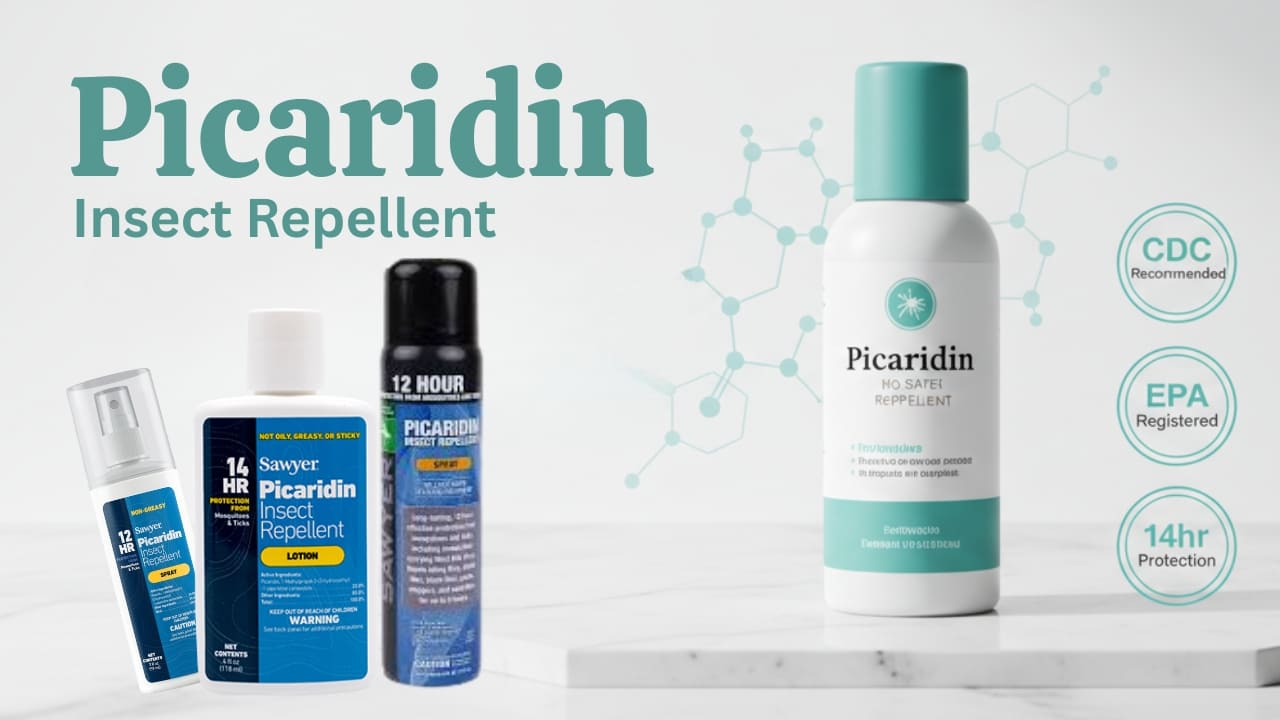
If you’ve looked at the active ingredient label on a mosquito repellent recently and seen the word picaridin, you’re not alone in wondering what it actually is. DEET has been the household name for decades. Picaridin has quietly been the preferred choice among public health professionals, international travelers, and anyone who’s ever complained that DEET smells terrible and ruins their watch strap.
Picaridin mosquito repellent has been available globally since the 1990s and is now recommended by the CDC, registered by the EPA, and endorsed by the WHO for use in malaria and dengue-endemic regions. It works. It’s safe. And for a lot of people, it’s actually the better option.
This guide explains everything — what picaridin is, how it works at a biological level, how long it lasts, which mosquito species it protects against, and how it stacks up against DEET in an honest, data-driven comparison.
Key Takeaways on Picaridin for Mosquito Protection
What Is Picaridin? (Mosquito Repellent Explained)
Picaridin — also known internationally as icaridin, KBR 3023, or Bayrepel — is a synthetic insect repellent developed in the 1980s by Bayer AG. It was designed based on the chemical structure of piperine, the compound that gives black pepper its characteristic pungency. The plant connection ends there — the final product is a fully synthetic molecule refined specifically for effective, stable repellency.
It became commercially available in Europe and Australia in the 1990s and reached the United States market in 2005. Since then it has been included on the CDC’s list of recommended mosquito repellents alongside DEET, Oil of Lemon Eucalyptus (OLE), and IR3535.
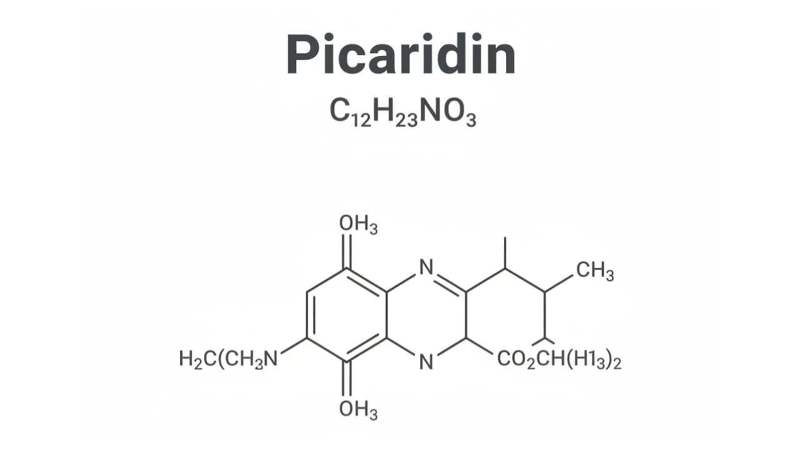
Chemically, picaridin is (2-(2-hydroxyethyl)-1-piperidinecarboxylic acid 1-methylpropyl ester) — a mouthful, but what matters practically is that it is:
- stable at room temperature,
- water-resistant for short periods,
- compatible with most materials, and
- highly effective at the concentrations used in commercial products.
How Picaridin Works Against Mosquitoes (Scientific Explanation)
Mosquitoes locate hosts through a sophisticated, multi-stage detection system. They track carbon dioxide plumes from up to 50 meters, then switch to heat detection at close range, and finally use olfactory receptors to detect skin-derived chemical compounds for final host confirmation.
Picaridin works primarily at the olfactory receptor stage. It interferes with the chemoreceptors on the mosquito’s maxillary palps and antennae — the sensory organs used to detect human scent compounds including lactic acid, ammonia, and various volatile organic compounds released through skin and breath.
The precise mechanism is not fully characterized at the molecular level, but research indicates that picaridin creates a chemical masking or blocking effect rather than a toxic one. It does not kill mosquitoes. It does not repel them violently. It simply prevents them from accurately detecting that a human host is present.
The practical result is that mosquitoes in the immediate vicinity fail to complete their host-seeking sequence. They are not attracted, not triggered to land, and not stimulated to bite. The treated skin surface effectively disappears from their sensory map.
Why Picaridin Is Effective for Mosquito Protection?
Effectiveness in repellents depends on two things: how well the compound disrupts mosquito detection, and how long it stays active on skin. Picaridin performs strongly on both measures.
At 20% concentration — the highest commonly available — picaridin provides up to 14 hours of protection against mosquitoes in controlled field studies. At 10%, which is the most widely recommended everyday concentration, protection typically extends 6–8 hours. These durations are competitive with DEET at equivalent concentrations.
Critically, picaridin works against all three medically significant mosquito genera: Aedes, Anopheles, and Culex. That coverage matters because different diseases are transmitted by different genera — dengue and Zika by Aedes, malaria by Anopheles, West Nile virus by Culex. A repellent that gaps on any one of these is leaving meaningful risk on the table.
Field studies conducted in malaria-endemic regions of sub-Saharan Africa and Southeast Asia have confirmed that picaridin at 20% provides protection equivalent to DEET at comparable concentrations against Anopheles species. The WHO includes picaridin in its guidelines for personal protection in malaria-risk areas on the basis of this evidence.
Picaridin vs DEET: Which Mosquito Repellent Is Better?
This is the comparison most people actually want. The honest answer is that they are closely matched on the metrics that matter most — effectiveness and duration — and picaridin wins on the metrics that affect everyday usability.
Table 1: Picaridin vs DEET — Complete Side-by-Side Comparison
| Feature | Picaridin (Icaridin) | DEET |
|---|---|---|
| Chemical origin | Synthetic compound based on piperine from black pepper plant | Synthetic compound — N,N-diethyl-meta-toluamide |
| CDC recommended | Yes | Yes |
| EPA registered | Yes | Yes |
| Protection duration | Up to 8–14 hours (20% concentration) | Up to 8–12 hours (30–40% concentration) |
| Odor | Nearly odorless | Strong, distinctive chemical odor |
| Skin feel | Light, non-greasy, absorbs quickly | Oily, greasy — noticeable on skin |
| Damages plastics / synthetics | No — safe on plastics, fabrics, gear | Yes — dissolves plastics, synthetic fabrics, watch crystals |
| Safe for children | Yes — safe for children 2 months and older | Yes — with concentration restrictions for young children |
| Safe during pregnancy | Yes — considered safe when used as directed | Yes — when used as directed |
| Skin irritation risk | Low — well tolerated by most skin types | Higher — can cause irritation, especially at high concentrations |
| Effective against mosquitoes | Yes — Aedes, Anopheles, Culex species | Yes — broad spectrum effectiveness |
| Available formulations | Spray, lotion, wipes, pump spray | Spray, lotion, towelettes, pump spray |
The practical differentiators are odor, skin feel, and material safety. DEET smells strongly and noticeably — many people find it unpleasant enough to avoid using it consistently. Picaridin is nearly odorless. DEET is oily and leaves a residue on skin. Picaridin absorbs quickly and leaves no greasy film.
DEET also degrades plastics, synthetic fabrics, watch crystals, and certain coated surfaces on contact. Picaridin does not. For hikers, campers, and travelers with gear to protect, that difference is practical and financially relevant.
Where DEET retains an edge: decades of accumulated real-world data across the widest possible range of species and environments. Picaridin’s evidence base is strong and growing, but DEET’s track record spans 70+ years of global use. For the highest-risk situations — remote areas with intense malaria transmission — some public health professionals still default to DEET for that reason alone.
For most people in most situations, picaridin is the better choice as it is:
- better tolerated,
- better smelling,
- safer on skin,
- safer on gear, and
- equally effective against the species most people are actually concerned about.
Picaridin Safety: Is Picaridin Safe for Humans?
Safety is where picaridin’s profile is genuinely impressive. It has been studied extensively since its development and holds regulatory approval from multiple independent bodies — the EPA in the United States, the European Chemicals Agency, the Australian Pesticides and Veterinary Medicines Authority, and the WHO.
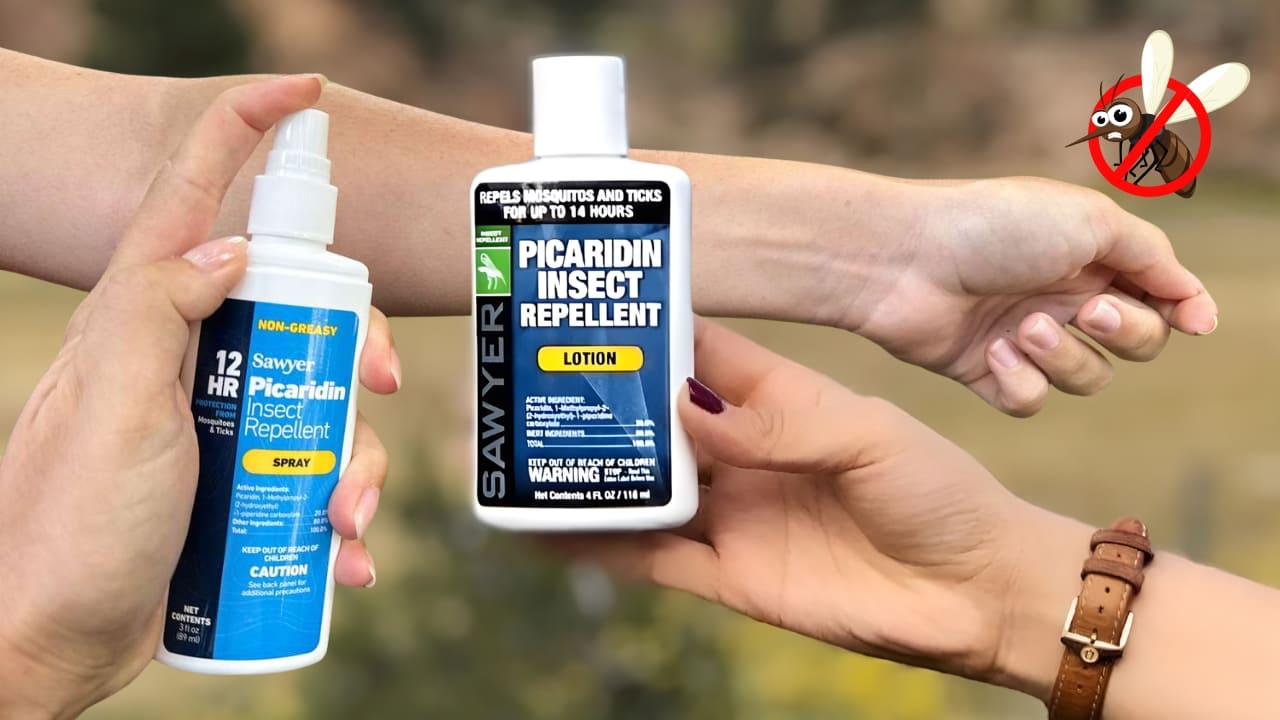
Image Credit: Illustration by Author
Toxicological studies classify picaridin as slightly toxic — the same low-toxicity category as table salt in acute exposure testing. It does not penetrate the skin significantly at recommended concentrations. It is not carcinogenic. It is not a known endocrine disruptor. It does not accumulate in body tissue.
- Children: The CDC considers picaridin safe for use on children aged 2 months and older, with no concentration restrictions specific to pediatric use beyond general label guidelines. This is a more permissive classification than some concentration-specific DEET guidelines for young children.
- Pregnancy: No evidence of teratogenicity or developmental harm has been identified in animal studies at doses far exceeding human exposure levels. Picaridin is considered safe for use during pregnancy when applied as directed, though as with any chemical exposure during pregnancy, unnecessary use should be minimized.
- Skin sensitivity: Picaridin is well-tolerated by most skin types, including sensitive skin. Skin irritation reactions are reported at low rates — lower than for DEET — and typically resolve with product removal. Patch testing is advisable for individuals with known chemical sensitivities.
The EPA completed a comprehensive registration review of picaridin and identified no risks of concern to human health at registered use levels. This classification reflects both the toxicological data and real-world surveillance data accumulated since its introduction.
How to Use Picaridin Properly for Mosquito Protection
Effectiveness depends not just on the product but on how it’s applied. Picaridin underperforms when used incorrectly — typically when too little is applied, coverage is incomplete, or reapplication is skipped.
1. Apply to all exposed skin. Picaridin works on skin surface. Any uncovered area is an unprotected area. Cover the same way you would apply sunscreen — systematically and thoroughly, not in a quick pass.
2. Apply to hands first for face coverage. Never spray directly onto the face. Apply to palms, then spread carefully to face and neck, avoiding eyes, mouth, and mucous membranes.
3. Sunscreen goes on first. Apply sunscreen first, allow it to absorb, then apply picaridin repellent on top. The order matters — repellent over sunscreen, not underneath.
4. Reapply at the interval for your concentration. 6–8 hours for 10%, up to 14 hours for 20% under ideal conditions. Reapply sooner if sweating heavily, swimming, or in high-humidity environments that accelerate breakdown.
5. Do not apply under clothing. Picaridin works on exposed skin only. Application under clothing provides no additional protection and may cause irritation.
6. Wash off after returning indoors. Standard hygiene practice — wash treated skin once exposure is no longer needed.
Types of Picaridin Products (Spray, Lotion, Wipes)
Picaridin is available in several formulations, each with different practical advantages. Choosing the right format affects both comfort and coverage quality.
Table 2: Picaridin Product Formulations — Selection Guide
| Formulation | Best Use Case | Advantages | Considerations |
|---|---|---|---|
| Pump spray | Large body areas; outdoor activities; general use | Fast, even coverage; easy to reapply; widely available | Avoid spraying near face — apply to hands first |
| Aerosol spray | Clothing application; quick full-body coverage | Reaches awkward areas easily; can treat clothing surfaces | Use in open, ventilated areas; avoid inhaling mist |
| Lotion / cream | Sensitive skin; precise application; face and neck | Controlled application; less waste; good for skin-focused coverage | Slightly slower to apply over large areas |
| Wipes / towelettes | Travel; children; on-the-go reapplication | Portable; precise; no mess; useful for children’s skin | Single use; higher cost per application; limited coverage area per wipe |
Well-known picaridin brands include Sawyer Picaridin, Natrapel, Avon Skin So Soft Bug Guard Plus Picaridin, and Ranger Ready. Always verify EPA registration number on the label before purchase.
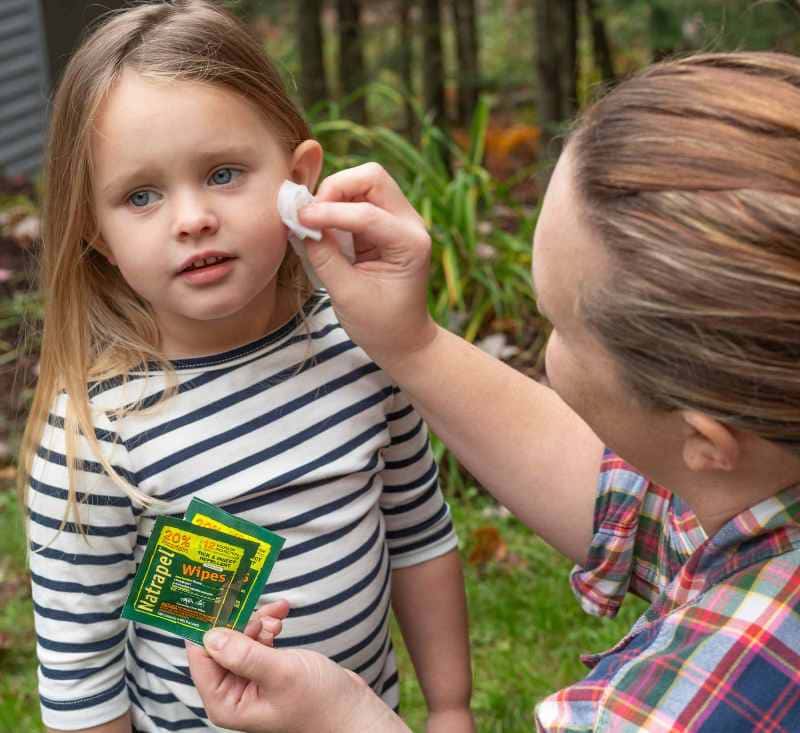
Image Credit: Natrapel
For travel to high-risk regions, the 20% pump spray or lotion formulation is the standard recommendation. For everyday suburban use — backyard evenings, morning walks — a 10% spray or lotion covers most exposure scenarios without any additional concentration.
How Long Does Picaridin Last Against Mosquitoes?
Duration is one of picaridin’s strongest selling points at higher concentrations. The numbers below reflect laboratory and field study data — real-world results vary by individual, sweat rate, humidity, and activity level.
Table 3: Picaridin Protection Duration by Concentration
| Concentration | Typical Protection Duration | Best Suited For | Notes |
|---|---|---|---|
| 5–7% | Up to 3–4 hours | Low-exposure situations; short outdoor periods | Suitable for casual garden use or brief outdoor activity in low mosquito density |
| 10% | Up to 6–8 hours | Everyday outdoor use; hiking, camping, travel | Most commonly recommended concentration for general outdoor protection |
| 20% | Up to 8–14 hours | High-exposure situations; tropical travel; malaria or dengue risk zones | CDC-recommended concentration for travel to areas with significant mosquito-borne disease risk |
One common mistake is assuming that higher concentration means exponentially longer protection. The relationship is not linear. Going from 10% to 20% roughly doubles duration, but concentration beyond 20% provides diminishing returns and is not found in standard commercial products for good reason. Very clearly depicted in the chart below.
📊 Picaridin Concentration vs. Protection Duration
The relationship is non‑linear — doubling concentration does not always double protection
• EPA (2020): Picaridin (KBR 3023) Registration Review – Efficacy data for 7%, 10%, 15%, 20% formulations.
• CDC – Arthropod Repellent Guidelines: Duration based on concentration (10% ≈ 6–8 h; 20% ≈ 12–14 h).
• Journal of Medical Entomology (2016): Dose‑response analysis of picaridin against Aedes aegypti and Anopheles stephensi.
• WHO Pesticide Evaluation Scheme (WHOPES): Picaridin 20% provides “long‑lasting” protection; incremental benefit above 20% is not supported by standardized efficacy tests.
• Commercial product registration data (SC Johnson, Sawyer) confirm that 20% is the highest widely available consumer concentration, as 25%+ adds minimal practical duration.
Environmental factors matter. A humid tropical environment with physical activity will shorten effective duration compared to a cool, low-humidity setting with minimal exertion. In those conditions, check the label interval and stick to it rather than extending past the recommended window.
Which Mosquito Species Does Picaridin Protect Against?
Picaridin provides broad-spectrum protection across the three genera responsible for virtually all mosquito-borne human disease.
Table 4: Picaridin Effectiveness by Mosquito Genus and Disease Risk
| Mosquito Genus | Diseases Transmitted | Picaridin Effective? | Geographic Risk Zones |
|---|---|---|---|
| Aedes aegypti / albopictus | Dengue fever, Zika virus, Chikungunya, Yellow fever | Yes — well documented | Tropics, subtropics, increasingly temperate regions via Ae. albopictus invasion |
| Anopheles spp. | Plasmodium malaria (falciparum, vivax, knowlesi) | Yes — confirmed in field studies | Sub-Saharan Africa, South Asia, Southeast Asia, parts of Central and South America |
| Culex pipiens / quinquefasciatus | West Nile virus, lymphatic filariasis, Japanese encephalitis | Yes — effective | North America, Europe, Africa, Asia — widespread urban and suburban distribution |
The evidence base is strongest for Aedes and Anopheles species, which have been the primary focus of controlled field trials. Culex protection is well-documented in North American and European contexts, particularly for West Nile virus risk.
One complexity is worth noting: efficacy against specific Anopheles species varies somewhat by region and sub-species. In areas with documented malaria transmission, consulting current CDC or WHO travel health guidance for the specific destination remains the best practice — picaridin is on both recommended lists, but local conditions and species profiles matter.
Advantages of Picaridin Over Other Repellents
- Odorless or near-odorless — no chemical smell; well tolerated even by people sensitive to strong scents
- Non-greasy formulation — absorbs quickly; does not leave oily residue on skin or clothing
- Does not damage materials — safe on plastics, synthetic fabrics, watch straps, sunglasses, and outdoor gear
- Excellent skin tolerability — low irritation rate; suitable for sensitive skin types
- Safe for children 2 months and older — no age-specific concentration restrictions beyond general label guidance
- CDC, EPA, and WHO endorsed — one of a small number of repellents to hold all three endorsements simultaneously
- Long duration at 20% — up to 14 hours provides full-day protection with a single application in moderate conditions
- Consistent effectiveness across major mosquito genera — Aedes, Anopheles, and Culex all covered
Limitations of Picaridin
No repellent is perfect, and overstating picaridin’s capabilities does readers a disservice.
- Reapplication required in challenging conditions. Heavy sweating, swimming, or prolonged high-humidity exposure shortens effective duration meaningfully. The 14-hour figure for 20% concentration is a best-case scenario under controlled conditions — not a guarantee in equatorial tropical environments with physical activity.
- Shorter real-world track record than DEET. Picaridin has 30 years of evidence versus DEET’s 70+ years. The safety and efficacy data is strong, but DEET’s evidence base is simply deeper. For the highest-risk environments, some experts still maintain DEET as the default.
- Not effective against all insects. This article focuses on mosquitoes specifically, and picaridin’s evidence for other insects — ticks, for example — is more variable. For tick-heavy environments, purpose-specific products or permethrin-treated clothing may be more appropriate.
- Concentration matters. Lower-concentration products (5–7%) found in some consumer formulations provide meaningful but shorter protection windows. Purchasing a product labeled as picaridin without checking the concentration can result in under-protection for the intended exposure.
📰 Must Read,
✔️ What Happens to Mosquitoes in Winter? Why They Come Out in Summer and Only When It’s Hot
✔️ 12 Hacks to Make Your Mosquito Spray Last Longer Outdoors
Conclusion
Picaridin mosquito repellent has earned its place as the leading alternative to DEET — and for a lot of people, it’s not really an alternative anymore. It’s the primary choice.
The effectiveness data is solid. The safety profile is well-established. The practical advantages over DEET — no odor, no grease, no damage to gear — make it easier to use consistently. And consistent use is ultimately what determines how well any repellent actually protects you.
For everyday outdoor use at 10%, for travel to malaria or dengue-risk areas at 20%, and for anyone who has ever found DEET too uncomfortable to use regularly — picaridin is worth reaching for. Check the concentration on the label, apply it correctly, and reapply when the conditions demand it.
That’s the full picture on picaridin. Science-backed, practically superior on usability, and safe across the populations that need protection most.
Frequently Asked Questions (FAQs)
Q. Does picaridin repel mosquitoes?
Yes — and it does it well. Picaridin is one of only four repellents currently recommended by the CDC for mosquito protection, and it works against all three medically significant mosquito genera: Aedes, Anopheles, and Culex. At 20% concentration, field studies have documented up to 14 hours of protection. It doesn’t kill mosquitoes — it blocks the sensory receptors they use to detect you, so they simply don’t know you’re there.
Q. Does picaridin repel ticks?
It does offer some tick protection, but the evidence isn’t as strong as it is for mosquitoes. Studies show picaridin reduces tick attachment, particularly at 20% concentration. That said, for serious tick exposure — hiking through dense brush, tall grass, wooded areas — most experts lean toward permethrin-treated clothing as the primary defense, with picaridin as a skin-level supplement. Using both together is the more reliable approach if ticks are a genuine concern in your environment.
Q. What is picaridin made from?
Picaridin is a synthetic compound, but its design was inspired by piperine — the naturally occurring molecule that gives black pepper its heat. Bayer AG developed it in the 1980s by using piperine’s chemical structure as a starting point and engineering a more stable, skin-friendly molecule around it. The final product — chemically known as 2-(2-hydroxyethyl)-1-piperidinecarboxylic acid 1-methylpropyl ester — is entirely synthetic. The pepper plant connection is really just a design inspiration, not an ingredient.
Q. Is picaridin safe for babies and toddlers?
The CDC considers picaridin safe for children aged 2 months and older, with no specific concentration restrictions for young kids beyond the general label guidelines. That’s actually a more permissive stance than DEET, which comes with more age-specific guidance. For infants under 2 months, no repellent is recommended — the better approach is mosquito nets and protective clothing. For toddlers, wipe formulations work well since they give you more control over exactly where the product goes.
Q. How is picaridin different from DEET?
They’re both effective, both CDC-recommended, and both EPA-registered — but the user experience is genuinely different. Picaridin is nearly odorless; DEET has that strong chemical smell a lot of people find unpleasant. Picaridin is light and non-greasy; DEET leaves an oily film. And DEET dissolves plastics — watch straps, sunglasses frames, synthetic fabrics — while picaridin doesn’t. For most everyday situations, picaridin is simply easier to use consistently, and consistent use is what actually keeps you protected.
Q. Can you use picaridin on your face?
Yes, but don’t spray it directly onto your face. Apply it to your hands first, then carefully spread it to your face, keeping clear of your eyes, lips, and the inside of your nose. The lotion formulation is generally better than spray for facial application — more control, less risk of accidental eye contact. It’s the same approach recommended for any skin-applied repellent. Once applied, it works the same way as anywhere else on your body.
Q. Does picaridin wash off in water or sweat?
It does degrade faster when wet. Swimming, heavy sweating, or high humidity all shorten effective duration — sometimes significantly. The label duration figures (6–8 hours at 10%, up to 14 hours at 20%) reflect controlled conditions, not a day of outdoor activity in July. After swimming or a heavy workout, reapplication is the safe call. Some people think water-resistant means waterproof — it doesn’t. Reapplying after water exposure is just part of using repellent correctly.
Q. Is picaridin safe to use every day?
For most people, yes — daily use as directed is considered safe based on the available toxicological data. Picaridin doesn’t accumulate in body tissue, doesn’t penetrate skin deeply at recommended concentrations, and has been classified as low-toxicity by the EPA. That said, applying any chemical to your skin daily is worth doing deliberately rather than carelessly — use what you need, apply it correctly, and wash it off when you’re done for the day. That’s just sensible practice for any repellent.
Editorial Team & Contributors

Raashid Ansari, Founder, Content Researcher & Author - MosquiTalk
Not an entomologist — just a genuinely curious writer who started researching mosquitoes and couldn't stop. What began as casual reading about repellents and bite prevention gradually turned into a deep ongoing dive into vector biology, disease epidemiology, animal health impacts, and the real science behind mosquito control. Everything published here is carefully edited, and written with one purpose: giving readers accurate, accessible information they can actually trust and use to protect themselves, their families, and their pets, birds and cattle.
Active across social platforms, regularly publishes, and genuinely invested in spreading mosquito awareness where it matters most. Because informed readers make better decisions — and better decisions save lives.