
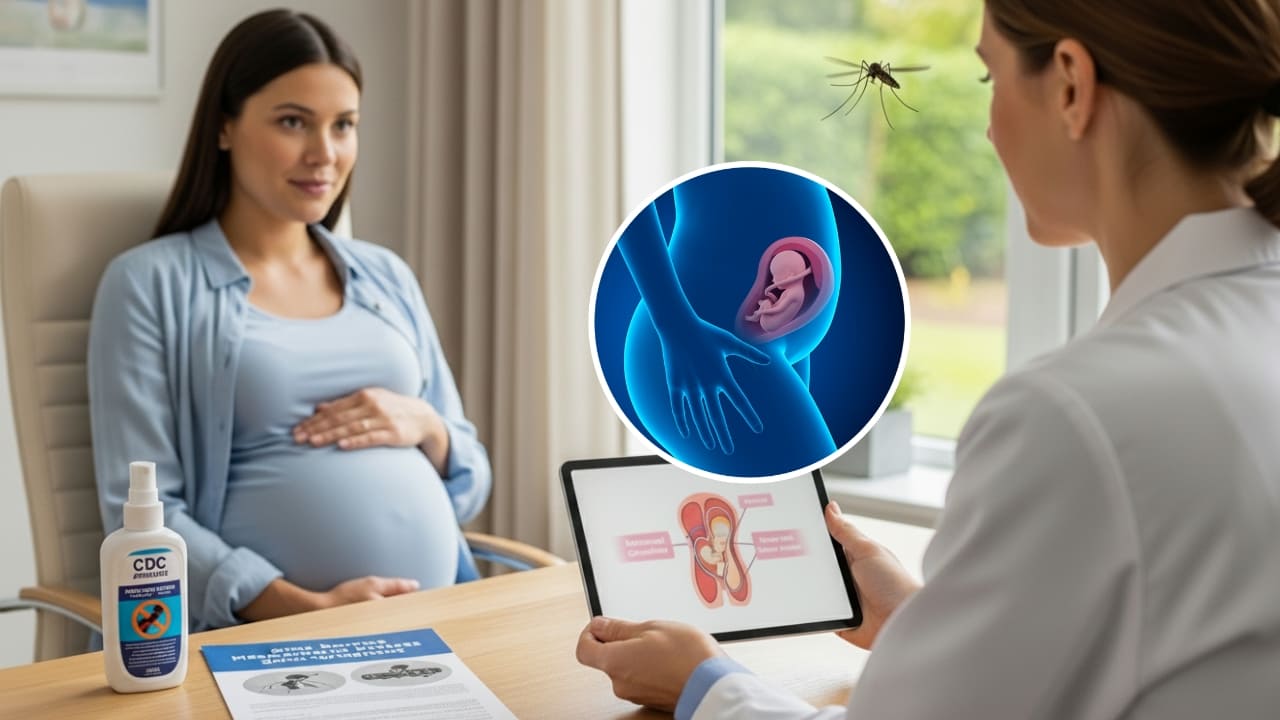
Introduction: Intrauterine Transmission of West Nile Virus During Pregnancy
Most people who get West Nile virus never even know it. No fever. No rash. Nothing. That’s what makes it so unsettling — especially if you’re pregnant.
West Nile virus (WNV) is the leading mosquito-borne illness in the continental United States, according to the Centers for Disease Control and Prevention (CDC). It shows up every summer, mostly in late August and September, and it largely goes unnoticed. But for pregnant women, the question isn’t just about personal risk. It’s about what happens to the baby — and the answer is more complicated than most OB-GYN pamphlets let on.
This article breaks down what we actually know about West Nile virus and pregnancy, intrauterine transmission risk, and what precautions make sense — without overstating the science.
Quick Facts: West Nile Virus & Pregnancy
- 80% of WNV infections cause no symptoms at all (CDC)
- Intrauterine transmission is possible but documented cases remain rare
- No approved antiviral treatment or vaccine exists for WNV in humans
- Prevention through mosquito avoidance remains the primary strategy
What Is West Nile Virus and Why Does It Matter in Pregnancy?
West Nile virus is a flavivirus — same family as Zika and dengue — transmitted primarily through the bite of an infected Culex mosquito. It circulates between birds and mosquitoes, with humans as accidental hosts.
The vast majority of infected adults recover without intervention. A smaller percentage — roughly 1 in 5, according to CDC estimates — develop West Nile fever, with flu-like symptoms that can last days to weeks. About 1 in 150 develop neuroinvasive disease, which can be severe. That risk climbs for people over 60 and for those who are immunocompromised.
Pregnancy complicates the picture. Immune function shifts during pregnancy — not uniformly suppressed, but meaningfully altered — and that changes how viral infections behave in the body. It also raises the question of fetal exposure.
Intrauterine Transmission of West Nile Virus During Pregnancy: What the Evidence Shows
This is where things get genuinely uncertain — and where you’ll want to read carefully.
Yes, West Nile virus can cross the placental barrier and reach the fetus. This is documented. What’s less clear is how frequently it happens and what the clinical outcomes look like across a broader population.
A small number of case reports — published in journals including Emerging Infectious Diseases — describe fetuses and newborns with WNV detected in their systems after maternal infection during pregnancy. In several of these cases, infants showed signs of brain abnormalities, including lissencephaly (smooth brain) and chorioretinitis (inflammation affecting vision).
However — and this matters — case reports capture the unusual, not the typical. There are also documented cases of maternal WNV infection during pregnancy where the infant appeared unaffected.
The CDC acknowledges that “in a limited number of cases, WNV has been transmitted from mother to baby during pregnancy.” The agency does not quantify a transmission rate because the data — still sparse — doesn’t support a reliable estimate.
Does the Trimester of Infection Change the Risk?
Possibly — but this is not well-established for WNV specifically. By analogy to better-studied TORCH infections (Toxoplasma, Rubella, CMV, Herpes, and others), first-trimester infections tend to carry higher risk for structural fetal abnormalities because organogenesis is happening. Later infections may produce different outcomes.
For WNV, there are reported cases of adverse fetal outcomes following infection in each trimester, but sample sizes are too small to draw firm conclusions about trimester-specific risk gradients.
Recognizing West Nile Virus Symptoms During Pregnancy
Here’s the frustrating part: most WNV infections are asymptomatic. You may never know you were infected. When symptoms do appear — typically 2 to 14 days after a mosquito bite — they can look a lot like other common illnesses.
Symptoms of West Nile fever include:
- Fever (often the most notable symptom)
- Headache and body aches
- Joint pain and fatigue
- Vomiting or diarrhea in some cases
- A skin rash on the trunk of the body
Neuroinvasive WNV — the more serious form — can cause encephalitis, meningitis, or acute flaccid paralysis. These symptoms are medical emergencies regardless of pregnancy status.
If you’re pregnant and develop a sudden fever, unexplained neurological symptoms, or severe headache during mosquito season, don’t wait it out. Contact your healthcare provider.

Diagnosis and Testing: What to Ask Your Provider
WNV diagnosis is confirmed through blood or cerebrospinal fluid (CSF) tests that detect IgM antibodies or viral RNA. The most commonly used test is the IgM antibody capture ELISA (MAC-ELISA), which can detect infection within a week of symptom onset.
If a pregnant woman is diagnosed with WNV, some providers may consider additional fetal monitoring depending on gestational age and clinical picture. This isn’t a standard protocol — it depends heavily on individual clinical judgment and available resources.
State health departments, including those in California, Texas, and Arizona — states consistently reporting high WNV activity — track cases and coordinate with the CDC’s ArboNET surveillance system. Your state health department’s website may have current activity maps worth checking during peak season.
West Nile Virus Prevention During Pregnancy: Practical Steps That Actually Work
There’s no vaccine. There’s no antiviral. So prevention comes down to exposure reduction — and during pregnancy, that’s not just a general recommendation, it’s genuinely important.
Are Mosquito Repellents Safe During Pregnancy?
Yes — and this often surprises people. The EPA and CDC both affirm that EPA-registered insect repellents are safe for use during pregnancy when applied as directed. DEET, in particular, has an extensive safety record. The American College of Obstetricians and Gynecologists (ACOG) supports the use of DEET for pregnant women during mosquito-borne illness outbreaks.
EPA-recommended active ingredients considered safe in pregnancy:
- DEET (up to 30% concentration is considered appropriate for adults)
- Picaridin (also called icaridin)
- IR3535
- Oil of lemon eucalyptus (OLE) — note: not recommended for children under 3, discuss with your provider for pregnancy)
Apply repellent over sunscreen (not under it), and wash hands after application. Don’t apply to broken skin.
Behavioral and Environmental Precautions
Beyond repellents, reducing overall exposure is a layered approach:
- Avoid peak mosquito hours — typically dusk to dawn for Culex species that carry WNV
- Wear loose, long-sleeved clothing and pants when spending time outdoors in the evening
- Ensure window and door screens are intact and properly fitted
- Eliminate standing water around your home — flowerpots, bird baths, clogged gutters, tarps, old tires
- Check your county or city health department for local WNV surveillance data and any active advisories
Where West Nile Virus Is Most Active: U.S. Geographic Risk Patterns
West Nile virus has been detected in every contiguous U.S. state. But activity isn’t uniform. Historically, the highest case counts come from California, Texas, Arizona, Colorado, and Nebraska — states with warm summers, irrigated agriculture, and abundant Culex habitat.
The CDC’s ArboNET system maps human cases, bird deaths, and mosquito positivity rates in near real-time during peak season. If you’re in a high-activity area or traveling to one while pregnant, it’s worth checking the most current data.
Climate trends are relevant here too. Extended warm seasons and shifting precipitation patterns are expanding mosquito habitats and potentially lengthening transmission seasons in parts of the country where WNV was historically limited. This isn’t speculative — state vector control agencies in the Southeast and Mid-Atlantic regions have been adjusting surveillance windows accordingly.
West Nile Virus and Breastfeeding: A Brief Note
There is at least one documented case of possible WNV transmission through breastfeeding, cited in a 2002 CDC report. However, the CDC has noted that the benefits of breastfeeding generally outweigh the risk, and it does not recommend that women with WNV infection stop breastfeeding — except in cases of neuroinvasive disease where the mother’s overall condition is the primary concern.
If you’ve been diagnosed with or suspected of having WNV and you’re breastfeeding or planning to, have a direct conversation with your provider. It’s one of those clinical decisions that shouldn’t be made based on a general article — individual circumstances matter a lot.
Talking to Your OB or Midwife: Questions Worth Asking
Most prenatal care settings don’t proactively discuss West Nile virus unless there’s a local outbreak or a patient has symptoms. That’s not negligence — it’s triage. But if you live in or are traveling to a high-activity region during mosquito season, it’s reasonable to bring it up yourself.
Questions to consider asking:
- “Is WNV activity elevated in my area this season?”
- “What repellents would you recommend for me at this stage of pregnancy?”
- “If I develop a fever during summer, at what point should I come in versus monitor at home?”
- “Are there any current local advisories I should know about?”
These aren’t alarmist questions. They’re reasonable, informed questions for anyone spending a summer pregnant in the United States.
The Bottom Line on West Nile Virus During Pregnancy
West Nile virus intrauterine transmission is real. It’s documented. And it can, in some cases, lead to serious fetal outcomes. But it’s also rare, and the data doesn’t support widespread panic.
What it does support is awareness, basic prevention, and an open conversation with your healthcare provider — particularly if you’re in a region where WNV is regularly active. The tools available are simple: repellents that are safe in pregnancy, reasonable exposure reduction, and knowing what symptoms to watch for.
West Nile virus during pregnancy sits in that uncomfortable space where the risk isn’t zero but the science isn’t complete either. That requires a measured response — not dismissal, not alarm.
If you’ve navigated a pregnancy during a period of elevated WNV activity — or if you’ve had questions your healthcare provider didn’t fully address — we’d genuinely like to hear your experience. Share it in the comments below.
Editorial Team & Contributors

Raashid Ansari, Founder, Content Researcher & Author - MosquiTalk
Not an entomologist — just a genuinely curious writer who started researching mosquitoes and couldn't stop. What began as casual reading about repellents and bite prevention gradually turned into a deep ongoing dive into vector biology, disease epidemiology, animal health impacts, and the real science behind mosquito control. Everything published here is carefully edited, and written with one purpose: giving readers accurate, accessible information they can actually trust and use to protect themselves, their families, and their pets, birds and cattle.
Active across social platforms, regularly publishes, and genuinely invested in spreading mosquito awareness where it matters most. Because informed readers make better decisions — and better decisions save lives.