
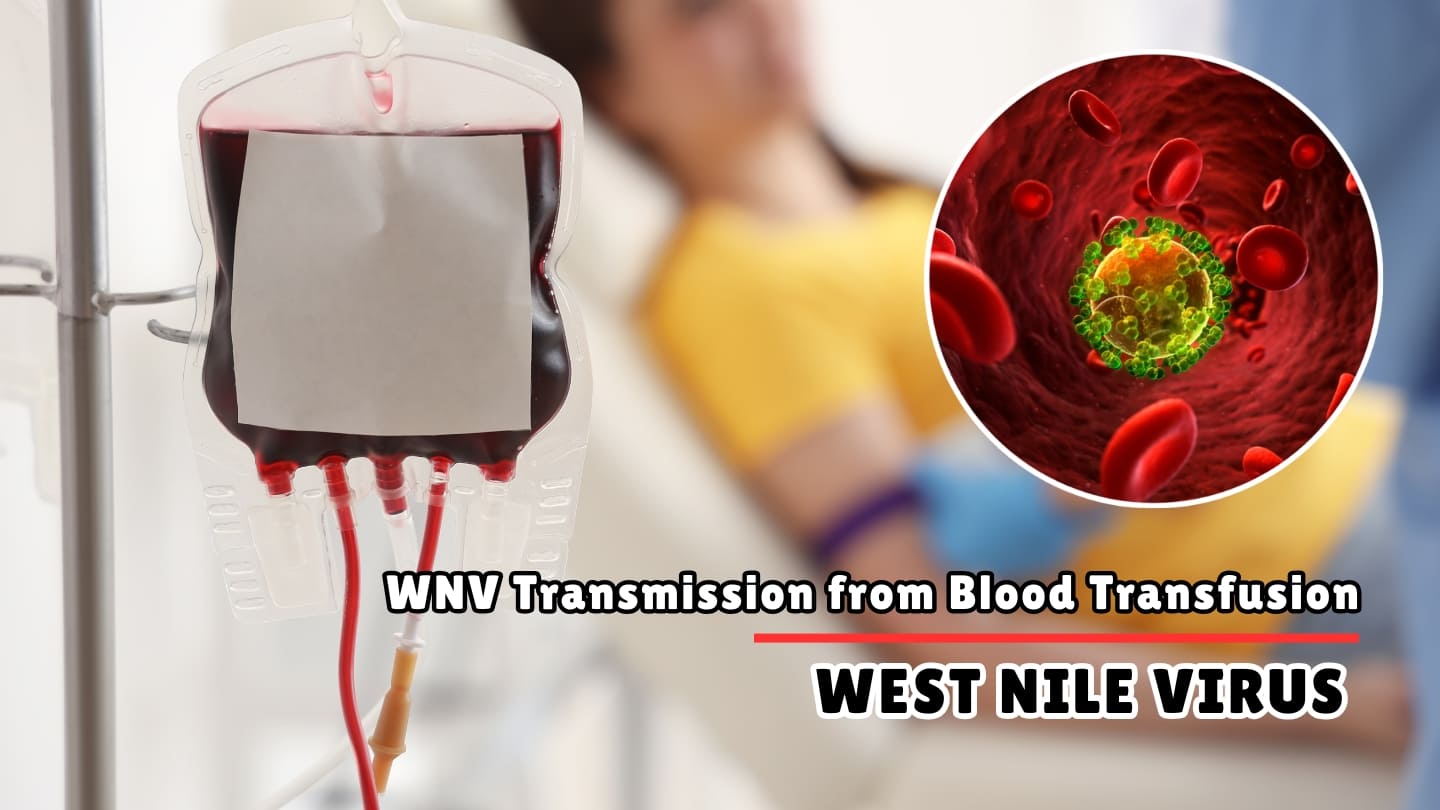
What patients, donors, and caregivers need to know about blood transfusion-transmitted WNV — and how the U.S. blood supply is protected today.
Introduction to West Nile Virus Transmission from Blood Transfusion
Most people associate West Nile virus with a mosquito bite during a summer evening. That connection is well-known. What’s less talked about — and genuinely worth understanding — is that West Nile virus can also be transmitted through blood transfusions.
It’s not common. But it’s not theoretical either.
The U.S. blood supply is among the safest in the world, and blood banks do screen for West Nile virus. Still, the risk isn’t zero — especially during peak transmission season. If you’ve recently had a transfusion, if you’re a regular blood donor, or if someone you love is immunocompromised, this article is directly relevant to you.
Let’s go through what the evidence actually says.
What Is West Nile Virus — And Why Does It Spread Through Blood?
West Nile virus (WNV) is a flavivirus — the same viral family as Zika, dengue, and yellow fever. It was first detected in the United States in 1999, and since then it has spread to all 48 contiguous states.
The primary route of transmission is the Culex mosquito. An infected bird serves as the reservoir host; a mosquito bites the bird, picks up the virus, and then bites a human. That’s the classic pathway.
But here’s the part that matters: WNV circulates in the bloodstream (viremia) during the early infection phase — sometimes before a person knows they’re infected. That’s the window during which donated blood can carry the virus.
The CDC acknowledges blood transfusion, organ transplantation, and rarely, breastfeeding and pregnancy as non-vector transmission routes. It’s unusual. But real.
How Blood Transfusion-Transmitted WNV Was First Discovered
The first confirmed cases of transfusion-transmitted West Nile virus in the U.S. were identified in 2002, during one of the largest WNV outbreaks recorded at the time. Investigators at the CDC traced infections back to blood donors who were in the early, asymptomatic stage of infection.
Several organ transplant recipients also became infected from donors who had undetected WNV viremia. Some of those recipients developed serious neurological complications.
That 2002 outbreak was a turning point. Within a year, the FDA pushed for blood screening protocols, and by 2003, blood collection organizations had implemented nucleic acid testing (NAT) for WNV nationwide.
It’s one of those cases where a public health crisis directly led to meaningful, lasting policy change.
Key Milestones in WNV Blood Safety Policy (1999–Present)
From first U.S. detection to nationwide NAT screening — how a public health crisis reshaped blood supply safety
Sources: CDC ArboNET, FDA Blood Safety guidance documents, AABB technical bulletins. Timeline reflects major policy and outbreak milestones — not exhaustive.
How the U.S. Blood Supply Is Screened for West Nile Virus Today
Since 2003, blood donations in the United States are routinely tested for WNV using nucleic acid amplification testing (NAT). This test looks for viral RNA — it doesn’t just look for antibodies that form later. It can detect the virus itself.
Here’s how the process works in practice:
- Mini-pool NAT (MP-NAT): Donations are pooled in groups (typically 6–16 samples) and tested together. If a pool tests positive, individual samples are re-tested.
- Individual donation NAT (ID-NAT): During peak WNV season and in geographic areas with high activity, blood collection centers often switch to testing each donation individually — a more sensitive approach.
- Geographic surveillance: Blood banks coordinate with state and local health departments to monitor WNV activity. The American Red Cross, Vitalant, and other organizations actively track regional outbreak data.
How Donated Blood Is Screened for West Nile Virus
Step-by-step NAT (Nucleic Acid Testing) protocol used by U.S. blood banks — regulated by the FDA
Protocol per FDA guidance and AABB technical standards for West Nile Virus NAT screening. MP-NAT = mini-pool nucleic acid testing. ID-NAT = individual donation NAT used in high-activity regions/seasons.
The FDA provides regulatory oversight, and the CDC’s ArboNET surveillance system tracks WNV activity nationally — feeding data that informs blood banking decisions in real time.
Mini-Pool NAT vs. Individual Donation NAT for WNV Screening
Side-by-side comparison of the two nucleic acid testing protocols used in U.S. blood banks
| Attribute | Mini-Pool NAT (MP-NAT) | Individual Donation NAT (ID-NAT) |
|---|---|---|
| How it works | 6–16 individual donations are combined into one pooled sample and tested together as a single unit. | Each donation is tested independently — no pooling. One test per one bag of blood. |
| Detection sensitivity | Moderate Viral load is diluted by pooling. May miss very low-level viremia (early infection window). | Higher No dilution effect. Detects lower viral RNA concentrations — closer to the infection window. |
| When used | Year-round baseline screening across all blood donation centers in the U.S. | Peak WNV season (typically July–October) and in geographically high-activity regions (e.g., TX, CA, CO). |
| If pool tests positive | Pool is flagged; each individual donation in the pool is then re-tested using ID-NAT before any decision is made. | N/A — already testing individual donations. Positive result leads directly to discard + donor deferral. |
| Resource requirement | Lower cost Fewer reagents and tests. More efficient for large-volume routine screening. | Higher cost More reagents per testing cycle. Justified by elevated community WNV transmission risk. |
| Regulatory status | FDA-mandated. Required for all blood collections in the U.S. since 2003. | FDA-recommended during high-activity periods. Implemented by blood banks per CDC/state health guidance. |
| Residual risk | Small but present Window period viremia at very low levels may be missed in a pool of 16. | Minimized Tighter detection window. Still not zero — early infection may fall below any NAT threshold. |
| Used by major U.S. blood banks? | Yes — all centers American Red Cross, Vitalant, OneBlood, New York Blood Center, and all FDA-licensed banks. | Yes — high-risk zones Same organizations escalate to ID-NAT seasonally and geographically per surveillance data. |
Sources: FDA Blood Safety guidance, AABB Technical Bulletin on West Nile Virus, CDC ArboNET seasonal protocols. NAT = Nucleic Acid Testing / Nucleic Acid Amplification Testing (NAAT).
Is the Risk of WNV from a Blood Transfusion Completely Eliminated?
Honestly? No. No screening test has a 100% detection rate, and NAT does have a detection threshold.
There’s a concept called the “window period” in infectious disease testing — the time between when a person is infected and when a test can reliably detect the pathogen. For WNV, this window can be very brief, but it exists. A donor who was bitten by an infected mosquito 24–48 hours before donating could theoretically have viral levels below the NAT detection threshold.
Published research in medical literature, including studies referenced by the AABB (formerly the American Association of Blood Banks), has documented rare breakthrough transmissions despite screening. These are infrequent. But they underscore that “very low risk” and “zero risk” are not the same thing.
Who is most vulnerable if a transmission did occur?
- Organ transplant recipients on immunosuppressive therapy
- Patients with hematologic cancers (leukemia, lymphoma)
- People with HIV or other immune-compromising conditions
- Adults over age 60 — who account for the majority of serious WNV neuroinvasive disease cases
- Neonates receiving transfusions in intensive care settings
For healthy, immunocompetent individuals, WNV infection — even if it occurred via transfusion — would likely be mild or subclinical. The concern is almost entirely concentrated in medically fragile populations.
West Nile Virus Symptoms: What to Watch For After a Transfusion
Most people infected with WNV — about 80%, according to the CDC — never develop symptoms. That’s actually part of what makes it tricky from a blood safety perspective: infected donors often don’t know they’re infected.
1. West Nile Fever (Milder Form)
Roughly 1 in 5 infected individuals develop a febrile illness, with symptoms including:
- Sudden fever and headache
- Body aches and joint pain
- Vomiting or diarrhea
- A skin rash on the trunk of the body
2. West Nile Neuroinvasive Disease (Severe Form)
Fewer than 1% of infected people develop neuroinvasive disease, which can be life-altering. This includes:
- West Nile encephalitis (brain inflammation)
- West Nile meningitis (inflammation of the brain lining)
- Acute flaccid paralysis — similar to polio-like limb weakness
If you or a family member develops neurological symptoms — confusion, loss of coordination, extreme weakness — in the weeks following a blood transfusion, notify your healthcare provider immediately and mention the transfusion. Timing matters for diagnosis.
When Is the Risk of WNV Blood Transmission Highest?
West Nile virus transmission in the U.S. follows a seasonal curve. Human cases peak between late July and early September — mosquito season in most parts of the country. Blood donations collected during this window carry a higher (though still very small) statistical likelihood of WNV viremia in the donor pool.
West Nile Virus — Historically High-Activity States
States consistently reporting elevated WNV neuroinvasive disease case counts (based on CDC ArboNET surveillance patterns)
Source: CDC ArboNET national arboviral surveillance system. Values represent relative historical case-rate index (illustrative ranking based on documented surveillance trends, not single-year counts).
Geographic concentration matters, too. States like Texas, California, Colorado, and Arizona have historically reported high WNV activity. But the virus has surprised researchers before — 2012 saw an unusually severe national outbreak, with Dallas County, Texas declaring a public health emergency.
Blood banks in high-activity regions typically respond by switching to individual-donation NAT during peak season — a more resource-intensive but more sensitive approach. This is proactive, not reactive.
WNV Transmission Risk by Month — United States
Seasonal risk pattern for mosquito-borne and blood-supply WNV transmission across the continental U.S.
Based on CDC ArboNET seasonal WNV human case reporting patterns. Risk levels represent continental U.S. average — southern states (TX, AZ, LA) may experience earlier onset and later resolution.
What Patients Receiving Blood Transfusions Should Know
If you’re scheduled for a procedure that may require transfusion — surgery, chemotherapy, dialysis — here are practical, evidence-based considerations:
- Ask about autologous donation. If time and health allow, donating your own blood ahead of a planned surgery eliminates transfusion-transmitted infection risk entirely. Talk to your surgeon.
- Understand directed donation limitations. Requesting blood from a specific person (a family member, for example) doesn’t guarantee greater safety — all blood still must pass through standard screening.
- Communicate your immune status. If you are immunocompromised, make sure your care team knows. They may take additional precautions or use irradiated blood products.
- Monitor for symptoms post-transfusion. Flu-like symptoms in the 2–14 days following a transfusion — especially fever, headache, or muscle aches — warrant a call to your physician.
- Report unusual symptoms to your blood bank. Transfusion recipients can report adverse events through their hospital or directly to the blood collection organization. This data improves the system for everyone.
What Blood Donors Should Know About West Nile Virus
If you donate blood — and donating is genuinely important, so please keep doing it — be aware of these deferrals and best practices:
- Temporary deferral after WNV diagnosis: The FDA guidance recommends deferral for 120 days after a WNV diagnosis or until your symptoms have resolved and 28 days have passed, depending on specifics. Check with your donation center for their current policy.
- Disclose any recent febrile illness: If you’ve had a fever or unexplained flu-like symptoms within the past few weeks — even if you recovered — tell the intake staff before donating. They are there to ask questions, not to judge.
- Recent mosquito exposure doesn’t disqualify you: Living in an area with mosquitoes doesn’t prevent donation. It’s only active infection (with or without symptoms) that triggers deferral consideration.
The blood supply depends on voluntary donors. The most important thing you can do is be honest about your recent health history — the screening process does the rest.
The Role of Public Health Agencies in Protecting the Blood Supply
Several agencies operate together to keep transfusion-related WNV transmission at minimal levels:
- CDC (Centers for Disease Control and Prevention): Operates the ArboNET national surveillance system, tracks WNV cases by state and county, and provides epidemiological guidance to blood banks.
- FDA (Food and Drug Administration): Regulates blood collection and sets testing requirements, including mandating NAT for WNV in all donated blood.
- State health departments: Issue regional alerts during outbreak periods, coordinate with local blood banks, and publish mosquito surveillance data that informs testing decisions.
- AABB (Formerly American Association of Blood Banks): Sets voluntary accreditation standards and publishes technical bulletins that guide blood bank practices beyond minimum regulatory requirements.
If you’re in a state with high WNV activity — Texas, California, Colorado, Illinois, or others that frequently report elevated case counts — your state health department’s website will have current seasonal surveillance data.
Climate Trends and the Expanding WNV Transmission Season
This is worth mentioning — not to alarm, but because it’s relevant to blood safety planning.
Warmer winters and longer summers in many U.S. regions are extending the Culex mosquito season. Research published in peer-reviewed environmental health journals has documented range expansion of mosquito populations in the U.S., particularly at higher latitudes and elevations that were previously less hospitable.
What this means practically: the window of elevated WNV risk — for community exposure and for the blood supply — may gradually be extending beyond the traditional July–September peak.
Blood safety researchers are paying attention to this. It’s one reason why continued investment in NAT screening infrastructure and flexible, geography-based testing protocols remains important.
The Bottom Line: Real Risk, Well-Managed — But Not Invisible
Yes — you can get West Nile virus from a blood transfusion. It has happened, and the possibility isn’t zero today. But the U.S. blood supply has robust, actively maintained screening protocols that keep this risk extremely low.
The system works because of multiple layers:
- mandatory NAT testing,
- geographic surveillance,
- seasonal protocol adjustments,
- donor education, and
- post-transfusion vigilance.
Remove any one of those layers, and risk increases.
If you or someone you care for is medically vulnerable and requires frequent transfusions, it’s worth having a specific conversation with your hematologist or primary care provider about WNV risk in your geographic area — especially before summer.
And if you’re a healthy blood donor reading this: please don’t stop donating. The blood supply needs you. Just be honest on your health questionnaire. That’s your part in this.
Have a question or personal experience with West Nile virus or blood transfusion safety? We’d genuinely like to hear from you — whether you’re a blood donor, a patient, a caregiver, or a clinician. Share your thoughts or story in the comments.
Sources & Further Reading
- Centers for Disease Control and Prevention (CDC) — West Nile Virus: https://www.cdc.gov/west-nile-virus/
- U.S. Food and Drug Administration (FDA) — Blood Safety and Availability Guidance
- AABB (formerly American Association of Blood Banks) — Technical Bulletins on Arboviral Testing
- CDC ArboNET National Arboviral Surveillance System
- Petersen, L.R. et al. — Transfusion-associated West Nile virus infection documented in peer-reviewed literature (multiple years, multiple journals)
- State health department WNV surveillance portals (Texas DSHS, California CDPH, Colorado CDPHE, Illinois IDPH)
Editorial Team & Contributors

Raashid Ansari, Founder, Content Researcher & Author - MosquiTalk
Not an entomologist — just a genuinely curious writer who started researching mosquitoes and couldn't stop. What began as casual reading about repellents and bite prevention gradually turned into a deep ongoing dive into vector biology, disease epidemiology, animal health impacts, and the real science behind mosquito control. Everything published here is carefully edited, and written with one purpose: giving readers accurate, accessible information they can actually trust and use to protect themselves, their families, and their pets, birds and cattle.
Active across social platforms, regularly publishes, and genuinely invested in spreading mosquito awareness where it matters most. Because informed readers make better decisions — and better decisions save lives.