
Table of Contents
Introduction to West Nile Virus Prevention
West Nile virus prevention isn’t just a public health talking point. It’s something I think about every single evening when the sun starts going down and the backyard turns into a no-man’s land. I’ve spent years studying mosquito biology, and still — that first warm-weather bite of the season catches me off guard. Every time.
West Nile virus (WNV) is the leading mosquito-borne illness in the continental United States. According to the CDC, over 58,000 cases have been reported since it first appeared in New York in 1999. The real number? Probably 10 to 15 times that, since most people never get tested. About 1 in 5 infected people develop symptoms. And roughly 1 in 150 develop severe neurological disease — encephalitis, meningitis, the kind of stuff that lands you in an ICU.
This guide covers everything. Basic protection, advanced strategies, what works for horses, what helps your dogs and cats, and what public health agencies don’t always explain clearly. Whether you’re a first-timer or someone who’s dealt with a WNV outbreak in your county, this is the resource I wish I’d had.
West Nile virus is transmitted primarily by Culex mosquitoes — especially Culex pipiens and Culex quinquefasciatus — which breed in stagnant, nutrient-rich water and are most active at dusk and dawn.
Understanding West Nile Virus: What You’re Actually Up Against
How West Nile Virus Spreads?
The transmission cycle is worth understanding because it shapes every prevention decision you make. WNV circulates in a bird-mosquito-bird cycle. Mosquitoes — particularly Culex species — bite infected birds, pick up the virus, then bite humans or horses. We’re what epidemiologists call “dead-end hosts” — we can get sick, but we don’t amplify the virus back into mosquitoes.
Crows and jays are especially sensitive to WNV and die in high numbers during outbreaks. If you start seeing dead birds in your neighborhood, that’s not just sad — it’s an early warning signal. Report it to your local health department.
Human-to-human transmission doesn’t happen through casual contact. Blood transfusions, organ transplants, and pregnancy (mother to child) are rare documented routes. But day-to-day, it’s all mosquitoes.
West Nile Virus Symptoms: Knowing What to Watch For
About 80% of infected people show zero symptoms. That’s the tricky part. The virus can be circulating silently in your community while everyone feels fine.
West Nile fever — the milder form — shows up 3 to 14 days after the bite. Expect fever, headache, body aches, joint pain, vomiting, diarrhea, and sometimes a skin rash. It usually clears in a few days to a few weeks, but fatigue can linger for months.
West Nile neuroinvasive disease is the severe form — encephalitis, meningitis, or acute flaccid paralysis. People over 60, those with diabetes, cancer, kidney disease, or compromised immune systems are at much higher risk for this outcome. This isn’t alarmism. It’s just the science.
| Form | Who Gets It | Key Symptoms | Duration |
|---|---|---|---|
| Asymptomatic | ~80% of cases | None | N/A |
| West Nile Fever | ~20% of cases | Fever, headache, fatigue, rash | Days to weeks |
| Neuroinvasive Disease | ~1 in 150 infected | Encephalitis, meningitis, paralysis | Weeks to months+ |
| WNV in Horses | High susceptibility | Ataxia, muscle weakness, death | Variable |
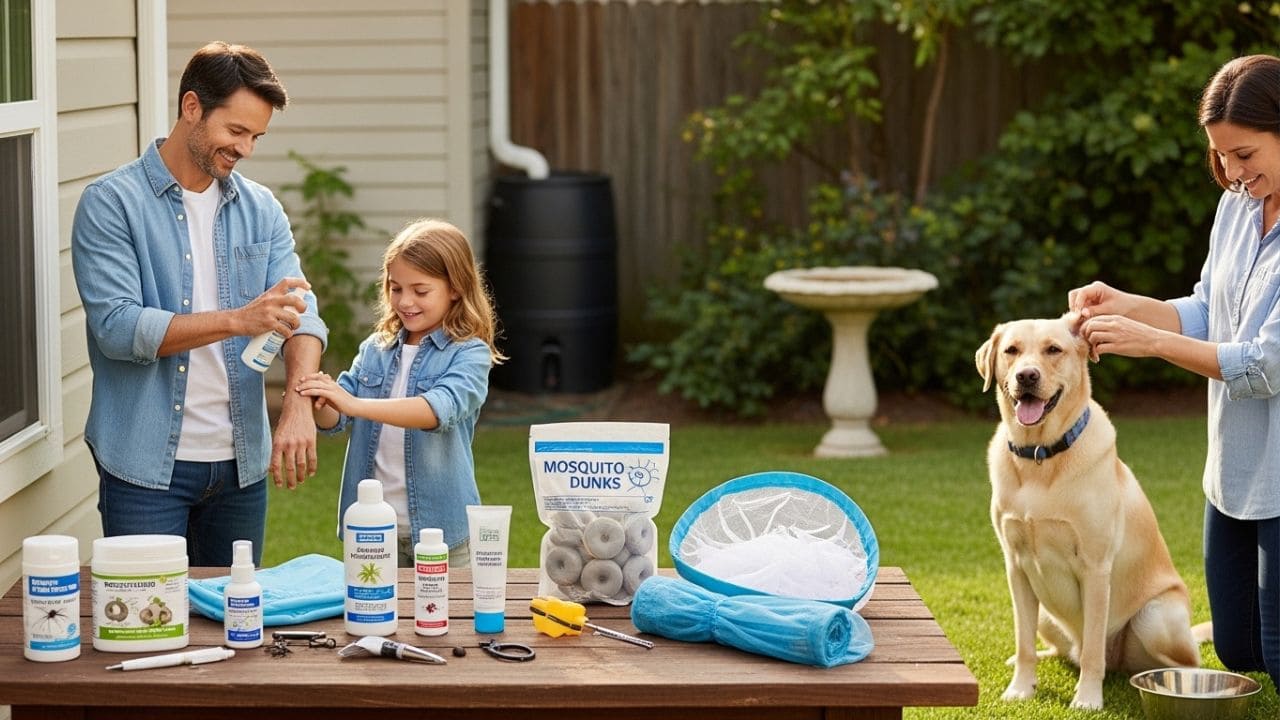
Image Credit: Illustration by Author
West Nile Virus Prevention Tips: Your Personal Protection Toolkit
1. Using EPA-Registered Insect Repellents the Right Way
I see people spray repellent on their shirt collar and call it done. That’s not how it works. Effective mosquito repellent application means covering all exposed skin — ankles, back of the neck, behind the ears, wrists. These are the spots mosquitoes find first.
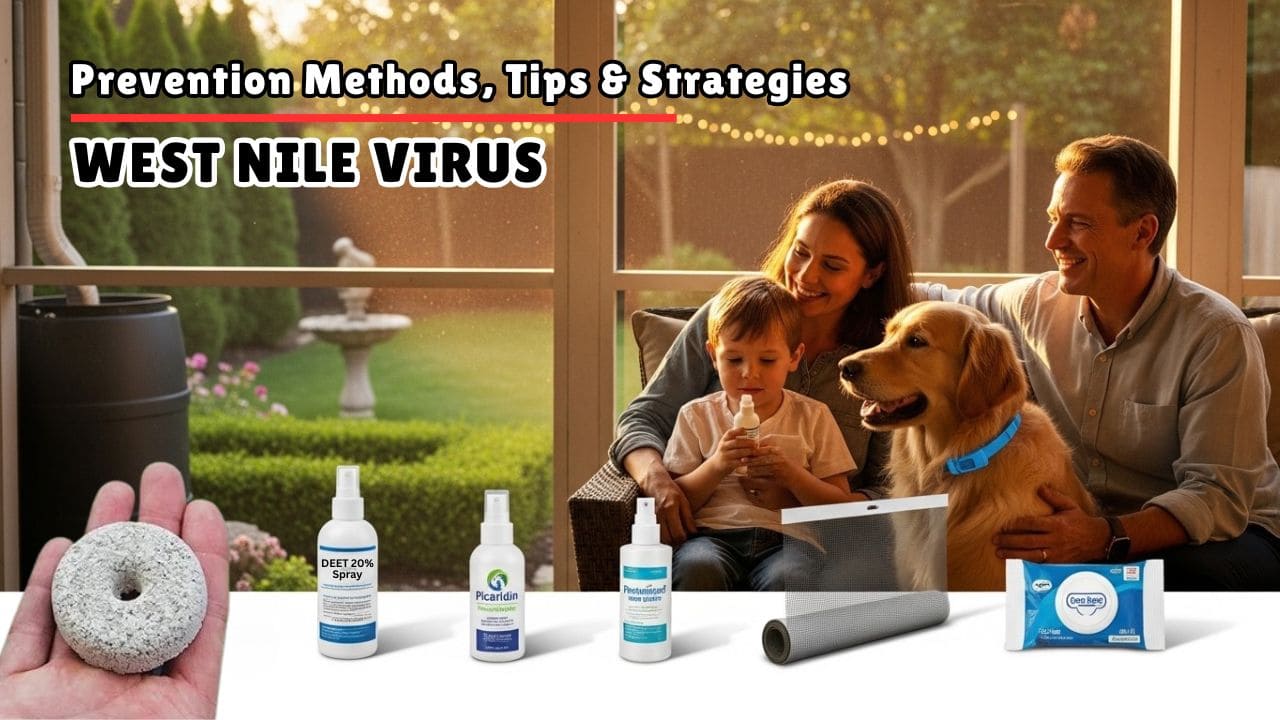
The EPA has approved four active ingredients with strong evidence for WNV prevention:
- DEET (10–30% concentration) — the gold standard, effective for 2–5 hours depending on concentration
- Picaridin (20%) — nearly as effective as DEET, less greasy, better for kids and sensitive skin
- IR3535 — mild, good for children over 2 months, slightly shorter protection window
- Oil of Lemon Eucalyptus (OLE) / PMD — plant-based, effective but NOT recommended for children under 3
Don’t use repellents with DEET on children under 2 months. For infants, mosquito nets over strollers and carriers are the safest option. Reapply repellent after swimming or heavy sweating — that’s when most bites happen, because people assume they’re still protected.
2. Protective Clothing Strategies Against Mosquito Bites
Long sleeves and pants at dusk and dawn — yes, even in summer heat. I know. It’s uncomfortable. But loose-fitting, light-colored clothing treated with permethrin creates a near-impenetrable barrier. Permethrin binds to fabric and stays effective through multiple washes.
Tuck pants into socks. It looks ridiculous. It works. Culex mosquitoes are low fliers — they often bite around the ankles first.
- Use permethrin-treated clothing or treat your own with a permethrin spray kit
- Light colors are less attractive to mosquitoes than dark blues and blacks
- Loose fabrics prevent mosquitoes from biting through — tight clothing can still allow bites
- Wide-brim hats protect the neck and ears, common bite zones
3. Timing Your Outdoor Activity to Reduce Bite Exposure
Culex mosquitoes — the primary WNV vectors — peak between dusk and dawn. This is when they feed. Planning outdoor activities in the middle of the day doesn’t eliminate risk entirely, but it dramatically reduces it. Morning yard work before 7 AM is usually fine. Evening barbecues at 8 PM? That’s prime time.
Check local mosquito activity forecasts if your county health department publishes them. Some cities have surveillance programs and send alerts when trap counts spike.
West Nile Virus Prevention Methods: Eliminating Mosquito Breeding Sites
1. The 7-Day Rule for Standing Water
Culex mosquito eggs hatch and larvae develop into biting adults in as little as 7–10 days. Which means any standing water sitting around your yard for a week is a potential production facility. I walk my property every Sunday morning. It takes 15 minutes and has genuinely reduced the mosquito pressure in my yard.
Here’s what catches people off guard:
- Clogged gutters — the number one breeding site in suburban yards, often forgotten
- Bird baths — need fresh water every 2–3 days, not weekly
- Pot saucers — small but surprisingly productive; empty them after every rain
- Tarps and pool covers — even a small depression holds enough water
- Children’s toys left outside — buckets, water tables, ride-on toys
- Wheelbarrows left upright
- Old tires — a single tire can produce hundreds of mosquitoes; dispose of properly
Anything that holds even a cup of water matters. I found a forgotten terra cotta pot base behind my shed that was breeding mosquitoes all summer. One pot saucer. Probably thousands of bites, traced back to one overlooked container.
2. Water Features, Ponds, and Rain Gardens
Ornamental ponds, rain gardens, and retention basins don’t have to be abandoned. They just need management. Moving water doesn’t breed mosquitoes effectively — the surface agitation disrupts egg-laying. A small solar-powered fountain in a garden pond is both attractive and functional.
For larger water features, Bacillus thuringiensis israelensis (BTI) — sold as Mosquito Dunks or Bits — is a biological larvicide that’s safe for birds, fish, pets, and beneficial insects. It kills mosquito larvae before they can develop into adults. I use Mosquito Dunks in my rain barrel religiously every 30 days.
- BTI dunks: effective for ~30 days, safe for all non-target organisms
- BTI bits: faster-acting granules, good for large areas and gutters
- Methoprene (Altosid): insect growth regulator, disrupts larval development
- Gambusia affinis (mosquitofish): voracious larval predators for ornamental ponds
3. Yard Drainage Improvements for Long-Term Prevention
Some properties just hold water. Low spots, poor grading, compacted soil — these create chronic breeding habitat that no amount of dumping containers can fix. This is where I’d say the single biggest investment you can make in mosquito control is in yard drainage.
French drains, regrading, adding organic matter to compacted soil to improve percolation — these are permanent solutions to a recurring problem. Expensive upfront, but they eliminate the source rather than manage the consequence.
West Nile Virus Prevention Measures: Protecting Your Home’s Interior
1. Window Screens, Door Seals, and Structural Barriers
A mosquito doesn’t need a wide-open door. A small gap around an air conditioning unit, a torn screen, a gap at the base of a door — that’s enough. I replaced all my window screens with 18×18 mesh (finer than standard) specifically to keep out Culex mosquitoes, which are slightly smaller than Aedes species.
- Repair or replace torn screens immediately — don’t let it sit
- Install door sweeps on all exterior doors
- Check AC unit gaps and seal with weatherstripping
- Use mesh covers on chimney openings and crawl space vents
- Keep windows and doors closed at dusk and dawn even if you don’t have AC
2. Indoor Mosquito Control Devices
Fans are genuinely effective. Mosquitoes are weak fliers — even a modest airflow disrupts their ability to land and feed. A box fan aimed at your seating area during outdoor evenings can cut bites significantly. I run ceiling fans in my screened porch at medium speed all summer.
For indoor use, EPA-registered spatial repellents like Thermacell devices (allethrin-based) work well in semi-enclosed outdoor spaces. They’re not appropriate for enclosed indoor rooms with poor ventilation.
- Clip-on fans for personal protection outdoors.
- Citronella candles: mild deterrent, not scientifically robust for heavy mosquito pressure.
- Electric mosquito traps using CO₂ and heat: can be effective for small areas
- UV light zappers: largely ineffective for mosquitoes, kill more beneficial insects.
West Nile Virus Prevention Strategies: Landscape and Environmental Approaches
1. Mosquito-Repelling Plants: What Science Actually Says
Let me be honest here. Planting lavender or citronella geraniums around your patio is not going to protect you from WNV. The research is clear — plants don’t release enough volatile compounds passively to deter mosquitoes at distances that matter. But they’re not useless either.
Crushing fresh leaves of lemon balm, catnip, or basil and rubbing them on skin does produce some short-term repellent effect. Catnip (Nepeta cataria) has shown activity comparable to low concentrations of DEET in some studies — though for far shorter duration. Plant them? Sure. Count on them as your primary defense? No.
2. Biological Controls: Natural Predators and Their Limitations
Purple martins eat mosquitoes. Bats eat mosquitoes. Both are frequently overhyped as neighborhood-scale solutions. A bat eats a few hundred to a few thousand insects per night, and studies show only a small fraction of those are mosquitoes. Purple martins feed primarily during daytime — the opposite of when Culex are active.
That said, supporting biodiversity in your yard has long-term ecosystem benefits. Dragonfly larvae are voracious aquatic predators that eat mosquito larvae in ponds. Native birds that forage in leaf litter help. It’s a support system, not a standalone strategy.
- Attract dragonflies with native aquatic plants in garden ponds
- Install bat boxes — modest contribution, but part of integrated pest management
- Encourage native ground-foraging birds with brush piles and native plantings
3. Insecticide Treatments for Yard Mosquito Control
Residual barrier sprays — typically bifenthrin, permethrin, or lambda-cyhalothrin — applied to vegetation, the underside of deck boards, and shaded resting areas can significantly reduce adult mosquito populations around the home. Mosquitoes rest in cool, shaded vegetation during the day. That’s where you target them.
I apply a permethrin-based barrier treatment around my yard perimeter and low shrubs in early June and again in August. Professionally applied treatments using backpack foggers or truck-mounted sprayers can cover larger areas, though the effect is temporary — usually 3–4 weeks.
- Bifenthrin (Bifen IT, Talstar): highly effective, 3–4 weeks residual
- Permethrin: excellent, widely available in ready-to-spray formulations
- Pyrethrin (organic option): fast knockdown, no residual — biodegrades quickly
- Malathion: used in public health aerial applications, not for home garden use
West Nile Virus Prevention for Animals: Horses, Dogs, Cats, and Livestock
1. West Nile Virus Prevention in Horses
Horses are the animal we worry about most with WNV. They’re highly susceptible — and unlike most infected humans, unvaccinated horses that develop neurological WNV have a fatality rate of 30–40%. If you have horses, this is not a background concern. It’s a foreground management priority.
Vaccination is the cornerstone. Three USDA-approved WNV vaccines are available for horses: the killed virus vaccine (West Nile-Innovator), the recombinant canarypox vector vaccine (Recombitek), and the DNA vaccine (West Nile-Innovator + EWT). Core vaccination recommendations from the American Association of Equine Practitioners (AAEP) include:
- Primary series: two doses, 3–6 weeks apart for naive horses
- Annual booster: before mosquito season begins (spring in most US regions)
- Semi-annual boosters in high-transmission areas or for horses with unknown vaccine history
Beyond vaccination, management practices matter enormously. Culex mosquitoes are most active during dawn and dusk — consider stabling horses during these peak periods during outbreak months.
- Use EPA-registered equine insect repellents containing permethrin or pyrethrin
- Install fans in stalls — air movement is a real deterrent
- Remove manure daily — organic matter in standing water accelerates larval development
- Screen water tanks and troughs; change water every 2–3 days
- Eliminate standing water in paddocks and pastures
- Use insecticide-treated leg wraps during high-risk periods
2. West Nile Virus in Dogs: Risk, Signs, and Protection
Dogs can contract WNV but are generally less susceptible to severe disease than horses or humans. Most infected dogs show mild or no symptoms. That said, immunocompromised dogs and very young puppies may be at higher risk for neurological signs.
There is no licensed WNV vaccine for dogs in the US. Protection focuses on reducing mosquito exposure — EPA-approved topical repellents for dogs (those containing OLE, 2-undecanone, or permethrin in canine formulations), avoiding outdoor activity at dawn and dusk during peak season, and eliminating standing water from the yard.
3. West Nile Virus and Cats: Low Risk, Still Worth Managing
Cats appear even less susceptible to WNV clinical disease than dogs. However, cats are particularly sensitive to pyrethrins and permethrin. Products safe for dogs can be fatal to cats — this is critical to get right.
- Never use permethrin or pyrethrin products on cats
- Keep cats indoors during peak mosquito hours as the primary prevention
- Consult your veterinarian before using any insect repellent on cats
4. Protecting Backyard Poultry and Other Livestock
Chickens are actually sentinel animals for WNV — some surveillance programs use chickens in sentinel flocks to detect circulating virus before human cases appear. Chickens rarely show serious disease.
Waterfowl, geese, and ducks are less susceptible. Exotic bird species in aviaries or zoos — especially corvids, raptors, and some parrots — can die from WNV. If you keep exotic birds, screen aviaries to prevent mosquito entry and consult an avian veterinarian about prophylactic measures.
West Nile Virus Prevention and Treatment: What to Do After Exposure
There Is No Specific Antiviral Treatment for West Nile Virus
Let me be direct: as of 2025, there is no FDA-approved antiviral drug specifically for West Nile virus infection. Treatment is supportive. That means managing symptoms — rest, fluids, pain relievers like acetaminophen or ibuprofen for fever and aches.
For severe neuroinvasive disease, hospitalization may involve IV fluids, respiratory support, and prevention of secondary complications. Intravenous immunoglobulin, ribavirin, and interferon-alpha have been studied but haven’t demonstrated consistent clinical benefit in trials. Research is ongoing.
This is precisely why prevention is everything. There’s no treatment to fall back on. The mosquito bite you prevent is the only reliable intervention.
When to Seek Medical Care
West Nile fever typically resolves on its own. But you should seek immediate medical evaluation if you or a family member develops:
- High fever with severe headache — especially a stiff neck (meningismus)
- Confusion, disorientation, or altered mental status
- Muscle weakness — especially sudden weakness in arms or legs
- Seizures
- Eye pain or unusual vision changes
If neuroinvasive disease is suspected, diagnosis involves lumbar puncture (spinal tap), MRI of the brain, and PCR testing for WNV RNA in cerebrospinal fluid. Don’t wait to see if it improves on its own if you have these warning signs.
Post-Exposure Monitoring and Long-Term Complications
Even people who recover from WNV fever sometimes report persistent fatigue, cognitive difficulties (“brain fog”), and musculoskeletal pain for months or even years. This post-WNV syndrome is increasingly recognized, though poorly understood.
Patients who’ve had WNV encephalitis or meningitis may require occupational therapy, physical therapy, and long-term neurological follow-up. The acute illness may resolve, but some deficits persist. This is one reason physicians take neuroinvasive cases very seriously even when patients initially seem to be improving.
Community-Level and Public Health West Nile Virus Prevention Strategies
1. Mosquito Surveillance Programs: How They Work and Why They Matter
Most counties in the US with significant WNV risk maintain active surveillance programs. This involves setting CO₂-baited light traps that catch adult mosquitoes, testing pooled trap samples for WNV, testing dead birds (sentinel surveillance), and monitoring human case reports.
When you see your county spraying or hear about elevated WNV in local mosquitoes, that’s your surveillance system working. Check your local health department’s website during summer for trap data. Some states publish weekly mosquito activity maps. This is genuinely useful, actionable information.
2. Aerial and Ground Adulticiding: What’s Being Applied and Is It Safe?
When WNV transmission risk spikes, public health agencies may conduct aerial or truck-mounted ground spraying of adulticides. In the US, the most commonly used products are naled (an organophosphate), pyrethrin, and permethrin-based ultra-low volume (ULV) formulations.
The risk to humans from properly conducted ULV spraying is considered very low — the concentrations used are far below levels that would cause harm to humans or pets. The EPA, CDC, and USDA have all reviewed the evidence. That said, if you have concerns:
- Bring pets indoors during and for 30 minutes after spraying
- Cover or bring in outdoor garden produce
- Beekeepers should contact their local agency — pyrethrins can harm bees
- People with severe chemical sensitivities can request advance notice to stay indoors
3. Integrated Vector Management (IVM): The Gold Standard Approach
Integrated vector management combines larviciding, source reduction, public education, surveillance, and targeted adulticiding. It’s the evidence-based framework recommended by the WHO and CDC. The key is using the least-toxic intervention first — source elimination, then larvae control, then adult control only when necessary.
At the neighborhood scale, organized community cleanup events — dump-and-drain campaigns — consistently reduce Culex mosquito populations. It sounds simple. It genuinely works. Coordinated source reduction across a block or subdivision has measurable population effects that individual yard management alone can’t achieve.
Advanced West Nile Virus Prevention Methods: Emerging Technologies
1. Genetically Modified Mosquitoes and Sterile Insect Technique
Oxitec’s OX513A and OX5034 programs involve releasing genetically modified Aedes mosquitoes — but these target Aedes aegypti (dengue, Zika, chikungunya vectors) rather than Culex mosquitoes. For WNV specifically, the sterile insect technique (SIT) using radiation-sterilized Culex males has been studied but isn’t yet deployed at scale in the US.
Research is active. It’s promising. But it’s not yet a practical tool for most homeowners or communities. Worth watching.
2. Wolbachia-Based Mosquito Control
Wolbachia is a naturally occurring intracellular bacteria. When introduced into certain mosquito populations, it reduces their ability to transmit arboviruses and can suppress wild populations through cytoplasmic incompatibility. The World Mosquito Program has deployed Wolbachia-infected Aedes mosquitoes with remarkable success against dengue in multiple countries.
For Culex and WNV specifically, research is ongoing but hasn’t produced deployable products yet. This is a space worth watching closely over the next 5–10 years.
3. Smart Mosquito Traps and Predictive AI Tools
Several companies now offer automated mosquito surveillance devices that use machine learning to identify species, count catches, and transmit data in real time. Municipalities using these tools can respond more rapidly to population spikes before human transmission occurs.
At the consumer level, subscription-based monitoring services exist but are primarily oriented toward Aedes species (dengue, Zika risk). Culex-specific smart surveillance is more specialized and mostly used at the public health level.
High-Risk Groups: Who Needs to Take Extra West Nile Virus Precautions
1. Older Adults and the Immune-Compromised
People over 60 are at significantly higher risk for West Nile neuroinvasive disease. The immune system’s ability to contain the virus in peripheral tissue before it crosses the blood-brain barrier diminishes with age. This isn’t a minor statistical footnote — it’s a strong, consistent finding across every WNV outbreak since 1999.
If you’re caring for elderly parents, think about their outdoor evening habits. A simple conversation about wearing repellent at dusk, not gardening after 6 PM in the summer, and checking their window screens — that could make a real difference.
2. Pregnant Women and West Nile Virus
WNV during pregnancy can, in rare cases, be transmitted to the fetus and has been associated with adverse outcomes including fetal brain abnormalities and neonatal death, based on case reports. The risk is considered low but not zero.
Pregnant women should be vigilant about repellent use. EPA-registered repellents including DEET are considered safe for use during pregnancy when applied according to directions. The risk of WNV infection significantly outweighs the theoretical concerns about repellent use.
3. Organ Transplant Recipients
This group doesn’t get mentioned enough. Transplant recipients are on long-term immunosuppressive drugs — that’s the whole point, to stop the body from rejecting the new organ. But those same drugs gut the immune response that would normally keep WNV from crossing into the central nervous system. And there’s a second layer most people don’t know about: WNV has been transmitted directly through organ transplantation. A donor asymptomatically infected at the time of harvest. The recipient gets the organ — and the virus.
The CDC now recommends WNV screening of donors during transmission season for exactly this reason. If you’re a transplant patient, mosquito bite prevention isn’t casual summer advice. It’s something that should be on the table every year with your transplant team, explicitly, before mosquito season starts.
4. People with Diabetes and Chronic Kidney Disease
Both conditions show up consistently in the epidemiological data on neuroinvasive WNV cases. Consistently. It’s not a weak association. Chronic systemic inflammation, impaired immune surveillance, compromised blood-brain barrier integrity — the mechanisms aren’t fully pinned down, but the pattern is clear across multiple outbreak studies. Diabetic patients, people on dialysis, anyone managing CKD — mosquito prevention should sit right alongside every other infection-control habit they already follow.
5. Cancer Patients Undergoing Chemotherapy
Chemotherapy hammers white blood cell counts. Sometimes dangerously low. During those windows of deep immunosuppression, a virus the body might normally contain without any symptoms at all can push straight into neuroinvasive disease. Oncology nurses and care teams in endemic areas should be having this conversation with patients routinely during summer months — not just handing them a pamphlet. Repellent use, avoiding outdoor exposure at dusk and dawn, screening on windows. Simple stuff. But somebody has to say it out loud.
6. Blood Transfusion Recipients (Acute Risk Window)
Since 2003, all donated blood in the US gets screened for WNV using nucleic acid testing. That’s a real and important safeguard. But NAT has a detection window — early in infection, viral loads can sit below the threshold. It’s a small gap. For most people, not worth losing sleep over. For patients receiving frequent transfusions while already immunocompromised? That residual risk is worth knowing about. It’s documented, not theoretical, and it’s another reason personal mosquito prevention matters even for people who spend most of their time indoors.
7. Outdoor Workers and Frequent Travelers
Agricultural workers, landscapers, utility workers, and anyone spending extended time outdoors in endemic areas during mosquito season face elevated exposure. Occupational WNV cases are documented and underreported. Employer-provided permethrin-treated uniforms and structured repellent protocols are evidence-based recommendations.
West Nile Virus Prevention Checklist: Your Seasonal Action Plan
Spring Preparation (March–April)
- Walk your property and eliminate all standing water sources
- Clean and unclog gutters — the most neglected step
- Install or replace window and door screens before mosquito season
- Stock up on EPA-registered repellents before prices rise at retailers
- Treat water features with Mosquito Dunks preventatively
- Schedule equine WNV booster vaccinations with your vet
- Apply first permethrin yard barrier treatment
Summer Management (May–September)
- Empty standing water containers weekly, every 7 days without fail
- Reapply yard barrier sprays every 3–4 weeks
- Use repellents consistently for all outdoor evening activities
- Check local health department WNV surveillance reports monthly
- Monitor horses for neurological signs — ataxia, weakness, head pressing
- Report dead crows or jays to local health authorities
- Keep fans running in outdoor entertaining areas
Fall Closing (October–November)
- Remove leaf accumulation promptly — wet leaves hold water
- Drain and store rain barrels after first frost
- Seal any gaps in structures identified during the season
- Document what worked and what didn’t — this makes next season easier
West Nile Virus Prevention Checklist
My Personal West Nile Virus Prevention Routine: What I Actually Do
I’ve been asked this a lot so let me just lay it out plainly. This is what I do, not what I theoretically recommend.
Every Sunday, I do a property inspection. I check gutters, empty any standing water, refresh the bird bath, add a fresh Mosquito Dunk to my rain barrel. Takes 15–20 minutes. I’ve been doing it for four years and the difference from when I wasn’t doing it is remarkable.
For any outdoor evening activity — grilling, gardening, sitting on the porch — I use 20% picaridin. I find it less greasy than DEET and it doesn’t melt synthetic fabrics. I keep a bottle by the back door. If I’m going out, I apply it automatically. It’s habit now.
In mid-June and again in late August, I apply a bifenthrin barrier spray to the perimeter of my yard, the base of my fence, and the underside of my deck boards. I’ve had a pest control company handle this a couple times when mosquito pressure was particularly high.
My horses get their WNV boosters in April. Non-negotiable. I’ve watched horses with WNV encephalitis struggle and the prognosis is grim. Vaccination is $25–40 per dose. It’s among the best investments I make.
Do I still get bitten occasionally? Of course. But the difference in frequency — the number of evenings I can sit on my porch without being driven inside — is significant. This stuff works when you’re consistent with it.
Frequently Asked Questions (FAQs)
Q. Can I Get West Nile Virus More Than Once?
Yes, theoretically. After natural infection, most people develop some protective immunity against the specific strain. But WNV strains vary, and immunity may wane over time. Cases of apparent reinfection are rare but documented. This is another reason why prevention remains important even after a prior WNV diagnosis.
Q. Does West Nile Virus Die Off in Winter?
The virus doesn’t disappear in winter — it enters a dormant transmission cycle. Culex mosquitoes overwinter as adults in sheltered locations, carrying the virus into the next spring. WNV has also been detected in dormant birds. The transmission season resumes each spring as temperatures rise and mosquito populations rebuild.
Q. Is There a West Nile Virus Vaccine for Humans?
As of 2025, there is no FDA-approved human vaccine for West Nile virus. Several vaccine candidates have been in clinical trials, including whole-inactivated virus vaccines and chimeric vaccines (like ChimeriVax-WN02). None has yet completed phase 3 trials with sufficient efficacy data to achieve licensure. The lack of a human vaccine makes personal protective measures all the more critical.
Q. How Effective Are Mosquito Dunks vs. Chemical Larvicides?
Bacillus thuringiensis israelensis (Bti) in the form of Mosquito Dunks is genuinely effective and environmentally preferable. Studies show 90–100% larval mortality in treated water. For homeowner use, it’s my first choice. Chemical larvicides like methoprene and temephos are used in public health programs for large-scale treatment of catch basins and storm drains where Bti may not provide adequate control.
Conclusion: Take West Nile Virus Prevention Seriously — Starting Today
West Nile virus prevention is not complicated, but it does require consistency. The strategies in this guide — eliminating breeding sites, using effective repellents, protecting your animals, managing your yard — are all backed by solid science. None of them is particularly expensive or time-consuming when done routinely.
The window between “I should do something about the mosquitoes” and a WNV transmission event in your community can be days. Culex mosquitoes move fast. The virus spreads fast. Your best protection is already in place before the season peaks.
Start with the source. Walk your yard today. Empty whatever’s holding water. Order Mosquito Dunks if you have a pond or rain barrel. Get your repellent. If you have horses, call your vet about their vaccine status. These are the moves that matter.
Have questions about West Nile virus prevention in your region? What methods have worked best in your yard — or what’s surprised you most about mosquito control? Share your experience in the comments. Real-world knowledge from homeowners across different climates and geographies genuinely helps other readers make better decisions.
Editorial Team & Contributors

Raashid Ansari, Founder, Content Researcher & Author - MosquiTalk
Not an entomologist — just a genuinely curious writer who started researching mosquitoes and couldn't stop. What began as casual reading about repellents and bite prevention gradually turned into a deep ongoing dive into vector biology, disease epidemiology, animal health impacts, and the real science behind mosquito control. Everything published here is carefully edited, and written with one purpose: giving readers accurate, accessible information they can actually trust and use to protect themselves, their families, and their pets, birds and cattle.
Active across social platforms, regularly publishes, and genuinely invested in spreading mosquito awareness where it matters most. Because informed readers make better decisions — and better decisions save lives.