
Introduction
West Nile Virus (WNV) isn’t always front-page news. But for organ transplant recipients, it doesn’t need to be trending to be dangerous. While most healthy adults who contract WNV never even know it happened, immunocompromised patients — people living with transplanted organs especially — face a starkly different picture.
Severe neurological complications. Rapid deterioration. Sometimes, death.
The risk isn’t hypothetical. According to the Centers for Disease Control and Prevention (CDC), transplant recipients have among the highest risks of developing severe West Nile neuroinvasive disease (WNND) of any population group. And yet, WNV screening in organ donation is an area that still doesn’t get the attention it deserves.
This article breaks down the science, the screening protocols, and the practical steps transplant patients and their families need to know.
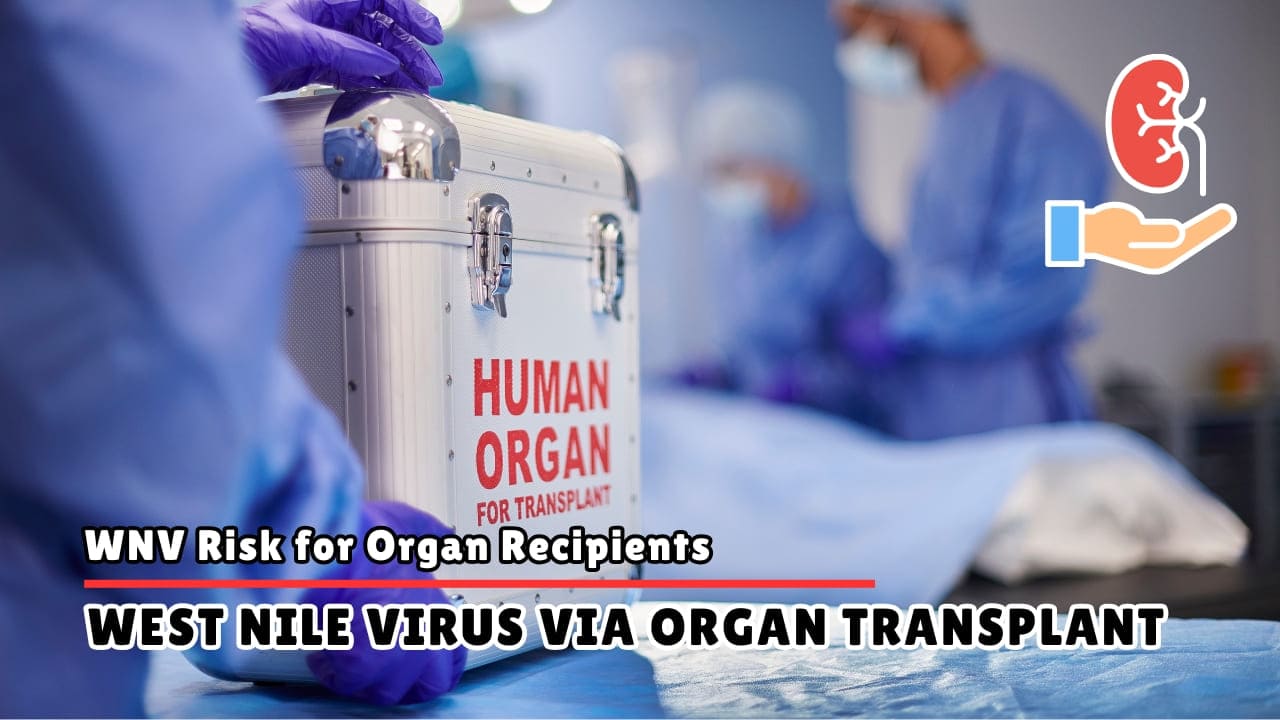
Can You Get West Nile Virus From an Organ Transplant?
The short answer: Yes — but under a specific and narrow set of circumstances. It’s not a risk that applies to every transplant. It’s not something most recipients need to lose sleep over after the fact. But it is real, it has happened, and understanding exactly how it happens matters.
1. Yes — Here’s How Transmission Actually Occurs
West Nile Virus lives in the blood. When a donor becomes infected, the virus enters the bloodstream — this is called viremia — and circulates throughout the body, including through the organs slated for donation.
If that donor is in the active viremic phase at the time of organ procurement, the transplanted organ carries live virus with it. The recipient’s body then receives both the organ and the infection simultaneously. Because the recipient is on immunosuppressive drugs from day one, their immune system cannot mount a meaningful defense. The virus takes hold.
That’s the mechanism. Not contact. Not proximity. The virus is literally transplanted along with the organ tissue.
It also isn’t limited to solid organs alone. WNV has been transmitted through blood transfusions — which is why NAT screening in blood banks was rolled out nationally in the early 2000s. The principle is the same: active viremia in the donor equals active risk to the recipient.
2. No — It’s Not a Risk in These Situations
This is important to understand, because fear around this topic can spiral quickly without context.
You cannot get WNV from a transplanted organ if:
- The donor was infected but had fully cleared the virus before donation — WNV viremia typically resolves within 1–2 weeks in immunocompetent individuals.
- The donor was never infected with WNV at all.
- The donor tested negative on nucleic acid testing (NAT) conducted prior to procurement.
- You received your transplant outside of active WNV transmission season in a low-incidence region and the donor had no known exposure history.
The organ itself — the kidney, liver, heart — doesn’t harbor WNV long-term the way some viruses embed into tissue. This isn’t like cytomegalovirus (CMV) or Epstein-Barr virus (EBV), which can remain latent in donor tissue for years. WNV is an acute infection. If the donor was past the viremic window, the risk essentially disappears.
The Window That Makes Screening So Difficult
Here’s the piece that complicates everything: a donor can be actively viremic — and fully contagious through their organs — while showing zero symptoms.
That’s not rare with WNV. The CDC estimates roughly 80% of infected individuals never develop any symptoms at all. So a donor who was bitten by an infected mosquito two weeks before a fatal accident may look completely healthy on every clinical measure. Without a specific NAT test targeting WNV RNA, nothing flags the infection.
That’s the gap. Not negligence. Not a broken system. Just the biology of a virus that hides well — and a donation timeline that moves fast.
What Is West Nile Virus? A Quick Primer for Organ Transplant Patients
West Nile Virus is a mosquito-borne flavivirus first detected in the United States in 1999. It spread quickly. By 2003, it had reached every contiguous state. Today, it circulates every mosquito season, primarily from late spring through early fall, with peak activity typically in August and September.
Transmission happens almost exclusively through the bite of an infected Culex mosquito. But there’s a less-discussed route that hits the transplant community directly: donor-derived transmission. Organs, blood transfusions, and tissue from an infected donor can pass WNV directly to a recipient — bypassing mosquitoes entirely.
That route is rare. But for transplant recipients who already have suppressed immune function, even a low-probability event carries outsized consequences.
Why Organ Transplant Recipients Face Elevated West Nile Virus Risk
The Immunosuppression Factor
Every organ transplant recipient takes immunosuppressant medications — for life. These drugs prevent the body from rejecting the new organ, but they do so by deliberately weakening the immune system’s normal defenses.
That tradeoff is intentional. But it means the immune system’s ability to fight off infections — including viruses like WNV — is fundamentally compromised. What the immune system of a healthy adult clears quietly and efficiently can become a serious neurological crisis in a transplant recipient.
Neuroinvasive Disease: The Worst-Case Scenario
In the general population, roughly 1 in 5 people infected with WNV develop mild symptoms — fever, body aches, headache. Less than 1% develop neuroinvasive disease. In transplant recipients, that proportion shifts dramatically.
Neuroinvasive disease includes West Nile encephalitis, West Nile meningitis, and acute flaccid paralysis. These are not mild complications. Encephalitis caused by WNV can result in permanent neurological damage, prolonged hospitalization, and in some cases, death. Research published in clinical literature has consistently identified solid organ transplant recipients as a high-risk group for these outcomes.
“Immunocompromised individuals, including organ transplant recipients, are at significantly higher risk for severe illness from West Nile Virus, including neuroinvasive disease.” — CDC, Division of Vector-Borne Diseases
Donor-Derived West Nile Virus Transmission: How It Happens and Why It Matters
Most people think of WNV as something you catch outdoors in summer. That framing misses an important piece of the picture for transplant patients.
A donor who was recently infected with WNV — potentially in an asymptomatic phase — can transmit the virus through donated organs, blood, and in some documented cases, through breast milk or laboratory exposure. The Organ Procurement and Transplantation Network (OPTN) and blood banking authorities have worked to establish protocols to reduce this risk. But it remains a real concern.
Documented Clusters of Donor-Derived WNV
The first confirmed donor-derived WNV cluster was documented in 2002. Multiple transplant recipients received organs from a single viremic donor and subsequently developed WNV illness — some with severe neurological outcomes. Since then, additional cases have been reported and studied, driving revisions in screening practice.
The CDC and OPTN have since worked with transplant centers and organ procurement organizations (OPOs) to refine how donors are screened during peak WNV transmission seasons.
West Nile Virus Screening Protocols in Organ Donation: Current Standards
Screening for WNV in organ donors isn’t simple. The virus presents a particular challenge: infected donors are often asymptomatic, and standard serological (antibody) tests may not detect an active infection during the early viremic window.
1. Nucleic Acid Testing (NAT): The Gold Standard
Nucleic acid testing (NAT) detects WNV RNA directly, making it far more effective than antibody tests for identifying active infections. Blood donation organizations in the US — operating under FDA oversight — implemented NAT for WNV in donated blood starting in the early 2000s.
For organ donation, the approach is more complex. Organ donors are often deceased individuals donated on short timelines, leaving limited windows for extensive screening. Some OPOs conduct WNV NAT testing — especially during peak season — but practices can vary.
2. OPTN Policy and Seasonal Screening Guidance
The OPTN has issued guidance encouraging OPOs to test potential organ donors for WNV using NAT, particularly during summer and fall months in geographic areas with active WNV transmission. Key points of the framework include:
- Increased vigilance in high-incidence states (historically: Texas, California, Arizona, Nebraska, Illinois, South Dakota)
- Coordination between transplant centers and OPOs when WNV testing results are pending or unavailable
- Monitoring recipient symptoms post-transplant in cases where donor WNV status was undetermined
- Clinician reporting of suspected donor-derived WNV infections to state health departments and the CDC
If you’re a transplant recipient — or a family member helping coordinate — it is entirely reasonable to ask your transplant team what screening was conducted for WNV on your donor, especially if your transplant occurred during summer or fall months.
Recognizing West Nile Virus Symptoms in Immunocompromised Patients
One of the trickiest aspects of WNV in transplant patients is that symptoms can mimic other post-transplant complications: drug side effects, organ rejection episodes, other opportunistic infections. The overlap can cause delays in diagnosis.
Warning Signs That Warrant Immediate Medical Attention
Transplant recipients should contact their transplant center or seek emergency care promptly if they experience:
- High fever (especially 103°F / 39.4°C or higher)
- Severe headache that does not resolve
- Stiff neck or signs of meningeal irritation
- Sudden confusion, disorientation, or altered mental status
- Muscle weakness, especially asymmetric limb weakness
- Tremors or seizures
Don’t wait for symptoms to “settle.” Immunosuppressed patients can deteriorate faster than immunocompetent individuals. Early intervention is everything.
West Nile Virus Prevention Strategies for Transplant Patients
There is no licensed WNV vaccine for humans as of 2025. Prevention, for transplant recipients, comes down to mosquito avoidance and environmental awareness — and it matters more for this group than for almost any other.
Expert-Backed Mosquito Prevention Tips for Immunocompromised Individuals
- Use EPA-registered insect repellents containing DEET (20–30%), picaridin, or IR3535 on exposed skin. The CDC and Environmental Protection Agency both endorse these as safe for routine use.
- Wear long-sleeved shirts and long pants during peak mosquito activity hours — dusk to dawn, particularly in July through September.
- Eliminate standing water around your home: flower pots, bird baths, clogged gutters, unused containers. Culex mosquitoes breed in stagnant water.
- Use window screens and air conditioning when possible. Keeping mosquitoes out of your living space is a straightforward, underrated intervention.
- Monitor your local and state health department advisories during WNV season. Many states — including Texas DSHS, California CDPH, and New York State DOH — publish weekly WNV activity updates.
It sounds basic. Some of it is. But transplant recipients who live in high-incidence regions sometimes underestimate personal mosquito exposure because they’re accustomed to thinking about hospital-based infection risks. The backyard matters too.
What Your Transplant Center Should Be Doing — And Questions Worth Asking
Transplant medicine has come a long way in its approach to donor-derived infections. But systems aren’t perfect, and gaps still exist — especially in smaller centers or regions that see less WNV activity.
Questions Transplant Recipients Can Ask Their Care Team
- Was our donor screened for West Nile Virus using NAT? What were the results, or is the result still pending?
- What is this transplant center’s protocol for WNV monitoring post-transplant during peak season?
- If I develop fever and neurological symptoms, what is the fastest pathway to WNV testing for me as an immunocompromised patient?
- Are there any current WNV alerts from state health officials I should be aware of in my region?
Asking these questions is not alarmist. It is informed. Your transplant team should welcome them.
The Role of State Health Departments in WNV Surveillance and Reporting
West Nile Virus surveillance is a collaborative effort. At the federal level, the CDC’s ArboNET system tracks WNV cases, deaths, and geographic spread in near real-time. At the state level, departments like the Texas Department of State Health Services (DSHS), California Department of Public Health (CDPH), and New York State Department of Health are among those publishing regular surveillance updates.
Transplant recipients living in or traveling to high-burden states should make it a seasonal habit to check their state health department’s WNV activity map before making decisions about outdoor activities. This information is publicly available and updated regularly.
When a case of suspected donor-derived WNV infection is identified, clinicians are expected to report it through both transplant regulatory channels (OPTN) and public health channels (state health departments → CDC). This reporting loop is how new data shapes better policy.
Treatment for WNV in Organ Transplant Recipients: Honest Expectations
This is the part that’s hard to read. There is currently no specific antiviral treatment approved for West Nile Virus. No drug that clears it.
Care is supportive: management of symptoms, hospitalization when needed, treatment of complications like seizures or respiratory failure. For transplant recipients who develop encephalitis, care often involves intensive care unit (ICU) management.
Some research has explored intravenous immunoglobulin (IVIG) containing WNV antibodies, and certain antiviral agents, but clinical evidence supporting routine use remains limited. Several academic transplant centers actively follow clinical trial developments in this space.
The practical implication: prevention and early detection matter more here than in most clinical scenarios. The gap between “we caught this early” and “we caught this late” in a neuroinvasive WNV case can be the difference between recovery and permanent disability.
Living With This Risk: A Note to Organ Transplant Recipients and Caregivers
Transplant recipients already carry a heavy cognitive load. Medication regimens, rejection monitoring, infection vigilance — it is a lot. Adding seasonal vector-borne virus awareness to that list isn’t meant to increase anxiety. It’s meant to give you actionable information.
The goal isn’t fear. The goal is informed living.
Mosquito repellent in July. Checking your state health dashboard in August. Knowing the symptoms. Knowing when to call your transplant coordinator versus when to go straight to the emergency room. These are small things with potentially large consequences for your specific situation.
Caregivers — partners, adult children, parents of pediatric transplant recipients — you play a role too. You can be the person who notices a confusion episode or an unusual fever first. That time matters.
Conclusion: West Nile Virus and Organ Transplant Recipients Require a Proactive Approach
West Nile Virus and organ transplant recipients are a combination that demands more attention — from patients, clinicians, and public health systems alike. The risks are real, specific, and in many cases preventable with the right information and protocols in place.
Donor screening through NAT testing, robust post-transplant surveillance, transparent communication between transplant teams and patients, and consistent personal mosquito prevention form the core defense strategy. None of these are revolutionary. All of them matter.
If you or someone you love is a transplant recipient, talk to your care team about WNV this summer. Ask the questions listed in this article. Push for clarity on donor screening practices. And follow your state health department’s WNV activity reports throughout mosquito season.
The mosquito season comes every year. The question is whether you’re prepared.
Share Your Experience or Questions
- Are you a transplant recipient navigating mosquito season?
- A clinician who has seen donor-derived WNV cases firsthand?
- A caregiver trying to keep someone you love safe?
We’d genuinely like to hear your perspective.
Drop a comment below — your experience might be exactly what another reader needs to read today.
Editorial Team & Contributors

Raashid Ansari, Founder, Content Researcher & Author - MosquiTalk
Not an entomologist — just a genuinely curious writer who started researching mosquitoes and couldn't stop. What began as casual reading about repellents and bite prevention gradually turned into a deep ongoing dive into vector biology, disease epidemiology, animal health impacts, and the real science behind mosquito control. Everything published here is carefully edited, and written with one purpose: giving readers accurate, accessible information they can actually trust and use to protect themselves, their families, and their pets, birds and cattle.
Active across social platforms, regularly publishes, and genuinely invested in spreading mosquito awareness where it matters most. Because informed readers make better decisions — and better decisions save lives.