

What Are the First Signs of West Nile Virus?
The first signs of West Nile Virus typically appear 2 to 14 days after a mosquito bite and include sudden fever, headache, fatigue, and body aches — symptoms so easily mistaken for the flu that most people dismiss them entirely. And that’s exactly what makes this virus dangerous.
Here’s the part that should concern you: about 1 in 5 infected people develop symptoms, and roughly 1 in 150 develop a severe, potentially life-threatening neurological illness. You can’t tell which category you’ll fall into just by how you feel on day one.
This guide covers everything — early signs of West Nile Virus in adults, children, toddlers, babies, horses, dogs, and birds. We also get into what the rash looks like, when symptoms become emergencies, and what to do right now if you think you’ve been exposed.
Stick with this. It could save a life — possibly yours.
How West Nile Virus Spreads: The Mosquito Connection
West Nile Virus (WNV) is a mosquito-borne flavivirus, primarily transmitted through the bite of an infected Culex mosquito. The virus cycles between birds — which are the reservoir hosts — and mosquitoes. Humans, horses, and dogs are accidental “dead-end” hosts.
You can’t catch it from another person. You can’t get it from touching an infected bird or dog. But one bite from the wrong mosquito during peak season — late summer through early fall — is all it takes.
Rare transmission routes include blood transfusions, organ transplants, diabetic patients, breastfeeding, and mother-to-child during pregnancy — but the mosquito is responsible for the overwhelming majority of cases.
The First Signs of West Nile Virus: What to Watch For
The CDC classifies West Nile infection into three categories. Understanding where you land matters — a lot.
Table 1: West Nile Virus Infection Severity — At a Glance
| Category | % of Cases | Key Symptoms | Severity | Typical Outcome |
| Asymptomatic | ~80% | None | None | Full recovery, no treatment |
| West Nile Fever | ~20% | Fever, headache, fatigue, rash, body aches, nausea | Mild–Moderate | Recovery in 3–6 days; fatigue may persist weeks |
| Neuroinvasive Disease | <1% | Encephalitis, meningitis, acute flaccid paralysis, seizures, confusion | Severe | 10% mortality; long-term neurological damage possible |
1. Asymptomatic Infection (About 80% of Cases)
Most infected people feel absolutely nothing. No fever, no rash, no warning at all. The immune system clears the virus quietly. This is common — and also why so many outbreaks go unnoticed until blood donation screening picks up antibodies.
2. West Nile Fever (Mild to Moderate — About 20% of Cases)
This is where symptoms actually show up. They usually begin within 3 to 6 days post-bite and may include:
- Sudden-onset fever (usually 100.4°F–104°F)
- Severe, persistent headache
- Generalized fatigue and weakness
- Muscle aches and joint pain
- Nausea and vomiting (sometimes)
- Skin rash — often appearing on the trunk (chest, back, arms)
- Swollen lymph nodes
- Eye pain or sensitivity to light
These symptoms typically last 3 to 6 days in otherwise healthy adults. Fatigue can linger for weeks. Most recover fully, but the process is slow and often underestimated.
3. Neuroinvasive Disease (Severe — Less Than 1% of Cases)
This is the life-threatening form. The virus crosses the blood-brain barrier and causes encephalitis (brain inflammation), meningitis, or acute flaccid paralysis — a polio-like condition. The mortality rate for neuroinvasive disease is 10%. For people over 70, it’s significantly higher.
Red flag symptoms requiring immediate emergency care:
- High fever with confusion or altered mental state
- Severe neck stiffness (sign of meningitis)
- Sudden muscle weakness or paralysis in limbs
- Tremors, seizures, or loss of coordination
- Vision problems
- Loss of consciousness
If anyone — adult, child, or elderly person — develops these symptoms after a mosquito bite, call 911 or get to an emergency room immediately. Do not wait.
What Are Three Signs of West Nile Virus? (The Quick Answer)
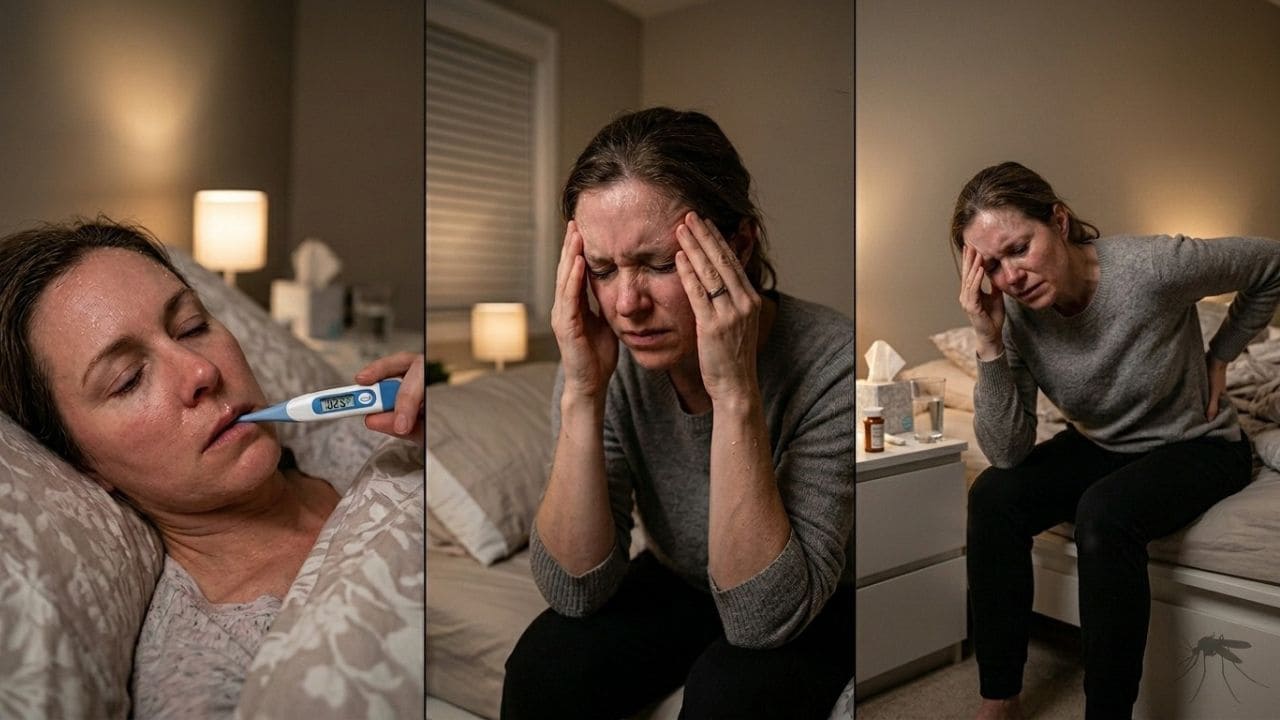
Image Credit: Illustration by Author
People search this question a lot, so here’s the direct clinical answer. The three most consistent early signs of West Nile Virus are:
- Sudden high fever — appears within 2–14 days of an infected mosquito bite
- Severe headache — often behind the eyes, made worse by light
- Extreme fatigue and body aches — disproportionate to what a typical cold feels like
Not everyone gets all three. Some people only get one or two. And the tricky part — these overlap heavily with flu, dengue, and even COVID. Context matters: recent mosquito exposure in a WNV-active area in late summer significantly raises suspicion.
West Nile Virus vs. Flu vs. Dengue vs. COVID: How to Tell Them Apart
This is one of the most searched questions in WNV awareness — and for good reason. The symptoms overlap so much that even doctors get the initial diagnosis wrong. Use this comparison table as your first triage checkpoint.
Table 2: Symptom Comparison — West Nile Virus vs. Common Illnesses
| Symptom | West Nile Virus | Influenza (Flu) | Dengue Fever | COVID-19 |
| Sudden High Fever | ✓ Yes | ✓ Yes | ✓ Yes | ✓ Yes |
| Severe Headache | ✓ Yes | ✓ Yes | ✓ Yes | Sometimes |
| Body / Muscle Aches | ✓ Yes | ✓ Yes | ✓ Yes | ✓ Yes |
| Skin Rash | Sometimes | Rare | ✓ Yes | Rare |
| Respiratory Symptoms | ✗ No | ✓ Yes | ✗ No | ✓ Yes |
| Neurological Signs | Possible | Rare | Rare | Sometimes |
| Retro-orbital Eye Pain | Sometimes | ✗ No | ✓ Yes | ✗ No |
| Swollen Lymph Nodes | ✓ Yes | Rare | Sometimes | Rare |
| Person-to-Person Spread | ✗ No | ✓ Yes | ✗ No | ✓ Yes |
| Mosquito Transmission | ✓ Yes | ✗ No | ✓ Yes | ✗ No |
Key differentiator: WNV does NOT spread person-to-person and lacks respiratory symptoms. Mosquito exposure in summer + severe headache + rash = suspect WNV.
West Nile Virus Rash: What Does It Actually Look Like?
The early stage West Nile Virus rash is something a lot of people overlook — mainly because it can be subtle and doesn’t always appear. When it does show up, here’s what to expect:
- Maculopapular rash — flat or slightly raised, reddish-pink spots
- Location: most commonly on the chest, stomach, back, and upper arms
- Timing: appears 1–5 days after fever begins
- Usually non-itchy, though some patients report mild itching
- Fades within a few days without treatment
- Not blistering, not spreading rapidly, not associated with pain at the site
Signs of West Nile Virus in Adults: Specific Patterns to Know
In otherwise healthy adults under 50, West Nile Virus typically presents as a flu-like illness. The fever, headache, aches — they hit hard and fast, then plateau. Adults tend to recover within a week or two.
Adults over 50 — and especially over 70 — are at significantly higher risk for neuroinvasive disease. The immune system’s response to WNV weakens with age, and the virus can more easily invade the nervous system. A 75-year-old with WNV fever should be monitored very closely.
Immunocompromised adults — including those on chemotherapy, HIV-positive individuals, or organ transplant recipients — are also at much higher risk of severe disease.
Signs of West Nile Virus in Kids: Children, Toddlers, and Babies
1. Signs of West Nile Virus in Children (Ages 2–12)
Children generally tolerate West Nile Virus better than older adults. Most infected children are asymptomatic. When symptoms occur, they tend to mirror adult West Nile Fever — fever, headache, fatigue — but are often milder.
Watch for:
- Unexplained fever following outdoor or camping activity in summer
- Complaining of headache and eye pain
- Unusual tiredness and loss of appetite
- Nausea or stomach upset
- Pink or red rash on trunk
2. Signs of West Nile Virus in Toddlers (Ages 1–3)
Toddlers can’t verbalize what they’re feeling — which makes WNV particularly tricky to spot. Parents should watch for:
- High fever seemingly out of nowhere (especially after time outdoors)
- Unusual irritability or inconsolable crying
- Refusal to eat or drink
- Lethargic, limp, or hard to wake — this is a red flag
- Rash appearing on belly or back
If a toddler develops high fever with stiff neck, seizures, or extreme limpness — go to the ER. Don’t wait to see if it passes.
3. What Are the Signs of West Nile Virus in Babies?
Infants under 12 months are a special concern. Their immune and neurological systems are still developing. WNV in babies may present as:
- Unexplained fever (especially in late summer, in mosquito-prone areas)
- Bulging fontanelle (soft spot on top of head) — a potential sign of brain pressure
- Seizures in a previously healthy infant
- Floppiness, poor muscle tone
- Feeding refusal, high-pitched cry
Any fever in a newborn under 3 months requires immediate medical evaluation — regardless of suspected cause. Don’t manage it at home.
West Nile Virus in Animals: Horses, Dogs, and Birds
1. Signs of West Nile Virus in Horses
Horses are highly susceptible to West Nile Virus and can develop severe neurological disease. Equine WNV is reportable in most US states.
Key signs in horses:
- Stumbling, ataxia (loss of balance), or falling
- Weakness in hind limbs — horse appears “wobbly”
- Head pressing or tilt
- Difficulty swallowing
- Muscle tremors or fasciculations
- Inability to rise from the ground
- Fever and general malaise early in infection
About 33% of horses that develop neurological WNV die or are euthanized. Vaccination is available for horses — and strongly recommended by veterinarians in endemic areas. If your horse shows neurological symptoms, call your vet immediately.
2. Signs of West Nile Virus in Dogs
Good news for dog owners: dogs are generally less severely affected by WNV than horses or humans. Most infected dogs clear the virus with mild or no symptoms. However, immunocompromised dogs, very young puppies, or certain breeds may show:
- Lethargy and decreased appetite
- Mild fever
- Skin rash (rare)
- Mild neurological signs in rare cases — tremors, incoordination
There is currently no licensed WNV vaccine for dogs. Reducing outdoor mosquito exposure is the best protection. If your dog shows sudden neurological symptoms in summer, WNV should be on your vet’s differential list.
3. Signs of West Nile Virus in Birds
Birds — especially corvids (crows, ravens, jays) and raptors — are extremely sensitive to WNV and serve as one of the most important surveillance markers for the virus. In birds, WNV infection often means death.
Signs in birds:
- Dead crow or blue jay found in the yard — one of the most reliable early indicators of WNV activity in the area
- Disoriented or unusually docile wild bird (not flying away from approach)
- Head tilt, circling, inability to stand
- Rapid death in otherwise healthy birds
If you find a dead crow or raptor, don’t touch it with bare hands. Report it to your local health department — it may be part of a WNV surveillance program. Finding dead birds in your neighborhood in late summer should raise your personal protective alert level.
Table 3: Quick-Reference — WNV Signs, Red Flags & Action by Host
| Who | Early Signs | Red Flags — Act Immediately | Recommended Action |
| Adults Under 50 | Fever, headache, fatigue, body aches, possible rash | Confusion, neck stiffness, limb weakness, seizures | See doctor if symptoms persist >3 days |
| Adults Over 50 | Same as above; often more severe | Any neurological symptom — higher neuroinvasive risk | Seek care promptly; ER if neuro signs |
| Children (2–12) | Mild fever, headache, fatigue, eye pain, rash on trunk | Stiff neck, seizures, sudden behavior change | Pediatrician if fever >3 days in summer |
| Toddlers (1–3) | High fever, irritability, refusal to eat, lethargy | Limpness, hard to wake, high-pitched cry | ER if limp or unresponsive |
| Babies (<12 mo) | Unexplained fever, bulging fontanelle, poor feeding | Seizures, extreme limpness, fever >100.4°F | ER immediately — no waiting |
| Horses | Mild fever, stumbling, hind limb weakness | Inability to rise, head pressing, muscle tremors | Call vet immediately; reportable disease |
| Dogs | Lethargy, reduced appetite, mild fever | Tremors, incoordination, neurological signs | Vet visit; reduce mosquito exposure |
| Birds (crows/jays) | Disorientation, inability to fly away | Dead bird found — strong WNV indicator | Don’t touch; report to local health dept. |
Red flag symptoms in any group warrant immediate escalation. When in doubt, always err on the side of caution.
How Is West Nile Virus Diagnosed? What to Expect at the Doctor
Diagnosis isn’t as simple as a rapid test. West Nile Virus is typically confirmed through blood serology (IgM antibody testing) or, in severe cases, cerebrospinal fluid (CSF) analysis via spinal tap.
What your doctor may order:
- WNV IgM antibody test (blood or CSF) — becomes positive around day 3–5 of illness
- Plaque reduction neutralization test (PRNT) for confirmation
- MRI or CT scan (if neurological symptoms)
- Lumbar puncture if meningitis or encephalitis is suspected
There is no specific antiviral treatment for WNV. Management is supportive — rest, hydration, pain relievers for fever and headache. Severe neurological cases may require hospitalization with IV fluids, respiratory support, and intensive monitoring.
Who Is Most at Risk for Severe West Nile Virus Infection?
Certain groups face a significantly higher risk:
- Adults over 50 — risk of neuroinvasive disease rises sharply with age
- Immunocompromised individuals — cancer patients, transplant recipients, HIV-positive people
- Organ transplant recipients — WNV can reactivate from donor organs
- Individuals with diabetes, kidney disease, or hypertension
- People without prior WNV exposure (no natural immunity)
- Those living near stagnant water or high mosquito density areas
West Nile Virus Prevention: Practical Steps That Actually Work
No vaccine exists for humans. Prevention is entirely about reducing mosquito exposure. Not all repellents are equal — here’s what the science says:
Table 4: Mosquito Repellent Comparison — Efficacy, Safety & Duration
| Active Ingredient | Protection Duration | Safe For | EPA Registered |
| DEET (20–30%) | 2–6 hours | Adults & children ≥2 months | ✓ Yes |
| Picaridin (20%) | Up to 8 hours | Adults & children ≥2 months | ✓ Yes |
| IR3535 (20%) | 2–4 hours | Adults & children ≥2 months | ✓ Yes |
| Oil of Lemon Eucalyptus | Up to 6 hours | Adults & children ≥3 years (NOT under 3) | ✓ Yes |
| Permethrin (clothing only) | Multiple washes | Apply to clothing/gear only — NOT skin | ✓ Yes |
| “Natural” sprays (citronella, etc.) | 15–30 min | Use only as supplemental — limited efficacy | ✗ Not EPA-reg. |
Always follow product label instructions. For children under 3, avoid Oil of Lemon Eucalyptus. Apply repellent after sunscreen.
Personal protection:
- Use EPA-registered repellents: DEET (20–30%), Picaridin, IR3535, or Oil of Lemon Eucalyptus
- Wear long sleeves and pants during peak mosquito hours (dusk to dawn)
- Install or repair window and door screens
- Use mosquito nets when sleeping outdoors
Reduce mosquito breeding at home:
- Dump standing water from pots, buckets, bird baths, gutters weekly
- Change pet water bowls daily
- Treat ornamental ponds with Bacillus thuringiensis israelensis (BTI) — safe for wildlife
- Keep swimming pools properly chlorinated and circulating
When Should You See a Doctor for West Nile Virus Symptoms?
Go to urgent care or your doctor if:
- You have fever, headache, and significant fatigue lasting more than 3 days, especially after outdoor activity in summer
- You live in or recently visited a WNV-active region
- Your symptoms are getting worse, not better, after 5 days
Call 911 or go to the ER immediately if:
- Confusion, altered consciousness, or unusual behavior
- Stiff neck with fever (meningitis sign)
- New weakness or paralysis in any limb
- Seizures
- Difficulty speaking or swallowing
- Any child under 12 months with fever over 100.4°F
What Medical Authorities Say: Clinical References
This article draws on the following authoritative sources for clinical accuracy:
- CDC (Centers for Disease Control and Prevention): West Nile Virus — Symptoms, Diagnosis, Treatment
- WHO (World Health Organization): West Nile Virus Fact Sheet
- USDA Animal and Plant Health Inspection Service (APHIS): WNV in Horses
- Mayo Clinic: West Nile Virus — Symptoms and Causes
- The Lancet Infectious Diseases: West Nile Neuroinvasive Disease in Immunocompromised Patients
- New England Journal of Medicine: West Nile Virus Encephalitis
Final Takeaway: Don’t Let the Flu Label Fool You
The first signs of West Nile Virus — fever, headache, exhaustion — are dangerously generic. That’s the problem. People shrug them off, assume it’s the flu, and wait it out. For most, that’s fine. For some, it’s catastrophic.
Knowing the early signs of West Nile Virus means you can make better decisions faster. You won’t panic over every mosquito bite — but you will know when summer flu-like symptoms after outdoor time deserve more than a dose of Tylenol and a nap.
Whether you’re protecting yourself, your kids, your elderly parents, or your animals — now you know the red flags. Use that knowledge.
Have you or someone you know experienced symptoms that turned out to be — or were suspected to be — West Nile Virus? Share your experience in the comments below. Your story could help someone recognize the signs before it’s too late.
Editorial Team & Contributors

Raashid Ansari, Founder, Content Researcher & Author - MosquiTalk
Not an entomologist — just a genuinely curious writer who started researching mosquitoes and couldn't stop. What began as casual reading about repellents and bite prevention gradually turned into a deep ongoing dive into vector biology, disease epidemiology, animal health impacts, and the real science behind mosquito control. Everything published here is carefully edited, and written with one purpose: giving readers accurate, accessible information they can actually trust and use to protect themselves, their families, and their pets, birds and cattle.
Active across social platforms, regularly publishes, and genuinely invested in spreading mosquito awareness where it matters most. Because informed readers make better decisions — and better decisions save lives.