
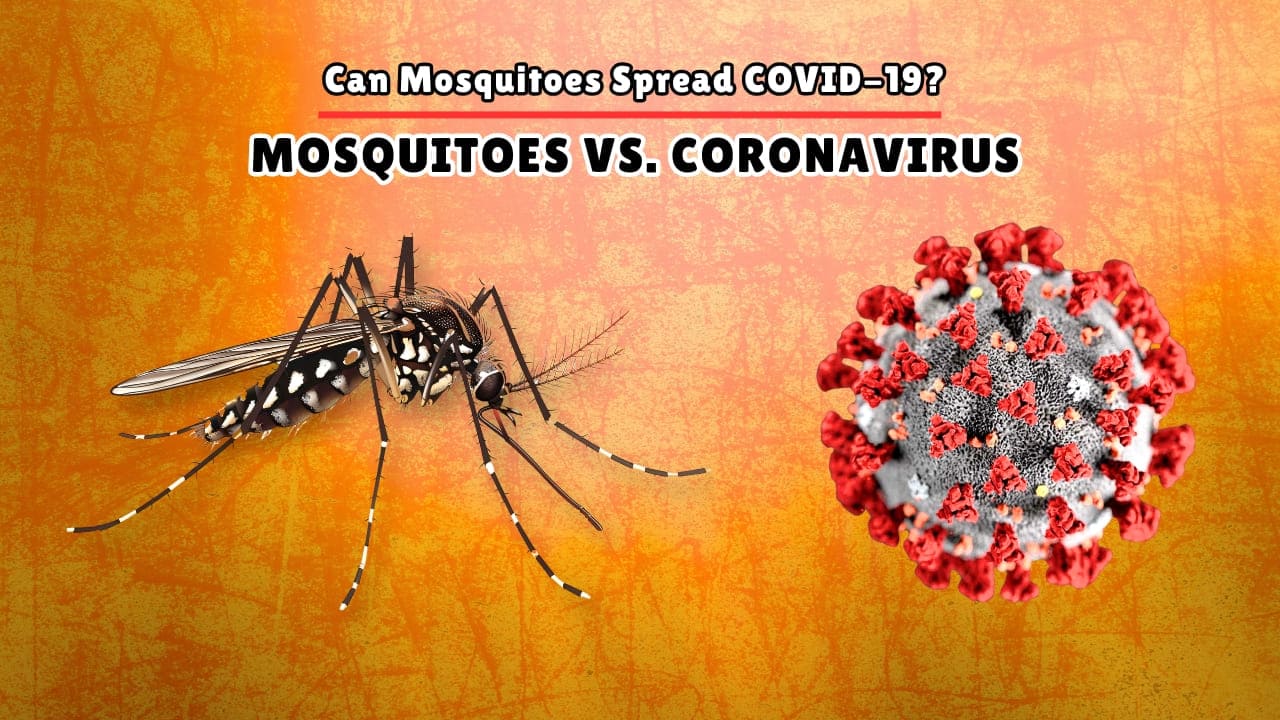
“No — mosquitoes cannot spread COVID-19. Coronavirus is a respiratory virus that doesn’t survive or replicate in a mosquito’s gut, which is a hard biological requirement for any insect-borne disease.”
Mosquitoes vs Coronavirus (Covid-19)
I’ve spent years studying vector biology and personally managing mosquito pressure around my own property — and this question still comes up constantly, especially whenever a new outbreak makes headlines. People see a mosquito, feel the itch, and worry. That anxiety makes sense. But the science here is clear and unambiguous: Can mosquitoes spread COVID-19 Coronavirus? The short answer is no. Mosquitoes do not transmit coronavirus. Not even close.
Can COVID-19 Be Transmitted Through Mosquito Bites? The Biology Says No.
To understand why mosquitoes cannot spread COVID-19, you first need to understand what it actually takes for a mosquito to transmit any pathogen at all. It’s not as simple as a flying needle carrying blood from person to person. Far from it.
What Mosquito Transmission Actually Requires
For a mosquito to serve as a biological vector — the technical term for an animal that spreads disease — the pathogen must complete what’s called the extrinsic incubation period (EIP) inside the mosquito’s body. That means:
- The pathogen must survive digestion in the mosquito’s midgut.
- It must replicate and amplify inside the mosquito’s tissues.
- It must migrate to and establish itself in the salivary glands.
- It must then be re-introduced into a new host through the mosquito’s saliva during a blood meal.
SARS-CoV-2, the virus that causes COVID-19, fails at step one. Completely. Studies published in journals including Scientific Reports (Huang et al., 2020) and research from Kansas State University confirmed that when SARS-CoV-2 was introduced into Aedes aegypti and Culex quinquefasciatus mosquitoes — two of the most medically important species on the planet — the virus was degraded in the mosquito’s gut and did not replicate. It could not survive, let alone reach salivary glands.
No replication. No migration. No transmission. The biology makes it impossible.
Key Scientific Finding
A 2020 study in Scientific Reports (Huang YJ et al.) experimentally fed SARS-CoV-2 to Aedes aegypti and Culex quinquefasciatus. In both species, the virus failed to replicate or disseminate. Researchers found no evidence of viral presence in salivary glands — making COVID-19 mosquito transmission biologically impossible.
Can Mosquitoes Transmit Coronavirus COVID-19?
No, mosquitoes don’t spread COVID-19. It just doesn’t work that way, biologically.
Coronavirus is a respiratory virus. It lives in the airways, not in mosquito guts. For something to be insect-borne, it has to survive and actually replicate inside the insect. That’s the hard rule.
Coronavirus? It doesn’t do that in mosquitoes. It gets digested, it dies, it goes nowhere.
So even if a mosquito bites someone who’s infected, it doesn’t become a carrier. The chain breaks right there.
It’s an understandable worry, though. People see “virus + bug” and think “mosquitoes.” But the science is clear on this one.
Why SARS-CoV-2 Is Different From Real Mosquito-Borne Viruses
There’s a reason certain diseases — dengue, malaria, Zika, West Nile — are called mosquito-borne illnesses. They evolved, over millions of years, to use mosquitoes as part of their life cycle. That’s a biological partnership that took an enormous amount of co-evolutionary time to develop.
SARS-CoV-2 is a respiratory coronavirus. Its primary transmission route is respiratory droplets and aerosols — not blood, not insects. It was never designed (evolutionarily speaking) to survive in an invertebrate host like Aedes aegypti. Its entry mechanism depends on the ACE2 receptor found in human and mammalian respiratory tissue. Mosquitoes simply don’t have this receptor in a form the virus can exploit.
Mosquito-Borne vs. Non-Mosquito-Borne Diseases: A Side-by-Side Comparison
| Disease | Mosquito-Transmitted? | Confirmed Mechanism |
|---|---|---|
| Malaria | Yes | Plasmodium parasite replicates in mosquito gut |
| Dengue Fever | Yes | Flavivirus replicates in salivary glands |
| Zika Virus | Yes | Flavivirus completes biological cycle in vector |
| West Nile Virus | Yes | Flavivirus with full vector competence |
| COVID-19 (SARS-CoV-2) | No | No replication in mosquito; virus destroyed in gut |
| HIV | No | Mechanical transmission impossible; virus degraded |
The contrast is stark. Viruses like dengue and West Nile have ACE2-independent entry mechanisms that allow them to infect mosquito midgut epithelial cells. SARS-CoV-2 does not. It’s simply the wrong virus in the wrong host.
What About Mechanical Transmission?
Sometimes people ask about mechanical transmission — like, could a mosquito act as a dirty needle and physically carry blood with viral particles from one person to another without biological amplification?
This is theoretically possible for some pathogens, but practically irrelevant for SARS-CoV-2. When a mosquito interrupts a blood meal and immediately moves to another host, the amount of blood transferred is miniscule — far below the infectious dose required for COVID-19. And mosquitoes do not typically behave this way; they prefer to complete a blood meal. The WHO, CDC, and European Centre for Disease Prevention and Control all concur: mechanical transmission is not a credible route for SARS-CoV-2.
Mosquitoes Do Not Transmit Coronavirus — What the WHO and CDC Confirm
This isn’t just lab research. It’s the established position of every major global health authority.
- The World Health Organization (WHO) explicitly states: To date, there is no information nor evidence to suggest that the new coronavirus could be transmitted by mosquitoes.
- The U.S. Centers for Disease Control and Prevention (CDC) confirms COVID-19 spreads mainly through respiratory droplets and close contact with infected individuals — not insect vectors.
- The European Centre for Disease Prevention and Control (ECDC) categorically excludes mosquito-borne transmission from all COVID-19 risk assessments.
This consensus isn’t surprising to anyone who works in vector biology. COVID-19’s epidemiological pattern tells the same story. The virus spread explosively in cold climates during winter — seasons and regions where mosquito activity is minimal or zero. Wuhan in January. Northern Italy in February. New York in March. If mosquitoes were a transmission route, you’d expect to see very different geographic and seasonal patterns.
How COVID-19 Actually Spreads — Know the Real Routes
Understanding how SARS-CoV-2 does spread is just as important as knowing how it doesn’t. Here are the confirmed transmission routes, according to peer-reviewed research and public health guidance:
- Respiratory aerosols and droplets — the dominant route, especially in enclosed, poorly ventilated spaces.
- Direct contact with an infected person — particularly relevant in households.
- Contact with contaminated surfaces (fomite transmission) — considered lower risk but documented.
- Close-range exposure during activities like singing, shouting, heavy breathing.
None of these involve insects. The virus doesn’t circulate in blood at levels sufficient for vector transmission, and it doesn’t survive in an invertebrate’s body. Protecting yourself from COVID-19 means masking, ventilating indoor spaces, vaccination, and avoiding crowded enclosed environments — not mosquito repellent.
Real Mosquito-Borne Diseases You Should Actually Worry About
Here’s where I do want to shift gears — because while mosquitoes can’t give you COVID-19, they absolutely can give you diseases that are serious, sometimes fatal, and genuinely transmitted through bites. Don’t let the myth distract you from the real risks.
Mosquitoes are the deadliest animals on earth, responsible for over 700,000 deaths per year through diseases like malaria, dengue, and lymphatic filariasis. COVID-19 is not among them. But malaria, dengue, Zika, West Nile virus, chikungunya — these are the diseases mosquitoes do carry, and they deserve your attention.
Protect Yourself from Mosquito-Borne Diseases
- Use EPA-registered repellents containing DEET, picaridin, or oil of lemon eucalyptus.
- Eliminate standing water on your property — even a bottle cap holds enough water for larvae.
- Wear long sleeves and pants during peak mosquito activity (dawn and dusk).
- Ensure window and door screens are intact and properly fitted.
- Consider permethrin treatment for outdoor clothing and gear.
I’ve treated my own yard with larvicide dunks in every standing water source, replaced screens, and run a perimeter spray schedule each spring. Not because of COVID — but because dengue and West Nile are real threats in many regions, and the prevention measures are simple and effective.
COVID-19 Symptoms vs. Mosquito-Borne Illness Symptoms
| COVID-19 Symptoms | Mosquito-Borne Illness Symptoms |
|---|---|
| Dry cough, loss of taste/smell | High fever with sudden onset |
| Respiratory distress | Severe joint/muscle pain (dengue) |
| Fever, fatigue | Skin rash (dengue, chikungunya) |
| Shortness of breath | Chills, sweating (malaria) |
| Spreads person-to-person via air | Spreads only via infected mosquito bite |
Why This Myth Spread — and Why It Matters to Correct It
The mosquito-COVID myth likely emerged from a very human pattern: we were scared, it was summer, mosquitoes were everywhere, and COVID was spreading fast. The dots got connected wrongly.
It also doesn’t help that COVID-19’s initial spread in tropical areas like Brazil, India, and Southeast Asia — regions with heavy mosquito activity — seemed, on the surface, to suggest a possible link. But those regions also have massive urban density and poor ventilation in residential structures. Correlation is not causation.
Misinformation about transmission routes is genuinely dangerous. If people believe mosquitoes spread COVID-19, they might focus energy on repellents and insect control while neglecting indoor air quality, masking, and vaccination — the interventions that actually work. Correcting this myth is a public health priority, not just a biology lesson.
Frequently Asked Questions (FAQs)
Q. Why can’t mosquitoes carry SARS-CoV-2?
For a mosquito to transmit a virus, it must be able to infect the mosquito and then replicate in its body. Studies show SARS-CoV-2 cannot infect or replicate in common mosquito species, so the chain breaks.
Q. What if a mosquito bites someone who is infected with coronavirus?
Even in that unlikely scenario, the virus gets digested and dies in the mosquito gut. It does not reach the salivary glands, so it cannot be passed on to the next person.
Q. Can mosquitoes transmit coronavirus or spread COVID-19?
No. Mosquitoes do not transmit coronavirus, and there is no evidence that they can spread COVID-19. SARS-CoV-2 is a respiratory virus that cannot infect or replicate inside mosquitoes, so the transmission chain never completes.
Q. Should I still worry about mosquito-borne diseases during the coronavirus pandemic?
Yes, but not because of COVID-19. Mosquitoes still transmit real threats like dengue, Zika, malaria, and West Nile, so bite prevention remains important even though they do not spread coronavirus.
Q. Can ticks or bedbugs spread coronavirus even if mosquitoes cannot?
No. There is no evidence that ticks or bedbugs transmit SARS-CoV-2 either. Like mosquitoes, they are not part of the coronavirus transmission pathway, which is driven by person-to-person respiratory spread.
Q. If mosquitoes can’t transmit coronavirus, why do people still ask about it?
Because mosquitoes do transmit other serious viruses, so it feels logical to worry. The confusion comes from mixing up vector-borne diseases like dengue and West Nile with a respiratory virus that spreads through the air.
Conclusion: Mosquitoes Do Not Transmit Coronavirus — Focus on What’s Real
Let’s be direct one final time. Mosquitoes do not transmit coronavirus. SARS-CoV-2 cannot survive, replicate, or disseminate in any mosquito species studied to date. Can COVID-19 be transmitted through mosquito bites? No — not biologically, not mechanically in any meaningful dose, and not epidemiologically in any observed pattern worldwide.
The WHO, CDC, ECDC, and multiple peer-reviewed experimental studies all arrive at the same conclusion. The virus spreads through the air, through respiratory droplets, between people in close proximity — not through insects.
Does that mean you should ignore mosquitoes? Absolutely not. They’re still the most dangerous animals alive, carrying real diseases that kill hundreds of thousands of people every year. Protect yourself from those. Drain standing water, use repellent, fix your screens.
But if your concern about mosquitoes is COVID-19 — rest easy. That’s one thing they cannot give you.
Editorial Team & Contributors

Raashid Ansari, Founder, Content Researcher & Author - MosquiTalk
Not an entomologist — just a genuinely curious writer who started researching mosquitoes and couldn't stop. What began as casual reading about repellents and bite prevention gradually turned into a deep ongoing dive into vector biology, disease epidemiology, animal health impacts, and the real science behind mosquito control. Everything published here is carefully edited, and written with one purpose: giving readers accurate, accessible information they can actually trust and use to protect themselves, their families, and their pets, birds and cattle.
Active across social platforms, regularly publishes, and genuinely invested in spreading mosquito awareness where it matters most. Because informed readers make better decisions — and better decisions save lives.