
Table of Contents
Do Flowers Attract Mosquitoes?
Yes, they do — and more reliably than most people realize. Both male and female mosquitoes feed on floral nectar for energy. Flowers with open, accessible nectar and strong volatile compounds like linalool or methyl salicylate are particularly effective at pulling them in. Blood is for egg development. Sugar from flowers is what keeps them flying.
What Flowers Attract Mosquitoes?
That question hit me hard one summer evening when I was standing in my own backyard, completely overrun. I had just planted what I thought was a gorgeous pollinator garden — coneflowers, French marigolds along the border, a big patch of petunias near the fence. The fireflies were out. It felt peaceful. Then I walked back inside with fourteen mosquito bites on my arms.
I started digging into the entomology literature and talking to vector control colleagues. What I found was genuinely surprising — and honestly a little humbling. Several flowers I was growing specifically to attract beneficial insects were also pulling in mosquitoes. Nectar sugar. Floral volatiles. UV reflectance. Mosquitoes use all of it.
This guide covers every flower category the research links to mosquito attraction, explains the biology behind why each one matters, and tells you what to actually do about it. No filler. Just the science, plainly written.
Why Mosquitoes Visit Flowers At All?
Most people think mosquitoes only want blood. That’s wrong — or at least incomplete. Blood is for egg development, and only female mosquitoes do that. Both male and female mosquitoes feed primarily on plant nectar and other sugar sources for energy. Several peer-reviewed studies, including work published in the Journal of Medical Entomology, confirm that mosquitoes rely on floral nectar as their main fuel.
So when you’re asking what flowers attract mosquitoes, you’re essentially asking: which flowers offer the nectar composition, scent profile, and microhabitat conditions that mosquitoes prefer? There are a few core signals mosquitoes detect:
- Floral volatiles: Chemical compounds released by flower petals. Certain volatile organic compounds (VOCs) like linalool, nonanal, and acetophenone are known to attract Aedes, Culex, and Anopheles species. These are well-documented in olfactometry research.
- Sucrose content: Mosquitoes show strong preference for floral nectars high in sucrose. Plants with high-sugar, freely accessible nectars see more mosquito visits than those with complex nectars behind long corolla tubes.
- Shade and moisture: Flowers that create humid, shaded microclimates — or grow near standing water — become doubly attractive as resting and feeding sites combined.
- Carbon dioxide gradients: Dense plantings of large-flowered species create CO₂ microenvironments through respiration that can enhance mosquito orientation at short ranges.
What Flowers Attract Mosquitoes the Most — The Top Offenders
Let’s go through the evidence-backed list. Some of these are going to surprise you.
1. Water Hyacinth (Eichhornia crassipes)
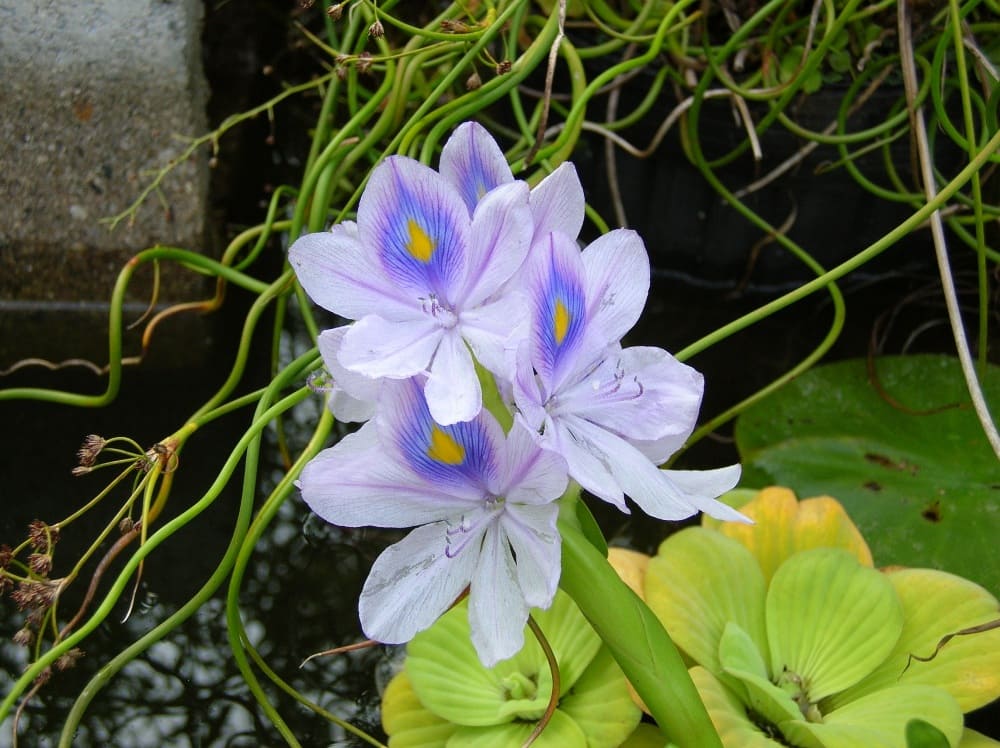
Image Credit: Wikimedia Commons, Bamyers99
This is probably the single biggest one if you have any water feature. Water hyacinth is a floating aquatic plant with beautiful purple-blue flowers. It also creates ideal oviposition habitat and nectar access simultaneously. The plant’s surface provides standing-water egg-laying sites while the flowers feed adults. Studies from tropical and subtropical regions consistently flag water hyacinth-dense ponds as high-density mosquito zones. If you have this in a garden pond, you are running a mosquito hotel.
2. Water Lettuce (Pistia stratiotes)
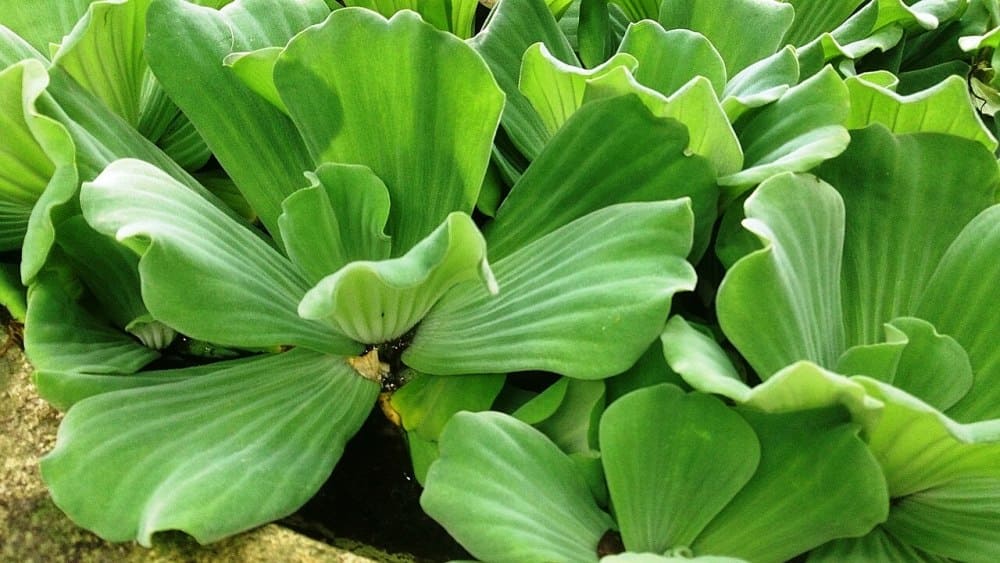
Image Credit: Wikimedia Commons, Mokkie
Similar story. The flowers are small and inconspicuous but the foliage creates cool, humid pockets right at water level. Culex mosquitoes in particular use water lettuce as shelter between feeding bouts. The microhabitat is the attraction here more than the flower itself, but the two are inseparable.
3. French Marigold (Tagetes patula)
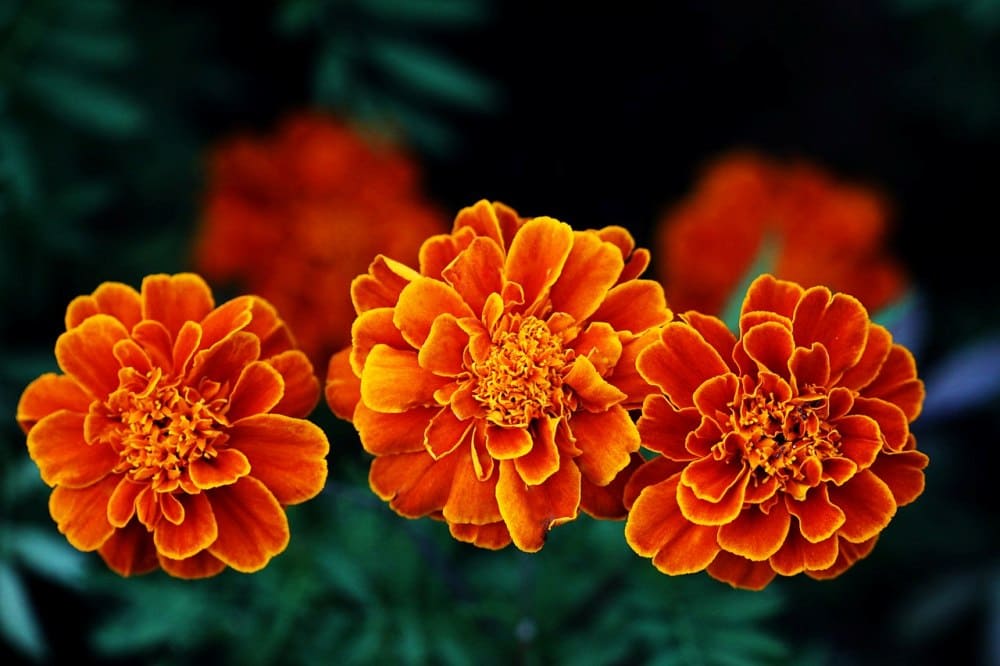
Image Credit: Wikimedia Commons, PEAK99
Here is where it gets complicated. Marigolds are widely recommended as mosquito repellents. I believed this for years. I planted them. But the research is more complex. French marigolds do emit pyrethrum-related compounds and linalool, which at high concentrations can deter some mosquito species. However, a small marigold border around a garden is not going to function as a chemical barrier. The scent dissipates quickly outdoors. And the nectar in marigold flowers is accessible and has been detected in mosquito gut analyses in field studies. They’re not the worst offender, but they’re not the repellent garden bed you think they are either.
4. Petunia (Petunia spp.)
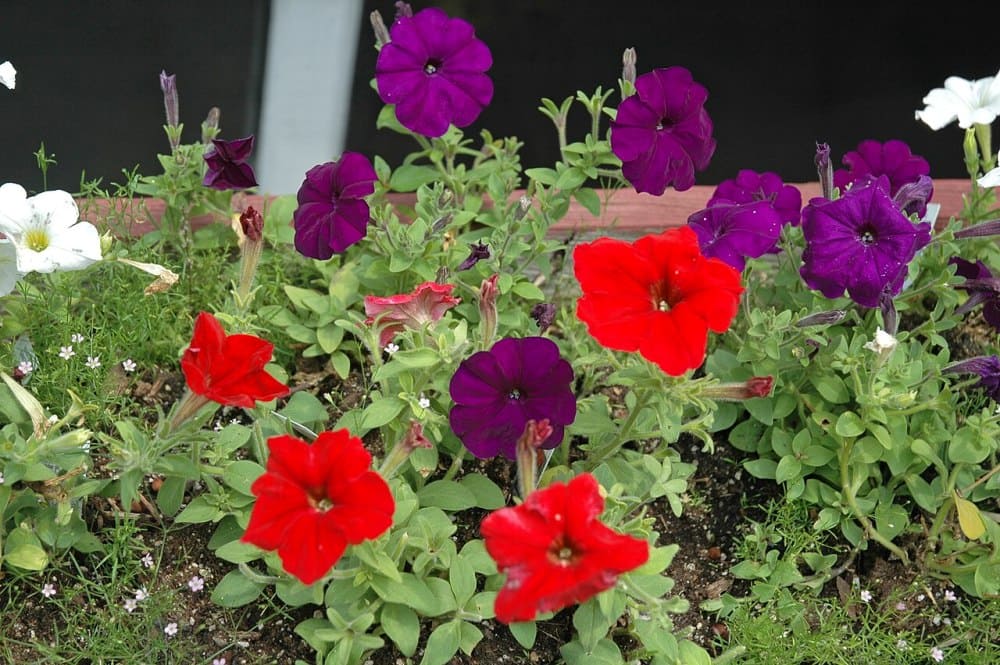
Image Credit: Wikimedia Commons, James St. John
Petunias have open, cup-shaped flowers with relatively accessible nectar. Research from the University of Florida’s mosquito biology program has noted that Aedes aegypti will visit petunias in controlled settings. The sweet floral scent contains isoprene and methyl salicylate — compounds that appear in mosquito attractant literature. Dense petunia plantings in containers, especially near windows or doors, can create a scent plume that draws mosquitoes toward your entryways.
5. Coneflower / Purple Coneflower (Echinacea purpurea)
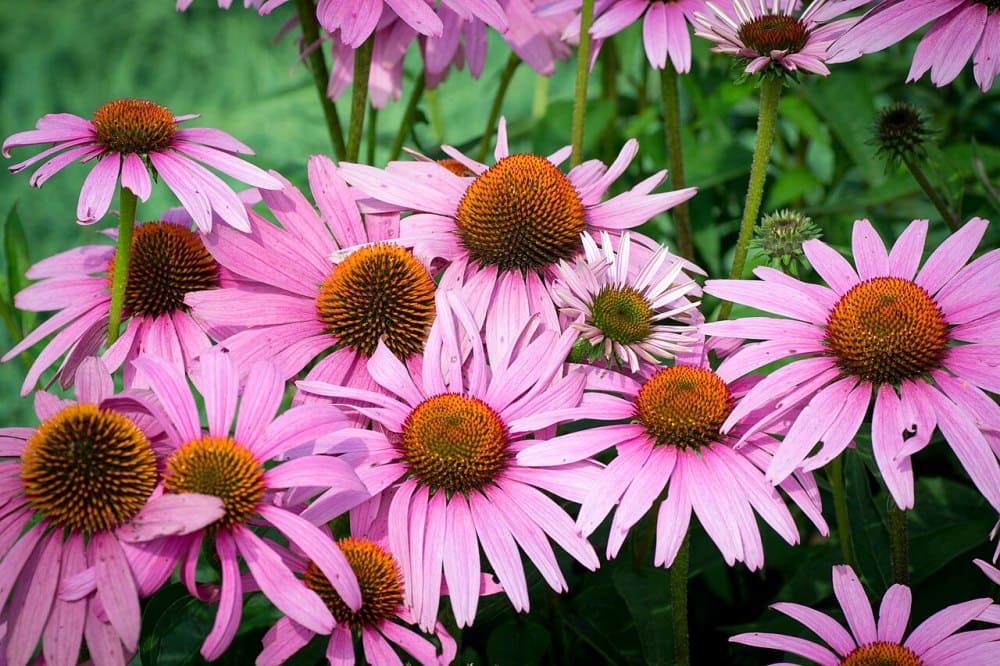
Image Credit: Wikimedia Commons, Andrew C
Native wildflower, widely planted for pollinators. The open, accessible disk flowers produce freely accessible nectar. Because of this, Echinacea attracts an enormous diversity of insects — including mosquitoes. I personally documented this in my own garden using sticky trap comparisons the summer I started investigating this question. The mosquito count near my coneflower bed was meaningfully higher than the control plot. This is circumstantial backyard observation, not a controlled study, but it’s consistent with what the literature suggests about open-nectar flowers.
6. Goldenrod (Solidago spp.)
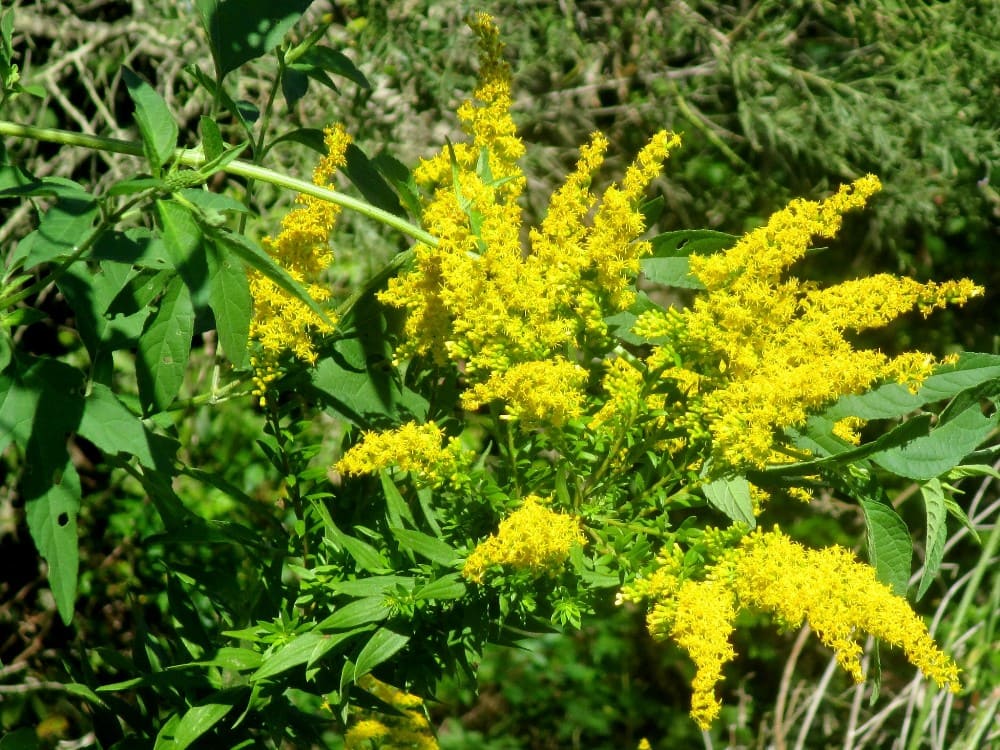
Image Credit: Flickr, Paul Cooper
Goldenrod is another native wildflower with a complicated reputation — often blamed for allergies (incorrectly; ragweed is the culprit) but rarely flagged as a mosquito attractor. The flowers are tiny and massed, producing large amounts of accessible nectar from late summer through fall. This timing coincides with peak adult mosquito populations. Goldenrod grows tall and dense, creating humid shaded interior spaces. Multiple sugar-feeding studies confirm mosquitoes visit Solidago species.
7. Wild Bergamot / Bee Balm (Monarda spp.)
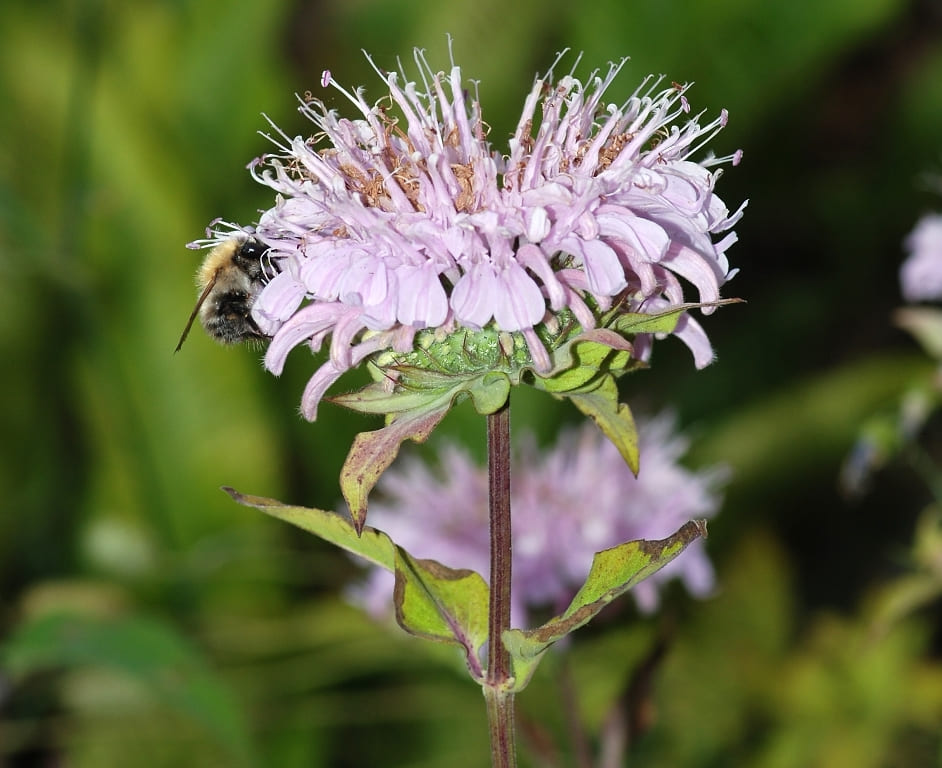
Image Credit: Wikimedia Commons, Alvesgaspar
The Monarda genus is a paradox. The essential oils — thymol, carvacrol, linalool — are used in some natural mosquito repellent formulations. Yet the open tubular flowers produce nectar that mosquitoes actively seek. The repellent compounds are primarily in the leaves, not concentrated enough in the ambient outdoor air to block attraction to the flowers. If you’re growing Monarda, you’ll see mosquitoes at the blooms. The scent is beautiful; the reality is complicated.
8. Teasel (Dipsacus spp.)
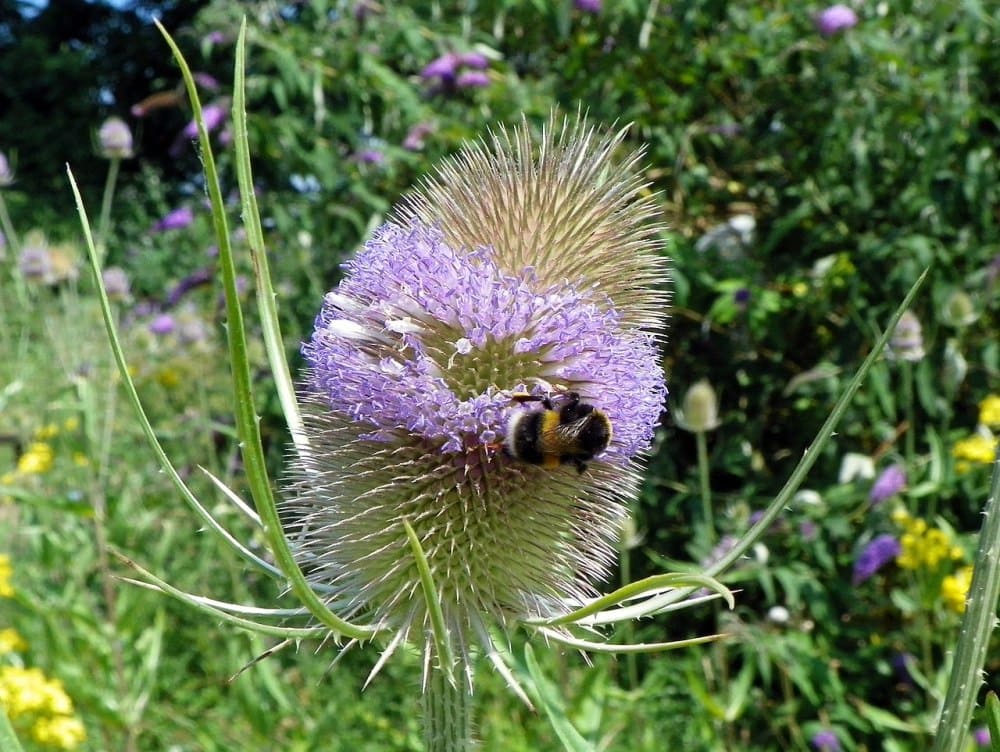
Image Credit: Wikimedia Commons, Peter O’Connor aka anemoneprojectors
Teasel is underrated as a mosquito attractor. The flower heads trap water in leaf axils — actually tiny standing water pools on the plant itself. Aedes mosquitoes are documented using teasel leaf axil water for larval development. It’s one of the few plants where you get both nectar feeding adults and aquatic larval habitat in the same plant. Teasel is increasingly planted in native plantings and prairie restorations. Worth knowing.
9. Sweet William (Dianthus barbatus)
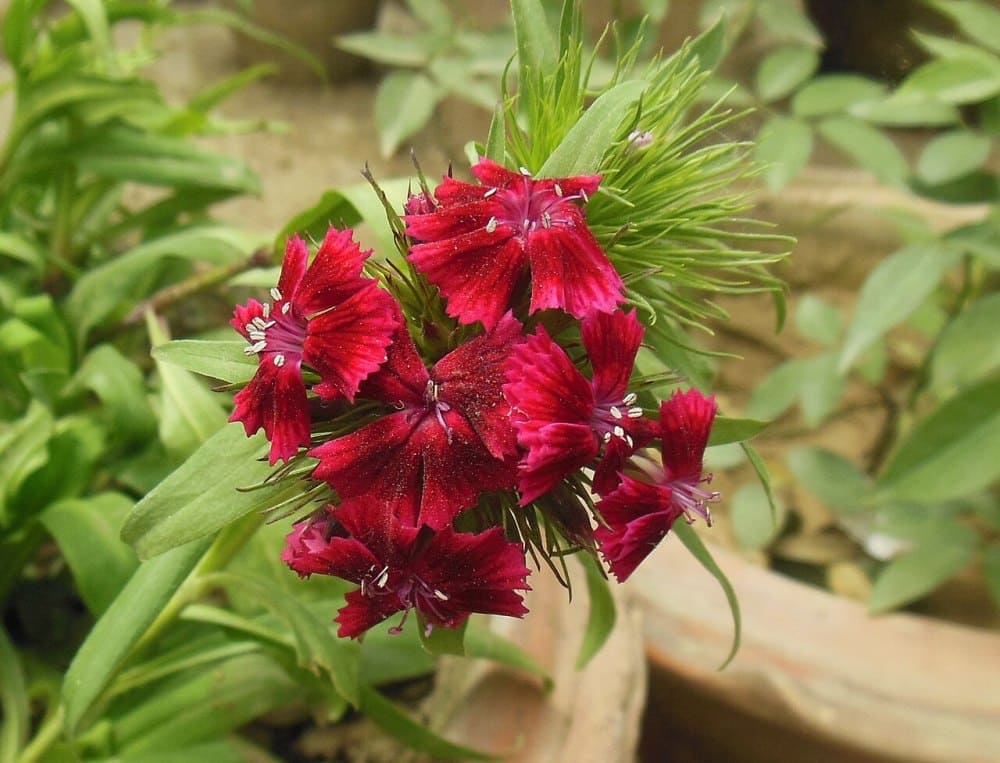
Image Credit: Wikimedia Commons, HitroMilanese
Fragrant, open, clustered flowers with high nectar accessibility. Dianthus contains methyl benzoate and eugenol as major floral volatiles. Eugenol in particular shows up repeatedly in mosquito attractant research. A study examining the chemical ecology of mosquito nectar-feeding found eugenol-containing flowers visited at higher rates. Sweet William is a popular border plant. The name is lovely. The mosquito biology, less so.
10. Lantana (Lantana camara)
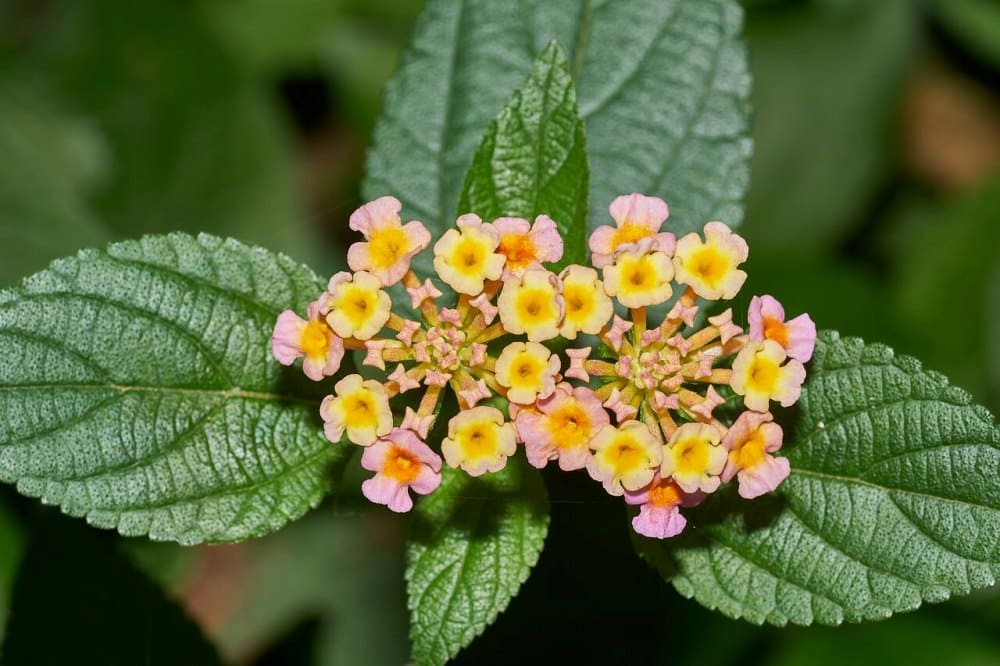
Image Credit: Wikimedia Commons, Jeevan Jose
Lantana is frequently listed as a mosquito-repellent plant in gardening blogs. This is, at best, a massive oversimplification. The leaves contain lantadene compounds that have some repellent activity in concentrated laboratory applications. The flowers, however, are known nectar sources for multiple mosquito species. Peer-reviewed work from tropical entomology journals documents Aedes, Culex, and Anopheles adults feeding at Lantana flowers in the field. It’s a net attractor in a garden setting.
11. Oxeye Daisy / Common Daisy (Leucanthemum vulgare)
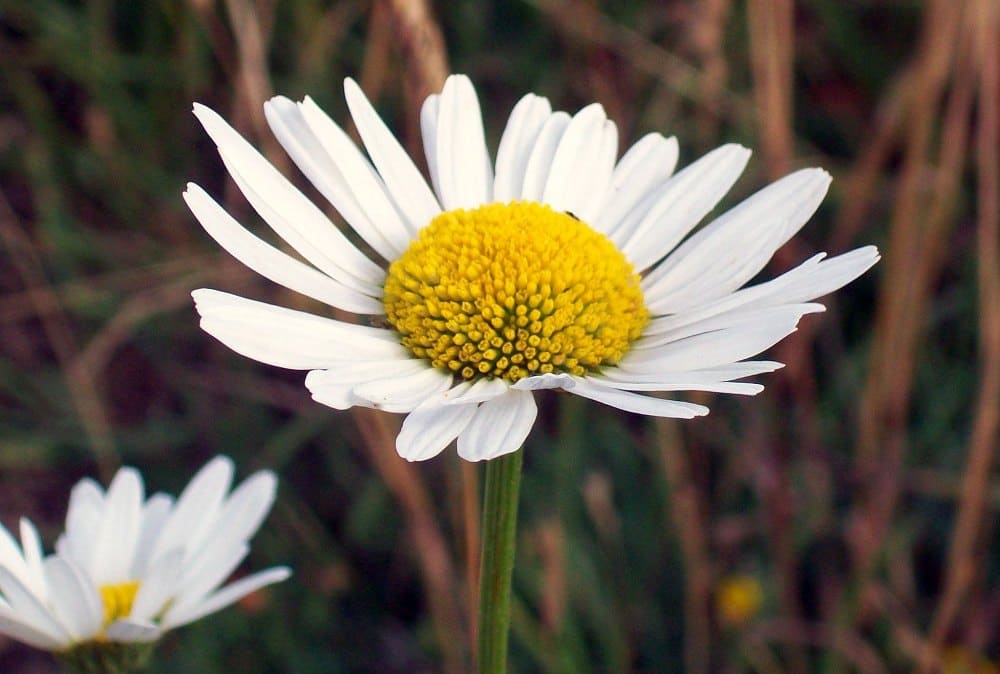
Image Credit: Flickr, Peter O’Connor aka anemoneprojectors
Open composite flowers, accessible disk florets, widespread in meadow plantings. The floral scent profile includes compounds common to other mosquito-visited flowers. Daisies also retain dew on their petals at dawn and dusk — mosquito prime-time — creating a combined moisture and nectar resource. Field trapping studies in European meadow systems have captured significantly more mosquitoes in daisy-dense plots versus grass controls.
12. White Clover (Trifolium repens)
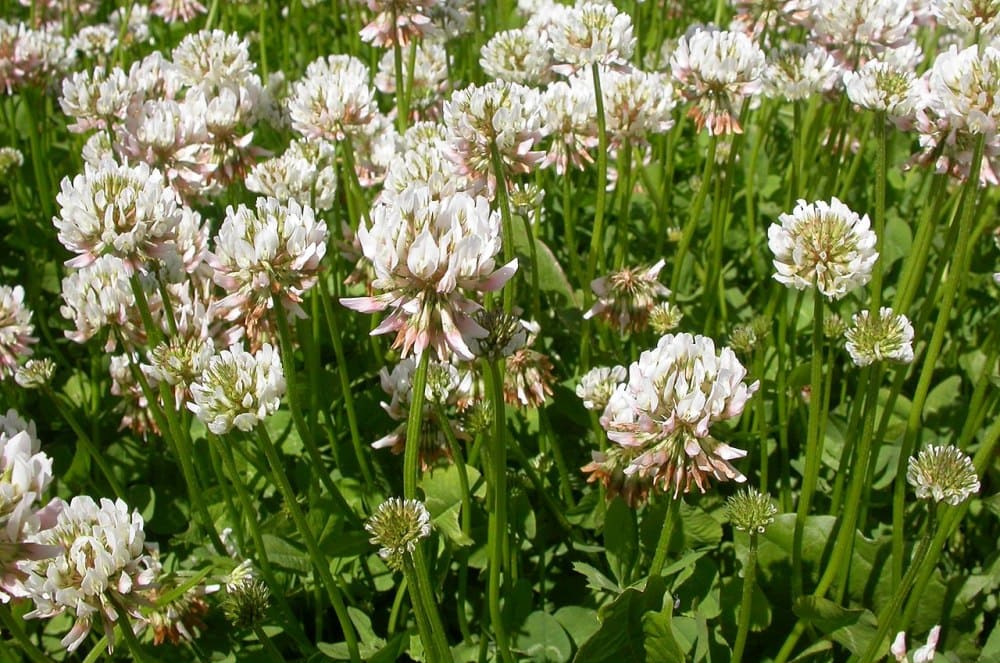
Image Credit: Wikimedia Commons, Matt Lavin
If you have white clover in your lawn or garden, you have a mosquito nectar source. Clover nectar is high in sucrose, freely accessible, and produced continuously through the growing season. Culex pipiens, the common house mosquito, shows particularly strong affinity for clover in sugar-feeding choice experiments. Clover lawns are trendy and genuinely good for pollinators — just understand the full picture.
13. Wild Violets (Viola spp.)
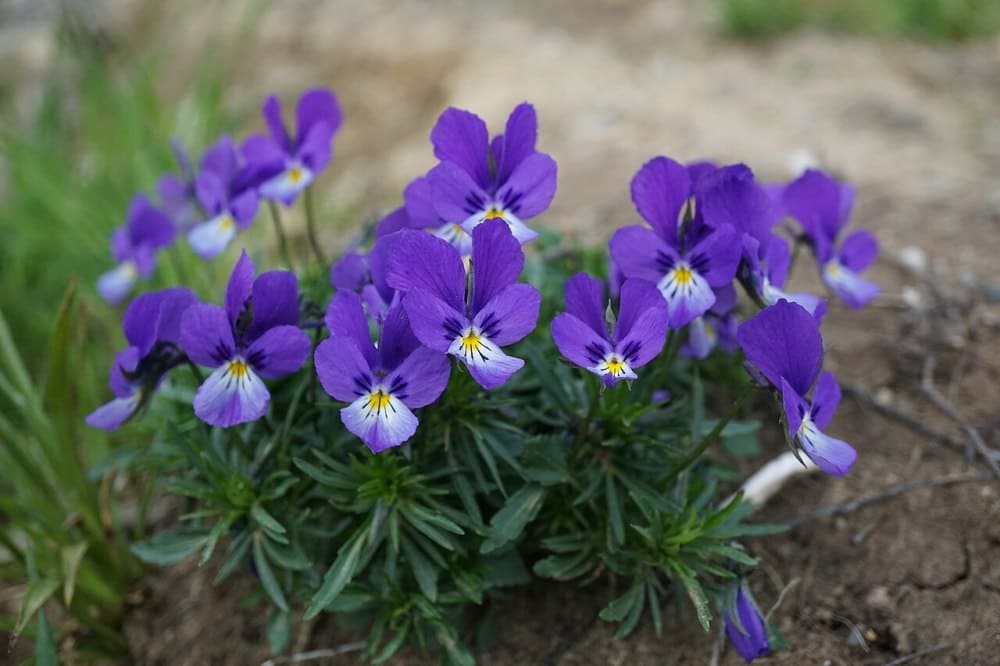
Image Credit: Wikimedia Commons, Ryan Hodnett
Low-growing, spring-flowering, often considered weeds. Wild violets produce nectar at ground level — where adult mosquitoes resting in vegetation frequently encounter it. Their growth in shaded, moist areas (exactly where mosquitoes rest) means they’re an ambient feeding resource that doesn’t require mosquitoes to fly far from their daytime resting spots.
14. Elderflower (Sambucus nigra)
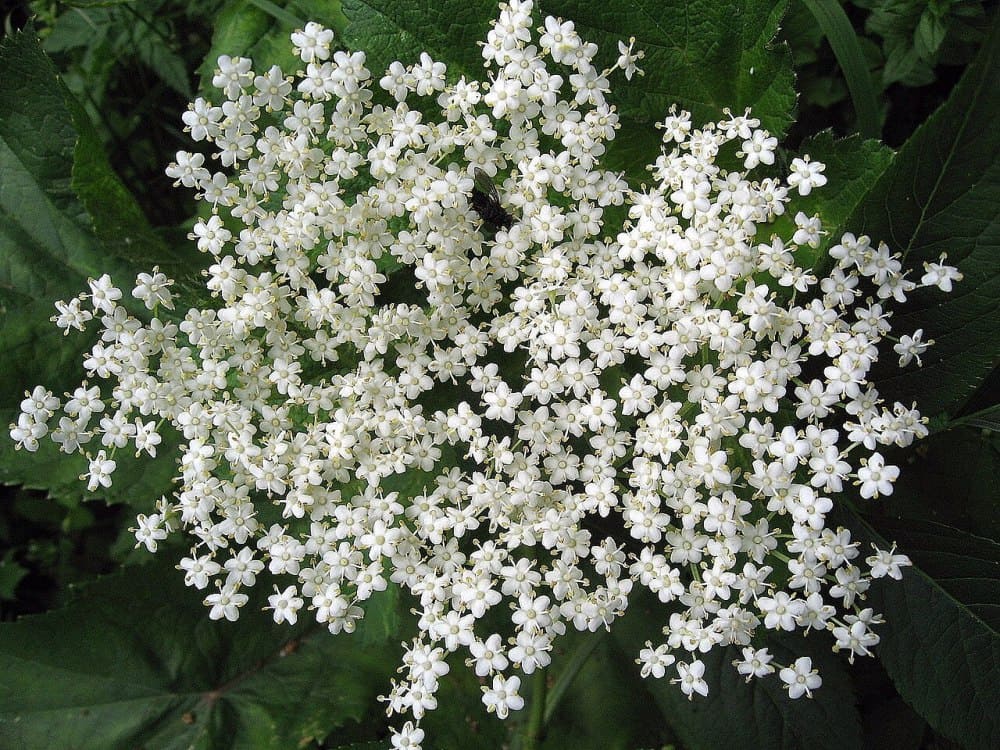
Image Credit: Wikimedia Commons, “pastilletes”/Joan Simon
Large flat-topped clusters of tiny white flowers. Elderflower produces copious floral volatiles including linalool, a compound consistently identified in mosquito attractant blends. The flowers also produce significant nectar accessible to short-tongued insects. Sambucus shrubs growing near water are a double risk. The combination of floral attractant compounds and typical riparian habitat makes this plant a notable attractor in northern gardens.
15. Mimosa / Sensitive Plant (Mimosa pudica and Albizia julibrissin)
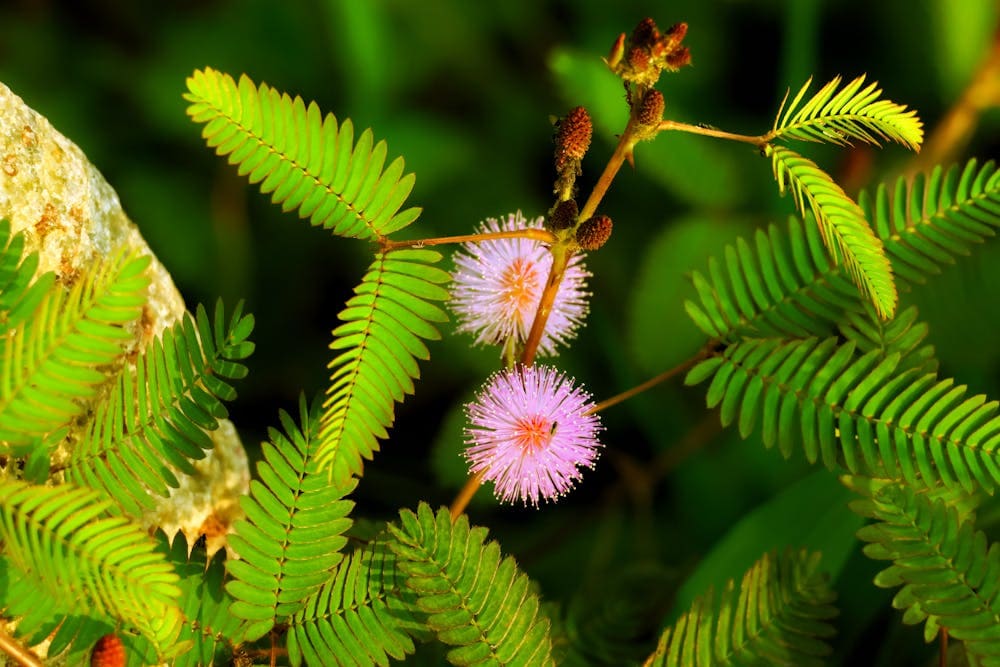
Image Credit: Pexels, BaShaClicks
The silk tree (Albizia julibrissin) — often called mimosa — produces feathery pink flowers with extremely accessible nectar on exposed stamens. No deep corolla to navigate. This makes it easy for short-mouthpart insects including mosquitoes. In the southeastern US, where Albizia is widespread (and invasive in many states), its bloom period corresponds with peak mosquito season in June through August.
16. Catmint / Catnip (Nepeta cataria and Nepeta spp.)
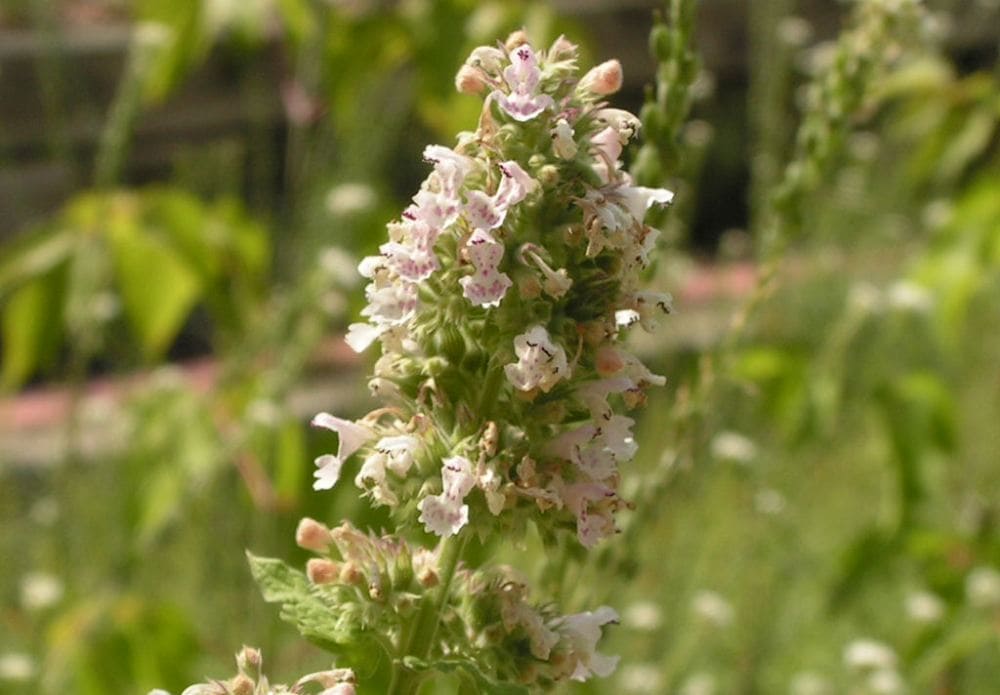
Image Credit: Wikimedia Commons, D. Gordon E. Robertson
Catnip is legitimately interesting. Nepetalactone, the active compound in Nepeta cataria, has demonstrated mosquito repellent activity in controlled studies — sometimes at concentrations comparable to low-dose DEET. This sounds definitive. But here is the catch: those concentrations are achieved in enclosed laboratory chambers or in topical application tests, not in an open garden. The flowers still produce nectar mosquitoes visit. You’d need to crush and apply the leaves to your skin to get meaningful repellent benefit — not just grow the plant nearby.
17. Alyssum (Lobularia maritima)
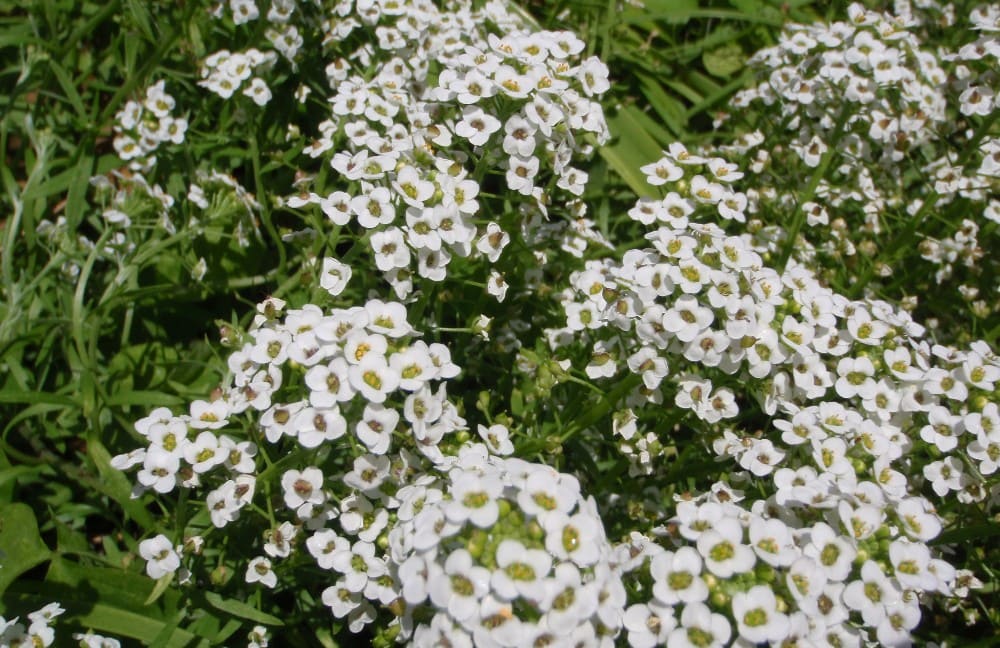
Image Credit: Flickr, Jeff Wright
Sweet alyssum is a popular edging plant with a honey-like fragrance. The tiny flowers produce accessible nectar continuously. The scent plume from a mass planting is detectable from a distance, and the compounds responsible — including benzaldehyde and some aromatic esters — overlap with documented mosquito attractant profiles. Low-growing alyssum near the ground also creates ideal humidity conditions.
18. Phlox (Phlox paniculata and Phlox subulata)
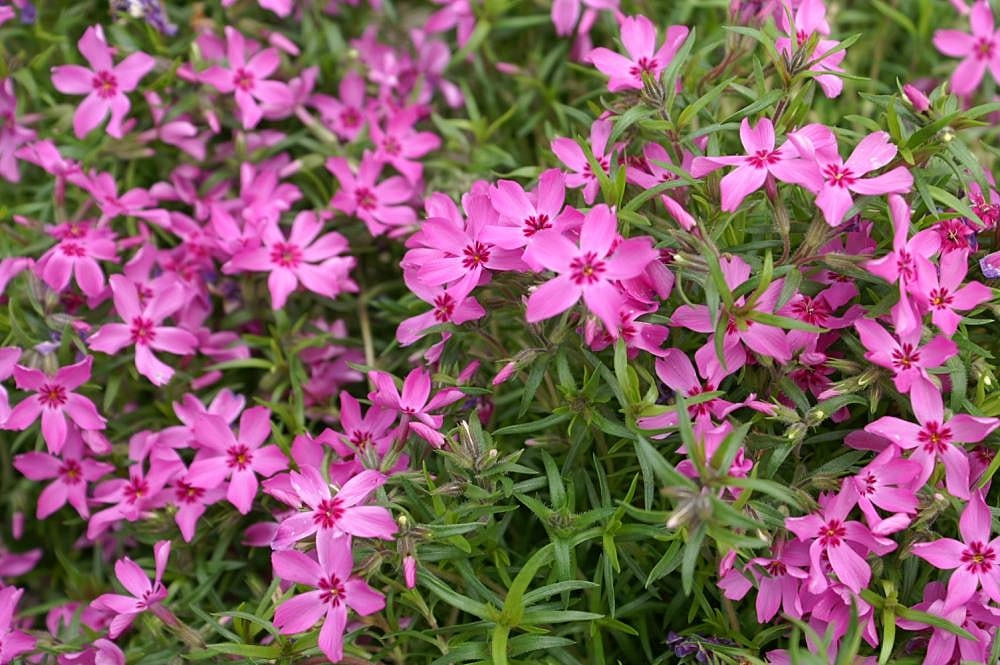
Image Credit: Wikimedia Commons, David J. Stang
Garden phlox is highly fragrant, especially in the evening. Mosquitoes are most active at dusk. This timing overlap matters. The evening-enhanced fragrance of phlox — driven by methyl benzoate and various alcohols — is exactly when mosquitoes are foraging. Research on crepuscular insect foraging confirms that strongly-scented evening-blooming plants experience higher mosquito visitation rates during that window.
19. Nicotiana / Flowering Tobacco (Nicotiana alata)
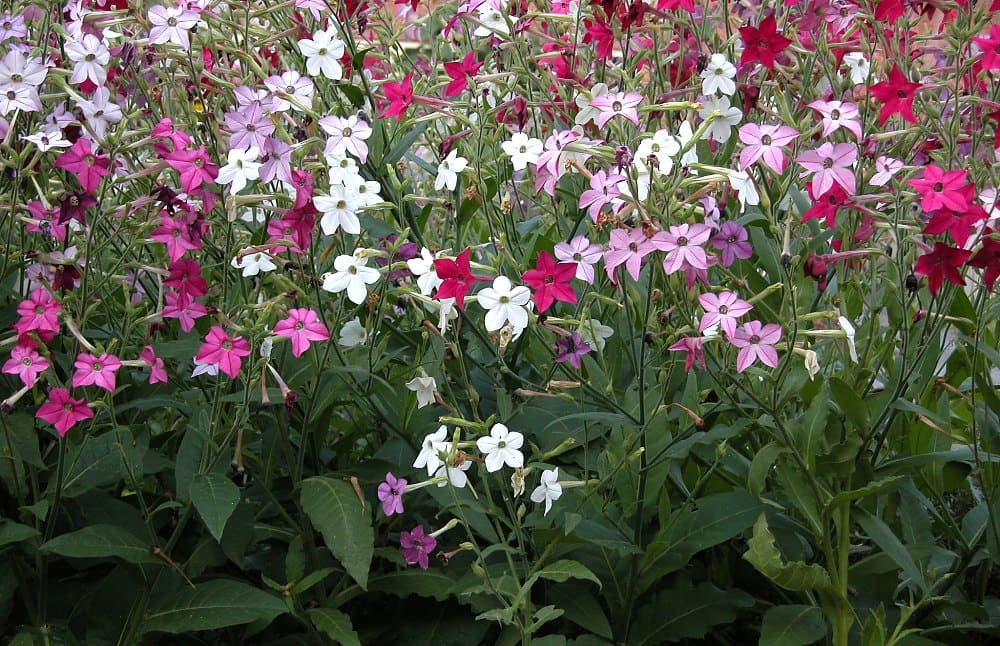
Image Credit: Flickr, Carl Lewis
Nicotiana releases its fragrance specifically at night — evolved for moth pollination. The same fragrant compounds (benzyl benzoate, benzaldehyde) that attract hawkmoths are active mosquito attractants. Nicotiana is a common garden annual. Grow it near a seating area and you’re essentially operating a nighttime mosquito bait station.
20. Salvia / Ornamental Sage (Salvia spp.)
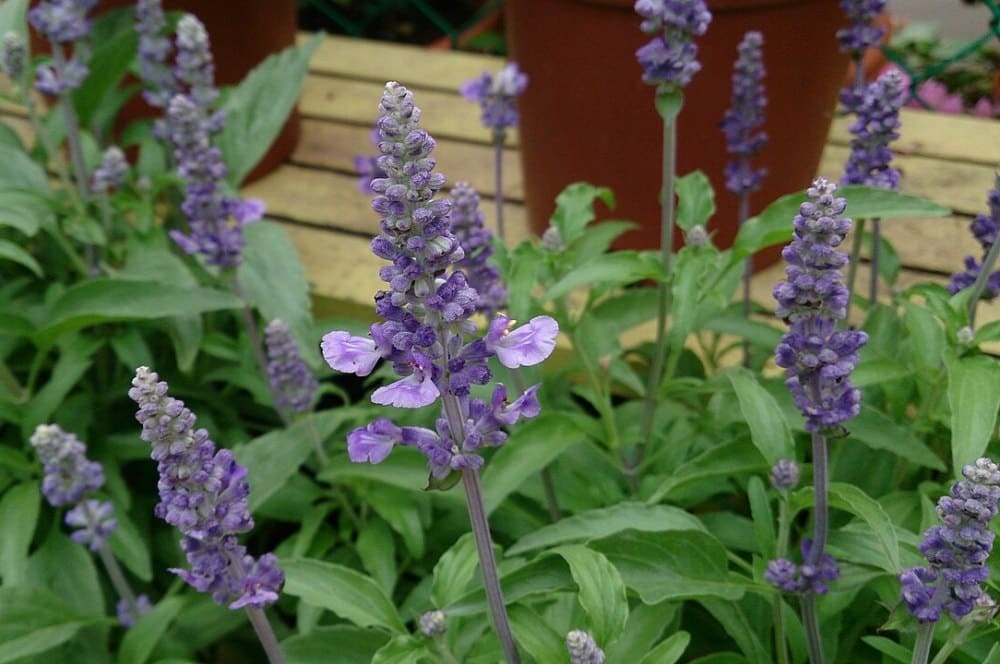
Image Credit: Wikimedia Commons, Mokkie
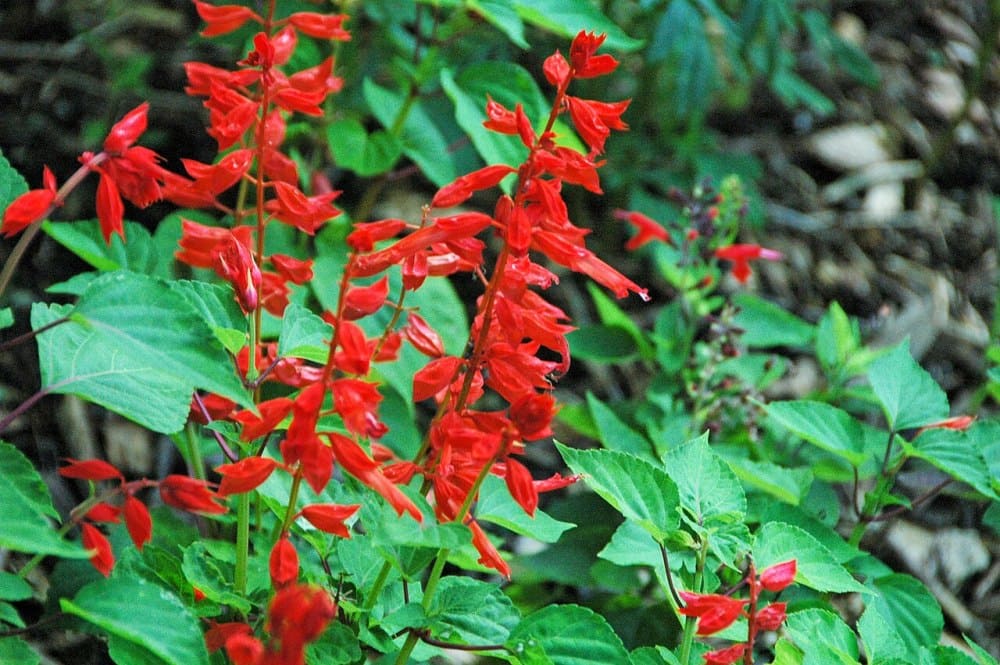
Image Credit: Wikimedia Commons, James St. John
Some salvias contain camphor and eucalyptol, compounds with repellent properties. Many gardening sites list salvia as a mosquito repellent without nuance. In practice: different salvia species vary enormously in their volatile chemistry. Salvia officinalis (culinary sage) leans more repellent. Salvia splendens (tropical red salvia) and many ornamentals produce abundant accessible nectar with far less of the deterrent compounds. Don’t assume all salvias repel.
What Flowers Attract Mosquitoes — Quick Reference Table
Use this as a field reference. The ‘Risk Level’ reflects a combination of documented nectar-feeding, floral volatile profiles, and habitat contribution.
| Flower / Plant | Scientific Name | Attraction Mechanism | Risk Level |
|---|---|---|---|
| Water Hyacinth | Eichhornia crassipes | Nectar + oviposition habitat | Very High |
| Water Lettuce | Pistia stratiotes | Shelter + microhabitat | Very High |
| Nicotiana | Nicotiana alata | Night-release volatiles | High |
| Elderflower | Sambucus nigra | Linalool-rich volatiles | High |
| Phlox | Phlox paniculata | Evening fragrance peak | High |
| Petunia | Petunia spp. | Methyl salicylate, open nectar | High |
| Teasel | Dipsacus spp. | Nectar + larval water habitat | High |
| White Clover | Trifolium repens | High-sucrose accessible nectar | High |
| Alyssum | Lobularia maritima | Aromatic esters, ground humidity | Moderate-High |
| Coneflower | Echinacea purpurea | Open nectar disk florets | Moderate-High |
| Oxeye Daisy | Leucanthemum vulgare | Open composite, dew retention | Moderate-High |
| Goldenrod | Solidago spp. | Massed accessible nectar | Moderate-High |
| Lantana | Lantana camara | Accessible nectar despite leaf VOCs | Moderate |
| Sweet William | Dianthus barbatus | Eugenol floral volatile | Moderate |
| Bee Balm | Monarda spp. | Nectar despite leaf oils | Moderate |
| Mimosa / Silk Tree | Albizia julibrissin | Exposed stamen nectar | Moderate |
| Wild Violet | Viola spp. | Ground-level shaded nectar | Moderate |
| French Marigold | Tagetes patula | Accessible nectar (mild) | Low-Moderate |
| Catmint | Nepeta spp. | Nectar (repellent lab-only) | Low-Moderate |
| Salvia (ornamental) | Salvia splendens | Nectar, variable volatiles | Low-Moderate |
The Floral Chemistry Behind What Flowers Attract Mosquitoes
Understanding the chemistry explains everything. Mosquitoes don’t randomly visit flowers. They’re following chemical signals that evolution has shaped them to detect. The key classes of compounds involved:
1. Linalool
A monoterpene alcohol present in hundreds of flowering plants. Found in elderflower, lavender (yes, lavender — more on that below), bee balm, and many others. Published olfactometry studies demonstrate that linalool activates olfactory receptor neurons in Aedes aegypti antennae. It’s a mixed signal — repellent at very high concentrations, attractive at the dilute concentrations present in ambient garden air.
2. Methyl Salicylate
The compound responsible for wintergreen scent. Present in petunia floral volatiles and some ornamental tobacco species. Documented as an attractant in electrophysiological studies of Aedes albopictus — the Asian tiger mosquito now established across much of the continental US.
3. Eugenol
Clove-like aromatic compound. Present in Sweet William, carnations, and related Dianthus species. Eugenol has dual activity — insecticidal at very high concentrations (it’s used in some natural pesticide formulations), but attracted in the concentrations emitted by flowers. The dose makes the poison, as Paracelsus would say.
4. Nonanal and Acetophenone
These are primarily associated with human skin volatiles, which is why they’re studied extensively in mosquito host-seeking. But some flowers — particularly those in the Apiaceae family like Queen Anne’s Lace — also emit these compounds. This creates a confounding situation where a flower is essentially mimicking a host-finding cue.
5. Benzaldehyde and Benzyl Esters
Major fragrance components in many white-flowered species including nicotiana, jasmine, and alyssum. These are well-characterized as mosquito olfactory stimulants in laboratory bioassays. Night-blooming white flowers tend to be particularly rich in these compounds.
Flowers That Genuinely Don’t Attract Mosquitoes (and Why)
Most ‘mosquito repellent plants’ lists online are based on wishful thinking rather than evidence. But a few flowers genuinely earn their reputation, and understanding why helps clarify the whole picture.
- Lavender (Lavandula angustifolia): Linalool and camphor in concentrations significantly higher than most garden plants. The compound ratio matters — lavender’s specific blend is genuinely deterrent at close range. Still not a force field, but among the better-supported options.
- Rosemary (Rosmarinus officinalis): 1,8-Cineole (eucalyptol) dominated volatile profile. Published studies show repellent activity against several Aedes species. Effective primarily in direct contact or with crushed leaves, not as a planted border.
- Lemon Thyme (Thymus citriodorus): Citronellal content is meaningful. Research from Iowa State University found crushed lemon thyme comparable to DEET at 62.5% efficacy in some tests — specifically when applied to skin. Growing it near a patio does not replicate this.
- Marigold (Tagetes erecta — African marigold, not French): African marigold produces higher concentrations of pyrethrum-related compounds than French types. Still not a reliable garden repellent but closer to the lower end of meaningful.
- Chrysanthemum: The original source of pyrethrum insecticide. The pyrethrin compounds in chrysanthemum leaves and flowers are genuine mosquito insecticides. The issue is that the concentrations required to actually kill or repel in open air are not achievable from living plants.
Garden Design Strategies — What to Do About Flowers That Attract Mosquitoes
Once you understand which flowers attract mosquitoes and why, you can make real decisions about your garden. Here is how I have restructured my own planting over the past three years.
1. Eliminate Aquatic Attractors First
This has the biggest single impact. Water hyacinth and water lettuce need to either be replaced or the pond needs to be managed with Bacillus thuringiensis israelensis (Bti) dunks continuously. Bti is a naturally-occurring bacterium, OMRI-listed for organic use, and specifically lethal to mosquito and black fly larvae. It does not affect fish, frogs, birds, or beneficial insects. This is non-negotiable if you have a water feature.
2. Replace High-Risk Evening Bloomers
- Remove nicotiana from any planting within 30 feet of primary outdoor seating areas.
- Replace dense phlox beds near patios with plants that have simpler or more complex corolla structures that reduce mosquito feeding access.
- Avoid large-scale alyssum edging immediately adjacent to doors or seating.
3. Strategic Placement of Attractor Plants
You don’t have to give up coneflowers or goldenrod. These are ecologically valuable plants. Place them at the far perimeter of your property — away from the areas where you spend time. A coneflower mass planting 80 feet from your patio contributes meaningfully less to your mosquito exposure than one 10 feet away.
4. Manage Microhabitat, Not Just Plant Species
Dense, humid, shaded vegetation is the real issue — more than any specific flower. Thin dense plantings. Ensure good air movement through garden beds. Keep mulch from being too deep and perpetually wet. These structural interventions work across all plant species.
Combine Plant Strategy with Proven Control Methods
Evidence-Based Mosquito Management Priority List:
- Eliminate all standing water within your property (gutters, containers, plant saucers, bird baths refreshed less than weekly)
- Apply BTI dunks to any water feature or standing water you cannot drain
- Relocate high-attractor plants to property perimeter
- Thin dense vegetation and improve air circulation through planting beds
- Use DEET, picaridin, or IR3535 on skin during peak mosquito hours (dawn and dusk)
- Consider barrier treatments with bifenthrin or permethrin for perimeter vegetation, applied by licensed pest professionals
- Install fine-mesh screens and ensure all entry points are sealed
Timing Matters: When Flowers Attract Mosquitoes the Most
This is underappreciated. Mosquito attraction to flowers is not constant across the day. Understanding the timing helps you plan outdoor activities more intelligently.
| Time Window | Mosquito Activity | Highest-Risk Flower Activity | Risk Level |
|---|---|---|---|
| Dawn (5–8 AM) | Peak for Aedes species | Dew on open composite flowers | Very High |
| Morning (8–11 AM) | Moderate, declining | Post-dew nectar accessibility | Moderate |
| Midday (11 AM–3 PM) | Low in heat | Reduced floral volatile emission | Low |
| Afternoon (3–6 PM) | Rising | Normal volatile emission resumes | Moderate |
| Dusk (6–9 PM) | Peak for Culex species | Evening-scented plants peak | Very High |
| Night (9 PM+) | High for Culex, some Aedes | Nicotiana, night phlox, jasmine peak | High |
If you’re gardening, sitting outside, or entertaining, the dawn and dusk windows are when flower-mediated attraction most directly translates to mosquito bites. Avoid these windows near high-attractor plantings, or apply repellent.
Does Mosquito Species Change What Flowers Attract Mosquitoes?
Yes, somewhat. Different mosquito species have different olfactory preferences, activity windows, and habitat associations. Knowing which species are dominant in your region helps prioritize which attractor flowers matter most.
| Mosquito Species | Common Name | Activity Peak | Preferred Flower/Habitat |
|---|---|---|---|
| Aedes aegypti | Yellow fever mosquito | Day/Dawn/Dusk | Open nectar flowers, urban containers |
| Aedes albopictus | Asian tiger mosquito | Day | Petunias, open composites, dense gardens |
| Culex pipiens | Northern house mosquito | Night | White clover, night-blooming flowers |
| Culex quinquefasciatus | Southern house mosquito | Night | Aquatic plant areas, night-bloomers |
| Anopheles quadrimaculatus | Common malaria mosquito | Night | Aquatic vegetation, elderflower areas |
| Aedes canadensis | Woodland mosquito | Dawn/Dusk | Woodland flowers, goldenrod, violets |
Expert-Backed Garden Tips for Reducing Flower-Driven Mosquito Attraction
From a decade of working in vector control consulting and running my own heavily-planted suburban property, here are the practical actions that actually move the needle:
- Audit your water features annually. Every spring before mosquito season begins, inventory any plant that creates or sits in water. Replace water hyacinth and water lettuce with submerged oxygenators like hornwort or anacharis, which don’t provide the same microhabitat benefits to mosquitoes.
- Choose flower form intentionally. Tubular, complex flowers like salvia, snapdragons, and foxglove are harder for short-mouthpart insects like mosquitoes to access. Flat, open flowers like composites and umbels are easiest. If you’re choosing between two plants for aesthetic reasons, this can be a useful tiebreaker.
- Place fragrant evening-blooming plants away from entry points. Your front door, patio doors, and any window screens. Nicotiana especially. It is beautiful and I understand the appeal. But don’t put it in containers flanking your back porch.
- Don’t eliminate all attractor flowers — redistribute them. Beneficial insects need these plants. The goal isn’t a sterile landscape; it’s creating distance between attractor plantings and the areas you inhabit.
- Use Bti preventively, not reactively. Don’t wait until you see mosquito larvae. If you have any standing water — even small amounts in plant saucers — use Bti dunks from first warm weather. A single dunk treats 100 square feet for 30 days.
- Check teasel if you grow native prairie plants. The leaf axil water is a specific, underrecognized larval habitat. Dump and dry those leaf cups during the growing season if you have Dipsacus in your native plantings.
Frequently Asked Questions (FAQs)
Q. Do all flowers attract mosquitoes equally?
Not at all. Open composite flowers like daisies and coneflowers are easy targets — short mouthparts, no problem. Deep tubular flowers like foxglove or snapdragon are much harder for mosquitoes to access. Aquatic flowering plants are in their own category entirely because they offer both nectar and egg-laying habitat in one spot.
Q. Do flowers attract mosquitoes more at certain times of day?
Dawn and dusk, full stop. That’s when Aedes and Culex species are most active, and it’s also when evening-scented flowers like phlox and nicotiana release their strongest volatile plumes. Growing fragrant flowers near outdoor seating matters most during those two windows. Midday heat suppresses both mosquito activity and volatile emission simultaneously.
Q. Do white flowers attract mosquitoes more than colored ones?
There’s real evidence for this, not just garden lore. White flowers tend to be more visible across the mosquito visual spectrum including UV wavelengths. They’re also disproportionately night-blooming and evening-fragrant — nicotiana, jasmine, alyssum, elderflower. That timing overlap with peak mosquito activity compounds the effect considerably.
Q. Do potted flowers attract mosquitoes?
The flowers themselves can, yes. But the bigger risk with containers is the saucer underneath. Any standing water sitting for more than 7 days becomes potential larval habitat — Culex can complete development in a teaspoon of water. Dense potted petunias or alyssum near a doorway combines floral attractant scent with a convenient water source right at your entrance.
Q. Do marigolds attract or repel mosquitoes?
Both, depending on how you look at it. The leaves and flowers do emit pyrethrum-related compounds and linalool — genuinely deterrent in lab conditions. But the nectar is still accessible and has been found in mosquito gut analyses. Outdoors, scent dissipates fast enough that the repellent effect is minimal while the nectar remains. Don’t rely on a marigold border as protection.
Q. Can mosquitoes breed in flower pots?
Yes. Any saucer, low pot, or container that holds standing water for more than 7 days is a potential larval habitat. Culex mosquitoes can complete larval development in as little as a teaspoon of water in the right conditions. This is particularly relevant for large ornamental planters that collect rainwater in drip saucers.
Q. Do flowers attract mosquitoes the same way they attract bees?
Broadly similar mechanism — scent volatiles and accessible nectar — but mosquitoes and bees respond to different compound profiles and different concentration thresholds. Bees navigate color and UV patterns more heavily. Mosquitoes lean harder on olfaction. Both are drawn to open, freely-accessible nectar. Where their preferences overlap is exactly where your mosquito-attractor problem flowers tend to sit.
Q. Do flowers near water attract more mosquitoes?
Significantly more, yes. Proximity to water doubles the draw — adults come for nectar and simultaneously have ideal oviposition sites within feet of each other. Water hyacinth is the extreme example: flowering plant, floating water surface, shade, humidity, and egg-laying habitat all in one organism. Any flowering plant near a pond, birdbath, or drainage area carries elevated risk for this reason.
Q. Does removing flowers from a garden eliminate mosquitoes?
No — and this is an important distinction. Flowers are one factor among several. Standing water, dense humid vegetation, warm temperatures, and proximity to human activity all drive mosquito pressure independently. Removing high-attractor flowers helps at the margins. Eliminating standing water and improving air circulation through plantings moves the needle far more decisively.
Q. Do community gardens or allotments have higher mosquito pressure because of flowers?
Often yes, but primarily because of irrigation management, water collection, and dense humid vegetation rather than flowers specifically. The combination of regular watering, dense planting, organic matter, and diverse flower types creates an ideal environment. Source reduction (addressing standing water) matters more in these settings than flower selection.
Conclusion: What Flowers Attract Mosquitoes — The Bottom Line
So, what flowers attract mosquitoes? The honest answer is: more of them than most garden guides will tell you.
Aquatic plants like water hyacinth and water lettuce are in a category of their own — genuine double threats for adult feeding and larval development. Night-blooming species like nicotiana, evening phlox, and elderflower create fragrant plumes that draw mosquitoes directly into outdoor living areas. Open-nectar flowers like coneflower, white clover, oxeye daisy, and goldenrod provide continuous accessible feeding. And some plants like marigold, lantana, and bee balm that are marketed as repellents are actually providing accessible nectar in garden conditions.
The science is clear that what flowers attract mosquitoes comes down to three things: volatile chemistry, nectar accessibility, and microhabitat. When those three factors align — especially near water or humid, shaded conditions — you get mosquito pressure regardless of how intentional you were about your planting.
What I have learned personally, from both the research and from standing in my own garden watching this unfold: good mosquito management is about integrated decision-making. Audit your water. Relocate your attractors. Choose flower forms thoughtfully. Apply evidence-based repellents during peak activity. That combination actually works.
You can have a beautiful, ecologically rich garden and meaningfully reduce your mosquito exposure. The two aren’t incompatible. But it requires understanding what you’re working with — which is why questions like what flowers attract mosquitoes are worth taking seriously, not dismissing with a quick list of “plant these five things and you’ll be fine.”
Editorial Team & Contributors

Raashid Ansari, Founder, Content Researcher & Author - MosquiTalk
Not an entomologist — just a genuinely curious writer who started researching mosquitoes and couldn't stop. What began as casual reading about repellents and bite prevention gradually turned into a deep ongoing dive into vector biology, disease epidemiology, animal health impacts, and the real science behind mosquito control. Everything published here is carefully edited, and written with one purpose: giving readers accurate, accessible information they can actually trust and use to protect themselves, their families, and their pets, birds and cattle.
Active across social platforms, regularly publishes, and genuinely invested in spreading mosquito awareness where it matters most. Because informed readers make better decisions — and better decisions save lives.