
Table of Contents
Introduction to Pond Mosquito Control
Ponds with standing water without any movement provides perfect conditions for mosquito breeding. Within couple of days, your backyard will become a nuisance with flooded swarm of mosquitoes after which it becomes literally impossible to keep mosquitoes out of pond.
As treating this mosquito haven will be quiet difficult now. So, cleaning your pond to avoid any mosquito infestation, is the first thing that you will do to reduce the population and growth of mosquitoes around your backyard. Later you can incorporate use of mosquito dunks, larvicides and natural predators to keep mosquitoes out of pond.
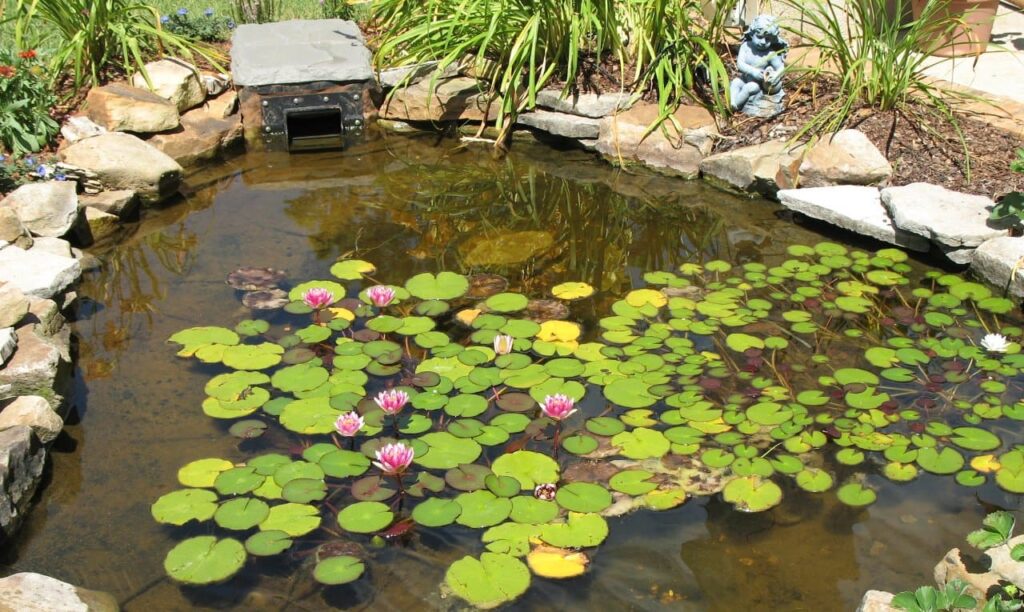
Image Credit: Flickr, Tim Martin | Creative Commons License
Mosquito Control Pond: Keeping mosquitoes out of your pond is a multiple step process and usually done in combination with preventive measures, regular maintenance, and using repellents and insecticides, etc.
Why Ponds Attract Mosquitoes?
Mosquitoes can lay eggs comfortably in uncovered stagnant water, and so they find ponds a perfect location for breeding. A single female mosquito can lay hundreds of eggs that can hatch into larvae and than into adult mosquitoes within few days.
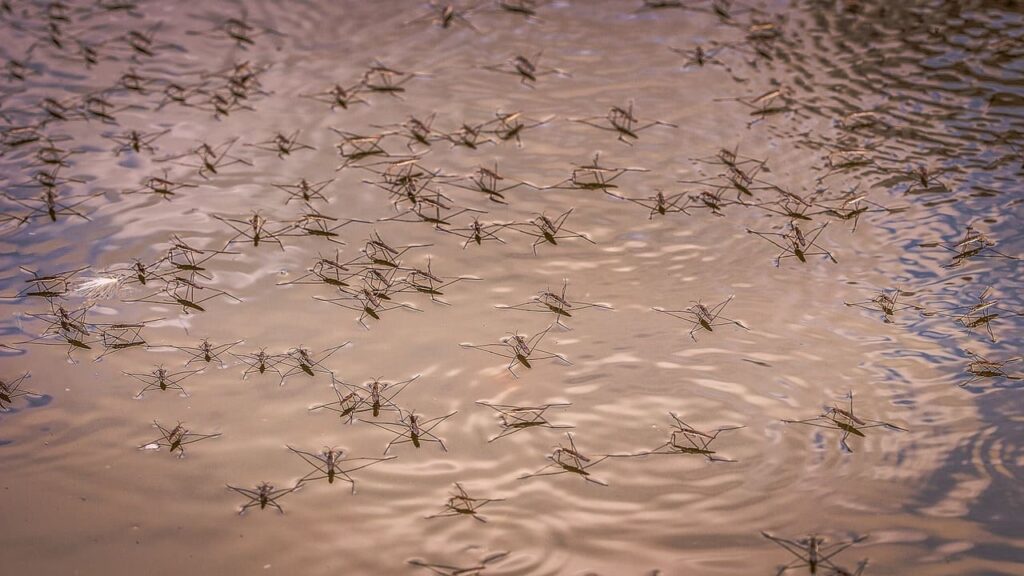
Image Credit: Pixabay, ddzphoto | Content License
The larvae can easily thrive in pond’s stagnant water and feed on organic matters present there. Thus, pond’s attract mosquitoes and provide them with a perfect breeding platform.
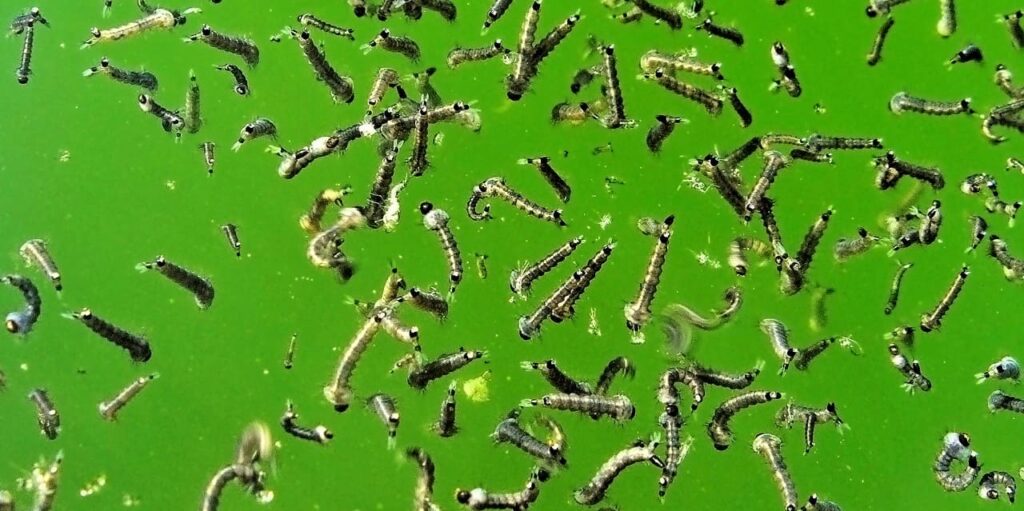
Image Credit: Flickr, fuentedelateja’s | Creative Commons License
How to Keep Your Pond Free of Mosquitoes?
There are different steps to reduce the population and growth of mosquitoes first with manual and mechanical means, which is than later accompanied by the use of repellents and insecticides for deterring mosquitoes. This all steps and combination forms a perfect strategy to keep mosquitoes out of pond.
Complete Guide to Keep Mosquitoes Out of Pond | Mosquito Control in Ponds
1. Maintain water circulation
Mosquitoes lay eggs in still water only. Any movement will hinder their egg-laying and hatching process. So, one of the most effective step to get rid of mosquitoes from pond is to keep the water moving.
You can:
- Install a fountain or waterfall: The continuous circulation of water from fountain or waterfall will create immense movement which will keep mosquitoes away from pond. Also, it will give an aesthetic appeal to the pond.
- Use a pond aerator: Aerator creates continuous bubbles and mild agitation within the water and current waves on its surface. This movement will disturb the water surface and helps to keep mosquitoes out of your pond. Aerator will oxygenate the water which is helpful for aquatic life and will keep the pond water clean and free of any mosquito eggs or larvae.
2. Add predators that feed on mosquito larvae
There are certain fish species that feeds on mosquito larvae and thus these natural predators within ponds will help in keeping the mosquito population under control.
- Goldfish: Goldfish can eat mosquito larvae and helps in controlling their population.
- Gambusia (Mosquito fish): This is a small fish species, that mainly feeds on mosquito larvae. They can consume and eliminate large number of mosquito larvae daily from pond. Often used in natural mosquito control programs.
- Koi: They can eat other aquatic insects as well along with mosquito larvae. They are mostly used when the pond size is large.
3. Use mosquito dunks or larvicides
Mosquito dunks and larvicides are very much effective in killing mosquito larvae in ponds. These products are so designed that it works or acts upon mosquito larvae only without harming fish, plants and other aquatic life.
- Mosquito Dunks: These are natural bacterium known as BTI (Bacillus Thuringiensis Israelensis), which attacks and kill mosquito larvae but non toxic and safe for other fish and aquatic plants.
- Larvicides: These are chemicals used to eliminate mosquito larvae from ponds. Follow manufacturer’s instructions to keep the other fishes and aquatic plants safe from such chemical treatments.
4. Using Mosquito Nets
Mosquito nets forms a physical barrier and restricts mosquitoes from entering the pond. Various products like “Pond covers” and “Floating Netting” are also available that can be placed over the water surface. Here it allows water and sunlight to penetrate but restricts any mosquito entering the pond.
Although these physical netting and covering can spoil the view and aesthetic of a pond but it is simple and easiest to control mosquitoes. These are light weight and easy to install and so very much preferable among pond owners.
5. Regularly maintenance of pond
Regular cleaning and maintenance of pond is very important to prevent mosquito breeding and keeping them away.
- Clean Organic matter: Cleaning the organic matter in the pond that larvae feeds on, is also very important. This includes leaves, algae and other debris which decomposes and provide food to mosquito larvae.
- Clean Pond filters and pumps: Clogged and non-functioning filters and pumps will create stagnant water that will attract mosquitoes.
6. Maintain water quality
Regularly test and check the pond water quality to maintain the environment that is inhospitable for mosquitoes.
- pH of water: Mosquitoes thrive in water with a neutral pH around 7. Keep the pond water pH on slightly acidic or alkaline side which is not favorable for mosquito breeding.
- Prevent Algal growth: Decaying organic matters like tree debris, dried leaves, algae growth increases the nutrient levels in the pond. This leads to algae bloom which supplies nutrients and provides shelter to mosquito larvae. Make use of algaecide to get rid of algal growth which gives clean and aesthetic look to your pond.
- Water temperature: As mosquitoes prefer warm temperatures, check for any shades and hanging vegetation that may provide warm hiding spots near or above the pond. Keep the temperature somewhat cooler during day times when sun is above head.
7. Consider installing UV Clarifier
UV clarifier is a device that kills the algae and other micro organisms in pond water. This helps in further reducing the organic matter. Thus it also, cleans the pond water of any micro-organisms and algae.
8. Keep surroundings clean
Keep the surroundings free from any other source of stagnant water, piles of wet grass clippings, debris and clutter, that may attract mosquitoes. Trim the vegetation and lawn grass around the pond to clear of any hiding spot for mosquitoes.
Construct birdhouses and bat houses to encourage natural predators like bats and swallows. You can also, create a diverse environment to attract dragon flies that are known as mosquito hawks, and feed on mosquitoes.
Tadpoles, top minnows, etc. are most preferred for garden ponds. You can do your research to find some local species native to your region that may help you with pond cleaning and mosquito prevention.
9. Using natural repellents around the pond area
You can grow plants or place plant pots of natural repellents around the garden pond. This will prevent both the garden as well as pond from mosquito infiltration. The important useful natural repellents are:
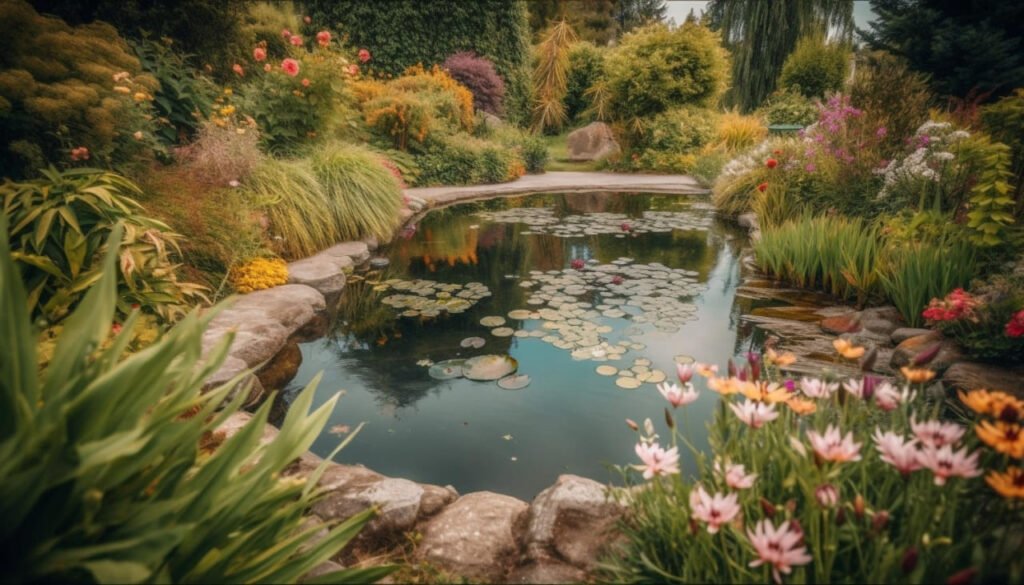
Image Credit: Freepik, vekstock | Content License
- Lemon grass
- Lavender
- Basil
- Catnip
- Peppermint
- Marigold
- Rosemary
- Thyme
- Bee balm
- Garlic
You can also make natural essential oil sprays and use around the pond. The useful essential oils are:
- Citronella oil
- Eucalyptus oil
- Neem oil
- Lavender oil
- Tea Tree oil
- Rosemary oil
- Clove oil
You can make DIY mosquito repellent sprays on your own using these naturally available herbs and essential oils. The details of DIY mosquito sprays are given in detail in the article: How to Keep Mosquitoes Away from Chickens
Koi Pond Mosquito Control
Koi ponds are a bit different from your average backyard water feature. You’ve got fish in there. Expensive ones, sometimes. So half the usual mosquito advice — dump in this chemical, spray that larvicide — needs a second look before you use it.
The good news? Koi actually help you out here. They eat mosquito larvae. A lot of them, actually, if the pond is set up right and they can reach the water’s surface where the larvae hang out.
But koi alone won’t solve everything. Larvae can hide in plant clusters, along the edges, in spots where the fish just don’t bother going. So you still need to pair fish with a bit of active management.
- Stick to koi-safe larvicides only. Bti-based dunks (Bacillus thuringiensis israelensis) are usually fine for koi ponds — they target mosquito larvae specifically and don’t harm fish. Avoid oil-based larvicides or anything broad-spectrum, since those can mess with oxygen levels or straight up poison your fish.
- Keep the water moving. Same rule as any pond, but it matters more here because stagnant zones near koi are where larvae thrive undisturbed. A decent pump or waterfall feature keeps things circulating enough that mosquitoes think twice.
- Don’t overcrowd with plants. Koi ponds often get plant-heavy for aesthetics, and honestly it looks great, but dense mats of floating plants give larvae cover from the fish. Thin them out occasionally so your koi can actually patrol the water.
- Check your skimmer and filter regularly. Debris buildup near the edges is basically a mosquito nursery. Koi keepers already do maintenance often for water quality reasons anyway, so this usually isn’t extra work — just don’t skip it.
One thing people get wrong — they assume koi will “handle it” completely on their own. They help a ton, but they’re not a total substitute for basic pond upkeep. Think of the fish as your first line of defense, not the whole strategy.
Conclusion – Mosquito Control in Pond
By adopting above measures you can keep the pond clean and beautiful along with maintaining safety and prevention from mosquitoes. The prompt action with proactive measures will keep you free of health risks and diseases associated with mosquitoes.
Regular cleaning and pond maintenance ensures freedom from mosquito infestations. Grow natural repellents around the pond and use natural sprays that will protect you from mosquito bites in your outdoor gatherings and celebrations.
Eliminate any moist bushes and shrubs that can become hiding spots for mosquitoes. Make use of fire pits to keep mosquitoes away from surroundings of your pond.
Editorial Team & Contributors

Raashid Ansari, Founder, Content Researcher & Author - MosquiTalk
Not an entomologist — just a genuinely curious writer who started researching mosquitoes and couldn't stop. What began as casual reading about repellents and bite prevention gradually turned into a deep ongoing dive into vector biology, disease epidemiology, animal health impacts, and the real science behind mosquito control. Everything published here is carefully edited, and written with one purpose: giving readers accurate, accessible information they can actually trust and use to protect themselves, their families, and their pets, birds and cattle.
Active across social platforms, regularly publishes, and genuinely invested in spreading mosquito awareness where it matters most. Because informed readers make better decisions — and better decisions save lives.