
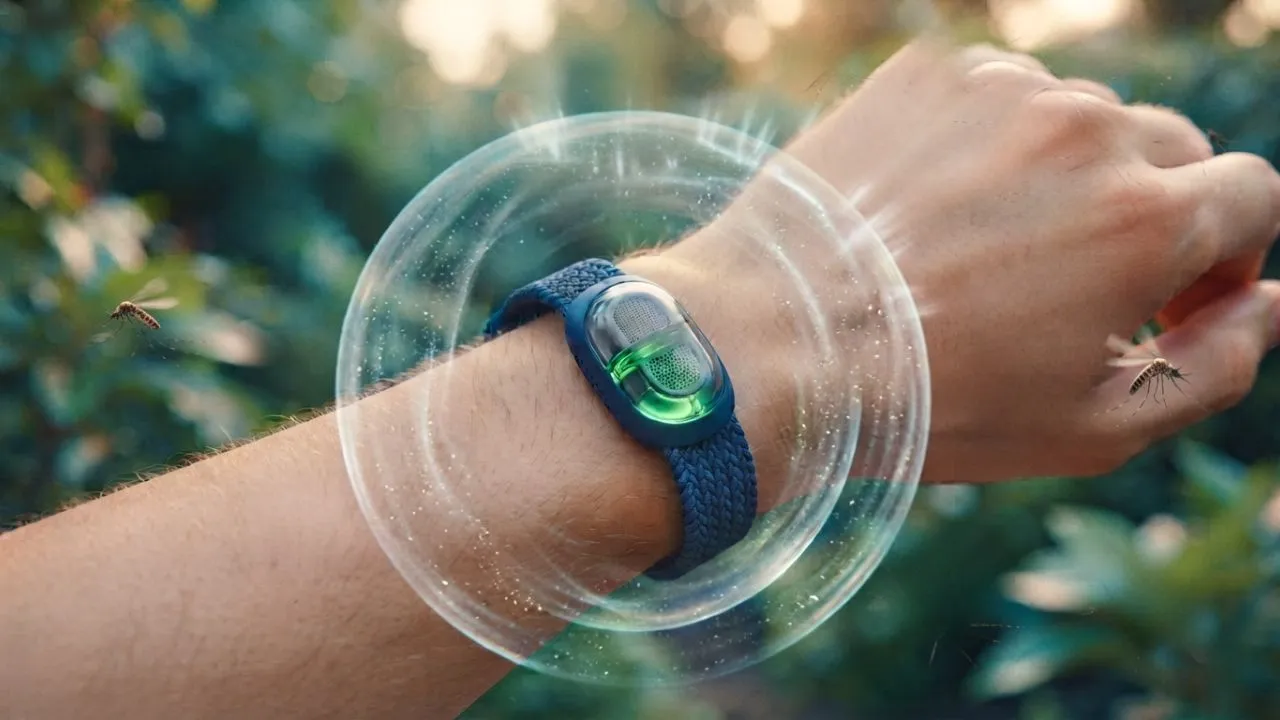
You’re at a barbecue. Someone’s kid is running around with a rubber band on their wrist that smells vaguely like a candle store. Their mom swears by it. Meanwhile you’re the one covered in bites by 8 p.m., wondering if you missed the memo.
So you buy a pack online. Twelve bracelets, citronella-scented, “up to 300 hours of protection,” five-star reviews. You wear one for a weekend camping trip and get bitten anyway — on the ankle, mostly, which is not where the bracelet was.
So do mosquito bracelets actually work, or is this just a wellness-aisle placebo with a pleasant smell? I went through the lab studies, the field trials, and the actual guidance from the CDC and EPA to find out. In Short: it’s complicated, and the marketing on the box is not telling you the whole story. To know the whole truth, keep reading.
Do Mosquito Bracelets Work? The Honest Answer
Here’s the blunt truth up front, because you shouldn’t have to regret later after spending.
Mosquito repellent bracelets do something — they’re not pure theater. But they don’t work anywhere close to how the packaging implies, and they’re nowhere near as effective as a topical repellent applied to skin.
The core problem isn’t the ingredients. It’s physics. A bracelet releases repellent vapor from one small point on your body — your wrist, usually. That vapor forms what researchers call a “protective cloud,” and that cloud is small. It doesn’t wrap around your whole body like a force field. It hangs near the band.
Multiple independent studies, including reviews referenced by The Conversation’s health science team, found that botanical wristbands reduced mosquito landings only within a few centimeters of the band itself. A few centimeters. Not your ankles. Not your neck. Not the back of your knee, which — if you’ve ever worn shorts near a swamp — is apparently a mosquito’s favorite address.
So the honest framing isn’t “do mosquito bracelets work” as a yes/no. It’s “work for what, exactly,” and that distinction matters a lot more than most product listings let on.
How Do Mosquito Bracelets Work? The Actual Mechanism
To understand why the range problem exists, it helps to know what’s actually happening inside these mosquito bracelets.
Most mosquito bracelets are silicone, fabric, or plastic bands infused with a repellent compound — usually a natural essential oil, sometimes a synthetic active. As the material warms from body heat, it slowly off-gasses that compound into the air around your skin.
The theory is scent disruption, not repulsion in the dramatic sense. Mosquitoes hunt primarily by detecting carbon dioxide, body heat, and certain skin odors from a distance, then homing in. The vapor from a bracelet is meant to interfere with that scent-tracking process, essentially confusing the mosquito’s sensors near the source.
It’s the same basic principle as a citronella candle. And it has the same basic limitation as a citronella candle — it protects a small zone, not a person-shaped one.
Common Active Ingredients in Mosquito Bracelets
- Citronella — the most common natural active, derived from lemongrass; breaks down quickly in heat and humidity
- Geraniol — extracted from geranium oil, tends to hold its potency longer than citronella in controlled testing
- Lemongrass and eucalyptus oil — often blended together for a broader scent profile
- DEET or Picaridin — rare in bracelet form, but exists in a small number of products; more effective than botanical oils when present
- DEPA (N,N-Diethyl phenylacetamide) — a synthetic active studied in some wristband formulations, shown effective against several mosquito species in lab settings
Worth noting: the vast majority of mosquito bracelets sold on Amazon and in big-box stores skip synthetic actives entirely and lean on essential oils, largely because that’s the selling point — “DEET-free” sells.
How Well Do Mosquito Repellent Bracelets Work?
This is where the marketing and the research start to diverge, sometimes sharply.
Lab conditions and real-world conditions produce wildly different numbers. In controlled laboratory trials — still air, no wind, no sweat, no movement — some bracelet formulations showed 85 to 90% bite reduction. Sounds great, right?
Then you take the same product outside. Field studies, including NIH-referenced trials, have shown real-world bite prevention drops to somewhere around 12 to 35 percent during normal outdoor activity like hiking or gardening. That’s not a small gap. That’s the difference between “this basically works” and “this barely moves the needle.”
Why the gap? A few consistent reasons show up across the research:
- Wind disperses the repellent cloud almost immediately outdoors
- Sweat and movement speed up how fast the active ingredient breaks down
- Body heat variation changes vapor release rates person to person
- Swimming or heavy activity can cut a bracelet’s functional life dramatically — some tests showed up to 60% faster depletion
For comparison, DEET sprays applied properly to skin block roughly 95% of bites for 8 to 12 hours, according to CDC-referenced research. Bracelets, even in a generous read of the field data, aren’t in the same category. They’re not really competing with DEET. They’re more like a mild supplement to it.
What Health Authorities Actually Say
This part matters, and it doesn’t get repeated enough. The CDC has stated that wearable repellent devices, bracelets included, are not effective as a standalone method of mosquito bite prevention. The reasoning lines up exactly with what the studies show — localized protection, unprotected skin everywhere else.
The EPA angle is just as important, and it’s the part most product pages quietly leave out: the majority of mosquito bracelets sold in the U.S. are not EPA-registered. EPA registration requires manufacturers to submit efficacy and safety data. Skipping that process isn’t illegal for a low-risk product like a citronella band, but it does mean nobody independently verified the bite-reduction claims printed on the box.
So when a listing says “clinically proven” or “up to 300 hours of protection,” ask yourself who did the clinical proving, and under what conditions. Often, that answer is unclear or simply unavailable.
How Long Do Mosquito Bracelets Work? Setting Realistic Expectations
Duration claims on packaging are, frankly, one of the more inflated corners of this whole product category.
You’ll see numbers like “up to 180 days” or “300 hours” printed on the box. Those numbers usually refer to shelf life or scent longevity in sealed packaging, not active repellent effectiveness while worn.
Real-world duration looks a lot different:
- Lab conditions: some bracelets maintained detectable repellent activity for 14 to 18 hours
- Real-world outdoor use: functional protection often drops to 6 to 9 hours, and sometimes less
- Citronella specifically: often loses meaningful potency in under 2 hours once exposed to heat, humidity, or direct sun
- Geraniol-based bands: tend to outlast citronella, retaining a higher percentage of active compound over several days of intermittent wear
The practical takeaway: treat the box’s duration claim as a best-case, lab-only ceiling, not a real-world guarantee. If you’re heading into a mosquito-heavy backyard evening, don’t assume yesterday’s bracelet is still doing much of anything.
Mosquito Bracelets vs. DEET: A Fair Comparison
It’s not really an apples-to-apples fight, but people keep asking, so here’s the honest breakdown.
Where DEET Wins
- Broad-spectrum, whole-body protection when applied correctly to exposed skin
- Backed by decades of research and EPA registration
- 8 to 12 hours of reliable protection at around 95% effectiveness
- CDC and AAP-recommended for kids over two months old, up to 30% concentration
Where Bracelets Win
- Zero mess, zero application hassle — just put it on
- No skin contact required, which matters for people with sensitive skin or reflux to spray inhalation
- Lower total chemical exposure — useful for short, low-risk outdoor windows
- Easier for supervising active kids who won’t sit still for a spray application
If you’re in a backyard for twenty minutes and mosquito pressure is low, a mosquito bracelet is a reasonable, low-effort layer. If you’re hiking through a dengue- or malaria-endemic region, or spending hours outside at dusk, a bracelet alone is not the tool for that job. Not even close.
Do Mosquito Patches and Clip-Ons Work Any Better?
Worth a quick detour here, because these get lumped in with mosquito bracelets constantly and they’re not identical products.
Adhesive patches work on the same localized-vapor principle as mosquito bracelets, so they carry the same core limitation — protection near the patch, not the whole body. Clip-on devices are a slightly different story. Battery-powered clip-ons using a metofluthrin cartridge and small fan tend to perform better than passive bracelets because they actively push repellent outward instead of relying on skin heat and ambient air to spread it.
Still, none of these — patches, clip-ons, or bracelets — match the coverage of a properly applied skin repellent. They’re all playing the same supporting role, just with slightly different levels of competence.
Do Ultrasonic Mosquito Bracelets Work?
These are completely different, and honestly, the evidence here is even shakier than it is for scented bracelets.
Ultrasonic mosquito bracelets don’t release any repellent compound at all. No citronella, no geraniol, nothing you can smell. Instead they claim to emit a high-frequency sound wave that mosquitoes supposedly find unbearable and avoid.
Sounds clever. The research doesn’t back it up.
How Ultrasonic Mosquito Bracelets Are Supposed to Work
These devices emit high-frequency sound, typically somewhere in the 20 kHz to 65 kHz range — well above what human ears can pick up, which is why you won’t hear anything even though it’s technically running.
The manufacturer claims usually fall into one of two theories:
- The “already-mated female” theory — the idea is that after a female mosquito mates, she avoids the wingbeat frequency of male mosquitoes to prevent further mating attempts. Since only mated females bite, the theory goes, replicating that frequency should make her steer clear.
- The predator-mimicry theory — some devices instead claim to replicate the wingbeat or hunting frequency of natural mosquito predators, like dragonflies or bats, on the idea that mosquitoes evolved to flee those sounds.
Both theories sound plausible on the surface — they’re built on real mosquito biology, not nonsense. The mating-avoidance behavior and predator-avoidance instincts genuinely exist in mosquitoes. The leap the devices make is assuming a small speaker can convincingly replicate those exact signals strongly enough, and precisely enough, to trigger the response in real-world conditions. That’s the part that hasn’t held up in testing.
What the Research Actually Shows
- Multiple entomology studies, going back decades, have tested ultrasonic repellent devices in various forms — plug-ins, wristbands, phone apps — and found no statistically significant reduction in mosquito landings or bites
- The EPA does not recognize ultrasonic technology as a validated method of mosquito repellency, and no ultrasonic product has received EPA registration on efficacy grounds
- Reviews from entomology researchers note mosquitoes primarily locate hosts through CO₂, heat, and scent — not sound — which undercuts the entire premise these devices are built on
- Consumer testing groups have repeatedly flagged ultrasonic bracelets and plug-ins as offering no measurable protection, despite frequently being marketed alongside legitimate repellent products
Ultrasonic vs. Scented Mosquito Bracelets
Scented bracelets, for all their real limitations, are at least built on a mechanism with some scientific footing — vapor disruption near the skin. Ultrasonic bracelets don’t even clear that bar.
If you’re choosing between the two, a citronella or geraniol band is the more defensible option. It’s a low bar, admittedly. But it’s not nothing, and ultrasonic devices, based on current evidence, are closer to nothing.
So Who Should Actually Use a Mosquito Bracelet?
Despite everything above, I’m not saying throw them out. They have a real, if narrow, use case.
Mosquito bracelets make the most sense when:
- Mosquito pressure is genuinely low — a patio, a backyard, not a rainforest trail
- You need a supplementary layer alongside a topical repellent, not a replacement for one
- You’re supervising young kids for a short outdoor window and want to skip spraying them down
- You have sensitive skin and want to reduce direct chemical contact for casual, low-risk exposure
They make far less sense when disease risk is actually on the table. If you’re traveling somewhere with active dengue, Zika, malaria, or West Nile transmission, don’t let a citronella bracelet be your main line of defense. That’s not fear-mongering, that’s just what the data says, repeatedly, across every serious study on this.
How to Get the Most Out of a Mosquito Bracelet, If You Use One
- Wear two — one on the wrist, one on the ankle — to widen your protective zones slightly
- Pair it with an EPA-registered spray on exposed skin for actual coverage
- Store unused bracelets sealed to preserve scent life before first wear
- Replace it more often than the box suggests, especially in heat, humidity, or after swimming
- Don’t rely on it as your only defense during dusk hours, when mosquito activity peaks
- Combine with permethrin-treated clothing for meaningfully better real-world results
Frequently Asked Questions (FAQs)
Q. Do mosquito bracelets really work?
Partially. They reduce bites in the immediate area around the band but don’t protect the rest of your body. Real-world effectiveness is far lower than lab testing suggests — often in the 12 to 35 percent range versus 85 to 90 percent under controlled conditions.
Q. How do mosquito bracelets work exactly?
They release a slow stream of repellent vapor, usually citronella, geraniol, or another essential oil, that’s meant to disrupt a mosquito’s ability to detect skin odor and body heat near the band.
Q. How long do mosquito bracelets actually last once worn?
Real-world protection typically runs 6 to 9 hours at best, and often far less for citronella-based bands exposed to heat or humidity. Package claims of 100+ hours usually refer to shelf life, not active wear time.
Q. Are mosquito bracelets EPA-registered?
Most are not. EPA registration requires submitted efficacy and safety data, and many bracelet brands skip that process entirely, which means their marketing claims aren’t independently verified.
Q. Are mosquito bracelets safe for kids?
Generally yes, since there’s no skin contact required, but check the label for age guidance — the CDC advises against oil of lemon eucalyptus or PMD-based products for children under three.
The Bottom Line
Mosquito bracelets aren’t a scam, exactly. They’re just overpromised.
The science shows a real, measurable effect in a small radius around the band, and basically nothing beyond that radius. Treat them as a light, convenient add-on for low-risk situations — not a stand-in for a proper EPA-registered repellent when the stakes are actually high.
If you want real protection for a night outdoors, skip the wishful thinking. Spray the DEET or picaridin on your skin, and let the bracelet be the backup, not the plan.
Editorial Team & Contributors

Raashid Ansari, Founder, Content Researcher & Author - MosquiTalk
Not an entomologist — just a genuinely curious writer who started researching mosquitoes and couldn't stop. What began as casual reading about repellents and bite prevention gradually turned into a deep ongoing dive into vector biology, disease epidemiology, animal health impacts, and the real science behind mosquito control. Everything published here is carefully edited, and written with one purpose: giving readers accurate, accessible information they can actually trust and use to protect themselves, their families, and their pets, birds and cattle.
Active across social platforms, regularly publishes, and genuinely invested in spreading mosquito awareness where it matters most. Because informed readers make better decisions — and better decisions save lives.