
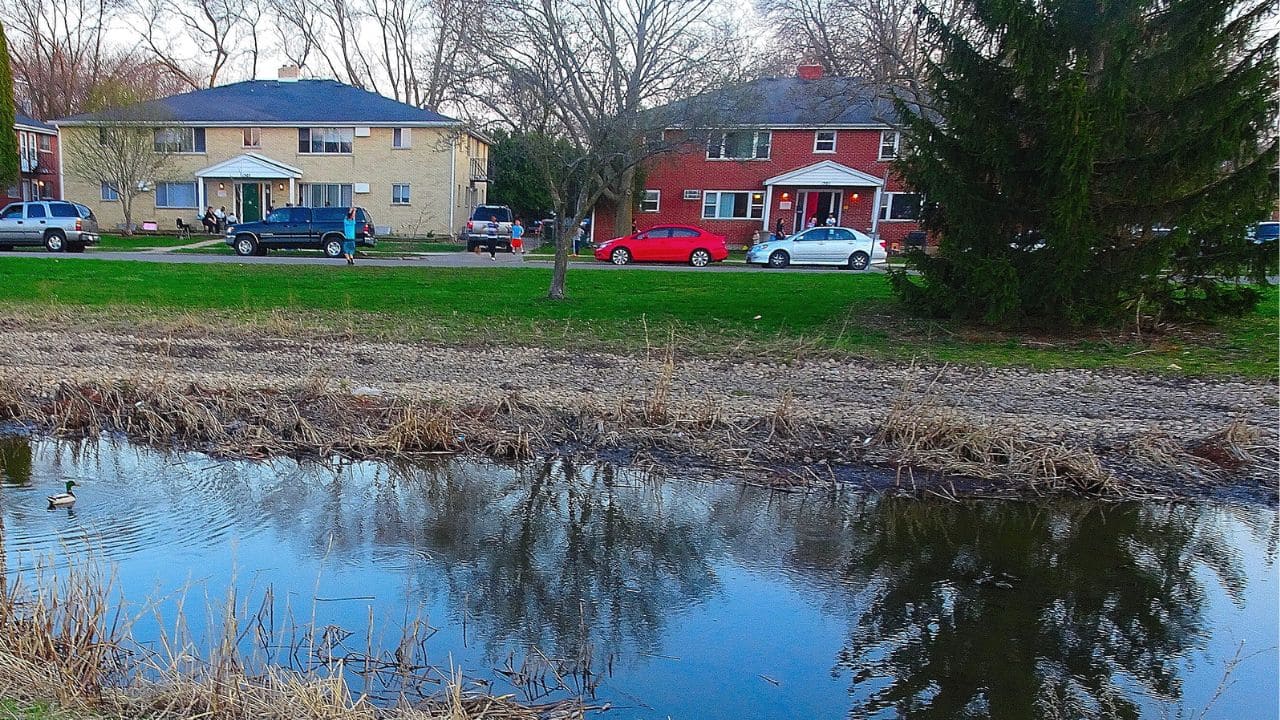
If you live near a stormwater retention pond, you already know the deal — the second that warm, humid air rolls in, your backyard becomes a mosquito war zone. To effectively control backyard mosquitoes if you are living near a stormwater retention pond, you need a layered approach — eliminate every standing water source on your property, apply Bti-based larvicides to the pond edges, introduce mosquito-eating fish, keep vegetation trimmed, and use yard treatments for adult mosquito control. No single fix works. It never has, not in my 20 years living 60 feet from a retention pond.
I’ve tried it all — the citronella candles that barely do anything, the foggers that gave me a false sense of victory, the expensive traps that sat gathering dust. What finally worked was understanding the enemy: the mosquito life cycle, what they need, and how to disrupt it at every single stage.
Keep reading. By the end of this, you’ll have a real plan — not just a tip sheet.
Why Retention Ponds Create a Mosquito Nightmare in Your Backyard
Retention ponds — also called stormwater ponds or detention basins — are designed to collect and slowly release rainwater runoff. That’s their job, and they do it fine. The problem is that the calm, shallow edges of these ponds are basically a five-star hotel for mosquitoes.
According to research cited by the Metropolitan Mosquito Control District, mosquitoes need standing water for just 48 hours to lay eggs — and those eggs can hatch into larvae within days. Retention pond perimeters, with their shallow margins and organic debris, are ideal. One study-backed estimate suggests that as many as 95% of mosquitoes in a neighborhood breed within the perimeter vegetation of nearby retention ponds.
Three factors make retention ponds especially dangerous:
- Shallow, stagnant water at the edges — perfect for egg-laying females
- Dense cattails and aquatic vegetation — shelter and a breeding factory
- Decomposing organic matter — food source for growing larvae
The species you’re most likely dealing with include Culex pipiens (the Northern House Mosquito, which can carry West Nile virus), Aedes albopictus (the Asian Tiger Mosquito), and Aedes aegypti. These aren’t just annoying — they’re genuine public health concerns flagged by the CDC and state health departments.
Understanding the Mosquito Life Cycle Near Standing Water (This Changes Everything)
This is where most homeowners fail. They spray for adults and call it done. But by the time you’re swatting mosquitoes, you’ve already lost that round.
Here’s how fast the cycle moves in warm weather:
- Eggs laid on stagnant water surface — hatch in 24–48 hours
- Larvae (wigglers) feed on organic matter for 4–14 days
- Pupae (tumblers) emerge — non-feeding stage lasting 1–4 days
- Adults emerge — females bite and begin the cycle again within days
The entire egg-to-adult process can happen in as little as one week when temperatures are warm. That’s why one missed treatment cycle, one ignored bird bath, can lead to a full-blown infestation before you even notice.
How to Eliminate Standing Water Sources Around Your Backyard
You cannot out-spray a breeding ground. I learned this the hard way, year two of living here. Even if the retention pond itself isn’t on your property — you likely have secondary breeding sites in your own yard that are multiplying your problem.
Common Backyard Mosquito Breeding Sites People Miss
- Clogged gutters — one of the most overlooked mosquito breeding grounds in residential yards
- Flower pot saucers and decorative planters holding rainwater
- Tarps, buckets, wheelbarrows — anything concave that collects water
- Bird baths that aren’t refreshed every 2–3 days
- Tree holes — fill with sand or expanding foam
- Low spots in your lawn that stay wet after rain for more than 3 days
- Pet water bowls left outside overnight
The Metropolitan Mosquito Control District recommends: if water stands undisturbed for more than three days in any container, it can produce mosquitoes. Walk your property after every rain — seriously, it takes ten minutes and it makes a difference.
Using Bti Larvicides to Kill Mosquito Larvae in Pond Water
Okay, here’s what actually moved the needle for me. Mosquito Dunks. If you haven’t used them, stop what you’re doing and order some right now.
Mosquito Dunks contain Bacillus thuringiensis israelensis (BTI) — a naturally occurring soil bacterium that kills mosquito larvae but is completely harmless to fish, birds, pets, wildlife, and humans. This has been confirmed by the UC Integrated Pest Management Program and endorsed as a go-to residential larvicide.
How to Use Mosquito Dunks Near a Retention Pond?
- Toss one dunk per 100 square feet of standing water surface area
- Replace every 30 days — they remain effective for about a month
- For very shallow edges or rain barrels, crumble the dunk — it works faster
- Combine with Mosquito Bits for faster knockdown (Bits work within 24 hours)
Introduce Mosquito-Eating Fish: Nature’s Best Larvicide
This is the sleeper tip that most homeowners never use. If you have any access to the pond — or any backyard water feature — fish are your best long-term weapon against mosquito larvae.
The top options:
- Gambusia affinis (Mosquito Fish) — small, hardy, used in California since 1922. Many county vector districts distribute them free. They consume thousands of larvae per day.
- Bluegill and pan fish — excellent for HOA retention ponds. They forage along the vegetated perimeter where 95% of breeding happens.
- Guppies and minnows — suitable for smaller backyard water features or ornamental ponds.
Pond Aeration and Water Circulation: Why Moving Water Repels Mosquitoes
Mosquitoes will not lay eggs in moving water. That’s not an opinion — it’s biology. A female mosquito needs a calm water surface to deposit her eggs. Even gentle rippling disrupts this.
For backyard water features, this is the easiest win. A small fountain pump or waterfall feature eliminates stagnation. For community retention ponds, aeration systems like solar-powered floating fountains are increasingly common and can be proposed to HOA boards.
Added benefits of aeration beyond mosquito control:
- Improves dissolved oxygen levels, supporting fish and aquatic life
- Reduces algae blooms that feed mosquito larvae
- Promotes decomposition of organic matter, reducing sludge buildup
Vegetation Management: Trim the Mosquito Hotel
The worst thing you can do if you live near a retention pond is let your lawn and landscaping run wild. Overgrown vegetation is where adult mosquitoes rest during the day — in the cool, shaded, moist underside of leaves — waiting for sunset.
Cattails are especially bad. According to pond management experts, cattails have shallow root structures that create an almost perfect mosquito nursery along the pond perimeter. If you have any ability to influence the pond’s vegetation management, push for cattail removal or trimming.
Vegetation control checklist:
- Keep lawn grass under 2 inches — mosquitoes hide in tall grass
- Trim shrubs and hedges around your patio and seating areas
- Remove dead leaves and organic debris from pond edges
- Trim any overhanging vegetation near water edges — larvae use it as shelter
Natural Mosquito Predators: Recruit Bats, Dragonflies, and Birds
One of the most underused strategies in backyard mosquito control is encouraging natural predators. And it’s basically free.
- Bats — a single bat can consume hundreds of mosquitoes per hour at night. Install a bat house on a post near your yard, ideally 10–15 feet off the ground, facing south/southeast.
- Dragonflies — both larvae and adults eat mosquitoes. They breed in ponds, so healthy pond ecology supports their presence. Avoid broad-spectrum insecticides near the water; they’ll wipe out dragonfly larvae too.
- Purple Martins and Swallows — these birds are agile aerial hunters. Put up a martin house and you’ll have a resident insect patrol.
These natural solutions take time to establish. Don’t expect overnight results. But after a season or two, the ecosystem around your yard genuinely shifts.
Yard Treatments for Adult Mosquito Control: What Works and What Doesn’t
Once you’ve dealt with the larvae, you still have adults coming in from the pond itself. This is where yard-level treatment comes in. But let me save you some money — most gadgets marketed for this are garbage.
What Actually Works for Adult Mosquito Control Near Ponds
- Permethrin yard spray — applied to vegetation, fences, and shaded areas. Safe once dried. Effective for 2–4 weeks. Avoid spraying directly on flowering plants or near water.
- Mosquito barrier sprays (garlic-based) — less toxic, safe around pets and kids, decent short-term effect. Need more frequent reapplication.
- CO₂ mosquito traps — genuinely effective for reducing adult populations over time. Not cheap, but worth it if you spend a lot of time outdoors. Requires strategic placement.
What Doesn’t Work (Stop Wasting Money)
- Citronella candles — minimal effect beyond a few inches
- Ultrasonic devices — no scientific evidence of efficacy
- Bug zappers — mostly kill moths and other beneficial insects, not mosquitoes
Personal Protection Tips When You Live Near a Mosquito Breeding Pond
Even the best-controlled yard will still have some mosquitoes if you’re living next to a retention pond. Personal protection isn’t optional — it’s part of the system.
- Use EPA-registered repellents containing DEET (20–30%), Picaridin, or Oil of Lemon Eucalyptus (OLE). All three are recommended by the CDC.
- Mosquitoes are most active at dawn and dusk — plan outdoor activities accordingly or stay protected during these windows.
- Wear loose-fitting, light-colored clothing — mosquitoes are attracted to dark colors and can bite through tight fabric.
- Install or repair window and door screens. Run a fan on your patio — mosquitoes are weak fliers and even a light breeze disrupts them.
When to Call a Professional Mosquito Control Service or Your County Vector District
If the retention pond is community property, you may not legally or physically be able to treat it yourself. This is where your local government comes in.
Most U.S. counties have a mosquito control district or vector control program. Many of them are authorized and equipped to treat stormwater retention ponds with appropriate larvicides or biological controls. They can also provide surveillance data — useful if you suspect a disease vector concern like West Nile virus is active in your area.
When to escalate to professionals:
- Severe infestations that persist despite your DIY efforts
- West Nile virus or other mosquito-borne disease activity reported in your county
- HOA or shared water body that needs coordinated treatment
- You have young children, elderly family members, or immunocompromised individuals at higher risk
A Seasonal Mosquito Control Schedule for Pond-Side Homeowners
This is the schedule I’ve followed for years. Adapt to your climate, but the core rhythm is the same:
- Early Spring (March–April): Walk your property, dump all standing water, clear gutters, treat any early-season bird baths or water features with Bti.
- Late Spring (May): Begin regular 30-day Mosquito Dunk applications in all standing water. Apply first round of yard permethrin spray. Assess pond edge vegetation.
- Summer (June–August): Maintain Dunk schedule. Reapply yard treatments monthly. Keep lawn trimmed. Check and maintain any aeration systems.
- Fall (September–October): Continue treatments until temperatures consistently drop below 50°F. Drain and store decorative water features.
Quick Reference: Mosquito Control Methods at a Glance
| Method | Target Stage | Effectiveness | Cost |
| Bti Dunks/Bits | Larvae | Very High | Low ($) |
| Mosquito-eating fish | Larvae | Very High | Free–Low |
| Pond aeration/fountain | Eggs + Larvae | High | Med ($$) |
| Vegetation trimming | Adults (resting) | High | Free |
| Permethrin yard spray | Adults | High | Low ($) |
| Bat houses | Adults (night) | Moderate | Low ($) |
| CO₂ traps | Adults | Moderate–High | High ($$$) |
| Eliminate standing water | Eggs + Larvae | Critical | Free |
Final Takeaway: Control Backyard Mosquitoes Near a Retention Pond the Right Way
Twenty years of living next to a retention pond taught me this: there’s no silver bullet, but there’s absolutely a winning strategy.
You control backyard mosquitoes near a retention pond by attacking the problem at every stage — larvae, adults, breeding sites, and harborage. Eliminate standing water weekly. Use Bti larvicides monthly. Stock or encourage mosquito-eating fish. Aerate any water feature you own. Trim vegetation. Use personal protection during peak hours. And don’t fight the pond alone — recruit your local mosquito control district.
This isn’t just about comfort. Mosquitoes near residential retention ponds carry real public health risks — West Nile virus, Eastern Equine Encephalitis, and others are active in communities across the U.S. Protecting your family isn’t paranoia; it’s responsibility.
Start this weekend. Don’t wait until you’re slapping yourself raw on the patio. Pick two things from this list and do them today. Build from there.
Have you tried any of these methods? Do you have a tip that worked for you near your retention pond? Drop it in the comments — real-world experience is worth more than any product label.
Editorial Team & Contributors

Raashid Ansari, Founder, Content Researcher & Author - MosquiTalk
Not an entomologist — just a genuinely curious writer who started researching mosquitoes and couldn't stop. What began as casual reading about repellents and bite prevention gradually turned into a deep ongoing dive into vector biology, disease epidemiology, animal health impacts, and the real science behind mosquito control. Everything published here is carefully edited, and written with one purpose: giving readers accurate, accessible information they can actually trust and use to protect themselves, their families, and their pets, birds and cattle.
Active across social platforms, regularly publishes, and genuinely invested in spreading mosquito awareness where it matters most. Because informed readers make better decisions — and better decisions save lives.