
Introduction
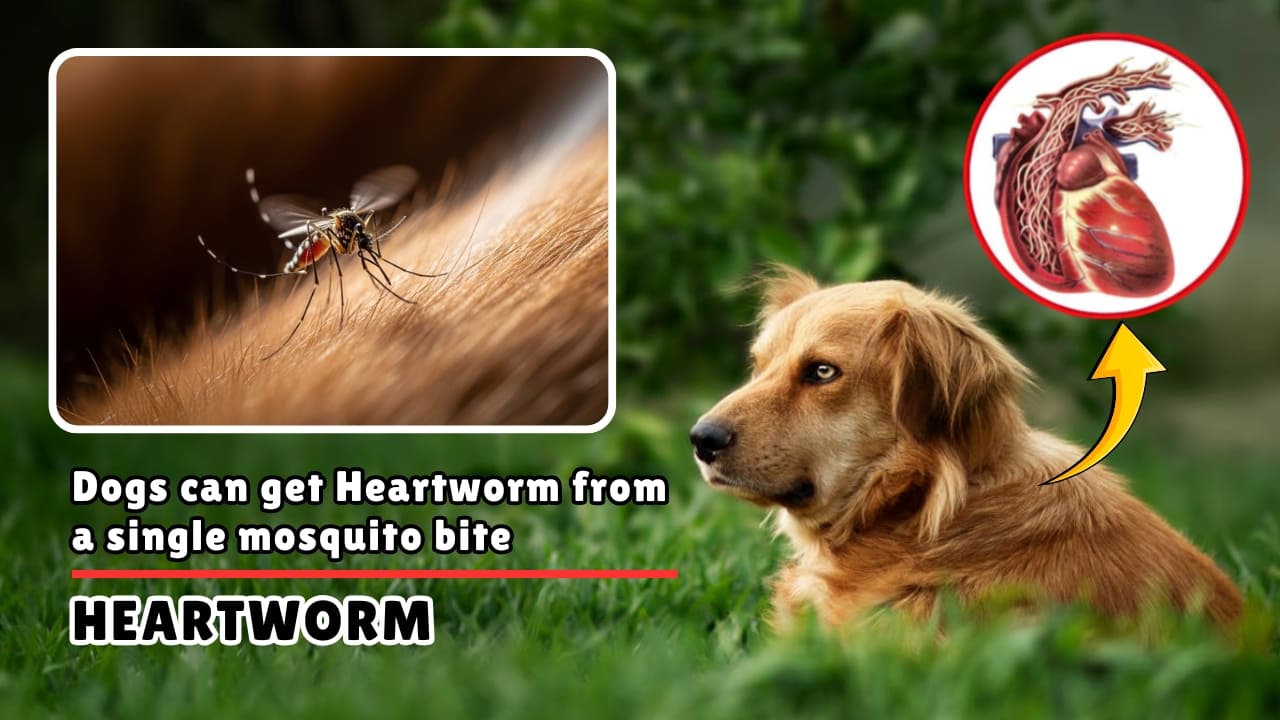
Your dog darts outside for a quick bathroom break. A mosquito lands on their leg. You brush it off without thinking twice. But what if that single bite could set off a chain of events that changes your dog’s life forever?
The question sounds straightforward enough, but the answer isn’t. And if you’re a dog owner in any mosquito-prone area, this matters more than you might think. Let’s cut through the confusion and get to what actually happens when one infected mosquito bites your dog.
Heartworm from a Single Mosquito Bite, But It’s More Complicated
Here’s the direct answer: Yes, your dog can absolutely get heartworm from a single mosquito bite. But—and this is important—that one mosquito has to be carrying the heartworm parasite already. Not all mosquitoes carry the heartworm parasite. Not even most do. But when one that does bite your dog, infection is genuinely possible.
The reality that keeps veterinarians up at night is this: you can’t tell by looking at a mosquito whether it’s infected or not. So that single bite? It might be completely harmless. Or it might be the beginning of a serious health crisis for your dog. The uncertainty is part of why heartworm disease remains one of the leading preventable health threats for dogs in the United States.
How Heartworm Actually Gets Transmitted — The Lifecycle You Need to Understand
The heartworm lifecycle is genuinely fascinating, and understanding it changes how you think about transmission. It’s not like bacterial infections where one exposure sometimes causes disease. Heartworms have specific requirements.
Stage 1: The Infected Mosquito
A mosquito first has to bite an already-infected dog or other canine host (coyotes, foxes can carry heartworms too). That dog has microfilariae—baby heartworms—circulating in their bloodstream. When the mosquito feeds on this infected blood, it ingests these larvae.
Stage 2: Development Inside the Mosquito
Here’s where the mosquito becomes dangerous. Inside the mosquito’s body, those larvae go through a crucial developmental stage over 10–14 days. The temperature has to be right. If it’s too cold, development stops. This is why heartworm is more prevalent in warmer climates and seasonal spikes happen in summer. During this window, the larvae mature into their infectious stage, called third-stage larvae.
Stage 3: Transmission to Your Dog
Once mature, those infective larvae concentrate in the mosquito’s mouthparts. When that mosquito bites your dog, the larvae are deposited into the bite wound. That single bite—if it’s from an infected mosquito with fully developed larvae—can transmit the parasite.
Stage 4: The Race in Your Dog’s Body
Once in your dog, the larvae begin their own journey. They migrate through tissues over 6–7 days, eventually reaching the bloodstream. Then they travel to the heart and lungs, where they mature into adult worms over 6–7 months. During that entire time—before symptoms even appear—your dog is infected and could transmit it to other mosquitoes. This silent period is why early detection matters so much.
The Window of Vulnerability: One Bite Is All It Takes
Let’s be crystal clear about what “one infected mosquito bite” really means. If a mosquito carrying third-stage larvae—the infective form—bites your dog’s skin and those larvae make it into the bite wound, that’s enough for infection to begin. You don’t need multiple bites. You don’t need exposure to dozens of mosquitoes. One. Infected. Mosquito.
The cruel part? Your dog might never show obvious signs they were bitten. Some dogs have minor reactions, sometimes invisible. The mosquito feeds for just 30 seconds, leaves no major wound, and disappears.
The infection rate from a single infected bite is high. Research shows that when properly infected mosquitoes bite unprotected dogs, transmission occurs in the majority of cases. It’s not a low-percentage risk. It’s a realistic threat.
Why Some Dogs Get Infected Faster Than Others
Not all dogs develop heartworm disease at the same rate after infection. Several factors influence how quickly the parasite establishes itself and causes damage.
i) Age and Overall Health
Young puppies and senior dogs are generally more vulnerable. Dogs with compromised immune systems fight infection less effectively. Pre-existing heart or lung conditions speed up disease progression.
ii) Exposure to Multiple Infected Mosquitoes
A single infected bite might establish one or a few worms. But if your unprotected dog is exposed repeatedly throughout mosquito season, the parasite burden multiplies rapidly. Five bites means potentially multiple worm pairs. Twenty bites? The infection becomes severe much faster.
iii) Geographic and Seasonal Factors
Dogs in warmer climates with year-round mosquito activity face constant risk. Northern dogs might have shorter seasons, but the risk isn’t zero. Even a few warmer weeks can create conditions for mosquito survival and heartworm development.
The Silent Infection: Why Your Dog Might Not Show Symptoms for Months
This is the terrifying reality of heartworm disease: your dog can be actively infected and seem completely normal. For 5–7 months after that single mosquito bite, the larvae are migrating, developing, and maturing. Your dog is playing fetch. They’re eating normally. They’re giving you zero warning signs that something dangerous is happening inside them.
This invisible period is when damage is accumulating. Adult worms are settling into the heart and lungs, interfering with blood flow. Your dog’s immune system is reacting, causing inflammation. By the time symptoms appear—coughing, fatigue, lethargy, difficulty breathing—the infection might already be severe.
The only way to catch heartworm during this silent phase is through a blood test. Most veterinarians recommend annual screening, or more frequently if your dog is unprotected or at high risk.
Heartworm Prevalence: Where Is the Risk Highest?
Heartworm isn’t distributed evenly across the country. Some regions have much higher infection rates than others, which directly affects how likely that single mosquito bite is to come from an infected vector.
1. High-Risk Areas:
The entire Southeast, Gulf Coast, Mississippi River valley, and lower Midwest regions have significant heartworm prevalence. If you live in Florida, Texas, Louisiana, or the Carolinas, infected mosquitoes aren’t rare. Dogs in these areas face exposure to multiple infected vectors throughout the year.
2. Moderate-Risk Areas:
Even states like Ohio, Pennsylvania, New York, and California have documented heartworm cases. The risk is lower, but it’s not zero. Coyote and fox populations in these regions also harbor the parasite, which means mosquitoes can still pick it up.
3. Low-Risk Areas:
Northern states with short summers and cold winters have lower prevalence, but warmer weather is changing this. Climate shifts are expanding mosquito ranges and the heartworm season itself.
Here’s What Your Dog ACTUALLY Needs: Prevention That Actually Works
Since a single mosquito bite can be enough, the only rational approach is prevention. And the good news? Prevention works. It’s effective, relatively affordable, and far cheaper than treating heartworm disease.

1. Monthly Preventatives
Monthly heartworm prevention (like ivermectin, milbemycin, moxidectin) is the gold standard. These medications kill larvae before they can establish infection. Taken monthly year-round (or during mosquito season in colder climates), they provide reliable protection.
Compliance is key. Missing doses creates windows of vulnerability. Some owners struggle with monthly schedules, which is why the next option exists.
2. Injectable Prevention
A newer option—a heartworm preventative injection given every 6 or 12 months—eliminates the monthly reminder issue. One vet visit, one injection, protection for months. It’s expensive upfront but practically foolproof for preventing missed doses.
3. Important Reality Check
No preventative is 100% effective if not given properly. Expired medications, inconsistent dosing, or wrong weight-based doses reduce effectiveness. Talk to your vet about what fits your dog’s lifestyle and your ability to follow through.
What Happens If Your Dog Gets Infected: The Cost of a Single Bite
If that one mosquito bite does lead to infection and heartworm disease develops, you’re looking at serious consequences—both health-wise and financially.
1. Early-Stage Disease
Caught early, heartworm treatment involves injections of an adulticide drug (like melarsomine) administered over weeks. The cost runs $500–$1,500 depending on your location and your dog’s severity. Your dog needs strict exercise restriction during and after treatment—sometimes for months. There’s a real risk of complications, including sudden death when dying worms break apart and lodge in blood vessels.
2. Advanced Disease
Dogs diagnosed late may have permanent heart damage. Treatment becomes riskier and sometimes isn’t an option. Many dogs with advanced heartworm disease face quality-of-life issues for the rest of their lives—reduced activity, medications, ongoing veterinary care. Some dogs don’t survive.
Prevention that costs you $100–$200 annually looks pretty good compared to these outcomes, doesn’t it?
📰 Must Read,
✔️ Mosquito-Borne Diseases in Pets and Animals: A Complete Handbook
✔️ How to Keep Mosquitoes Away from Dogs? Vet Approved Guide
✔️ 5 Mosquito Repellent Plants Safe for Dogs
✔️ Are Mosquito Dunks Safe for Dogs?
The Bottom Line: One Bite, Real Risk, Simple Solution
Can your dog get heartworm from a single mosquito bite? Absolutely, yes. The only requirement is that one mosquito must be carrying the parasite, and that’s far more common than most dog owners realize. In many regions, it’s likely. You don’t see it coming. Your dog doesn’t know it happened.
But here’s what should give you peace of mind: heartworm disease is almost 100% preventable. We have safe, effective medications. We have multiple delivery options. Veterinary experts unanimously recommend prevention for good reason—it works.
The moment to act is now. Talk to your veterinarian about your dog’s specific risk level and which preventative makes sense for your situation. Discuss whether year-round prevention or seasonal prevention fits your climate. Figure out which format—monthly pills, topicals, or injections—you’ll actually stick with.
That single mosquito might be out there. But you don’t have to let it win.
What’s Your Experience? Share Your Heartworm Story
Have you dealt with heartworm disease in your dog? Are you in a high-risk region and wrestling with prevention options? Or maybe you caught an infection early and want other dog owners to know the warning signs? Your experience matters. Leave a comment below and join the conversation. Other dog owners are reading this, and your insights could help someone protect their dog from the same threat.
Editorial Team & Contributors

Raashid Ansari, Founder, Content Researcher & Author - MosquiTalk
Not an entomologist — just a genuinely curious writer who started researching mosquitoes and couldn't stop. What began as casual reading about repellents and bite prevention gradually turned into a deep ongoing dive into vector biology, disease epidemiology, animal health impacts, and the real science behind mosquito control. Everything published here is carefully edited, and written with one purpose: giving readers accurate, accessible information they can actually trust and use to protect themselves, their families, and their pets, birds and cattle.
Active across social platforms, regularly publishes, and genuinely invested in spreading mosquito awareness where it matters most. Because informed readers make better decisions — and better decisions save lives.