

Introduction
You’re sitting outside on a warm evening with a group of friends, everyone within a few feet of each other, and by the end of the night you’ve counted six bites on your arm while the person next to you has none. Same environment. Same time. Completely different experience.
This is one of the most common and genuinely frustrating patterns people notice with mosquitoes. And it is not random. Mosquitoes make deliberate, signal-driven decisions about who to target — and the most powerful signal they follow is carbon dioxide.
If you are a larger person — whether that means taller, heavier, or simply built bigger — there is a clear, science-backed explanation for why you tend to attract more bites. It begins with every breath you take.
Why Do Larger People Get Bitten by Mosquitoes More Often?
The fundamental answer is metabolic. Larger bodies require more energy to function. They burn more calories at rest, move more mass during activity, and most critically — they exhale more carbon dioxide as a direct byproduct of that energy expenditure.
Carbon dioxide is the primary attractant mosquitoes use to locate potential hosts. The more CO₂ you produce, the stronger the signal you broadcast, and the greater your attractiveness to every mosquito within range.
Research shows that mosquitoes can detect a CO₂ plume from up to 50 meters away. A larger CO₂ output doesn’t just attract more mosquitoes — it attracts them from further away, for a longer sustained period. That’s a meaningful compounding effect.
How Mosquitoes Detect Carbon Dioxide (CO₂)
Mosquitoes are remarkably precise hunters. They don’t wander aimlessly until they stumble onto a host. They follow chemical gradients through the air with directional accuracy that researchers have described as goal-directed tracking.
The primary sensory organ responsible for CO₂ detection is the maxillary palp — a pair of short appendages flanking the mosquito’s mouthparts. These structures are densely packed with cpA neurons, which are highly specialized to respond to CO₂ concentrations above atmospheric baseline levels. A 2007 study published in Nature identified these neurons as the core of the mosquito CO₂ detection system.
When a mosquito encounters elevated CO₂ in the air, it immediately shifts into host-seeking mode. It begins flying upwind, following the concentration gradient toward its source. The denser and more sustained the plume, the more reliably the mosquito tracks it.
CO₂ is the first signal in a sequential detection chain. Once close enough, the mosquito layers in additional cues — body heat, skin odors, moisture, visual movement — but the initial trigger, the thing that tells a mosquito a host exists nearby, is almost always CO₂.
Do Larger Bodies Produce More Carbon Dioxide?
Unambiguously, yes. And understanding why requires a brief look at how CO₂ is generated in the human body in the first place.
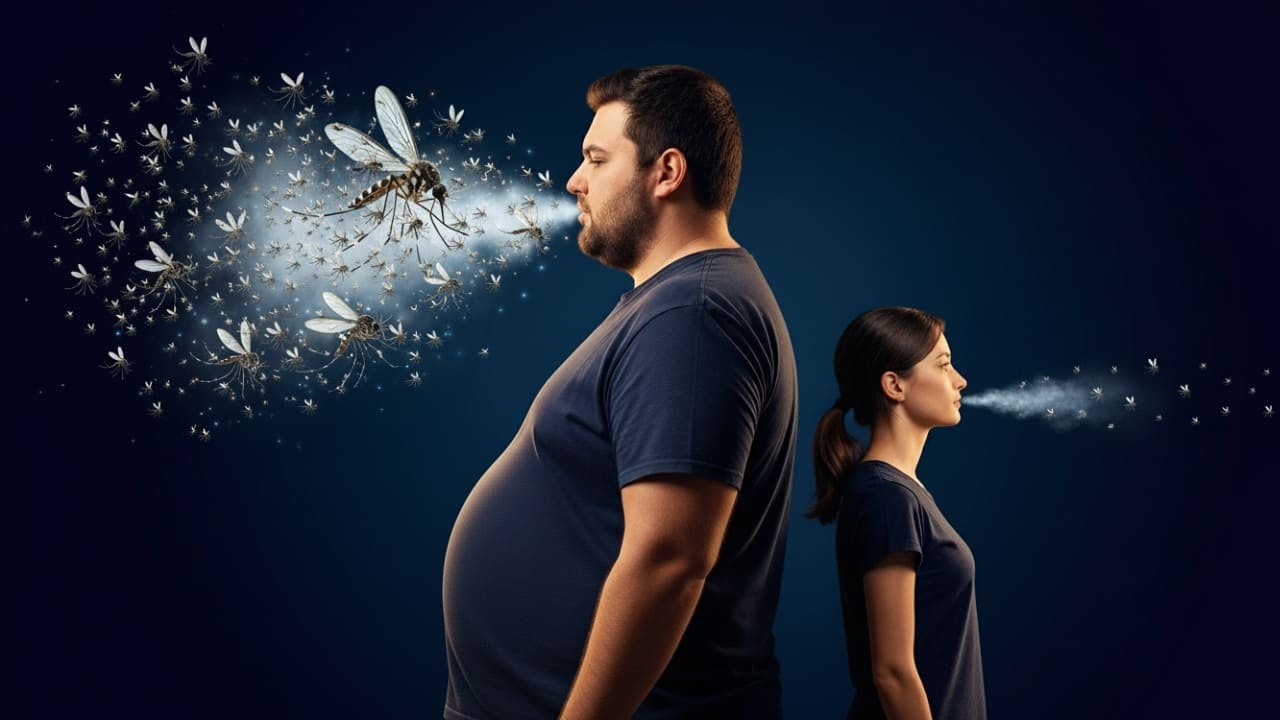
Image Credit: Illustration by Author
Every cell in the body runs a process called aerobic respiration: oxygen is used to break down glucose, releasing energy the cell can use. The waste products of this reaction are water and carbon dioxide. That CO₂ enters the bloodstream, gets carried to the lungs, and is exhaled.
More cells means more cellular respiration. More cellular respiration means more CO₂ produced. Larger bodies have more cells. The logic is as direct as it sounds — though the specifics differ between body types.
Table 1: Estimated CO₂ Output and Mosquito Attraction by Body Type
| Body Type | Avg. Resting CO₂ Output (L/min) | Avg. BMR (kcal/day) | Mosquito Attraction Level | Key Driver |
|---|---|---|---|---|
| Small / Lean (120–140 lbs) | 0.15 – 0.18 | 1,400 – 1,600 | Low | Low metabolic demand |
| Average (150–180 lbs) | 0.18 – 0.22 | 1,700 – 2,000 | Moderate | Standard BMR |
| Tall / Athletic (190–220 lbs) | 0.22 – 0.28 | 2,100 – 2,500 | High | Lung capacity + muscle mass |
| Obese (250+ lbs) | 0.26 – 0.35 | 2,200 – 2,800 | Very High | Elevated metabolic rate + labored breathing |
Obese Individuals and CO₂ Output
Obesity increases CO₂ production through several overlapping mechanisms. The most straightforward is metabolic demand. Adipose tissue — body fat — is metabolically active. It consumes oxygen and releases CO₂ around the clock, even at rest.
Scientific studies indicate that obese individuals have substantially elevated resting metabolic rates compared to lean individuals of equivalent height, simply because there is significantly more tissue requiring maintenance.
Beyond baseline metabolism, obesity is strongly associated with increased respiration rate. Carrying greater body weight places additional strain on the cardiovascular and pulmonary systems. Breathing tends to become more frequent and more effortful, particularly during even mild physical activity. This altered breathing pattern drives up total CO₂ output.
There is also a night-time dimension worth noting. Obesity is a significant risk factor for obstructive sleep apnea. Individuals with sleep apnea experience irregular breathing during sleep — periods of reduced airflow followed by compensatory surges — which creates fluctuating CO₂ concentrations. Since mosquitoes are most active around dawn and dusk, and many people in warm climates sleep with windows open, this pattern can be relevant.
Tall, Large, Healthy and Obese Individuals
Body size and body fat are not the same thing, and this distinction matters for understanding CO₂ output. A tall, lean, physically active individual can produce as much or more CO₂ than someone who is obese — through entirely different mechanisms.
Lung capacity scales with body frame. A person who is six feet four has physically larger lungs than someone who is five feet two. Larger lungs move more air per breath cycle. More air per breath means more oxygen extracted, and proportionally more CO₂ exhaled with each breath.
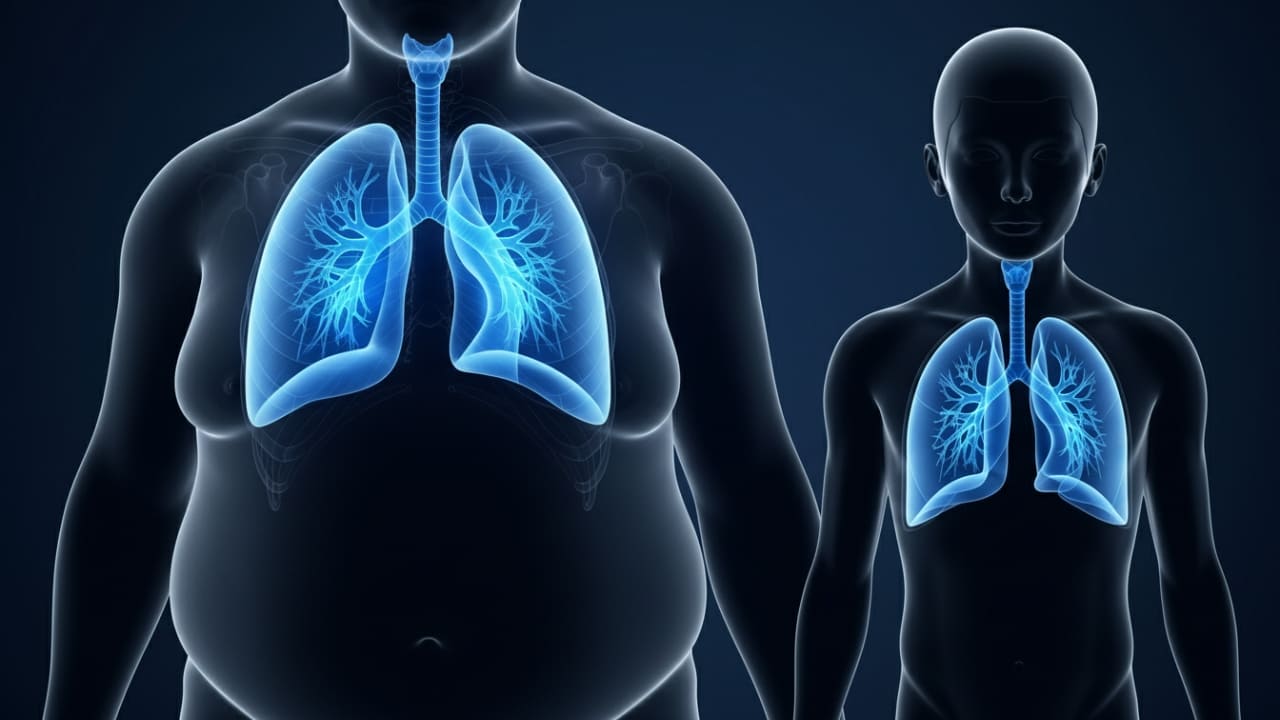
Image Credit: Illustration by Author
Muscle mass compounds this effect. Muscle tissue is among the most metabolically active tissue in the human body. A large, muscular individual burns substantially more calories at rest than a smaller person with less muscle, even controlling for body fat percentage. That elevated resting metabolism translates directly into a higher continuous CO₂ output.
During exercise, the gap widens dramatically. According to physiology researchers, CO₂ output during intense physical activity can increase five to tenfold compared to resting levels. A large, fit person exercising outdoors is producing a CO₂ plume of remarkable density — and mosquitoes from a wide radius respond accordingly.
The Science of CO₂, Metabolism, and Mosquito Attraction
The relationship between body size, metabolism, and CO₂ output is not approximate — it is measurable and consistent. Basal metabolic rate (BMR), the number of calories the body burns at complete rest, increases predictably with body mass. Standard BMR equations (the Mifflin-St Jeor formula, for example, used widely in clinical settings) show that a 250-pound individual has a resting caloric burn roughly 40–60% higher than a 140-pound individual of the same sex and age.
Every calorie burned produces a corresponding volume of CO₂. The relationship isn’t perfectly linear because different macronutrients (fat, carbohydrate, protein) produce different CO₂-to-oxygen ratios — but the directional relationship holds firmly: more metabolic activity equals more CO₂ exhaled.
This means the effect is continuous. It doesn’t require exercise or exertion. A larger person sitting quietly on a porch in the evening is still exhaling a denser CO₂ plume than a smaller person doing the same thing in the same chair. The mosquitoes in that environment are operating off that difference in real time.
Why CO₂ Makes You a Mosquito Magnet?
The CO₂ exhaled with each breath does not simply dissipate instantly. It forms a plume — a trail of elevated CO₂ concentration that drifts downwind from the source. The size, density, and persistence of that plume are direct functions of how much CO₂ is being produced per unit of time.
A larger plume has two compounding effects on mosquito attraction. First, it is detectable from a greater distance. A modest CO₂ output might draw mosquitoes from 20–25 meters. A dense, sustained plume from a larger body can draw them from 40–50 meters — doubling the effective attraction radius and exponentially increasing the number of mosquitoes responding.
Second, a larger plume is more persistent in the air. Wind and diffusion gradually dilute a CO₂ plume, but a higher-output source continuously replenishes it. This means the plume stays strong and directional for longer, giving mosquitoes more time and a clearer signal to follow.
According to entomologists, mosquito host-seeking behavior once locked onto a CO₂ gradient is highly persistent. They do not easily abandon a plume once tracking begins. A person producing a strong, sustained CO₂ signal is keeping mosquitoes engaged and approaching for longer periods than a weaker signal would.
Other Factors That Amplify CO₂ Attraction
Carbon dioxide initiates the hunt. But several other factors interact with it — and many of these factors correlate directly with larger body size, which is why the attraction compounds beyond what CO₂ alone would predict.
Table 2: Mosquito Attractant Factors — How They Work and Their Connection to Body Size
| Attractant Factor | How It Works | Correlation With Body Size | Mosquito Response |
|---|---|---|---|
| Carbon Dioxide (CO₂) | Primary plume signal tracked from up to 50 m | Directly proportional to body mass and metabolic rate | Triggers host-seeking from distance |
| Body Heat | Infrared radiation detected at close range | Greater surface area in larger individuals | Confirms and locks onto target |
| Lactic Acid | Released in sweat, amplified by exercise | Higher output in larger, more active bodies | Increases attractiveness at close range |
| Skin Bacteria / Odour | Specific microbiome composition affects odour profile | Greater sweat gland density in larger surface area | Fine-tunes host selection |
| Movement | Visual cue at short range; also spikes CO₂ output | Larger individuals produce more visible movement cues | Visual targeting in final approach |
- Body heat. Larger bodies have greater surface area radiating heat. Mosquitoes detect infrared radiation at short range — typically within a meter or two — using pit organs. Once CO₂ has drawn them close, body heat helps them identify and zero in on the warmest, most accessible skin surface. Larger individuals radiate more heat from more surface area, amplifying attractiveness at close range.
- Lactic acid. Produced during cellular metabolism and released in sweat, lactic acid is a documented mosquito attractant. Research published in the Journal of Chemical Ecology confirmed that lactic acid concentrations significantly increase mosquito landing rates. Larger individuals, particularly those who are physically active, tend to produce and release more lactic acid — adding a second chemical layer on top of the CO₂ signal.
- Sweat composition. Sweat contains ammonia, uric acid, and various fatty acids, many of which attract mosquitoes. The specific skin microbiome — the bacterial population living on the skin surface — shapes how these compounds break down and what they smell like to a mosquito. Larger surface area means more sweat glands, more sweat production, and in many cases a stronger overall odour profile.
- Movement. Physical movement serves as a visual cue for mosquitoes at close range. It also, crucially, spikes CO₂ output temporarily. Even mild movement — shifting position, gesturing, walking — increases respiratory rate and momentarily elevates the CO₂ plume. Larger individuals produce more visible movement cues simply due to greater physical presence.
📰 Must Read,
✔️ Why Do Mosquitoes Bite Me So Much? Factors that Makes You a Mosquito Magnet
✔️ What to Take Orally to Prevent Mosquito Bites: Pills, Vitamins, Diet, and Supplements
Conclusion
The pattern of larger people attracting more mosquito bites has a clear, reproducible biological explanation. It begins with carbon dioxide — the inevitable byproduct of human metabolism — and compounds through related factors like body heat, sweat chemistry, and lactic acid output.
Bigger bodies burn more energy. Burning more energy produces more CO₂. More CO₂ means a stronger, wider-ranging, more persistent plume in the air around you. Mosquitoes detect that plume from further away, respond to it more reliably, and track it more persistently than a weaker signal.
The effect is not a quirk of individual sensitivity. It is a direct consequence of fundamental metabolic biology.
For those who find themselves disproportionately targeted, practical steps can meaningfully reduce exposure.
- DEET and picaridin-based repellents work in part by disrupting the mosquito’s ability to detect CO₂ and other host cues.
- Avoiding outdoor activity during peak mosquito hours — dawn and dusk — reduces exposure windows.
- Wearing loose, light-coloured, long clothing reduces available skin surface.
- Remaining still and staying in well-ventilated, shaded areas during high-activity periods lowers both the CO₂ gradient and the visual movement cues that bring mosquitoes into final approach.
Body size cannot be changed in an evening. But exposure can be managed — and understanding the mechanism is the first step toward doing that effectively.
Editorial Team & Contributors

Raashid Ansari, Founder, Content Researcher & Author - MosquiTalk
Not an entomologist — just a genuinely curious writer who started researching mosquitoes and couldn't stop. What began as casual reading about repellents and bite prevention gradually turned into a deep ongoing dive into vector biology, disease epidemiology, animal health impacts, and the real science behind mosquito control. Everything published here is carefully edited, and written with one purpose: giving readers accurate, accessible information they can actually trust and use to protect themselves, their families, and their pets, birds and cattle.
Active across social platforms, regularly publishes, and genuinely invested in spreading mosquito awareness where it matters most. Because informed readers make better decisions — and better decisions save lives.