
Table of Contents
Introduction to Garlic as Mosquito Repellent
Garlic has been used as a natural insect deterrent for generations. Farmers have been spraying garlic juice on crops for decades to keep pests away, and that folk wisdom turns out to have at least some science behind it.
The main active compound — allicin — is a sulfur-based molecule released when garlic is crushed or chopped. Mosquitoes, like most soft-bodied insects, are extremely sensitive to sulfur compounds. That sensitivity is essentially what makes garlic repellent worth talking about.
But here’s where it gets complicated. There’s a real difference between spraying garlic in your yard and taking a garlic supplement and expecting mosquitoes to leave you alone. One has legitimate research support. The other doesn’t. This article breaks both down clearly.
Does Garlic Actually Repel Mosquitoes?
Short answer: yes, but it depends entirely on how you use it. The repellent properties of garlic come from its organosulfur compounds — primarily allicin, diallyl disulfide (DADS), and diallyl trisulfide (DATS).
These are formed when garlic is crushed or cut, triggering an enzyme called alliinase that converts alliin into allicin. That reaction produces the characteristic pungent smell — and it’s that smell that mosquitoes find intolerable.
A 2022 study published in ScienceDirect’s Industrial Crops and Products journal evaluated garlic oil against all life stages of Aedes aegypti — the primary dengue, Zika, and chikungunya vector. Researchers found significant larvicidal, pupicidal, ovicidal, and adulticidal activity, with larvicidal LC50 values of just 1.0 ppm.
The study concluded garlic oil is a strong candidate for integrated mosquito vector control programs, particularly as resistance to conventional insecticides continues to grow.
Earlier research in the Journal of Vector Ecology found that garlic-derived compounds significantly reduced mosquito landing and probing behavior in laboratory conditions. Spatial repellency was also confirmed — the volatile sulfur compounds dispersed into surrounding air and created a chemical barrier mosquitoes actively avoided.
Topical & Yard Application: Supported by Research
Applied as a spray — to skin, plants, or yard surfaces — garlic demonstrates measurable repellent and insecticidal activity against multiple mosquito species, including Aedes aegypti and Anopheles gambiae. Several peer-reviewed studies back this up.
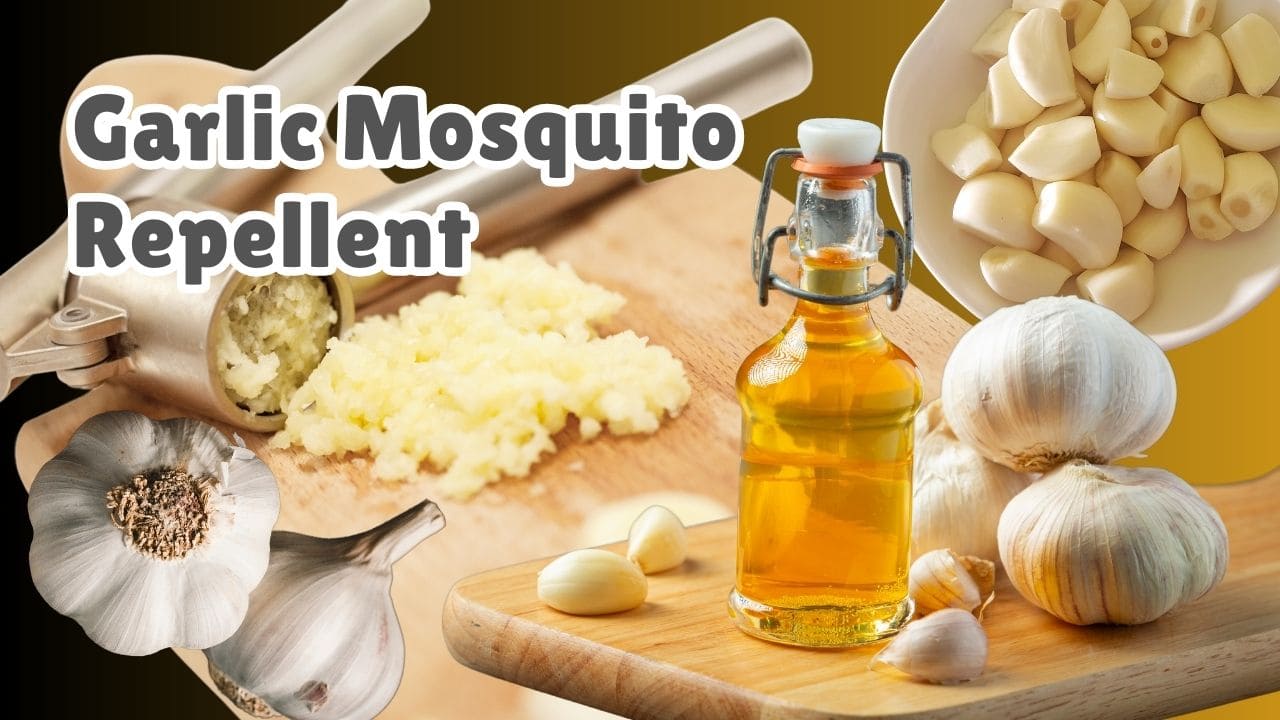
Garlic – A Natural Repellent for Mosquitoes
Making use of liquid garlic to keep mosquitoes away is not new. Our ancestors from last generations were using garlic juice made by crushing garlic cloves to repel many pests and insects. Garlic juice contains allicin and sulfur in form of various diallyl sulfide compounds, which are repellent to mosquitoes.
The characteristic odor of garlic makes it a powerful insect repellent which also repels mosquitoes. The garlic being natural and environment friendly causes no harm to humans and pets.
One important caveat: commercial garlic products like Mosquito Barrier use highly concentrated extracts — significantly stronger than what you’d make from grocery-store cloves at home.
Standard kitchen garlic has meaningful repellent activity, but won’t match the concentration of a purpose-built liquid garlic concentrate. Homemade sprays work — just expect to reapply more frequently.
How Liquid Garlic Repel Mosquitoes?
Garlic contains sulfur compounds which releases strong pungent odor that is highly unpleasant for mosquitoes. When applied or sprayed at outdoor spaces like garden, flower beds, grasses and lawn, they creates a barrier that mosquitoes find difficult to invade and hence they avoid garlic sprayed areas.
This strong odor from garlic interferes with the olfactory senses of mosquitoes and disrupts their ability to smell the body odor and carbon dioxide of their hosts.
Why Should We Use Liquid Garlic Mosquito Repellent?
The garlic mosquito repellent is preferred due to many reasons like:
- It is natural, chemical-free and eco-friendly
- It is safe for pets and humans
- Homemade garlic sprays can be prepared at home and used
- It is cost-effective
Eating Garlic vs. Applying It — A Critical Distinction
This question comes up constantly. The idea that eating garlic changes your body odor enough to repel mosquitoes has been circulating forever. It’s appealing — who wouldn’t want bug protection built into dinner?
But the clinical evidence just doesn’t support it.
A randomized, double-blinded, placebo-controlled crossover trial published on PubMed (Rajan et al., 2005) specifically tested this. Subjects consumed either garlic or a placebo and were then exposed to mosquitoes under controlled conditions.
Blood plasma analysis confirmed garlic metabolites were present in the garlic group — meaning it was absorbed systemically. But researchers found no statistically significant difference in mosquito biting rates between the two groups.
The reason makes sense biochemically. When you eat garlic, its compounds are metabolized before being excreted through sweat and breath. The resulting concentration of sulfur volatiles on the skin surface is too low — and not the right molecular profile — to interfere with how mosquitoes detect carbon dioxide, lactic acid, and body heat.
Mosquito Barrier, one of the most well-known commercial garlic repellent brands, states directly on their FAQ: eating garlic has never been scientifically shown to repel mosquitoes.
Eating Garlic: Not Supported by Clinical Evidence
Consuming garlic — raw cloves, supplements, or juice — does not reliably reduce mosquito bites. The concentration of sulfur compounds reaching the skin surface after digestion is insufficient to affect mosquito host-seeking behavior.
Table 1 — Eating Garlic vs. Applying Garlic: Key Differences
| Method | How It Works | Scientific Support | Effective? |
|---|---|---|---|
| Eating raw garlic / supplements | Metabolized; excreted through sweat and breath | PubMed RCT (Rajan 2005) — no effect found | No |
| Garlic oil applied to skin | Direct contact with olfactory deterrent compounds | Asian Pacific J. Tropical Biomedicine — up to 4 hrs protection | Moderate |
| Garlic spray on yard / plants | Volatile sulfur barrier in air; larvicidal on water | ScienceDirect 2022; Journal of Vector Ecology 2005 | Yes |
| Garlic-infused candles indoors | Spatial repellency from volatilized sulfur compounds | Limited; anecdotal and small-scale studies only | Uncertain |
| Sources: PubMed (PMID 15752181); ScienceDirect Industrial Crops 2022; Asian Pacific J. Tropical Biomedicine 2013 | |||
Process to Make Liquid Garlic Mosquito Spray
How to Make a Liquid Garlic Mosquito Repellent Spray at Home?
Making your own garlic mosquito spray is inexpensive and takes about 10 minutes of active prep. There are two main versions worth knowing — a basic water-based yard spray, and an oil-infused version that’s more durable.
Neither is as concentrated as commercial products like Mosquito Barrier, but both provide real repellent activity.
Recipe 1: Basic Garlic Yard & Garden Spray
Best for spraying lawn, shrubs, garden beds, and around outdoor seating areas.
Follow the step-by-step process given below for making home made liquid garlic mosquito repellent spray:

Step #1: Prepare the Garlic solution
- Crush 10 to 12 cloves of garlic and blend it
- Steep the crushed garlic in 4 cups of water for several hours
- Now strain and transfer it into a container
Step #2: Dilute the Garlic concentrate
- Dilute the above garlic concentrate in 1:3 ratio with water
- Make up the volume and fill it in a spray bottle for final use
Step #3: Treatment / Application
This spray solution of liquid garlic mosquito trepellent can be used at different places to keep mosquitoes away:
- Spray the garlic solution around the sitting areas and patios, flower beds, tall grasses, shrubs and bushes and any other mosquito prone areas in your garden and backyard.
- Spray around decks and barbeque table, outdoor lights, trash cans, chicken coops, and inside your garage and basement.
- Do not spray directly in birdbaths and ponds, as it may harm the fish, frogs, birds and other useful insects.
Step #4: Repeat as needed
- The impact or the effect of garlic may subside soon and may not lasts longer than a week or two. So you may need to reapply after every 10 to 12 days.
- Excess watering in lawns and rainfall may wash away the garlic spray and therefore need to apply again.
Ingredients
- 10–12 garlic cloves (crushed)
- 4 cups of water
- 1 tsp liquid castile soap
- Optional: ½ tsp cayenne pepper
You’ll Need
- Blender or food processor
- Fine mesh strainer or cheesecloth
- 32 oz spray bottle
- Large bowl or pitcher
- 1 Crush or blend garlic cloves with 1 cup of water for 60 seconds until fully liquefied.
- 2 Steep the garlic liquid in the remaining 3 cups of water for 6–8 hours, or overnight in the fridge for stronger concentration.
- 3 Strain thoroughly through cheesecloth — any garlic solids will clog the sprayer.
- 4 Add castile soap and optional cayenne, stir gently, and pour into spray bottle.
- 5 Spray in the early morning or late afternoon to maximize effectiveness and minimize evaporation.
Recipe 2: Garlic + Mineral Oil Spray (Long-Lasting)
Oil-based versions are more durable. The oil helps active compounds adhere to surfaces and slows evaporation of the sulfur volatiles. This is closer to how commercial garlic concentrates are formulated.
Ingredients
- 8–10 minced garlic cloves
- 2 tbsp mineral oil or light olive oil
- 2 cups water
- 1 tsp liquid soap (emulsifier)
- 1 tbsp fresh lemon juice (optional)
You’ll Need
- Small glass jar with lid
- Fine mesh strainer or cheesecloth
- 32 oz spray bottle
- Funnel
- 1 Mince garlic cloves finely and place in a small glass jar. Add mineral oil and stir to coat.
- 2 Cover jar and let sit at room temperature for 24 hours to allow the garlic to infuse into the oil.
- 3 Strain the garlic oil through cheesecloth into a bowl, squeezing to extract all liquid. Discard solids.
- 4 Add water, liquid soap, and optional lemon juice. Stir well to combine (soap acts as emulsifier to bind oil and water).
- 5 Pour into spray bottle using a funnel. Shake vigorously before each use as oil may separate. Store in refrigerator between uses.
Storage Tip
Homemade garlic spray stays potent for 1–2 weeks when refrigerated. After that, allicin begins to break down and repellent activity drops. Make fresh batches regularly during peak mosquito season.
How to Use Garlic to Keep Mosquitoes Away?
Garlic can be used in following ways to repel mosquitoes:
- Garlic juice or extract can be used as mosquito repellent sprays as discussed above.
- Garlic plants can be grown side by side with other garden plants as well as mosquito repellent plants, which gives an improved overall mosquito repellent effect.
- Garlic extract are infused directly while making candles along with lavender or lemongrass essential oil to give mosquito repellent effect.
- Garlic extract can be used directly on plants.
According to Patrick Parker, Director of SavATree Plant Health Care Program, “When this garlic extract is given to plants they absorb it and undergoes biochemical changes in its foliage which is responsible for making the plants as active insect repellents. The garlic-breath from the treated plants causes insects to avoid coming near to them. This treatment can last upto 2 weeks and can repel insects, including mosquitoes for upto a month”
- There are certain claims made for adding garlic as a part of regular diet to keep mosquitoes away. Although no scientific proofs were available, but It is believed that eating raw garlic cloves or drinking fresh garlic juice can change the chemical composition of one’s sweat and body odor which helps in repelling mosquitoes.
Where and How to Apply Garlic Mosquito Spray for Best Results
Application technique matters a lot with garlic spray. Mosquitoes rest in specific locations during the day — shaded, humid spots — and that’s exactly where you want to focus.
Broadcast spraying open lawn areas is less effective than targeting these resting zones.
Outdoor Yard & Garden
- Spray the undersides of leaves on shrubs, hedges, and low-growing plants — prime daytime resting spots for adult mosquitoes.
- Target tall grasses, garden borders, woodpiles, and damp shaded areas.
- Spray around outdoor seating, patio furniture, and trash can areas.
- For standing water you can’t drain — decorative ponds and birdbaths — mix garlic concentrate with a small amount of canola oil and soap. The oil film suffocates larvae on the surface. Do not spray directly into fish ponds or active birdbaths.
- Reapply every 10–14 days, or within 24 hours of heavy rainfall.
Around the Home
- Spray around doorframes, window sills, garage entries, and basement vents.
- Apply to the inside of outdoor sheds or covered porches where mosquitoes tend to congregate.
- For indoor use, garlic-infused candles blended with lavender or lemongrass oil provide mild spatial repellency. The lavender masks most of the garlic odor within 20–30 minutes.
Timing Your Applications
Spray either early morning (8–11 AM) or late afternoon (5–7 PM). Midday heat causes faster evaporation of the volatile sulfur compounds, reducing how long the spray stays active.
According to Garlic Research Labs — manufacturer of Mosquito Barrier — spraying about an hour before sundown gives the best overnight protection when mosquito activity peaks.
Don’t Spray Near Fish Ponds or Flowering Plants During Pollinator Hours
Garlic spray doesn’t kill beneficial insects, but avoid spraying directly onto blooming plants when bees are active. Never apply the oil-soap-garlic mixture to active fish ponds — it can reduce dissolved oxygen levels.
Garlic Mosquito Repellent for Indoors
Garlic infused candles with a blend of lavender oil can provide effective mosquito repelling action when placed indoors and inside your home. It releases a mild scent of lavender with a subtle garlic smell that repels mosquitoes without any unpleasant or foul smell.
The garlic juice or liquid garlic extract can be mixed with cleaning agents for cleaning the indoor surfaces like kitchen floors and window panels.
Garlic vs. Other Natural Mosquito Repellents
If you’re committed to going chemical-free, garlic is one of the more legitimate options. But it’s not the only one.
The EPA and CDC both recognize a small number of plant-based repellents with sufficient evidence. Here’s how garlic compares to the main alternatives.
| Repellent | Active Compound | Duration | Safe for Skin | Safe for Pets | Evidence Level |
|---|---|---|---|---|---|
| Garlic spray | Allicin, diallyl sulfides | 1–4 hrs (skin) up to 4 wks (yard) | Caution | Caution (cats) | Moderate |
| Oil of Lemon Eucalyptus | p-Menthane-3,8-diol | Up to 6 hrs | Yes (adults) | Generally yes | Strong — EPA-registered |
| Catnip oil | Nepetalactone | 2–3 hrs | Limited data | Avoid (cats) | Moderate |
| Citronella oil | Citronellal, geraniol | 30 min–2 hrs | Yes (diluted) | Generally yes | Moderate |
| DEET (20–30%) | N,N-Diethyl-meta-toluamide | 4–8 hrs | Yes (EPA-approved) | Yes | Strongest — gold standard |
| Sources: CDC Mosquito Repellent Guidelines; EPA Registration Data; Iowa State University Extension | |||||
According to the CDC, EPA-registered repellents containing DEET, picaridin, IR3535, or OLE are the only options proven to provide consistent protection against disease-carrying mosquitoes.
Garlic spray works best as a yard-level suppression tool. It’s not your primary line of personal defense in high-risk areas — but it’s a solid supplemental option.
Alternative Uses of Garlic in Pest Control
It is useful in repelling other pests and insects like ticks, ants, aphids, etc. It can be sprayed directly on garden plants to protect them from insects and pests without using any harmful and costly pesticides.
Garlic can also be grown or planted near crops to prevent insect infestations in farms by repelling pests and maintain overall plant health.
Garlic Mosquito Spray: Safety, Precautions & Who Should Be Careful
Organic garlic mosquito spray is generally safe, but there are a few real concerns worth knowing before you start spraying everything.
i) Skin Application
Concentrated garlic applied directly to skin — especially garlic paste or undiluted garlic oil — can cause contact dermatitis and in some documented cases, second-degree chemical burns.
Case reports in the Journal of the American Academy of Dermatology have documented blistering in children from overnight garlic paste applications. Always dilute. Always do a patch test on your inner wrist first. If you experience redness, burning, or itching, wash off immediately and don’t reapply.
ii) Pet Safety
Garlic belongs to the Allium family and is known to be toxic to cats and dogs when ingested, according to the ASPCA Animal Poison Control Center.
While a yard spray is far more diluted than what a pet would eat, some dogs have reported gastrointestinal distress after being in recently sprayed areas. Cats are significantly more sensitive to organosulfur compounds than dogs. If your cat roams outside, allow at least 30–60 minutes after spraying before letting them back out.
Cats & Small Dogs: Use Caution
The ASPCA lists garlic as toxic to cats and dogs. Keep pets indoors during application and for 30–60 minutes after. Never spray garlic near pet food, water bowls, or surfaces pets lick directly.
iii) Children
Garlic spray is generally considered safer than synthetic pesticides around children. That said, avoid applying concentrated sprays near sandboxes or surfaces children might touch and then put their hands in their mouths.
For personal repellent use on children, the CDC recommends OLE-based products. OLE has documented safety data for children over 3 years old — garlic does not.
Not a Replacement in High-Risk Situations
If you’re in an area with active West Nile virus, dengue, or other mosquito-borne disease transmission, garlic spray alone is not sufficient protection.
Use it as a supplemental yard control tool alongside EPA-registered repellents — not instead of them.
Conclusion: Garlic as a Mosquito Repellent
Garlic is a legitimate, research-backed natural mosquito repellent — when it’s applied, not eaten. The sulfur compounds in garlic, especially allicin and its derivatives, create a chemical environment that mosquitoes genuinely avoid.
It’s not magic, though. Homemade garlic spray needs regular reapplication, won’t protect you in high-risk disease zones the way DEET will, and requires real caution around cats and in high concentrations on skin.
What it is: a genuinely useful, low-cost, chemical-free option for reducing mosquito pressure in your yard during the season. Use it as part of a broader strategy — eliminate standing water, screen your windows, wear protective clothing in the evenings — and garlic spray becomes a practical piece of the puzzle rather than your entire plan.
📰 Must Read,
✔️ Mosquito Bites: A Complete Guide to Mosquito Bite Prevention
✔️ What to Take Orally to Prevent Mosquito Bites: Pills, Vitamins, Diet, and Supplements
Frequently Asked Questions (FAQs)
Q. What does liquid garlic repel?
Liquid garlic is known to repel mosquitoes, ticks, ants, aphids, etc. There are other insects as well that finds the garlic smell unpleasant due to its pungent odor and therefore they avoid entering those areas where liquid garlic mosquito repellent spray has been applied.
Q. What are the benefits of drinking garlic juice?
Garlic juice has many other benefits apart from mosquito and insect repellent. It boosts immunity, reduces inflammation, improves heart health, lowers blood pressure, etc. It fights infections as it is anti-bacterial and anti-viral. However its strong taste and odor not suits everyone.
Q. Does eating garlic keep mosquitoes away?
No. A placebo-controlled clinical trial published on PubMed found no statistically significant reduction in mosquito bites among people who consumed garlic versus a placebo. The concentration of sulfur compounds that reach the skin after digestion is too low to affect mosquito behavior.
Q. How long does garlic spray last in the yard?
Homemade sprays typically last 1–2 weeks before reapplication is needed — less if it rains. Commercial concentrates like Mosquito Barrier, which use more potent garlic extracts, can last up to 3–4 weeks per application.
Q. Will my yard smell like garlic after spraying?
You’ll notice the smell for about 20–30 minutes after spraying, then it dissipates for humans. Mosquitoes, however, can detect odor up to 10,000 times more sensitively — so even when you can’t smell it anymore, they still can. That’s exactly how the spray keeps working long after the scent is gone to your nose.
Q. Is garlic spray safe to use around vegetable gardens?
Yes. Garlic spray is safe on vegetable crops and does not affect the taste or smell of produce. It’s widely used by organic gardeners and is listed by OMRI (Organic Materials Review Institute) for use in certified organic production when using commercial formulations like Garlic Barrier AG+.
Q. Does garlic spray repel ticks too?
There’s some evidence it does. The sulfur compounds that deter mosquitoes appear to have a similar effect on ticks. Treating tall grasses and fence lines with garlic spray may reduce tick presence in your yard, though it won’t kill ticks on contact.
Q. Can I apply garlic spray directly to my skin?
Only in heavily diluted form, and with caution. Research found topical garlic oil provided up to 4 hours of protection, but concentrated garlic can cause skin burns. Always dilute and patch test first. For most people, OLE-based sprays are more practical for skin use.
Editorial Team & Contributors

Raashid Ansari, Founder, Content Researcher & Author - MosquiTalk
Not an entomologist — just a genuinely curious writer who started researching mosquitoes and couldn't stop. What began as casual reading about repellents and bite prevention gradually turned into a deep ongoing dive into vector biology, disease epidemiology, animal health impacts, and the real science behind mosquito control. Everything published here is carefully edited, and written with one purpose: giving readers accurate, accessible information they can actually trust and use to protect themselves, their families, and their pets, birds and cattle.
Active across social platforms, regularly publishes, and genuinely invested in spreading mosquito awareness where it matters most. Because informed readers make better decisions — and better decisions save lives.