
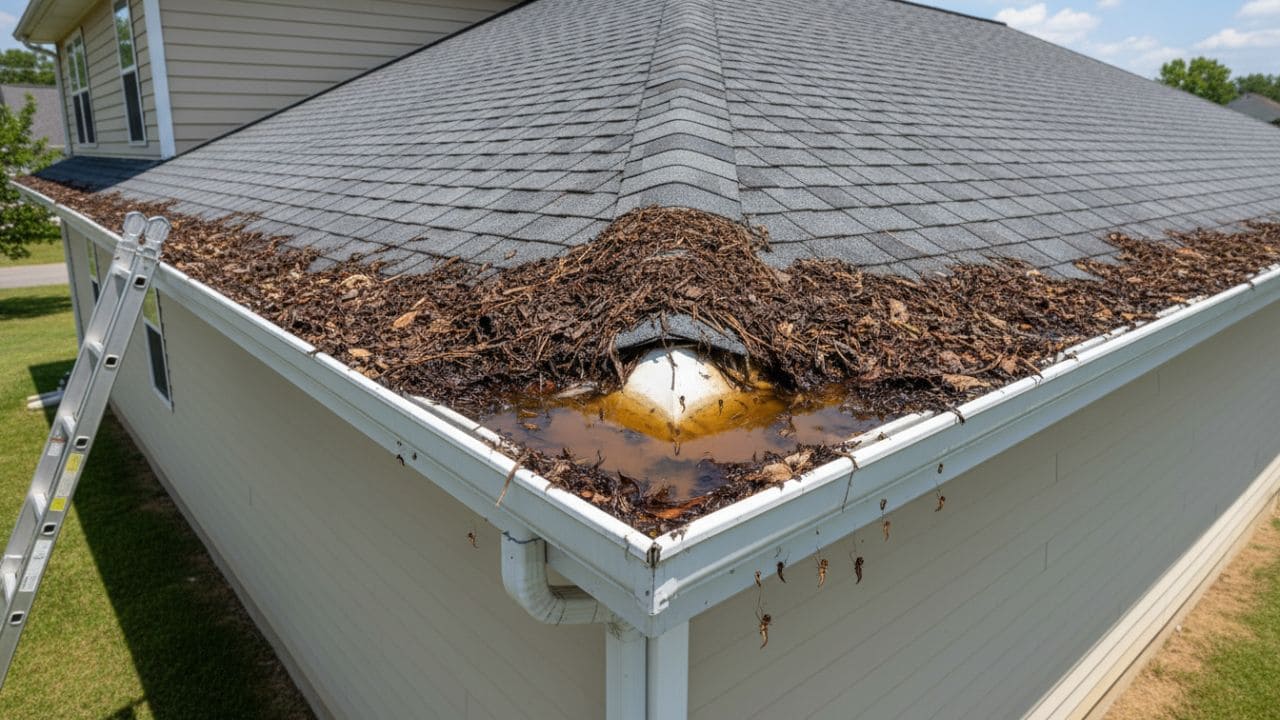
Yes — mosquitoes are absolutely breeding in your clogged gutters. It takes as little as half an inch of standing water sitting for 7–10 days for a mosquito to complete its entire breeding cycle, and a gutter packed with decomposing leaves is practically a five-star resort for them.
I’ve lived in a region where mosquitoes aren’t a nuisance — they’re a genuine health threat — and the first summer I ignored a blocked downspout, I paid for it with weeks of bites, sleepless nights, and a cloud of insects hanging around my porch like they owned the place. Cleaned the gutters. Problem gone. Almost overnight.
Here’s the thing nobody tells you: it’s not just the standing water in your yard or the birdbath you forgot to empty. The gutters running along the roofline of your house are quiet, hidden, and completely ignored — until they overflow during a rainstorm or you spot a mosquito hatch happening fifteen feet above your head. This article is going to walk you through everything: why it happens, how to fix it fast, and how to make sure it doesn’t come back.
Stay with me. Some of these fixes take less than 20 minutes and cost nothing.
Why Clogged Gutters Are a Perfect Mosquito Breeding Ground
Mosquitoes don’t need a pond. They need still, stagnant water — and a clogged gutter delivers exactly that. When leaves, twigs, roof grit, and organic debris pack into your gutters, water stops flowing and starts pooling. That decomposing organic layer at the bottom? It’s rich with nutrients. It actually accelerates mosquito larval development.
The species most commonly linked to gutter breeding — Culex pipiens (the northern house mosquito) and Aedes albopictus (the Asian tiger mosquito) — thrive in exactly these dark, warm, enclosed environments. The CDC identifies both species as primary vectors for West Nile virus, Zika, and dengue in the U.S. This isn’t fearmongering. It’s basic entomology.
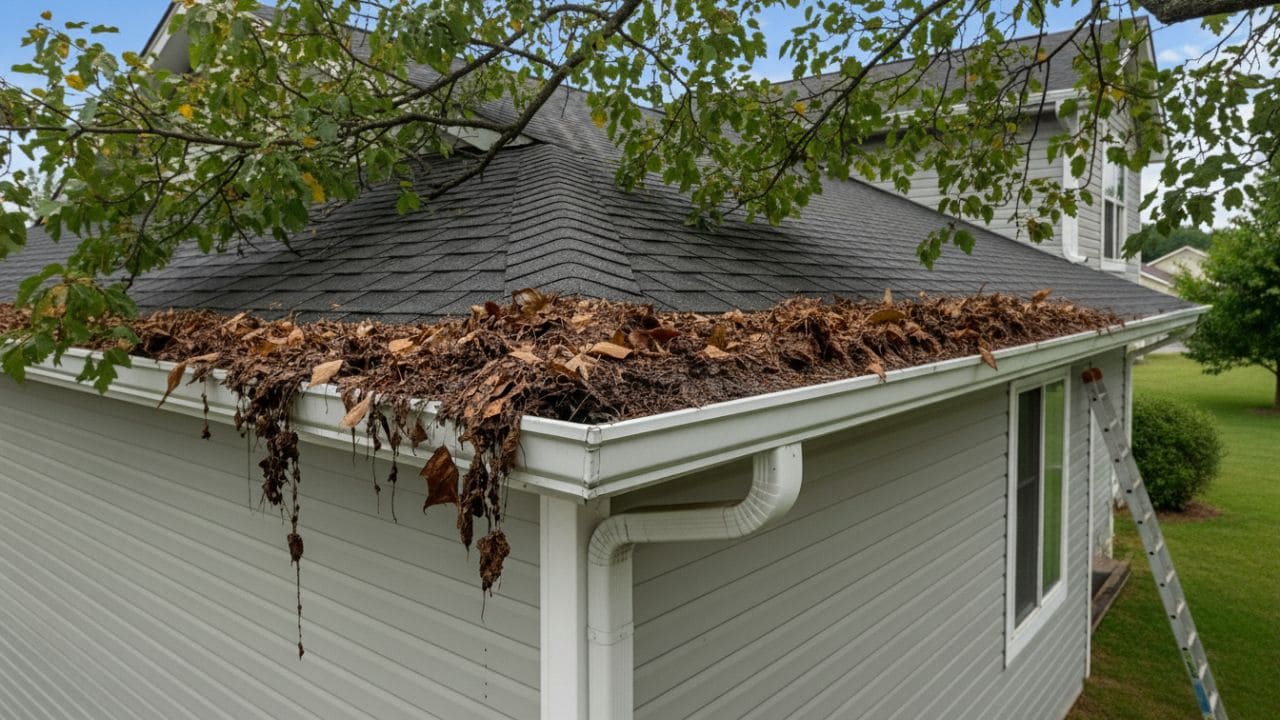
What makes gutters especially problematic:
- They’re elevated and enclosed — predators can’t reach larvae
- Organic debris provides ideal larval nutrition
- Dark interiors retain warmth, speeding development cycles
- Most homeowners never think to check them
Signs Your Gutters Are Breeding Mosquitoes (Don’t Ignore These)
You don’t always need to climb a ladder to know something is wrong. Here are some warning signs I’ve learned to watch for over the years:
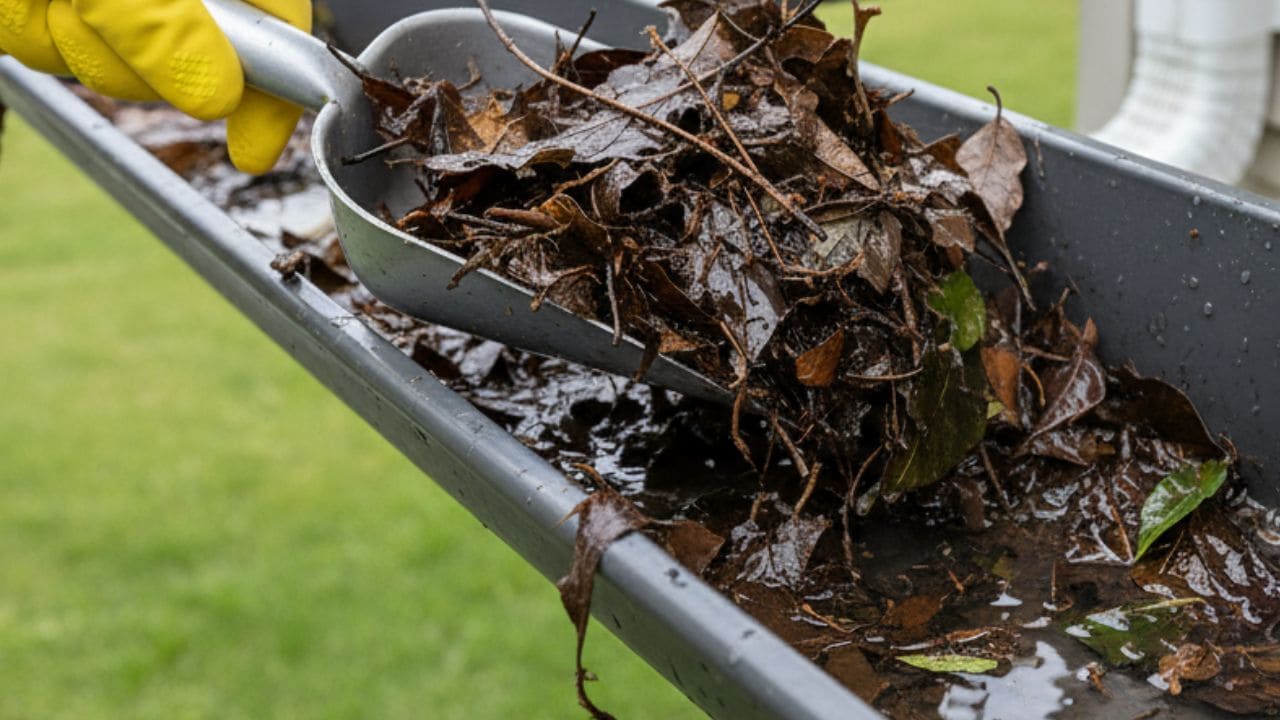
- Swarms near the roofline at dusk — if mosquitoes are congregating near your eaves, they didn’t fly far from where they hatched.
- Gutters that overflow during rain — a clear sign water is sitting and not draining.
- Visible plants or moss growing out of gutter sections — water has been sitting there long enough for vegetation to establish.
- Dark staining running down fascia boards — overflow marks from blocked gutters.
- A persistent “earthy” or swampy smell near your home’s exterior — decomposing organic matter in the gutter trough.
Any one of these should push you into action. Mosquito populations can double every few days under ideal conditions.
Quick Fixes to Stop Mosquitoes Breeding in Clogged Gutters
Let’s get into the practical stuff. These are the fixes that actually work — ranked roughly from fastest to most comprehensive.
Step 1. Manual Gutter Cleaning (The Non-Negotiable First Step)
There’s no substitute for physically removing the debris. I know people want a spray or a gadget. There isn’t one. The gunk has to come out.
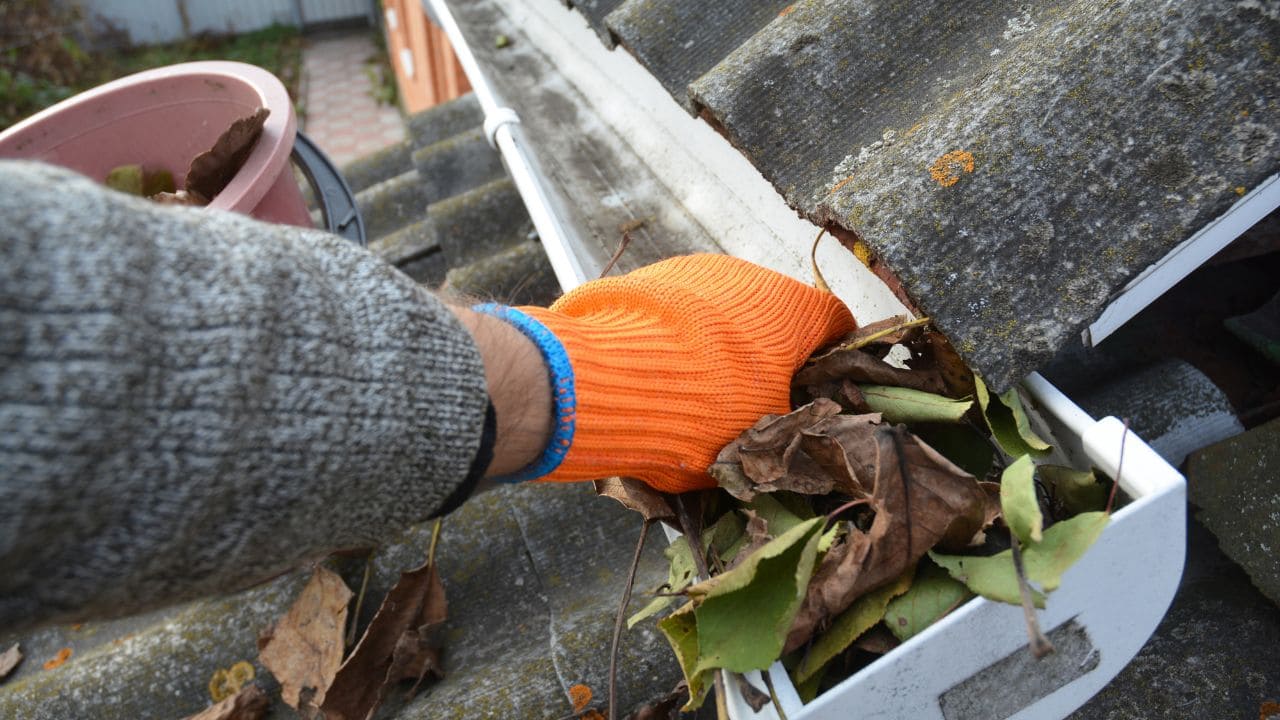
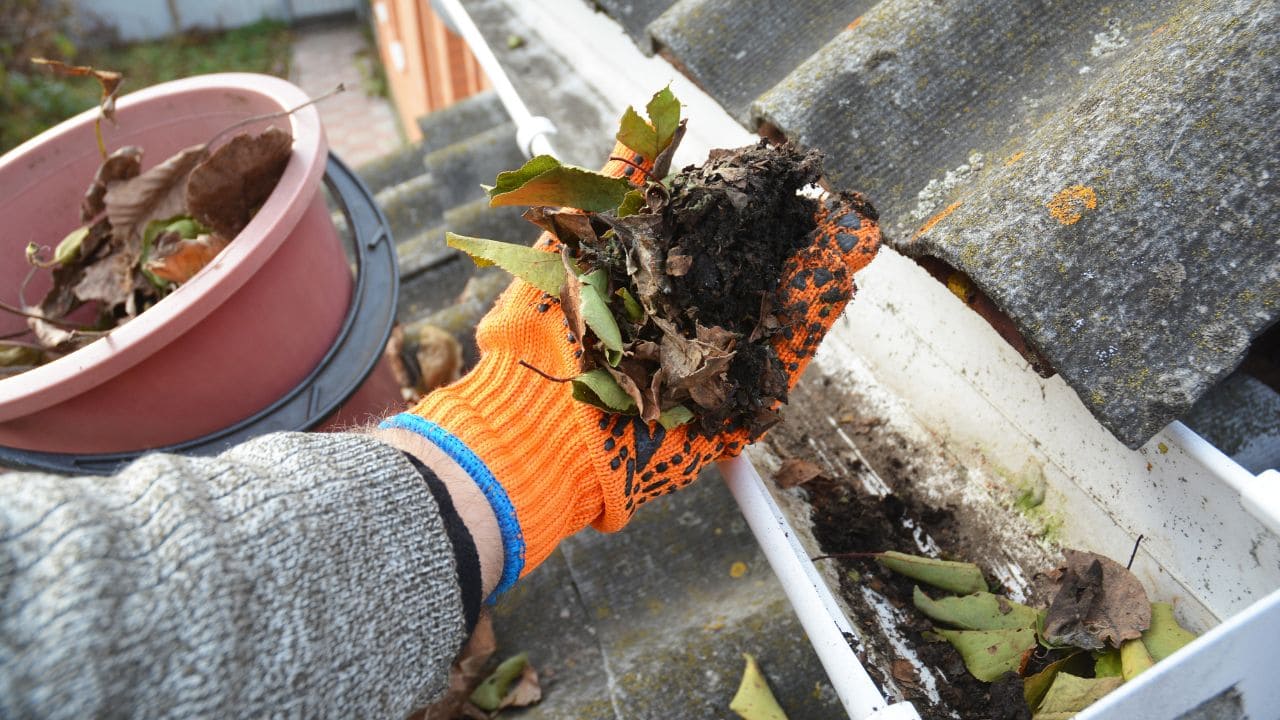
- Use a gutter scoop or gloved hands to remove leaf buildup
- Flush downspouts with a garden hose to clear compacted debris
- Check gutter slope — water should flow toward downspouts at a minimum ¼” drop per 10 feet
- Do this at minimum twice a year: once in late spring, once in late fall after leaves drop
If you have overhanging trees, honestly? Four times a year. I do it quarterly and it takes maybe an hour per session.
Step 2. Use Mosquito Dunks for Standing Gutter Water
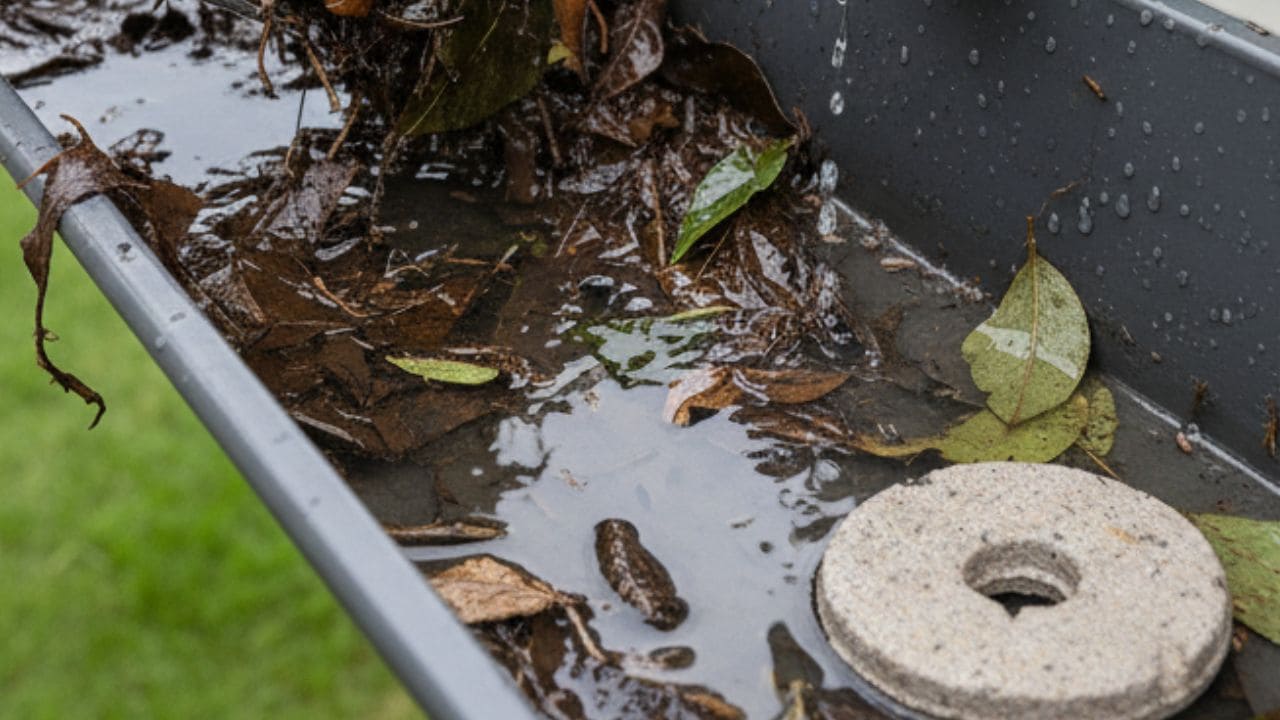
If you’ve just discovered your gutters are waterlogged and you can’t clean them right this minute, drop in a BTI mosquito dunk. These contain Bacillus thuringiensis israelensis (BTI) — a naturally occurring bacterium that kills mosquito larvae but is completely harmless to humans, pets, birds, and beneficial insects. The EPA and CDC both approve of BTI as a larvicide for standing water control.
They look like small donut-shaped tablets. Break one, toss it into the clogged section. It works for up to 30 days. Not a permanent fix — but it buys time.
Step 3. Fix Downspout Clogs and Ensure Proper Drainage
Sometimes the gutter trough is clear but the downspout is blocked. Water backs up, sits, breeds mosquitoes. Classic problem. Here’s how to tackle it:
- Insert a plumber’s snake or a pressure washer nozzle into the downspout opening
- Run a garden hose from the top — if water backs up instead of flowing down, you’ve found your clog
- Install downspout strainers at all entry points to catch debris before it reaches the downspout
- Extend downspout extensions at least 6 feet from the foundation to redirect water away from the house

Step 4. Install Gutter Guards to Prevent Future Clogs
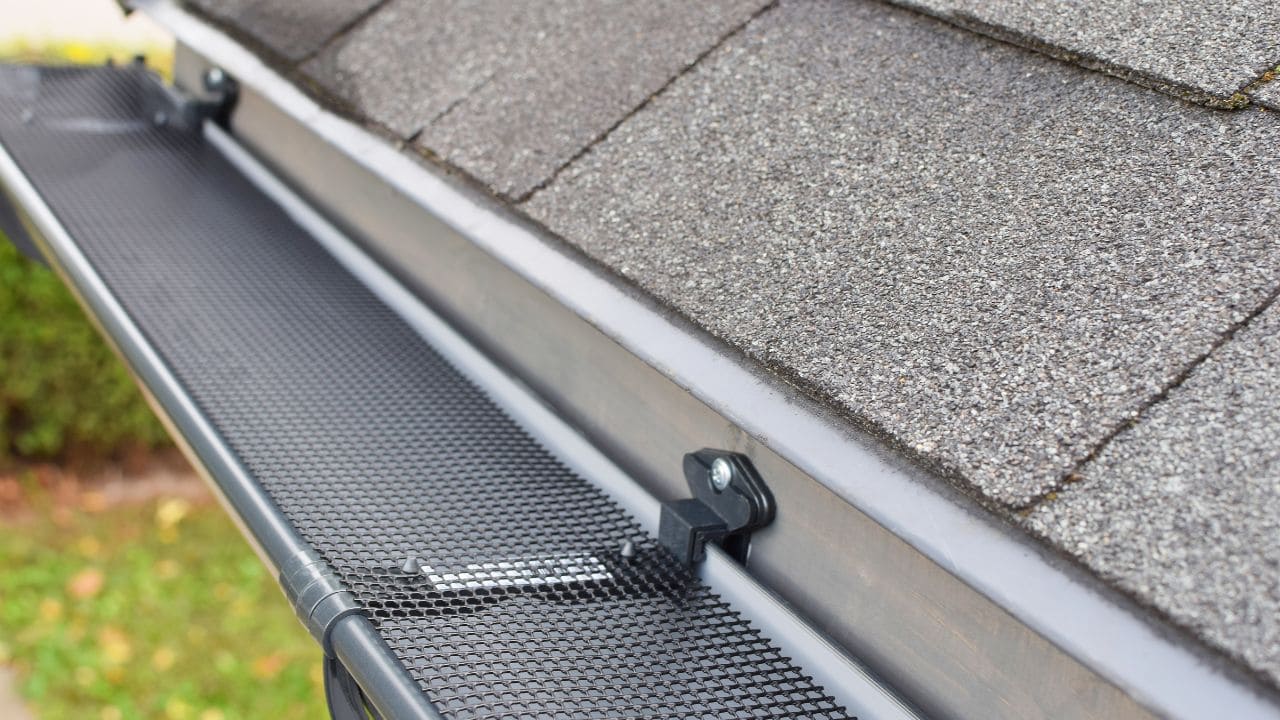
Gutter guards are often oversold as “maintenance-free” solutions. They’re not. But they do dramatically reduce how often debris builds up. The best types for mosquito prevention:
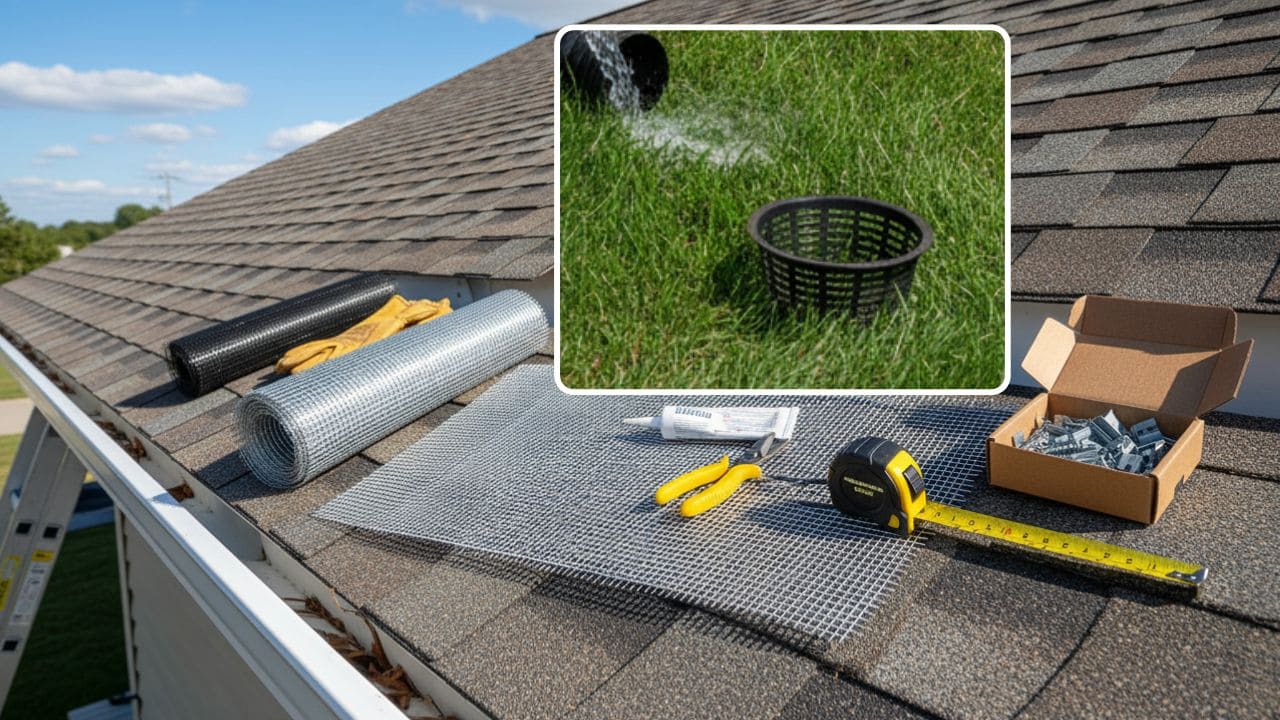
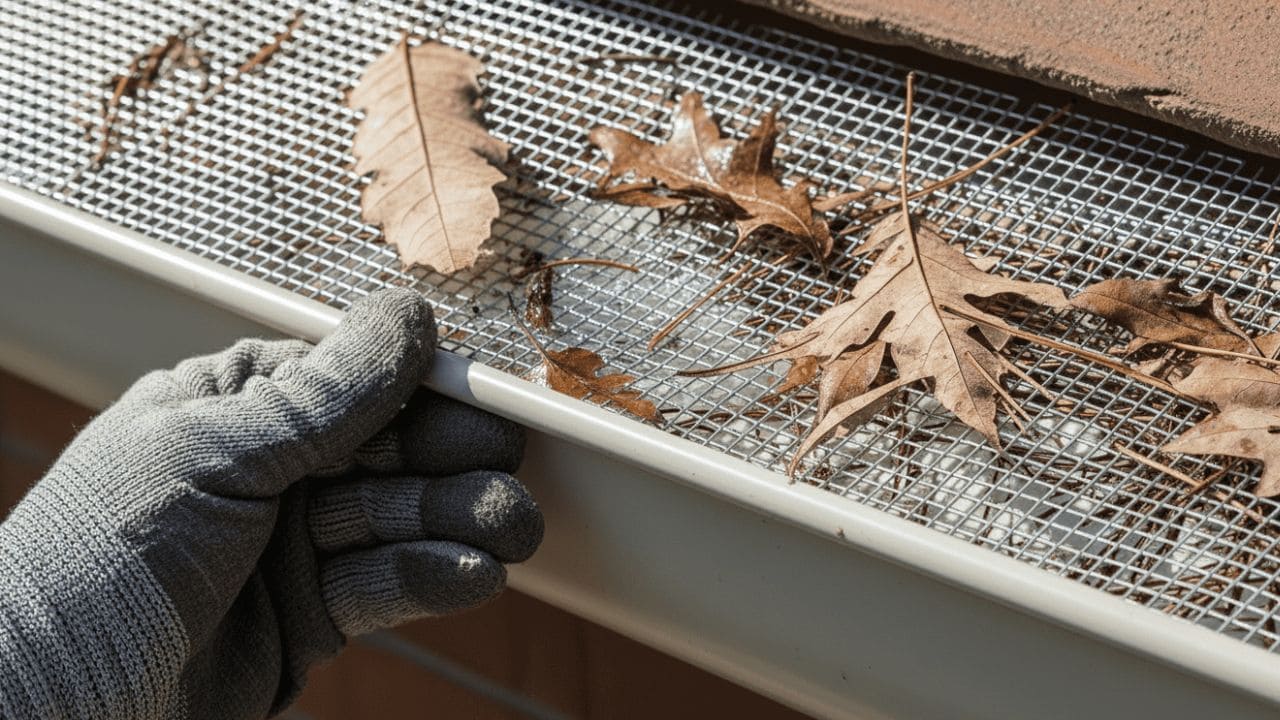
- Micro-mesh guards — best overall for keeping out fine debris and pine needles while allowing water flow
- Reverse curve guards — decent for larger debris but can still allow small leaf bits through
- Brush inserts — easy to DIY, but trap debris in the bristles over time
I went with micro-mesh guards on my aluminum gutters four years ago. Still check them twice a year, but the volume of debris inside dropped by probably 80%.
Step 5. Check for Low Spots and Re-Slope Your Gutters
Even clean gutters can collect standing water if they’ve sagged over time. Gutters shift — hangers loosen, wood behind them rots, and sections develop low spots where water pools. Run a hose and watch: if any section holds water instead of draining, that section needs to be re-pitched or re-hung.
This is a surprisingly common problem in older homes. And it’s one of those things that looks fine from the ground but is a standing-water nightmare up close.
Household Drainage System Problems That Make Mosquitoes Worse
Gutters are one piece of a larger drainage puzzle. If your gutter water drains toward pooling areas near the foundation — or if you have clogged area drains, poorly graded landscaping, or flat sections around the property — you’re essentially relocating the breeding pool, not eliminating it.
- French drains — install along the house perimeter to redirect gutter overflow underground
- Splash blocks or downspout diverters — direct water away from foundation and low areas
- Rain barrels with screens — if you’re catching gutter runoff, screen it tightly; open rain barrels are mosquito nurseries
- Re-grade flat spots in the yard — even shallow depressions hold enough water to breed mosquitoes after a single rainstorm
Gutter Maintenance in Mosquito-Prone Regions: What You Should Do Differently
If you’re in the Gulf Coast, Florida, the Southeast, or any similarly humid, warm climate, the standard twice-a-year cleaning schedule isn’t going to cut it. Mosquito breeding season can span 9–10 months. A single week of gutter neglect can result in a significant hatch.
Recommendations for high-risk zones:
- Clean gutters every 6–8 weeks during peak season (late spring through early fall)
- Keep Bti dunks handy as a between-cleaning safety net
- Consider professional gutter inspection annually — they can identify sagging, cracking, and blocked elbows you’d miss from the ground
- Check your local health department mosquito advisories — many counties in the Southeast and Southwest issue regular standing-water alerts
State health agencies like the Florida Department of Health and the Texas DSHS publish updated vector control guidelines online. Worth bookmarking if you’re in those areas.
Gutter Fixes Are Part of a Broader Mosquito Control Strategy
Clearing your gutters helps — a lot. But it’s one part of the picture. Mosquito control experts will tell you that eliminating breeding sources is always more effective than treating adult mosquitoes after they’ve hatched. The source reduction approach is endorsed by the American Mosquito Control Association (AMCA) and recommended by the CDC as the foundation of any effective mosquito management plan.
While you’re at it, do a property sweep for:
- Clogged outdoor drains and catch basins
- Birdbaths — change water every 3–4 days
- Saucers under potted plants
- Old tires, buckets, or tarps collecting rainwater
- Low spots in window wells or basement stairwells
- Flat-roofed outbuildings with pooling water
Mosquitoes don’t respect property lines. One neglected spot — yours or a neighbor’s — can feed a population across an entire block. Coordinated action with neighbors, especially around shared drainage features, makes a meaningful difference.
DIY Gutter Cleaning vs. Hiring a Professional: When Each Makes Sense
Honest answer? Most gutter cleaning jobs are DIY-friendly if you’re comfortable on a ladder and working at height safely. Single-story homes are almost always a DIY job. Two-story homes require more caution. Anything taller or steeply pitched — just hire someone.
When to DIY:
- Single-story home with easy ladder access
- You’re comfortable working at height
- Routine seasonal maintenance (not a first-time unclogging)
When to call a professional:
- Multi-story home or steep roof pitch
- You haven’t cleaned in several years (major debris buildup)
- You suspect structural damage, sagging, or fascia rot
- You want gutter guards professionally installed at the same time
Typical professional gutter cleaning runs $100–$250 for a standard home, depending on size and degree of clogging. That’s a small price for eliminating a primary mosquito breeding site.
Safety First: Ladder Safety and Protective Gear for Gutter Work
Falls from ladders are one of the most common causes of serious home-maintenance injuries. Before you go up:
- Always use a ladder with a weight rating well above your own — include tools and bucket weight
- Set the ladder on firm, level ground — never on soft soil or near downspout splash areas
- Wear thick rubber gloves — gutter debris can hide sharp metal edges, broken glass, and wasp nests
- Wear eye protection — decomposing matter and pressurized water kicks up debris
- Never lean past the side rails of a ladder — reposition instead
Frequently Asked Questions (FAQs)
Q. How long does it take for mosquitoes to breed in gutter water?
Under warm conditions (above 70°F), a mosquito can develop from egg to adult in as few as 7–10 days. At peak summer temperatures, some species can complete the cycle in 4–5 days.
Q. Can mosquitoes breed in gutters with gutter guards?
Yes, if debris builds up on top of guards and retains moisture. Low-quality or poorly fitted guards can also allow water pooling in sections. Guards reduce risk significantly but don’t eliminate the need for periodic inspection.
Q. What kills mosquito larvae in gutters naturally?
Bti-based products (like Mosquito Dunks or Mosquito Bits) are the most effective and safest option for standing water treatment. They’re organic, non-toxic, and widely available at hardware stores.
Q. Are clogged gutters the main source of mosquitoes around my home?
They’re one of the most commonly overlooked sources — not necessarily the only one. Check all water-holding features: planters, tarps, wheelbarrows, pool covers, blocked drains, and leaf-pile areas that stay damp.
The Bottom Line: Stop Mosquitoes Breeding in Clogged Gutters Before They Start
Mosquitoes breeding in clogged gutters is one of those problems that feels invisible until it isn’t. And by the time you notice the swarms, there are already multiple generations hatched and flying. The good news is that this is one of the most fixable mosquito sources on your property — and fixing it is well within the reach of any homeowner willing to spend an afternoon on it.
Clean the gutters. Fix the slope. Add guards if the trees are nearby. Drop in a mosquito dunk when you can’t get up there right away. And then check the rest of the yard while you’re at it.
You’re not just eliminating a nuisance. You’re reducing real health risk for yourself, your kids, your neighbors. That’s worth the afternoon.
Your Turn: Have you dealt with a mosquito problem that turned out to be coming from your gutters? Did a gutter guard or downspout fix make a real difference for you? Drop your experience in the comments — your story might save someone else a summer of misery.
Editorial Team & Contributors

Raashid Ansari, Founder, Content Researcher & Author - MosquiTalk
Not an entomologist — just a genuinely curious writer who started researching mosquitoes and couldn't stop. What began as casual reading about repellents and bite prevention gradually turned into a deep ongoing dive into vector biology, disease epidemiology, animal health impacts, and the real science behind mosquito control. Everything published here is carefully edited, and written with one purpose: giving readers accurate, accessible information they can actually trust and use to protect themselves, their families, and their pets, birds and cattle.
Active across social platforms, regularly publishes, and genuinely invested in spreading mosquito awareness where it matters most. Because informed readers make better decisions — and better decisions save lives.