
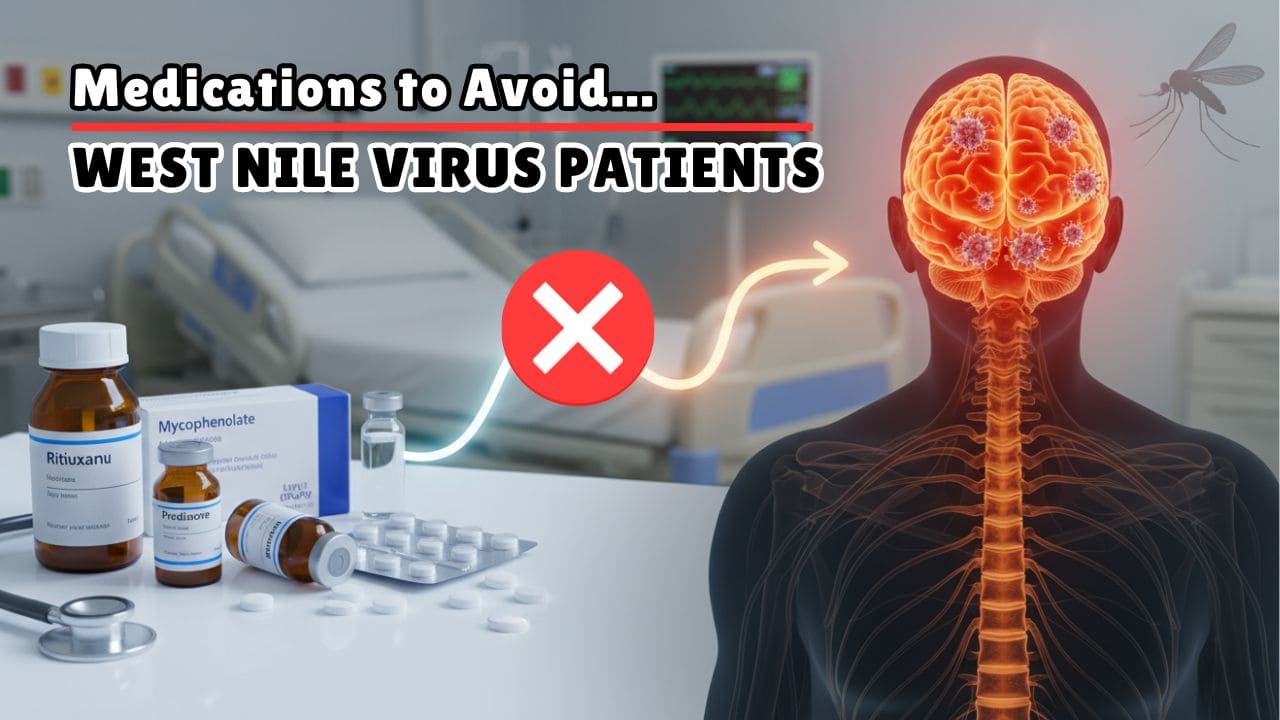
Are There Any Medications That Increase West Nile Virus Risk?
Yes — certain medications can make a West Nile virus infection significantly more dangerous. Drugs that suppress the immune system, like corticosteroids, rituximab, and transplant medications such as mycophenolate, reduce your body’s ability to contain the virus before it reaches the brain.
Most people who get infected with West Nile virus never know it. Roughly 80 percent have no symptoms at all, according to the CDC. But that statistic — as reassuring as it sounds — leaves out a critical group.
For people on certain medications, especially those that suppress the immune system, West Nile virus is a different story. It can move fast. It can turn neurological. And for some, it’s life-threatening.
This isn’t alarmism. It’s immunology.
Why Your Immune Status Matters So Much With West Nile Virus
West Nile virus is a flavivirus. After a bite from an infected Culex mosquito, the virus replicates in the skin and nearby lymph nodes before entering the bloodstream. A healthy immune system usually contains it there — mild or no symptoms.
The problem is when the immune system can’t mount that early defense. The virus crosses the blood-brain barrier more easily in immunocompromised individuals, potentially causing West Nile neuroinvasive disease — which includes encephalitis, meningitis, and acute flaccid paralysis.
That’s where specific medications come in. Several drug classes directly impair the immune responses that normally control this virus.
Medications That May Increase Severe West Nile Virus Risk
The following drug categories have the most documented association with worse outcomes during West Nile virus infection, based on clinical case reports, CDC guidance, and published infectious disease literature.
| Drug Category | Common Examples | Why It Raises Risk |
|---|---|---|
| Corticosteroids (systemic) | Prednisone, methylprednisolone, dexamethasone | Suppresses T-cell and macrophage activity needed to contain viral replication |
| Calcineurin inhibitors | Tacrolimus (Prograf), cyclosporine | Impairs T-lymphocyte function; heavily used in transplant recipients |
| Antiproliferative agents | Mycophenolate mofetil, azathioprine | Reduces white blood cell production, reducing viral clearance capacity |
| mTOR inhibitors | Sirolimus, everolimus | Disrupts immune signaling pathways; associated with higher WNV severity in transplant populations |
| Biologic TNF-alpha inhibitors | Adalimumab (Humira), infliximab (Remicade), etanercept | Blocks TNF-alpha, a key cytokine in early antiviral response |
| Other biologic agents | Rituximab, natalizumab, ocrelizumab | Depletes B cells or blocks lymphocyte migration; documented WNV neurological cases |
| Chemotherapy agents | Methotrexate, cyclophosphamide, fludarabine | Broad immunosuppression; damages bone marrow and adaptive immunity |
| HIV antiretrovirals (indirect) | When CD4 count is low despite treatment | Underlying HIV immunodeficiency, not the drugs themselves, elevates risk |
This table isn’t exhaustive. Any medication that significantly reduces white blood cell counts, lymphocyte function, or cytokine response can theoretically impair your ability to fight a West Nile virus infection.
West Nile Virus Risk for People on Immunosuppressants: What the Research Shows
The intersection of West Nile virus and immunosuppressant therapy has been studied most closely in organ transplant patients. These individuals take multiple immunosuppressive medications simultaneously — often for life.
1. Organ Transplant Recipients
Solid organ transplant recipients represent one of the highest-risk groups for severe West Nile disease. Published case series have documented neuroinvasive West Nile disease in kidney, liver, and heart transplant patients who were on standard post-transplant immunosuppression regimens. Several of these cases resulted in prolonged neurological deficits or death.
The combination of tacrolimus or cyclosporine with mycophenolate and corticosteroids — the typical triple immunosuppression regimen — appears particularly problematic, because it hits multiple immune pathways at once.
2. Patients on TNF-Alpha Inhibitors
The biologics used in rheumatoid arthritis, psoriasis, Crohn’s disease, and ankylosing spondylitis — adalimumab, infliximab, etanercept — work by blocking TNF-alpha. That’s the mechanism that makes them effective. It’s also the mechanism that leaves you more exposed.
TNF-alpha plays a direct role in early antiviral immunity. Neuroinvasive West Nile cases in patients on these drugs have been documented in the medical literature. The American College of Rheumatology and various infectious disease specialists flag these patients as high-risk during active West Nile season.
3. Rituximab and B-Cell Depleting Therapies
Rituximab is used in certain lymphomas, rheumatoid arthritis, and multiple sclerosis-adjacent conditions. It depletes CD20-positive B cells — meaning it essentially wipes out a significant portion of the antibody-producing machinery.
Since neutralizing antibodies are critical in controlling West Nile virus and preventing neuroinvasion, rituximab-treated patients have reduced capacity to mount that defense. Neurological West Nile cases in this population have been reported, including fatal outcomes.
What Medications Should I Avoid if I Have West Nile Virus?
Image Credit: Pexels
This is the practical question — and it deserves a careful answer.
If you’ve already been diagnosed with West Nile virus infection, the answer depends heavily on your situation, your prescribing physician, and the severity of your illness. There’s no universal “stop this drug” list.
That said, several principles apply across most clinical scenarios.
1. Systemic Corticosteroids
High-dose corticosteroids like prednisone are generally considered problematic during active viral infections, including West Nile. They blunt the innate immune response at a time when it needs to be running at full capacity.
Some clinicians do use steroids in specific scenarios — like West Nile encephalitis with significant cerebral edema — but this is a risk-benefit judgment made in an inpatient setting. Self-medicating with corticosteroids during a West Nile infection is not something to do casually.
2. NSAIDs — Use With Caution
Non-steroidal anti-inflammatory drugs like ibuprofen and naproxen aren’t immunosuppressants. But during viral illness with fever, there’s some debate about whether suppressing the febrile response too aggressively is beneficial or counterproductive.
The more pressing concern with NSAIDs and West Nile is kidney function. West Nile virus can affect the kidneys, and NSAIDs are nephrotoxic at higher doses. Acetaminophen is generally the preferred fever and pain management option during acute WNV illness.
3. Immunosuppressants for Transplant or Autoimmune Patients
This is where it gets genuinely complicated. You can’t simply stop tacrolimus or mycophenolate because of a West Nile diagnosis — the risk of organ rejection or autoimmune flare may be equally serious.
Some transplant teams do reduce immunosuppression temporarily during severe West Nile infection, accepting some rejection risk to allow a stronger antiviral immune response. This is a documented but individualized management strategy. It’s not something that happens without close specialist involvement.
Who Is Most at Risk for Severe West Nile Illness: Risk Summary
| Risk Factor | Risk Level | Primary Mechanism |
|---|---|---|
| Organ transplant + triple immunosuppression | Very High | Simultaneous T-cell, B-cell, and cytokine suppression |
| Active chemotherapy (hematologic cancers) | Very High | Bone marrow suppression, lymphocyte depletion |
| Rituximab therapy (B-cell depletion) | High | Loss of neutralizing antibody production |
| TNF-alpha inhibitor biologics | High | Impaired early cytokine antiviral response |
| High-dose systemic corticosteroids (chronic) | High | Broad immune suppression, reduced phagocyte function |
| HIV with CD4 count below 200 | High | Severe baseline immunodeficiency |
| Adults over age 60 (general) | Moderate–High | Natural immunosenescence, independent of medications |
| Diabetes (poorly controlled) | Moderate | Multiple immune dysfunction pathways |
| Calcineurin inhibitors alone (low dose) | Moderate | T-cell suppression without full multi-drug effect |
West Nile Season and Immunocompromised Patients: Timing Your Precautions
West Nile virus transmission in the U.S. peaks from mid-July through September, with some variation by region. States like Texas, California, Arizona, and those in the Great Plains historically report the highest case counts each year. The CDC and state health departments publish real-time surveillance data during this window.
If you’re on immunosuppressant therapy, the practical takeaway is this: mosquito bite prevention isn’t a casual suggestion — it’s a genuine medical priority during peak season.
Prevention Steps That Actually Matter
For immunocompromised individuals, standard prevention advice applies with more urgency:
- Use EPA-registered insect repellents containing DEET (20–30%), picaridin, or IR3535 — consistently, not occasionally
- Wear long sleeves and pants during peak mosquito hours (dusk to dawn), especially in areas near standing water
- Make sure window and door screens are intact — Culex mosquitoes are persistent
- Eliminate standing water around your home — flower pots, bird baths, gutters, tarps — Culex breed in small volumes
- Discuss your risk level directly with your prescribing physician before peak season each year
Symptoms of West Nile Neuroinvasive Disease in Immunocompromised Patients
For most healthy adults, West Nile fever presents as a flu-like illness — headache, fatigue, body aches, sometimes a rash. It resolves on its own.
Immunocompromised patients need to watch for symptoms that suggest neurological involvement, which can develop faster and with less warning in this group.
- Severe headache that comes on suddenly and is unlike normal headaches
- High fever (above 103°F) that isn’t responding to acetaminophen
- Stiff neck or sensitivity to light (photophobia) — signs of meningeal irritation
- Confusion, disorientation, or personality changes
- Tremors, muscle weakness, or difficulty moving limbs
- Seizures
West Nile encephalitis in immunocompromised patients has been documented to progress rapidly — within 24 to 48 hours of initial symptom onset. Early evaluation matters.
Diagnosing West Nile Virus in Patients on Immunosuppressants: Why It’s Harder
Standard West Nile diagnosis often relies on detecting IgM antibodies in blood or cerebrospinal fluid. Here’s the complication: patients on B-cell depleting therapies like rituximab, or those on other heavy immunosuppression, may have impaired antibody production.
This can produce false-negative serology results even in the presence of active West Nile infection. PCR testing of blood or CSF may be necessary. Clinicians treating immunosuppressed patients with suspected West Nile should be aware that standard antibody tests can mislead.
This is a genuinely underappreciated diagnostic challenge — not theoretical. It has delayed treatment in documented cases.
What to Tell Your Doctor if You’re on Immunosuppressants and Suspect West Nile Virus
If you’ve been bitten by mosquitoes during active WNV season, you live in a high-transmission area, and you develop flu-like symptoms — especially with fever and headache — don’t dismiss it.
When you contact your physician or go to an urgent care, tell them:
- The specific immunosuppressant medications you’re on and the doses
- Whether you’ve had recent mosquito exposure — location, timing, any bites you noticed
- Any prior organ transplant history or active cancer treatment
- Your current CD4 count if you’re living with HIV
- Any neurological symptoms, even mild ones — headache that’s “different,” brief confusion, any weakness
Your immunosuppression status should change the physician’s index of suspicion and the diagnostic approach. Make sure they have that context upfront.
Treatment Considerations for Immunocompromised West Nile Patients
There’s no FDA-approved antiviral treatment for West Nile virus as of this writing. Management is supportive — fever control, hydration, management of neurological complications in severe cases.
For immunosuppressed patients, especially those with neuroinvasive disease, inpatient hospital management is typically required. Some centers have used intravenous immunoglobulin (IVIG) off-label, and there’s investigational use of West Nile-specific immunoglobulin preparations, though evidence remains limited.
The decision about whether to temporarily reduce immunosuppression — and by how much — is made in coordination with the transplant team or rheumatologist. It involves weighing infection severity against rejection or flare risk. There’s no one-size answer.
The Bottom Line on What Medications Increase West Nile Virus Risk
West Nile virus is mild for most people. For people on immunosuppressants — transplant recipients, patients on biologics, people on chronic corticosteroids or chemotherapy — it can be something else entirely.
Knowing which medications increase West Nile virus risk isn’t about fear. It’s about situational awareness. Being on tacrolimus doesn’t mean you’ll get West Nile. It means mosquito bite prevention becomes medically meaningful, not just a nuisance issue. And if you do get sick during peak season, it means making sure your doctor knows what you’re on — and doesn’t just treat you like a routine case.
Talk to your prescribing team before summer hits. Know your risk. Take the repellent seriously. That’s really the whole message here.
Frequently Asked Questions (FAQs)
Q. Can I still take my rheumatoid arthritis medication during West Nile season?
Yes — in most cases you should not stop your prescribed medications without guidance. What you should do is talk to your rheumatologist before peak season (typically May or June) to discuss your specific risk, adjust any planned dosing if warranted, and sharpen your mosquito protection strategy.
Q. Are there any medications that protect against West Nile virus?
No. There’s no prophylactic antiviral or vaccine approved for West Nile virus in humans as of 2025. Protection is entirely prevention-based: mosquito repellents, protective clothing, eliminating breeding sites, and reducing exposure during peak hours.
Q. Does West Nile virus show up differently on blood tests in immunocompromised people?
Yes — as discussed above, antibody-based tests can return false negatives in patients with impaired antibody production. Your clinician should consider PCR testing and CSF analysis if clinical suspicion is high and standard serology is negative.
Q. What states have the highest West Nile virus risk?
Historically, Texas, California, Arizona, Colorado, and states across the Great Plains and Midwest report the highest annual case counts. The CDC’s ArboNET surveillance system publishes current-season data by state, and it’s worth checking if you live in or travel to these areas during peak season.
Editorial Team & Contributors

Raashid Ansari, Founder, Content Researcher & Author - MosquiTalk
Not an entomologist — just a genuinely curious writer who started researching mosquitoes and couldn't stop. What began as casual reading about repellents and bite prevention gradually turned into a deep ongoing dive into vector biology, disease epidemiology, animal health impacts, and the real science behind mosquito control. Everything published here is carefully edited, and written with one purpose: giving readers accurate, accessible information they can actually trust and use to protect themselves, their families, and their pets, birds and cattle.
Active across social platforms, regularly publishes, and genuinely invested in spreading mosquito awareness where it matters most. Because informed readers make better decisions — and better decisions save lives.