
Table of Contents
Introduction
You spritz on your favorite jasmine perfume before heading to a summer barbecue. Within twenty minutes you’re the most bitten person there, while everyone around you seems fine. Coincidence? Probably not entirely. The relationship between fragrances and mosquito attraction is real — but it’s more complicated than a simple yes or no, and the science behind it is genuinely interesting.
Mosquitoes don’t just follow their nose randomly. They’re running a remarkably sophisticated chemical detection operation, and some of what we spray, rub, and apply to our skin sits squarely within the frequency range their olfactory system is tuned to. Whether your perfume attracts them depends on what’s in it, what’s already on your skin, how warm it is, and whether you’re sweating. All of that matters.
Key Takeaways — Fragrances & Mosquito Attraction
The Mosquito’s Detection System — What They Actually Look For
Before getting into fragrances specifically, it helps to understand what mosquitoes are actually responding to. The short version: they’re running a multi-sensor search operation, and no single cue closes the deal alone.
Carbon dioxide is the primary long-range signal — exhaled breath activates host-seeking behavior from up to 50 meters away. Body heat guides the final approach. But the cue that determines whether a mosquito actually lands and bites — and explains why she bites you more than the person next to you — is the chemical profile of your skin. The specific mix of volatile organic compounds produced by your skin microbiome, your sweat glands, and your metabolism. Fragrance interacts directly with this chemical layer.
Table 1 — How Mosquitoes Detect Hosts and Where Fragrance Fits
| Detection Cue | What It Is | Mosquito Response | Interaction with Fragrance |
| Carbon Dioxide (CO₂) | Exhaled breath, released continuously from human and animal metabolism | Primary long-range attractant — activates flight and host-seeking behaviour from 30–50 metres | Fragrance does not affect CO₂ output; this cue is unrelated to perfume |
| Body Heat | Infrared radiation from skin surface (~34°C) | Short-range attraction guide once mosquito is within ~1 metre | Not affected by fragrance; heat is a physical rather than chemical signal |
| Body Odour / Skin Volatiles | Lactic acid, ammonia, carboxylic acids, aldehydes, ketones produced by skin microbiome and sweat glands | Major host-discrimination signal — explains why mosquitoes prefer some people over others | Fragrance chemicals can mask, mimic, or amplify specific volatile compounds that mosquitoes recognise |
| Moisture / Humidity | Water vapour from skin transpiration and breath | Close-range cue used during final approach to landing site | Scented lotions and moisturisers increase skin hydration, potentially enhancing this signal |
| Visual Cues | Contrast between host and background, movement | Secondary orientation cue especially in daylight | No interaction with fragrance |
| Floral and Nectar Volatiles | Terpenoids, linalool, benzyl acetate — compounds shared by both flowers and many fragrances | Many mosquito species feed on plant nectar and are attracted to floral chemical signals | DIRECT overlap — perfumes containing floral volatiles can activate mosquito nectar-seeking behaviour |
Do Perfumes And Scents Attract Mosquitoes? The Scientific Answer
The direct answer is: some do, some don’t, and a few might actually reduce your attractiveness slightly. It depends almost entirely on the chemical composition of the fragrance.
What the research consistently shows is that fragrances containing floral volatiles — linalool, geraniol, benzyl acetate — activate the same olfactory pathways mosquitoes use when locating nectar sources. Mosquitoes aren’t exclusively blood feeders. Both males and females feed on plant sugars for energy, and they’ve evolved to detect and be attracted to floral chemical signals. When a perfume contains those same signals, it can trigger the same response.
It’s not the scent itself that attracts them so much as the specific molecules in the scent. Two perfumes that smell broadly similar to a human nose can have very different effects on a mosquito’s olfactory receptors. The mosquito doesn’t care about your aesthetic preference. She cares about linalool.
How Fragrance Type Affects Mosquito Attraction?
i) Floral Scents — The Highest Risk Category
Floral fragrances are the most documented category in terms of mosquito attraction. Linalool is found in lavender, rose, and hundreds of mainstream fragrances. It is also documented in multiple laboratory studies as an attractant for Aedes aegypti. Geraniol and benzyl acetate show similar patterns.
ii) Sweet and Fruity Fragrances
Sweet and fruity fragrances present moderate-to-high attraction risk. The volatile esters responsible for banana, peach, and tropical fruit scents overlap with the fermentation volatiles that mosquitoes associate with ripe fruit, a sugar source they actively seek.
iii) Musky, Woody, and Oriental Fragrances
Musk and woody fragrances carry lower documented attraction risk. Synthetic musks are largely alien to mosquito olfactory systems — these are molecules that evolved in a laboratory, not in nature. Heavy oriental bases with amber, oud, and leather notes similarly show limited evidence of attractant activity.
iv) Citrus Fragrances — The Paradoxical Category
Citrus is the most complicated category. Limonene shows mild attractant properties in some studies. But citronellal, found in lemongrass and closely related to citronella, has documented repellent properties. A citrus fragrance can contain both. The net effect depends on the specific formulation and concentration.
Table 2 — Fragrance Categories and Their Effect on Mosquito Attraction
Sources: Birkett et al. (2004) Non-host plant volatiles · Logan et al. (2008) Floral compounds and mosquito behaviour · Syed & Leal (2009) Mosquito olfaction mechanisms.
Do Scented Lotions Attract Mosquitoes?
Scented body lotions add a dimension that straight perfume doesn’t: they directly interact with skin hydration, and moisture is itself a mosquito attractant signal. A scented lotion is delivering fragrance compounds plus increased skin surface humidity — two potential attractants in one product.
The skin chemistry interaction is important here. When fragrance compounds from a lotion mix with the natural volatile profile of your skin — lactic acid, ammonia, fatty acids from your microbiome — the resulting scent blend can be more complex and more detectable than either element alone.
Table 3 — Scented Lotions, Plain Skin, and Mosquito Attraction Risk
| Condition | Skin Chemistry Effect | Mosquito Attraction Risk | Notes |
| Unscented plain skin | Natural volatile profile of skin microbiome and sweat — highly individual | Baseline (varies by person) | Some individuals significantly more attractive to mosquitoes based purely on skin microbiome composition |
| Floral or fruity scented lotion | Fragrance volatiles added on top of natural skin odour; lotion base increases skin hydration | Elevated — moderate to high | Moisture enhancement increases humidity signal; floral/fruity compounds add attractant volatiles above baseline |
| Unscented moisturiser | Increases skin hydration without adding fragrance volatiles | Slightly elevated | Moisture alone may mildly increase attractiveness; no fragrance-specific effect |
| Herbal or citrus lotion (non-repellent) | Adds green or citrus volatiles that partially mask natural skin odour | Variable — may be slightly reduced | Not equivalent to approved repellent; masking effect is inconsistent and short-lived |
| Lotion containing DEET or picaridin | Repellent compounds block mosquito olfactory receptors regardless of fragrance base | Significantly reduced | DEET/picaridin overrides any attractant effect from added fragrance in the lotion base |
| Scented lotion + sweating | Fragrance mixes with lactic acid, ammonia, carboxylic acids from sweat | High | Sweat amplifies volatilisation of fragrance compounds and adds its own attractant signals; combined effect higher than either alone |
Specific Scent Compounds — Most Attractive vs Most Repelling
The clearest way to understand fragrance and mosquito attraction is to look at the individual chemical compounds rather than the broad fragrance categories. The same perfume note — rose, for instance — can contain multiple compounds with opposing effects depending on concentration and skin chemistry interaction.
Table 4 — Key Scent Compounds: Attractant to Repellent Spectrum
Sources: Ditzen et al. (2008) Insect olfactory receptors · Syed & Leal (2009) Mosquito olfaction · Paluch et al. (2010) Essential oil mosquito repellency.
How Skin Chemistry Changes Everything
Here’s why two people wearing the exact same perfume can have completely different experiences: their skin chemistry is different, and skin chemistry is what ultimately determines what a mosquito’s olfactory system registers.
Your skin microbiome produces a unique cocktail of volatile organic compounds through metabolic activity. This profile is individual. Some people naturally produce more lactic acid, more ammonia, more of the specific carboxylic acids that mosquitoes find highly attractive. Others produce a profile that is simply less detectable. This variation explains why in any group of people, a small subset tends to receive the majority of bites regardless of what they’re wearing.
When you apply a fragrance, it doesn’t sit cleanly on top of your natural skin odour. It mixes with it, reacts with it, and the combined volatile output is a blend that differs from person to person even with the same product.
When Fragrances Increase Your Risk Most
The fragrance itself is only part of the equation. The conditions under which you’re wearing it matter as much as what you’re wearing.
Table 5 — Environmental and Behavioural Risk Factors That Amplify Fragrance Attraction
| Risk Factor | How It Amplifies Fragrance Risk | Mosquito Species Most Affected | Practical Implication |
| Outdoor evening activity (dusk) | Peak biting time for Culex and Aedes species coincides with highest fragrance volatilisation in warm evening air | Culex pipiens, Culex quinquefasciatus, Aedes aegypti | Avoid floral or fruity fragrances for outdoor evening events; highest risk window is dusk to 2 hours after dark |
| Physical exercise / sweating | Sweat adds lactic acid and ammonia that amplify fragrance volatilisation; combined scent profile is more complex and attractive | Aedes aegypti, Anopheles gambiae | Fragrance applied before exercise becomes significantly more attractive as sweat mixes with fragrance compounds |
| Hot and humid conditions | Heat increases volatilisation rate of fragrance compounds; higher ambient temperature = stronger scent plume | All species active in tropical and subtropical conditions | In hot weather, fragrance concentration in the scent plume around the body is higher and spreads further |
| Fresh fragrance application (first 30 min) | Immediately after application, concentration of volatile compounds is at its peak before evaporation stabilises | Variable by species | The first 30 minutes after applying a strongly floral or fruity perfume represents the highest-risk window outdoors |
| Sleeping in unscreened environments | Prolonged static exposure allows mosquitoes extended time to locate and approach a scented host | Culex species (night biters); Anopheles (malaria vectors) | Night-time use of scented body products in areas without screens adds measurable risk, particularly in malaria-endemic regions |
Scents That Repel Mosquitoes — The Other Side of the Equation
The same chemical ecology that makes some fragrances attractive makes others actively repellent. Several plant-derived and synthetic compounds are well-documented mosquito repellents, and understanding why they work clarifies the broader picture of fragrance and mosquito behavior.
- DEET (N,N-diethyl-meta-toluamide): Works by blocking the olfactory co-receptor Ir76b, effectively making the host invisible to the mosquito’s scent-detection system. Not a fragrance compound but present in some lotion-format repellents.
- Picaridin: Synthetic compound with a similar mechanism to DEET. Less odorous, compatible with more materials, and equally effective.
- PMD (para-menthane-3,8-diol): Plant-derived from lemon eucalyptus. CDC-recommended. One of the few repellent compounds that also has a relatively pleasant fragrance profile.
- Citronellal / Citronella: Blocks olfactory detection pathways. Lower substantivity than DEET — meaning it evaporates faster — but genuinely repellent, not just masking.
- Eucalyptol (1,8-cineole): Found in eucalyptus, rosemary, and tea tree. Related to PMD. Some documented repellent activity.
- Thymol and carvacrol: Found in thyme and oregano essential oils. Some laboratory evidence of repellent activity; practical field use requires higher concentrations than are typically found in herbal fragrances.
How to Use Fragrance Without Increasing Mosquito Attraction?
Completely avoiding fragrance in mosquito environments isn’t a realistic expectation for most people. The practical goal is understanding which products carry higher risk and how to layer your protection intelligently.
Table 6 — Practical Fragrance Guide by Scenario
| Scenario | Recommendation | What to Avoid | What to Use Instead |
| Outdoor evening in mosquito-endemic area | Minimise fragrance; prioritise repellent | Floral or fruity perfumes; heavily scented body lotions | DEET (20–30%) or picaridin-based repellent; unscented sunscreen; light-coloured clothing |
| Outdoor daytime in low-risk area | Moderate fragrance use acceptable with awareness | Avoid applying fresh perfume immediately before extended outdoor exposure | Citrus or herbal fragrance profiles carry lower risk than floral; reapply repellent if sweating |
| Exercise outdoors in warm weather | Avoid all attractant fragrances | Any floral or sweet fragrance applied before exercise | Unscented products; DEET or picaridin applied to exposed skin |
| Travel to tropical or malaria-endemic region | Eliminate attractive fragrances entirely during outdoor hours | All strongly scented personal care products in evenings | WHO-recommended repellents (DEET, picaridin, IR3535, PMD); permethrin-treated clothing |
| Indoor air-conditioned environment | Normal fragrance use — minimal risk | No specific restrictions indoors with screens | No special precautions required beyond standard window screening |
| Camping or hiking | Minimal fragrance; prioritise practical protection | Heavily scented shampoos, soaps, lotions; fabric softeners with floral scents | Unscented camp soap; picaridin or DEET repellent; permethrin-treated tent and clothing |
Everyday Scented Products — Do They Attract Mosquitoes?
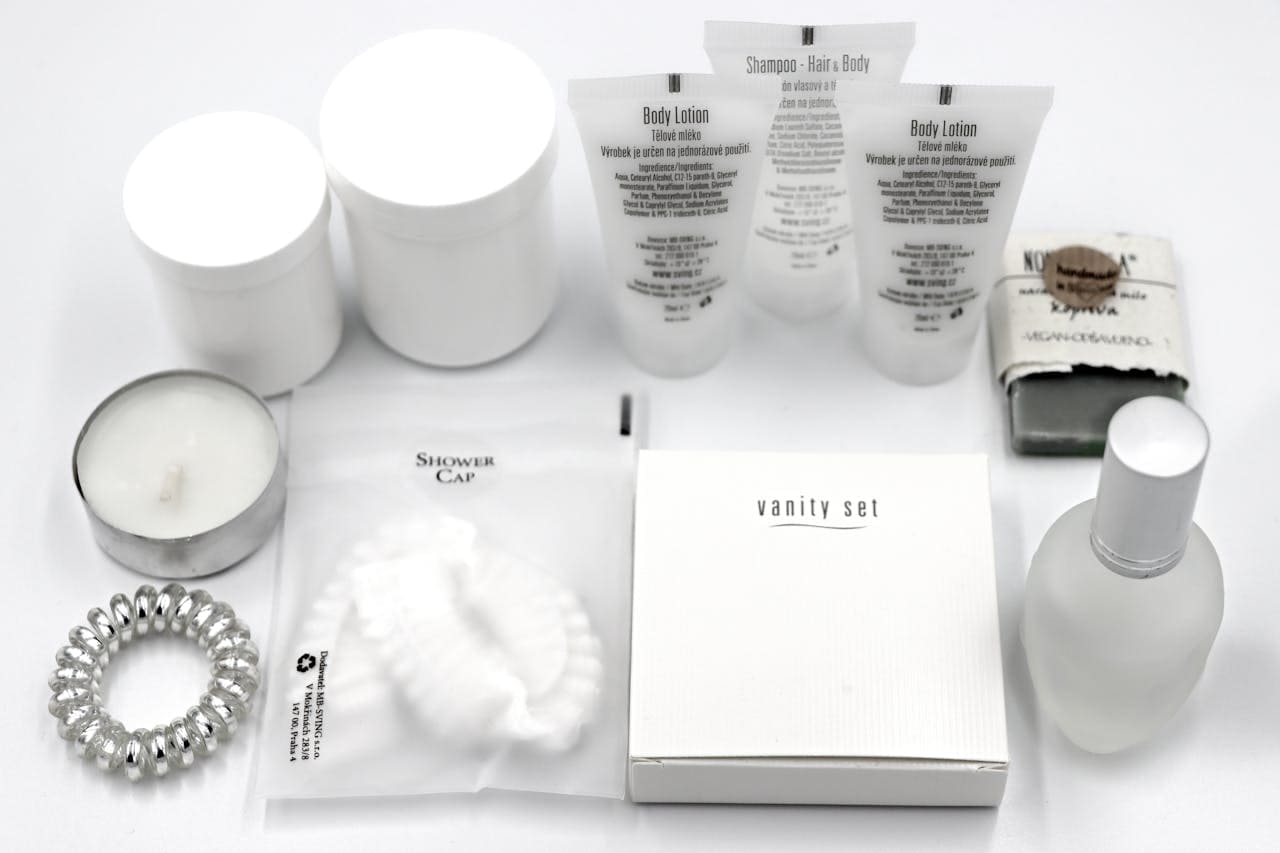
Most people don’t think twice about the scented products they use daily. Shampoo in the shower, deodorant before leaving the house, a spritz of cologne, a vanilla candle on the coffee table. It’s routine. But from a mosquito’s perspective, each of these products changes the chemical signal you’re broadcasting into the environment — sometimes in ways that work against you.
This section goes through each product category specifically, based on what the published research actually says. Not generalisations. Not assumptions. Just the evidence, clearly stated, with its limitations acknowledged where they exist.
1. Perfume (Eau de Parfum / Eau de Toilette)

Conventional alcohol-based perfumes are the most studied category. The core finding is consistent: floral and fruity-dominant perfumes carry the highest attraction risk because they contain linalool, benzyl acetate, geraniol, and isoamyl acetate — compounds that overlap with the nectar volatiles mosquitoes have evolved to seek.
One notable exception worth mentioning: a study from New Mexico State University found that Victoria’s Secret Bombshell perfume — despite being a fruity-floral — unexpectedly repelled mosquitoes, likely due to specific terpene compounds in its formulation. This illustrates why broad generalisations about perfume are less useful than understanding the specific chemistry. The alcohol carrier evaporates quickly, meaning the highest-risk window is concentrated in the first 20–40 minutes after application.
2. Ittar / Attar (Natural Perfume Oil)
Ittar is oil-based, concentrated, and alcohol-free — which means it does not evaporate the way conventional perfume does. It adheres closely to skin and releases fragrance gradually over hours. For mosquito attraction, this means sustained rather than peak-then-diminishing exposure.
The most popular varieties — rose (gulab), jasmine (mogra), and tuberose — are concentrated sources of linalool, geraniol, and benzyl acetate. These are precisely the compounds that laboratory studies identify as attractants.
Oud and sandalwood-dominant attars carry considerably lower risk. If you wear rose or jasmine attar outdoors in the evening in warm humid conditions, the scientific basis for elevated mosquito attraction is real and well-founded.
3. Cologne (Eau de Cologne)
Cologne has the lowest fragrance concentration of the main formats — typically 2–5% aromatic compound versus 15–20% in an Eau de Parfum. Lower concentration means a shorter and less intense attraction window. The same fragrance-family rules apply — citrus-dominant and fresh aquatic colognes carry lower risk than floral-accented ones — but the brevity of the scent throw is a partial natural mitigation.
4. Deodorant and Antiperspirant
This is counterintuitive: research published in Scientific Reports (Verhulst et al., 2016) found that armpit skin emanations were less attractive to Anopheles coluzzii compared to hands and feet, and attributed this to deodorant residues. The deodorant compound isopropyl tetra-decanoate specifically reduced mosquito landings by 56.4% compared to the control in bioassay testing.
The caveat is that this applies to the deodorant’s chemical base, not necessarily to added fragrance. Researchers at Michigan State University noted that floral scents in scented deodorants and perfumes can attract some mosquito species to skin. The two effects operate simultaneously: the base may reduce bacterial odor signals that attract mosquitoes, while floral fragrance introduces new attractant volatiles.
5. Soap and Shampoo
A Virginia Tech proof-of-concept study (2023, published in iScience) found that certain soaps could make people more or less attractive to mosquitoes, and that just by changing soap scents, someone who already attracts mosquitoes at a higher-than-average rate could further amplify or decrease that attraction.
The specific finding was striking: in some cases, washing increased the number of mosquito landings. Dove and Simple Truth soaps made some (but not all) subjects more attractive to mosquitoes, while Native soap seemed to decrease attractiveness. All four soaps tested were dominated by limonene — a known mild repellent — yet three out of four still increased attraction in some subjects. The skin chemistry interaction is the dominant variable, not the soap ingredient list alone.
The one consistently lower-risk result was coconut-scented soap. The researchers attributed this to fatty acid derivatives from coconut oil that may act as mild repellents. The same logic applies to floral shampoos and body washes.
6. Body Lotion and Body Wash
Scented body lotions combine three potential attractant signals simultaneously: fragrance volatiles, increased skin surface moisture (a close-range mosquito detection cue), and — frequently overlooked — alpha-hydroxy acids and lactic acid. Many moisturizing lotions contain lactic acid, which is a documented mosquito attractant. Products used for skin rejuvenation often contain alpha-hydroxy acids, which are also attractants.
Unscented lotions carry lower but not zero risk, primarily through the moisture and AHA effects. Floral and fruity scented lotions combine all three risk factors together.
7. Hair Care Products (Shampoo, Conditioner, Hair Mist, Styling Products)
Hair is an efficient fragrance diffuser — it traps and slowly releases aromatic compounds over hours, creating a persistent low-level scent plume around the head. Floral and fruity-scented hair products apply the same fragrance-chemistry logic as body products. The key difference is persistence: a jasmine-scented hair product applied in the morning can still be broadcasting its volatile profile in the evening.
Coconut-scented hair products are worth noting as a potentially lower-risk option, given the Virginia Tech soap findings on coconut-derived fatty acids. This is preliminary but scientifically plausible.
8. Edible Scented Products — Vanilla, Fruit Essences
Vanilla essence, fruit extracts, and baking aromas contain isoamyl acetate, vanillin, and various fruity esters — the same sweet fermentation volatiles that attract mosquitoes to ripe fruit in natural settings. The risk is relevant when these scents are present on skin — vanilla-scented body products or food residue on hands.
Vanillin specifically has mild documented repellent properties at high concentrations in some studies, but at typical skin-contact concentrations from food or cosmetics, this effect is not reliable or meaningful. The outdoor food environment matters more than the person wearing vanilla — fresh-cut fruit and sugary drinks create ambient attractant signals that may draw more mosquitoes to the area.
9. Scented Candles
Floral and fruity scented candles — the bestselling category in most markets — diffuse the same attractant volatile compounds into ambient air as wearing floral perfume. They do not meaningfully increase your personal bite risk, but they may draw more mosquitoes into the space. Citronella candles have documented but limited repellent effect — research shows modest protection at close range only (1–2 square meters), not area-wide elimination.
Geraniol diffusers have performed consistently better: one study documented 97% repellency indoors, outperforming both citronella and linalool formulations in both indoor and outdoor settings. A decorative floral candle has no repellent benefit and may mildly increase local mosquito activity. Neither candle type replaces repellent on skin.

10. Scented Wet Wipes
Scented wipes make transient contact with skin and leave behind a thin fragrance residue that evaporates rapidly, particularly with alcohol-based formulations. This is not a meaningful or documented risk factor in any published mosquito-attraction research. No special concern is warranted.
11. Room Fresheners and Car Air Fresheners
Room fresheners and plug-in diffusers alter the chemical environment of a space rather than your personal scent profile. Floral and sweet room fresheners can create an ambient attractant signal that draws mosquitoes toward a room — this matters more in settings with inadequate screening or open windows.
Car air fresheners present minimal practical bite risk in sealed vehicles. The exception is driving with windows open through a mosquito-active area, where the combined CO₂ from occupants and ambient fragrance creates a compound signal at open windows.
Fresheners containing citronella, eucalyptus, or lemongrass compounds may provide very modest ambient repellent effects in enclosed spaces — but not at a level that substitutes for repellent protection on skin.
Table 7 — Everyday Scented Products: Attraction Risk Reference Guide
Sources: Verhulst et al. (2016) Scientific Reports — deodorant & mosquito attraction · Vinauger et al. (2023) iScience / Virginia Tech — soap study · Müller et al. (2009) — geraniol repellency · Cleveland Clinic vector biology guidance · EPA, CDC, and WHO repellent guidelines.
Conclusion
Do perfumes and scents attract mosquitoes? The evidence says yes — conditionally, variably, and in ways that depend on what’s in the fragrance, what’s already on your skin, and what conditions you’re in when you wear it.
Floral and sweet fragrances genuinely elevate attraction risk for many people in outdoor conditions. That’s not paranoia — it’s chemistry. The same linalool that makes your perfume smell like a garden is the same compound that tells a gravid Aedes she’s near a nectar source worth investigating.
But this isn’t a reason to stop wearing fragrance. It’s a reason to be deliberate about when you wear it, what type you choose, and whether you’re pairing it with actual protection in environments where it matters. The same principle extends to every scented product in your daily routine — from your shampoo to your room freshener. Not all of them matter equally, and the context in which you use them determines the real-world risk.
The science on fragrance and mosquito attraction is still developing. What we can say with confidence is that mosquito olfaction is sophisticated, fragrance chemistry overlaps with it in documented ways, and the practical implications are worth understanding.
Article researched and written for informational purposes only. Not a substitute for professional medical or public health advice. All repellent recommendations reference EPA, CDC, and WHO guidelines current as of 2024–2025.
📰 Must Read,
✔️ Why Do Mosquitoes Bite Me So Much? Factors that Makes You a Mosquito Magnet
✔️ What to Take Orally to Prevent Mosquito Bites: Pills, Vitamins, Diet, and Supplements
Frequently Asked Questions (FAQs)
Q. What scent attracts mosquitoes the most?
Floral scents — specifically rose and jasmine — consistently come up as the highest-risk profiles across research. The compounds behind them, linalool and benzyl acetate, overlap directly with the nectar volatiles mosquitoes have evolved to seek. Sweet fruity profiles are a close second. But honestly, lactic acid from your own sweat might outrank all of them — it’s one of the strongest known attractants, and fragrance just layers on top of that existing signal.
Q. Do scented candles keep mosquitoes away?
Citronella candles have some effect — but only within about 1–2 metres, and it drops off fast beyond that. A floral or sweet-scented candle does the opposite — it may actually pull more mosquitoes toward the space. Geraniol diffusers performed considerably better in research, hitting 97% repellency indoors in one study. For actual protection though, candles are not the answer. Repellent on skin is.
Q. Does Vanilla scent attract mosquitoes
Vanillin at very high concentrations actually shows mild repellent properties in some studies. But at the concentrations you’d get from a vanilla body lotion or food residue on your hands? Not really enough to matter either way. The bigger concern is fruity esters from fruit-scented products — those have cleaner attractant evidence than vanilla does.
Q. Is coconut-scented soap really better against mosquitoes?
According to the Virginia Tech 2023 study, yes. Coconut-scented soap was the only one that consistently reduced mosquito attraction across test subjects, likely due to fatty acid derivatives from coconut oil. Every other soap tested — even ones dominated by limonene, a known mild repellent — increased attraction in some people. It’s not a repellent, but it’s the lowest-risk option in that product category.
Q. Which perfume ingredients attract mosquitoes the most?
Linalool is the big one. It’s in lavender, rose, jasmine — basically half the perfumes on the market. Benzyl acetate, geraniol, and isoamyl acetate are also documented attractants. If your perfume smells like a flower garden, it’s probably signaling something similar to a mosquito’s brain.
Q. Does applying perfume over sunscreen or repellent matter?
Yes, layering order matters. Repellent should go on last — over sunscreen, over moisturizer, and ideally over any scented products. Applying perfume over repellent can interfere with the repellent’s effectiveness and introduce attractant volatiles on top of it. The standard guidance from CDC is sunscreen first, repellent second. Fragrance before both, if you’re using it at all outdoors.
Q. Is there a perfume or fragrance that actually repels mosquitoes?
No mainstream cosmetic fragrance qualifies as a repellent — not in the regulatory sense, and not in terms of reliable field protection. Some compounds found in fragrances (citronellal, eucalyptol) have documented repellent activity, but at concentrations too low in typical perfumes to make a meaningful difference. One notable exception that keeps getting cited: Victoria’s Secret Bombshell perfume unexpectedly repelled mosquitoes in a New Mexico State University study, probably due to specific terpene content. Interesting finding. Not something to rely on though.
Q. Does sweating while wearing perfume make it worse?
Significantly worse, yes. Sweat adds lactic acid and ammonia to the mix — both documented mosquito attractants — and heat accelerates the volatilization of fragrance compounds at the same time. A floral perfume on a sweaty person outdoors at dusk is probably the highest-risk combination in this whole topic. Not ideal.
Q. What fragrances repel or keep mosquitoes away?
Citronellal and citronella are the most documented — they block mosquito olfactory receptors rather than just masking odour. Eucalyptol, found in eucalyptus and rosemary, works similarly and is chemically related to PMD, a CDC-recommended repellent. Geraniol in diffuser form performed surprisingly well in studies — 97% repellency indoors in one trial. None of these are substitutes for DEET or picaridin when real disease risk is involved, but they’re the most credible natural options.
Q. Does perfume attract mosquitoes?
Some perfumes do, some don’t — it’s entirely about what’s in the bottle. Floral and fruity perfumes carry real attraction risk because their key compounds (linalool, geraniol, benzyl acetate) directly trigger the same olfactory response mosquitoes have toward flower nectar. Woody, musky, and oriental perfumes sit in much lower-risk territory. The first 20–40 minutes after application are the highest-risk window, when the volatile concentration on your skin is at its peak.
Q. Does cologne attract mosquitoes?
Less than perfume, for a fairly simple reason — cologne has much lower fragrance concentration, typically 2–5% versus 15–20% in an Eau de Parfum. The scent throw is shorter, the volatile output is lower, and the attraction window is brief. The same fragrance-family rules still apply though. A floral cologne carries more risk than a fresh aquatic one. Just at a smaller scale.
Q. Does sweet perfume attract mosquitoes?
Yes, and this one’s fairly well-supported. Sweet and fruity fragrance profiles contain isoamyl acetate and similar fermentation esters — the same class of volatiles mosquitoes associate with ripe fruit, which is a sugar source they actively seek. It’s a different olfactory pathway from floral attraction, but the end result is similar. Sweet vanilla, tropical fruit, peach, mango-type fragrances all fall into the moderate-to-high risk category. Especially in warm humid conditions where volatilization is faster and the scent plume around you is larger.
Editorial Team & Contributors

Raashid Ansari, Founder, Content Researcher & Author - MosquiTalk
Not an entomologist — just a genuinely curious writer who started researching mosquitoes and couldn't stop. What began as casual reading about repellents and bite prevention gradually turned into a deep ongoing dive into vector biology, disease epidemiology, animal health impacts, and the real science behind mosquito control. Everything published here is carefully edited, and written with one purpose: giving readers accurate, accessible information they can actually trust and use to protect themselves, their families, and their pets, birds and cattle.
Active across social platforms, regularly publishes, and genuinely invested in spreading mosquito awareness where it matters most. Because informed readers make better decisions — and better decisions save lives.