
Table of Contents
Mosquitoes and Ruined Outdoor Plans
It’s supposed to be a relaxing evening. You’ve got the chairs out, the grill going, maybe something cold to drink. And then — within ten minutes — everyone’s slapping their arms, tucking their feet under themselves, and someone’s already heading inside. Mosquitoes. Again.
Mosquitoes ruin more outdoor experiences than weather does:
- Barbecues cut short.
- Kids dragged inside before dark.
- Evening runs cut down to sprints.
- Camping trips remembered more for the bites than the scenery.
It’s one of those problems people have accepted as just part of warm weather — when really, most of it is preventable.

Image Credit: Illustration by Author
Every year, millions of people spend money on products that don’t work, follow advice that has no science behind it, and end up right back where they started — slapping, scratching, and retreating indoors earlier than they wanted to. The mosquito control industry is enormous and frankly pretty good at selling hope without always delivering results.
This guide is different. It covers what mosquitoes actually respond to, which products and strategies genuinely work, and how to build a prevention approach that holds up through an entire outdoor season — not just for one evening.
What is in your control is how well you understand the process — and how many of the right prevention strategies you’re stacking together. This guide covers all of it. Why mosquitoes bite, how they find you, which products actually work, which ones are a waste of money, and a complete set of practical mosquito bite prevention strategies that hold up under scrutiny.
Why Mosquito Bites Are More Than Just an Itchy Bug Bite
The itch is annoying. But it’s almost the least important part of the problem.
When a mosquito bites, it injects saliva containing anticoagulants — proteins that keep the blood flowing while it feeds. Your immune system recognizes those proteins as foreign and mounts a histamine response. That’s the swelling and the itch. In most people, it’s mild and temporary. But not always.
i) Allergic Reactions and Skeeter Syndrome
Some people develop disproportionately strong reactions — large welts, pronounced swelling, bruising around the bite site. In children especially, what’s sometimes called Skeeter syndrome can produce reactions alarming enough to be mistaken for a bacterial infection. Wide, warm, swollen bite sites that develop within hours. Not dangerous in most cases, but worth knowing about if your child consistently reacts badly to mosquito bites.
ii) Secondary Infections From Scratching
Scratching breaks the skin causing bruises. Broken skin in warm outdoor environments is an open invitation for bacteria. Staphylococcal skin infections from scratched mosquito bites are more common than most people realize — and occasionally require antibiotic treatment. The initial bite is rarely the problem. The scratching is. This can lead to severe infection and further negligence can lead to cellulitis from mosquito bites.
iii) Mosquito-Borne Diseases
This is the part that actually matters from a public health standpoint. Mosquitoes transmit more disease than any other organism on earth. The WHO estimates that mosquito-borne illnesses — malaria, dengue fever, Zika virus, West Nile virus, chikungunya, yellow fever — account for hundreds of millions of infections annually worldwide.
In the United States, West Nile virus is a consistent seasonal concern, and dengue is increasing in southern states and territories. Effective mosquito bite prevention is a legitimate public health strategy, not just a comfort preference.
Why Mosquitoes Bite Humans
The short version: only female mosquitoes bite. Males feed entirely on plant nectar. Female mosquitoes need a blood meal to develop eggs — the proteins in blood are essential for reproduction. Without it, the cycle stops.
So the female mosquito hunting you isn’t being aggressive for its own sake. She’s completing a biological requirement. That doesn’t make the bites less annoying, but it explains why no amount of “just being still” will make her lose interest.
Why Some People Get Bitten More Than Others?
What makes me attractive to mosquitoes? Why do mosquitoes bite me so much and not my wife? This is genuinely one of the most-asked questions in mosquito biology. The answer is more interesting — and more frustrating — than most people expect.
- Blood type: Research in the Journal of Medical Entomology found that people with Type O blood attracted significantly more mosquito landings than Type A. Type B fell in between. The mechanism relates to skin secretions that signal blood type to nearby insects.
- CO2 output: People who exhale more carbon dioxide — larger individuals, pregnant women, people mid-exercise — are consistently more attractive at long range. CO2 is the primary long-distance navigation signal mosquitoes follow.
- Skin microbiome: Bacteria living on your skin produce a volatile compound profile that is unique to you. Some profiles are far more attractive to mosquitoes than others. This is largely genetic and not something you can meaningfully change.
- Body heat: Higher skin surface temperature creates a stronger thermal signal. People who run warm, or who are exercising, are more detectable from a distance.
- Lactic acid and sweat: Exercising increases CO2 output and sweat simultaneously — and sweat contains lactic acid, a known close-range mosquito attractant. If you get bitten more during or after physical activity, that’s exactly why.

Image Credit: Illustration by Author
How Mosquitoes Find You: The Detection Sequence
Mosquito host-seeking is a multi-stage process. Understanding each stage makes the prevention strategies later in this guide make much more intuitive sense — you can see which intervention is targeting which step.
Stage 1: Long Range: Carbon Dioxide Plume Tracking
From 30 to 50 meters away, mosquitoes navigate primarily by following CO2 plumes. They have specialized receptor neurons sensitive to CO2 concentrations just a few parts per million above background levels. When they detect an elevated plume, they orient into the wind and fly upwind toward the source — a behavior entomologists call casting.
This is exactly why propane carbon dioxide traps work. They produce a continuous CO2 output comparable to human exhalation, creating a competing plume that intercepts mosquitoes before they reach people.
Stage 2: Medium Range: Heat and Moisture Signatures
Within about 5 to 10 meters, heat and moisture become the dominant cues. Human skin sits at around 33 to 35 degrees Celsius, radiating warmth outward. Exhaled breath and skin transpiration create a warm, humid microclimate around the body. Mosquitoes detect both the infrared heat gradient and the moisture differential — which is why fans that disrupt the plume are genuinely effective deterrents.
Stage 3: Visual Cues at Close Range
Dark clothing provides a clearer silhouette against bright outdoor backgrounds. Movement amplifies the signal. Wearing light colors and staying still reduces bites somewhat — though it’s a minor factor compared to the chemical and thermal signals. Worth doing, but not worth relying on alone.
Stage 4: Close Range: Skin Odor and Volatile Compounds
Within a meter or two, the mosquito switches to olfactory navigation. Volatile organic compounds from skin bacteria — octenol, lactic acid, ammonia, carboxylic acids — confirm that the heat source is a viable host. This is the final targeting stage before landing, and it’s why chemical lures added to traps increase catch rates so significantly.
When Mosquitoes Are Most Active?
Timing is one of the most underused and completely free prevention tools available. Mosquito activity is heavily shaped by temperature, light, humidity, and wind — and those variables follow patterns you can plan around.
i) Dawn and Dusk: Peak Feeding Windows
Most mosquito species — Culex mosquitoes especially, the primary West Nile virus vector — are crepuscular. Most active in the low-light hours around sunrise and sunset. Lower temperature, higher humidity, reduced wind. All conditions that favor mosquito flight and feeding.
The Asian Tiger Mosquito (Aedes albopictus) is the significant exception — it bites throughout the day, which is why timing alone won’t solve the problem if that’s your dominant local species. The CDC tracks regional species prevalence if you want to know what you’re actually dealing with.
ii) Temperature, Humidity, and Wind
Mosquitoes are cold-blooded. They function between roughly 50°F and 95°F, with peak activity around 80°F. High humidity slows water loss and makes flight easier. Hot, dry, breezy afternoons are legitimately your best outdoor window — and that’s not coincidental. Plan accordingly when you can.
iii) Seasonal Patterns and Mosquito Season
In temperate US climates, mosquito season runs from late spring through early fall — whenever temperatures consistently stay above 50°F overnight. Southern states, Gulf Coast regions, and tropical areas deal with year-round mosquito pressure. Local mosquito control districts track seasonal population data and publish it — genuinely useful if you’re trying to time yard treatment or travel.
How to prevent Mosquito Bites: Personal Mosquito Bite Prevention Strategies
This is where most people focus first, and it’s the right instinct. Personal protection is the most direct defense. But the quality gap between strategies is enormous — some are highly effective, others are essentially placebos with good marketing.
1] Wear Mosquito-Protective Clothing (Clothing to Prevent Mosquito Bites)
Clothing is genuinely underrated as a mosquito bite prevention tool. A mosquito cannot bite through tightly woven fabric. Period. No spray needed, no product, no maintenance.

Image Credit: Illustration by Author
- Wear long sleeves and long pants during dawn, dusk, and evening outdoor activity — especially near vegetation or water.
- Choose light-colored, tightly woven fabrics. Dark colors increase visual contrast and retain more heat — both increase mosquito attraction.
- Loose-fitting clothing is better than tight — mosquitoes can bite through fabric stretched tightly against skin.
- Permethrin-treated clothing adds an active layer — it repels and kills mosquitoes on contact without going on your skin. Brands like Insect Shield sell pre-treated clothing that retains effectiveness through 70+ wash cycles. You can also treat your own clothing with spray-on permethrin — let it dry completely before wearing. This is particularly valuable for hiking, camping, and travel.
One important distinction: permethrin is for clothing and gear only. Never apply it directly to skin. DEET and Picaridin go on skin. Permethrin goes on fabric. Getting this backwards reduces effectiveness and increases unnecessary chemical exposure.
2] Use Effective Mosquito Repellents
There are four EPA-registered active ingredients with solid evidence behind them. Everything else — every essential oil blend, every wristband, every plant-based product — falls meaningfully short in controlled comparisons.
Mosquito Repellent Comparison: Active Ingredients
| Active Ingredient | EPA Registered | Effectiveness | Safe for Kids | Duration |
|---|---|---|---|---|
| DEET (20–30%) | Yes | Very High | 2+ months (diluted) | 4–8 hrs |
| Picaridin (20%) | Yes | Very High | Yes (2 months+) | 8–12 hrs |
| IR3535 | Yes | High | Yes | 4–6 hrs |
| OLE / PMD | Yes | High | 3+ years only | 4–6 hrs |
| Citronella (candles) | Partial | Low–Moderate | Yes (ambient) | ~20 min |
| Essential Oils (DIY) | No | Very Low | Often unsafe | <30 min |
DEET at 20 to 30% concentration remains the gold standard — over 70 years of use, the safety record is well established when used as directed. Picaridin at 20% performs comparably, doesn’t degrade plastics or synthetic fabrics, and has less odor. Both are endorsed by the CDC for effective mosquito bite protection.
Apply repellent to all exposed skin — including ears, the back of the neck, and ankles. Apply sunscreen first if you’re using both, then repellent on top. Reapply according to label directions after swimming or heavy sweating.
Repellent Application Mistakes That Undermine Protection
Even the right repellent applied incorrectly provides incomplete protection. The most common mistakes:
- Missing the neck and ears — two of the most frequently bitten areas, especially at dusk when mosquitoes fly upward toward exhaled breath.
- Applying repellent under clothing — it goes on exposed skin only. Fabric already provides a barrier; repellent under it just adds unnecessary skin contact.
- Not reapplying after swimming or sweating heavily — water washes off repellent regardless of the stated duration.
- Touching eyes or mouth after application — wash hands immediately after applying any repellent.
- Applying DEET or Picaridin to damaged, irritated, or sunburned skin — absorption increases significantly and can cause reactions.

Image Credit: Illustration by Author
3] Protection for Babies, Young Children, and Pregnant Women
This section is missing from most mosquito prevention guides and it’s one of the most important. The rules are different for vulnerable groups and getting them wrong has real consequences.
- Infants under 2 months: Do not use any insect repellent on babies under 2 months old. Full stop. The CDC and American Academy of Pediatrics both advise this. Use mosquito netting over strollers and carriers instead — it’s more effective anyway for this age group.
- Children 2 months to 3 years: DEET (low concentration, 10% or less), Picaridin, and IR3535 are acceptable. Oil of Lemon Eucalyptus (OLE/PMD) is NOT recommended for children under 3 — this restriction is specific to OLE, not DEET. Apply repellent to your own hands first and then apply to the child, avoiding hands, eyes, and mouth.
- Children 3 years and older: All four EPA-registered options are acceptable. Apply to clothing and exposed skin — never to the face directly. Sunscreen and repellent combination products are generally not recommended for children because repellent doesn’t need to be reapplied as frequently as sunscreen.
- Pregnant women: DEET, Picaridin, and IR3535 are considered safe during pregnancy when used as directed. The CDC recommends their use, noting that the risk of mosquito-borne disease during pregnancy — particularly Zika, which can cause severe fetal abnormalities — outweighs the risk of approved repellent use. OLE/PMD has less safety data for pregnant women and is generally avoided.

Image Credit: Illustration by Author
4] Avoid Peak Mosquito Activity Hours
Adjusting your schedule is free and requires nothing. If you can move outdoor work, exercise, or backyard time to midday — when heat and light are strongest and most mosquito species are resting — you reduce exposure meaningfully. Not always practical. Worth doing when it is.
5] Shower After Sweating Outdoors
Sweat contains lactic acid, ammonia, and skin bacterial metabolites — all close-range mosquito attractants. Showering after outdoor exercise removes those compounds from the skin surface and reduces your attractiveness for the following hours. Simple, free, and consistently effective. Worth mentioning to kids who play outside in summer evenings.
6] Use Fans to Disrupt Mosquito Flight
Mosquitoes are genuinely weak fliers. They cannot maintain directional flight in wind speeds above roughly 1 mph — well below what a standard box fan or oscillating patio fan produces. A fan directed at seating areas disperses the CO2 plume, makes thermal detection harder, and physically prevents landing. This works extremely well for contained outdoor spaces and is often more immediately effective than repellent for backyard gatherings.
7] Wearable Repellent Products — What’s Worth It
The wearable repellent market is large and uneven. Some products are genuinely useful. Others are essentially scented accessories.
- Thermacell clip-on devices: Battery-powered fan disperses metofluthrin repellent in a small zone around the wearer. Useful for situations where applying skin repellent is inconvenient — early morning fishing, hiking. Effective in still air; wind reduces the protection zone significantly.
- Repellent patches and stickers: Slow-release repellent patches for clothing or strollers are useful for young children who can’t wear skin repellent. Effectiveness is localized to the area around the patch — not full-body protection, but useful as a supplementary layer for infants in strollers or carriers.
- Repellent wristbands: Popular, widely sold, and largely ineffective as full-body protection. Studies consistently show they create a small repellent zone around the wrist but provide no meaningful protection to the rest of the body. They’re in the myths table for a reason. Skip them.
- Ultrasonic personal repellers: No evidence of effectiveness. The EPA and multiple university studies have found no measurable mosquito repellent effect from ultrasonic devices. Category belongs firmly in the myths section regardless of how the product is marketed.
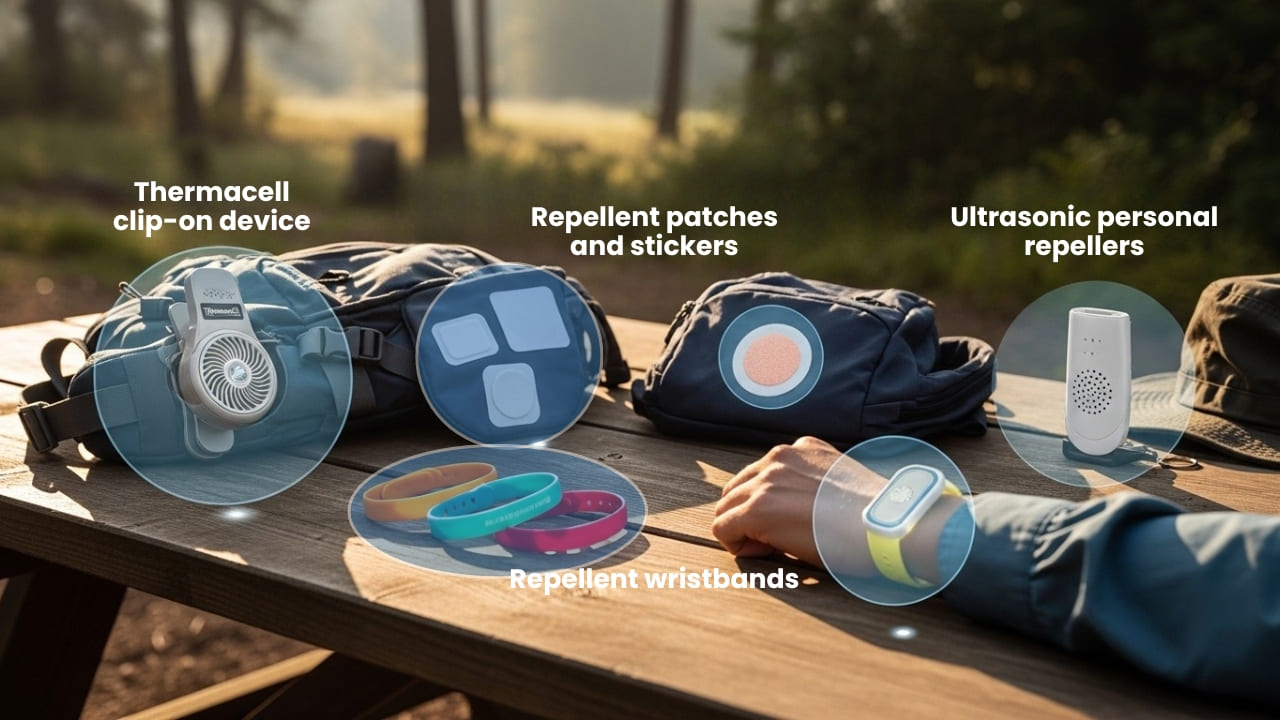
Image Credit: MosquiTalk.com
Mosquito Control Devices and Products: What Works, What Doesn’t
Walk into any hardware store or scroll through Amazon during mosquito season and the number of products claiming to eliminate mosquito problems is overwhelming. Bug zappers, mosquito traps, diffusers, coils, misting systems, plug-ins. The effectiveness range is enormous — from genuinely impressive to borderline useless. Here’s what the science and practical experience actually show.
Mosquito Control Products: Effectiveness Comparison
| Product Type | How It Works | Effectiveness | Best Used For |
|---|---|---|---|
| Propane CO2 Trap | Mimics human CO2/heat plume | High (population suppression) | Yard-level seasonal control |
| Thermacell Device | Heat-activated allethrin mat | High in still air | Patios, camping, outdoor dining |
| Plugin Vaporizer | Electric heat releases repellent | Moderate indoors | Bedrooms, indoor spaces |
| Mosquito Coils | Slow-burn pyrethroid smoke | Moderate outdoors | Outdoor areas, campsites |
| UV + Fan Trap | Light + vacuum capture | Low-Moderate | Indoor supplementary control |
| UV Bug Zapper (alone) | UV light + electric grid | Very Low for mosquitoes | Not recommended |
| Perimeter Yard Spray | Pyrethrin/permethrin barrier | High short-term knockdown | Pre-event treatment |
| Auto Misting System | Timed pyrethrin mist bursts | High with regular use | High-pressure residential yards |
| Mosquito Dunks/Bits | Bti kills larvae in water | Very High (larvicidal) | Ponds, water features, gutters |
| In2Care Trap | Fungus + larvicide on females | High (breeding suppression) | Residential yards |
1] Heat-Activated Diffusers and Repellent Devices
- Thermacell devices (butane or rechargeable): One of the more legitimately effective outdoor repellent devices available. Thermacell uses heat to volatilize allethrin — a synthetic pyrethroid — creating a repellent zone of roughly 15 to 20 feet in still air.
University field studies have shown meaningful reduction in mosquito landing rates within the protection zone. The key limitation is wind — in breezy conditions the protection zone shrinks significantly. Best used in semi-enclosed outdoor areas: patios with partial windbreaks, tent vestibules, outdoor dining areas.
- Mosquito coils: Slow-burning coils impregnated with pyrethroid insecticide have been used for decades across Asia, Africa, and tropical regions — and they work moderately well in outdoor settings. The active repellent compound disperses in the smoke.
The legitimate concern is prolonged indoor use, which produces particulate matter and combustion byproducts at levels that raise respiratory health questions. Outdoors and in well-ventilated areas, coils are a reasonable budget option for supplementary protection. Don’t use them in enclosed indoor spaces or near sleeping children.
- Plugin liquid vaporizers (electric mat/liquid diffusers): These are the most widely used indoor mosquito control product in many markets — brands like All Out, Good Knight, Raid Night & Day. They use electric heat to slowly release synthetic pyrethroid repellent into the room.
Effective for indoor spaces, particularly bedrooms. Follow manufacturer guidelines on ventilation — prolonged use in very small sealed rooms isn’t advisable. For a bedroom with a closed door and reasonable ventilation, they’re practical and effective.
- Essential oil diffusers as mosquito deterrents: Widely used, not particularly effective. Citronella, eucalyptus, and lavender diffused into a room create a pleasant smell and provide minimal deterrence at best. The concentration of active compounds achievable through a standard room diffuser is far below what’s needed for meaningful mosquito repellent activity. Fine as a supplement; not a replacement for any proven strategy.
Mosquito Traps
- Propane CO2 traps: The most effective mechanical trap category available for residential use. Propane combustion produces CO2, heat, and moisture — closely mimicking the signals a resting human produces. Mosquitoes follow the plume, commit to landing, and are captured by a vacuum impeller into a holding net. Catch rates increase significantly with octenol lure additions, particularly for Aedes species. The critical variable is continuous operation — population suppression compounds over weeks, not days.
- UV + fan combination traps: These draw insects with UV light and capture them with a vacuum fan into a collection container. More effective than pure UV zappers because the fan actually captures and kills rather than relying on the electric grid. Still primarily effective against UV-attracted insects — moths, gnats, some midges. Mosquitoes are not strongly UV-attracted, so catch rates for mosquitoes specifically are lower than marketing suggests. Useful for indoor supplementary control but not a primary mosquito trap.
- UV bug zappers (standalone): Already in the myths section and worth reiterating here as a product category. UV zappers have been extensively studied and consistently found to kill mostly beneficial insects — moths, beetles, lacewings — with mosquitoes representing less than 0.1% of catch in residential settings (University of Notre Dame research). They’re not mosquito control tools. They’re beneficial insect reduction tools. Avoid them.
- In2Care mosquito traps: An innovative biological control trap that deserves more attention in the residential space. It attracts egg-laying female mosquitoes with standing water and yeast-based odors, then contaminates them with a fungal spore and larvicide. The female carries the larvicide to other water sources when she goes to lay eggs — disrupting breeding across a wider area than the trap footprint.
Used by professional mosquito control programs and increasingly available for residential use. Genuinely effective at targeting the breeding cycle rather than just adults.
- Sugar-yeast DIY CO2 traps: These homemade traps — a plastic bottle with sugar, water, and yeast producing fermentation CO2 — get shared widely online as cheap alternatives to propane traps. They produce CO2, which does attract mosquitoes. But the output is inconsistent, much lower volume than a propane trap, and the trap mechanism (typically just a funnel with no vacuum) catches poorly. Fine for curiosity’s sake; not a meaningful mosquito control strategy for a yard.
UV Bug Zappers: A Clear-Cut Case
This one is worth mentioning here because so many people still have one in their yard believing it’s working. UV light zappers create a satisfying crackle and produce a pile of dead insects. They feel like they’re doing something. They are not reducing your mosquito population. They are reducing your local population of moths, beetles, and other beneficial insects.
The only scenario where a UV zapper has mosquito relevance is in combination with a CO2 attractant — some newer hybrid models add this. Without CO2, it’s not a mosquito control tool.
Outdoor Lighting Choices
This is genuinely one of the simplest and most overlooked adjustments in the home mosquito prevention toolkit. Standard white outdoor bulbs emit wavelengths that attract flying insects broadly. Warm yellow or amber LED bulbs — specifically marketed as “bug lights” — emit wavelengths that are far less attractive to mosquitoes and other flying insects.
The reduction isn’t total, but switching porch and patio lights to warm yellow spectrum measurably reduces the number of insects gathering at those light sources. A single bulb swap. Worth doing.
Outdoor Mosquito Control for Your Yard
Personal protection handles the mosquitoes that reach you. Yard-level control reduces how many are produced and how many are active near your home. Both layers matter — and neither is complete without the other.
i) Eliminate Every Standing Water Source
This is the single highest-impact thing most homeowners can do. Mosquitoes breed in standing water and don’t need much — a bottle cap of water is enough for some species to lay eggs. Beyond the obvious sources, the ones people most consistently miss:
- AC unit condensate drip trays — often sitting under your outdoor AC unit that is accumulating water for weeks
- Flat roof sections with poor drainage — common on additions and sheds
- Pool covers after rain — the surface depression holds water even when the pool itself is treated
- Tarps covering firewood, equipment, or garden furniture — water pools in any depression
- Rain barrels — should have tight-fitting lids or be treated with Bti
- Corrugated downspout extensions and splash blocks — water sits in the channels
- Gutters — arguably the highest-volume residential breeding site when blocked; check and clear seasonally
- Plant pot saucers, birdbaths, children’s toys, buckets — anything that holds water for more than 48 to 72 hours
The underlying principle: mosquito larvae need standing water for 7 to 14 days to complete development. Any water source that gets refreshed or disrupted within that window cannot produce adults. That’s the target — not perfect elimination of all water, just disrupting the development window.
ii) Water Treatment Products for Standing Water You Can’t Remove
- Mosquito dunks (Bti slow-release): Donut-shaped pellets of Bacillus thuringiensis israelensis (Bti) placed in ponds, water features, rain barrels, and other standing water sources. Bti is a naturally occurring soil bacterium that produces a protein toxic specifically to mosquito and fungus gnat larvae.
Safe for fish, birds, pets, and all other wildlife. This is the same larvicide used by county mosquito control districts nationwide. Dunks last about 30 days and are inexpensive.
- Mosquito bits: Faster-acting granular Bti formulation. Good for soil that retains moisture and for quick treatment of containers and gutters. Can be applied to standing water or mixed into soil in areas that flood after rain.
- Mosquito fish (Gambusia affinis): Live fish introduced to ornamental ponds to eat mosquito larvae. Used extensively by mosquito control programs — Los Angeles Mosquito Abatement, for example, distributes them free to residents. Highly effective in ponds where Bti dunks are impractical. Not suitable for water features connected to natural waterways without program guidance.
iii) Yard Sprays and Perimeter Treatments
- Permethrin perimeter yard spray: Spraying the perimeter of your yard — particularly lawn edges, shrub borders, and vegetation within 10 to 15 feet of outdoor seating areas — with a permethrin solution kills adult mosquitoes resting in vegetation and creates a lasting residual barrier. Effective for 3 to 6 weeks depending on rain and sun exposure.
Important note: Permethrin is highly toxic to cats and should not be applied near areas which are accessible to cats. Extremely toxic to aquatic invertebrates — never apply near water bodies or storm drains.
- Professional mosquito barrier spray treatments: Professional-grade pyrethrin or permethrin applications provide fast knockdown of adult populations and residual protection. Many homeowners use them as seasonal treatments (spring, early summer) to reset the baseline population before ongoing prevention takes over.
They work well for immediate relief but don’t address breeding. Populations rebound within 2 to 4 weeks from emerging larvae unless source control is also in place.
- Automated mosquito misting systems: Fixed nozzle systems installed around the yard perimeter that release timed bursts of pyrethrin or permethrin repellent — typically at dawn and dusk when mosquito activity peaks. Effective at maintaining low adult mosquito populations in high-pressure residential environments.
The main considerations are cost (installation runs several hundred to several thousand dollars), the environmental exposure of synthetic pyrethroids in the yard ecosystem, and the same cat/aquatic toxicity concerns as manual permethrin sprays. Increasingly popular in the Gulf Coast and Southeast US where mosquito pressure is high enough to justify the investment.
iv) Trim Dense Vegetation
Adult mosquitoes rest during the day in cool, humid, shaded vegetation — tall grass, dense shrubs, overgrown ground cover. Keeping vegetation trimmed back from primary outdoor activity areas removes the daytime resting habitat and reduces the population available to bite at dusk. Not glamorous. Very effective.
v) Use Mosquito Traps Strategically
Propane CO2 traps positioned between the property boundary and living areas intercept mosquitoes in transit before they reach people. Run continuously through mosquito season. The population suppression compounds over weeks — think of it as a cumulative depletion strategy rather than instant relief. [Internal link: How Propane Mosquito Traps Work]
vi) Backyard Gatherings: Extra Steps for Outdoor Events
Hosting outdoor events deserves its own mention because the combination of multiple people, food, drinks, and open flames changes the mosquito dynamics significantly.
- Apply perimeter spray 24 to 48 hours before the event — this gives the treatment time to take full effect and reduces residue on surfaces.
- Set up Thermacell devices at table locations where guests will be sitting longest.
- Run fans directed at seating areas — mechanical airflow is genuinely one of the most effective gathering-level deterrents.
- Switch outdoor lights to warm yellow spectrum bulbs before the event.
- Cover or remove open food and drink containers when not actively in use — fermentation from open drinks produces CO2 that attracts mosquitoes.
- Dark outdoor furniture absorbs heat and provides visual contrast — light-colored patio furniture is meaningfully less attractive to resting mosquitoes. Not critical, but worth knowing.
How to Mosquito-Proof Your Home Indoors
Indoor control is mostly about keeping mosquitoes out rather than killing them once they’re inside. One or two mosquitoes in a bedroom at night will ruin your sleep far more effectively than their outdoor population density would suggest.
- Install and maintain window and door screens with 18×16 mesh or finer. Inspect for tears and gaps at the start of each season — a single small gap is enough for dozens to enter on a warm evening.
- Keep doors closed during dawn and dusk. If you want airflow during peak hours, use a screen door — don’t just prop the main door open.
- Air conditioning reduces the need for open windows during mosquito-active evenings and lowers the indoor temperature that otherwise makes mosquitoes more active.
- Mosquito nets over beds are highly effective and underused in North American homes. In endemic areas they’re considered one of the most cost-effective public health interventions available according to the WHO. Permethrin-treated nets add a kill layer. Even in non-endemic areas they’re useful if your screens are imperfect.
- Plugin liquid vaporizers in bedrooms are practical and effective during peak season — particularly useful in rooms where windows are occasionally left open or screens aren’t perfect.
- Switch outdoor-facing entry lights and patio lights to warm amber or yellow LED spectrum bulbs to reduce insect attraction at entry points.
- Indoor UV + fan combination traps can reduce any indoor population that’s already entered — place near windows or entry points as a secondary capture layer.
Natural Mosquito Repellents: What Actually Works
There’s a lot of noise in this category. People want natural options — understandably — but the gap between what sounds appealing and what works in controlled conditions is wide. Here’s the honest breakdown.
i) Options With Actual Evidence
- Oil of Lemon Eucalyptus (OLE) / PMD: The only plant-derived repellent with EPA registration and CDC endorsement. At 30% PMD concentration, it provides protection comparable to DEET for several hours. Importantly: this is the processed extract, not lemon eucalyptus essential oil or regular eucalyptus oil — the active compound PMD only appears in significant quantities in the processed OLE product. Not recommended for children under 3.
- Citronella (properly understood): Citronella candles and torches provide a short-range, temporary deterrent effect — roughly 20 minutes of mild reduction in mosquito landing rates within a few feet of the flame. They’re not repellents in any meaningful systemic sense. Fine as a supplementary layer outdoors with other strategies in place. The citronella plant in your garden is a different matter — the ambient release is far too diluted to deter anything.
- Catnip (nepetalactone): Laboratory studies have shown nepetalactone has mosquito-repellent properties — some showing effects comparable to low-concentration DEET in short-duration tests. It’s not yet widely commercialized for human use in reliable formulations. One to watch.
ii) Homemade Repellent Sprays
Apple cider vinegar and essential oil sprays, lemon-clove combinations, neem oil DIY blends — these get shared constantly online and they’re genuinely popular. The honest assessment: most show very brief deterrence (under 15 minutes in controlled tests) and none come close to matching EPA-registered repellents in field conditions.
Neem-based products are the most evidence-adjacent in this category and worth considering as a supplementary option for shorter outdoor exposures. But if you’re spending an evening outside in a high-pressure mosquito environment, a homemade spray is not going to carry you through it.
iii) What Genuinely Doesn’t Work
Lavender, peppermint, tea tree oil, rosemary, thyme — most DIY essential oil blends provide protection measured in minutes, not hours. Some are skin irritants on already-irritated skin. Plants known as mosquito-repelling — citronella plants, marigolds, basil, lemon balm — have negligible effect outdoors.
The volatile release in open air is too diffuse. Camphor tablets placed in rooms, garlic applied to yard vegetation, baking soda-yeast traps — none of these produce meaningful mosquito control in real-world conditions.
Mosquito Bite Prevention While Traveling
Travel changes the risk profile significantly. At home you know your local mosquito species and their typical disease burden. In unfamiliar regions — especially tropical destinations — you may be encountering species your immune system has never met, carrying diseases not present in your home country. The stakes are higher and the prevention game changes accordingly.
Tropical and High-Risk Destinations
Central and South America, Sub-Saharan Africa, Southeast Asia, and parts of the Caribbean carry risk for dengue, Zika, malaria, chikungunya, and yellow fever. The CDC Travel Health Notices page gives current risk assessments by destination — check it before any international trip, not after.
- Consult a travel medicine clinic 4 to 6 weeks before departure. Destination-specific vaccines and malaria prophylaxis require lead time.
- Pack permethrin spray to treat clothing and gear before you leave — socks, shoes, pants, and base layers. Pre-treating at home is easier than treating in a hotel room.
- Use DEET or Picaridin consistently — not just during jungle excursions but at restaurant terraces, hotel pools, transit hubs. Dengue mosquitoes bite during the day in urban areas.
- Sleep under permethrin-treated bed nets in accommodation without reliable air conditioning or screens.
Camping and Hiking
- Apply repellent before entering wooded or marshy terrain — don’t wait until you’ve been bitten.
- Treat all clothing with permethrin before the trip. Pay attention to socks and shoes — many species preferentially bite low on the body.
- Set up camp away from standing water. Higher elevation sites with natural breeze exposure have significantly lower mosquito pressure.
- Campfire smoke naturally disrupts mosquito detection — sit upwind and let the drift do its job.
- Clip a Thermacell device to your belt or chair strap for a hands-free repellent zone that moves with you around the campsite.
- A mosquito head net looks ridiculous. It works perfectly. Keep one in the pack.
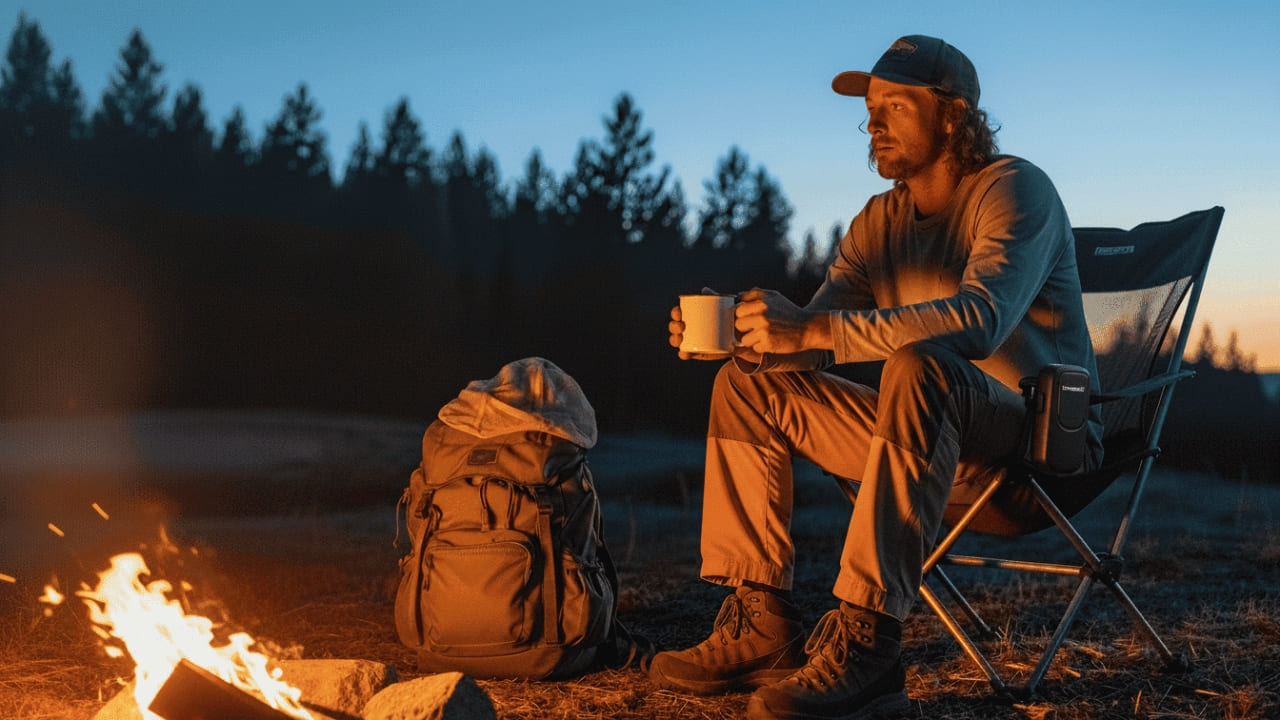
Image Credit: Illustration by Author
Beach Vacations
Salt marsh mosquitoes along coastal areas are often extremely aggressive and active during the day. Biting midges — no-see-ums — are a separate problem on beaches, requiring finer mesh netting to block. Standard repellents work against both but density can be high enough that clothing coverage matters more than usual at dawn and dusk beach walks.
Mosquito Bite Prevention for Vulnerable Groups
Most mosquito prevention guides are written for a generic healthy adult. Real households include infants, elderly family members, and people with health conditions that change the risk equation. Here’s what’s different for each group.
- Elderly individuals: Thinner skin and more fragile capillaries mean mosquito bites often produce more pronounced bruising and swelling. Older adults on blood thinners may see significantly more sub-surface bleeding at bite sites. EPA-registered repellents are safe for older adults when used as directed. The bigger priority is consistent use — older adults sometimes underestimate bite frequency and skip repellent.
- People on blood-thinning medications: Anticoagulants including warfarin, aspirin, and newer agents like rivaroxaban reduce clotting at bite sites. Bites may bruise more dramatically. The prevention strategy is the same — repellent, clothing, source control — but monitoring bite sites and mentioning unusual reactions to your physician is reasonable.
- Immunocompromised individuals: People undergoing chemotherapy, living with HIV, or on immunosuppressant medications may have more pronounced bite reactions and higher susceptibility to secondary infection from scratching. Mosquito-borne disease risk is also elevated if the immune response to infection is reduced. Extra attention to full coverage repellent application and physical barriers is warranted.
- People with known mosquito hypersensitivity (Skeeter syndrome): If you or a family member consistently develops large, hot, swollen reactions to mosquito bites that go beyond normal welts, mention it to a dermatologist or allergist. Skeeter syndrome is a recognized hypersensitivity condition and having a confirmed diagnosis changes how aggressively you should prioritize prevention — and what treatment options are available when bites occur despite prevention efforts.
Why Community-Level Mosquito Control Matters
Everything covered so far has been individual or household-level. But mosquitoes don’t respect property lines. The standing water in your neighbor’s yard, the neglected birdbath three doors down, the retention pond at the end of the street — all of these contribute to the mosquito population that reaches your yard.
Individual prevention is valuable and necessary. But it has a ceiling. A yard that’s been meticulously treated will still receive adult mosquitoes from surrounding untreated areas. The radius of influence of most mosquito species is 100 to 300 meters — meaning your neighbors’ properties are directly relevant to your mosquito problem.
- Talk to immediate neighbors about standing water sources on their properties — frame it as a shared interest, which it genuinely is.
- Contact your local mosquito control district if you identify significant breeding sites in common areas, drainage infrastructure, or neglected properties. Most districts have public complaint and treatment programs.
- Neighborhood associations can organize seasonal perimeter spray treatments that cover a larger area than individual yards — reducing the regional population that individual households are fighting.
This isn’t about policing neighbors. It’s about recognizing that mosquito control at the neighborhood level produces better outcomes than individual household control alone — and that a 10-minute conversation with a neighbor about their birdbath might do more for your mosquito problem than any product you can buy.
What to Do If You Get Bitten by Mosquitoes?
Prevention first, always. But bites happen regardless — even with repellent applied correctly, occasional bites occur. Here’s what actually helps.
Reducing Itch and Swelling
- Cold compress: 10 to 15 minutes of cold applied to the bite constricts blood vessels, reduces swelling, and temporarily numbs the itch. Most effective in the first hour after the bite.
- Oral antihistamines: Cetirizine (Zyrtec), loratadine (Claritin), or diphenhydramine (Benadryl) reduce the histamine-driven itch response systemically. More effective than topical antihistamines for stronger reactions.
- Topical 1% hydrocortisone cream: Reduces local inflammation and the urge to scratch. The Mayo Clinic recommends this as standard home care for insect bite reactions. Don’t use for more than a week continuously on the same spot.
- Don’t scratch: Every scratch adds capillary trauma, prolongs the inflammatory response, and risks breaking the skin. Take an antihistamine rather than scratching if the itch is severe.
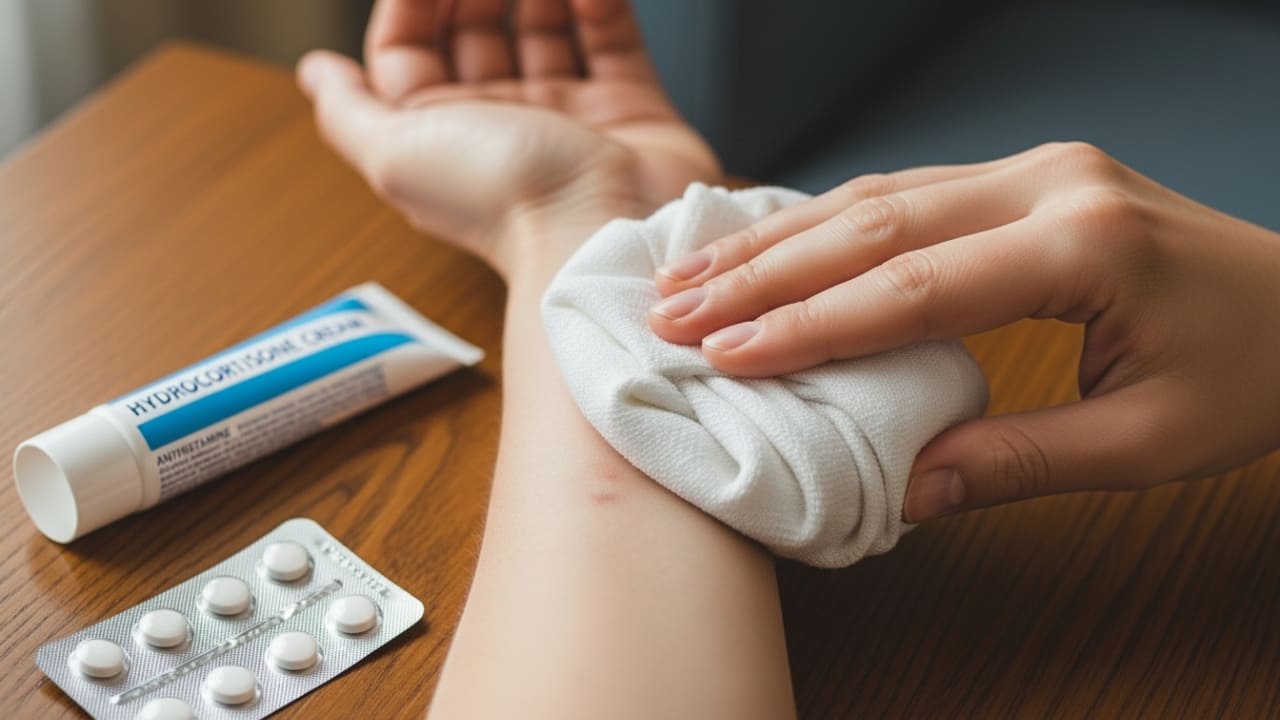
Image Credit: Illustration by Author
When to See a Doctor
- The bite site develops warmth, pus, or red streaking radiating outward — signs of secondary bacterial infection requiring antibiotic treatment.
- Significant swelling around the face, lips, or throat — warrants emergency evaluation for allergic reaction.
- Fever, headache, joint pain, or rash within 2 weeks of travel to a disease-endemic area.
- A bite reaction that continues to expand after 48 to 72 hours rather than beginning to shrink.
Common Mosquito Prevention Myths — Debunked
The internet is full of mosquito prevention advice. A significant portion of it is wishful thinking. These are the ones that come up most consistently — and what the evidence actually shows.
Mosquito Prevention Myths vs. Science
| The Myth | Verdict | What the Science Says |
|---|---|---|
| Vitamin B12/B supplements repel mosquitoes | False | Multiple controlled studies found no reduction in mosquito attraction. CDC does not endorse it. |
| Ultrasonic plug-in devices repel mosquitoes | False | EPA and university studies found no measurable repellent effect. Considered ineffective. |
| Mosquitoes prefer people with “sweet blood” | False | Mosquitoes are attracted to CO2, heat, and skin chemicals — not blood sugar levels. |
| Eating garlic repels mosquitoes | False | No scientific evidence supports dietary garlic as a mosquito deterrent. |
| UV bug zappers effectively control mosquitoes | False | UV zappers kill mostly beneficial insects. University of Notre Dame research: mosquitoes <0.1% of catch. |
| Repellent wristbands protect against bites | False | Studies show they create a very small scent zone around the wrist only. Offer no meaningful body protection. |
| Dryer sheets in pockets deter mosquitoes | Unproven | No peer-reviewed evidence. Occasionally cited online — not a reliable strategy. |
| Homemade vinegar/essential oil sprays work | Weak | Some show very brief (<15 min) deterrence. No formulation matches EPA-registered repellents in controlled studies. |
The pattern is consistent. Strategies that don’t address the actual biological signals mosquitoes use — CO2, heat, skin chemistry — don’t work. A mosquito navigating a CO2 plume toward a warm body is not going to be deflected by a vibration, a vitamin supplement, or a wristband.
✅ Complete Mosquito Bite Prevention Checklist
If you want one reference to check before outdoor activities, summer gatherings, or travel — this is it. The strategies here have the strongest evidence base and the most practical day-to-day application.
Mosquito Bite Prevention Checklist: For Complete Protection
📰 Must Read,
✔️ What Happens to Mosquitoes in Winter? Why They Come Out in Summer and Only When It’s Hot
✔️ US Mosquito Statistics 2026: State-by-State Data, Mosquito Season, Disease Trends & Bite Rates
Conclusion: Prevention Gets Easier When You Understand the Biology
Most people treat mosquito bite prevention as a product problem — which repellent to buy, which candle to light. But the more effective frame is behavioral, environmental, and layered. Mosquitoes are following a specific sequence of signals to find you. Interrupt enough of those signals at enough stages and you stop being a viable target.
That means: reduce your CO2 and thermal attractiveness where you can (fans, timing, post-exercise showers), apply a proven repellent that masks your skin’s chemical profile, eliminate the standing water where the next generation is developing, use physical barriers that don’t depend on any product, and choose devices and tools that target the right biological signals. Stack the strategies.
No single method is complete on its own and the ones people rely on most — wristbands, zappers, essential oils — are often the least effective.
The frustrating truth is that if you’re a Type O blood person who runs warm, sweats during outdoor activity, and has a yard backing onto a drainage ditch, mosquitoes are always going to find you more attractive than the person next to you. You can’t fully change that. But with the right layered approach, you can make yourself a hard enough target that the evenings are yours again.
What’s your worst mosquito environment — backyard, trail, travel? What’s actually worked for you and what hasn’t? Drop a comment below. Real-world experience from people dealing with actual mosquito pressure is often more useful than anything written in a guide like this one.
Frequently Asked Questions (FAQs)
Q. How to prevent mosquito bites from scarring?
Stop scratching — that’s genuinely most of it. Scratching breaks the skin and that’s where the scar risk comes from, not the bite itself. Keep the area clean, apply a cold compress early to reduce inflammation, and use 1% hydrocortisone cream to kill the itch urge before it becomes a scratch habit. For existing dark spots, a gentle vitamin C serum or niacinamide helps fade post-inflammatory hyperpigmentation over time.
Q. How to prevent mosquito bites without repellent?
Clothing first — long sleeves, long pants, light colors. Run a fan directed at wherever you’re sitting; mosquitoes genuinely can’t fly in moderate airflow. Avoid being outside at dawn and dusk when they’re most active. Shower after sweating to remove the lactic acid and skin compounds that attract them up close. None of these alone is as effective as repellent, but stacked together they make a real difference.
Q. What to wear to prevent mosquito bites?
Light-colored, tightly woven fabrics that cover as much skin as possible. Long sleeves, long pants, closed shoes — especially at dusk. Loose-fitting is better than tight because mosquitoes can bite through fabric stretched against skin. If you’re in a high-pressure environment, permethrin-treated clothing is the upgrade worth making — it repels and kills on contact and survives dozens of wash cycles.
Q. How to prevent mosquito bites when camping?
Treat all your clothing with permethrin before the trip — including socks and shoes, which people always forget. Apply DEET or Picaridin to exposed skin before heading out, not after you’ve already been bitten. Set up camp away from standing water and low-lying marshy areas. A Thermacell device at the campsite entrance works surprisingly well in still evening air. And keep a mosquito head net in your pack — looks ridiculous, works perfectly.
Q. How long do mosquito bites last?
Most bites resolve within 3 to 5 days if you don’t scratch them. The initial welt peaks within the first few hours and then slowly flattens. If you’ve been scratching — or if you had a stronger-than-normal immune reaction — the redness and swelling can linger for up to two weeks. Antihistamine cream or an oral antihistamine speeds things up noticeably.
Q. Can mosquitoes bite through sunscreen?
Sunscreen doesn’t repel mosquitoes at all — it just sits on the skin and mosquitoes largely ignore it. Apply sunscreen first, then repellent on top. The two don’t interfere with each other’s function when layered in the right order, but don’t assume one is doing the other’s job.
Q. Is it safe to use mosquito repellent every day during summer?
Yes, when using EPA-registered repellents as directed. DEET, Picaridin, and IR3535 have been studied extensively and daily use at recommended concentrations is considered safe for adults and children over 2 months. Apply only to exposed skin, wash it off when you come inside, and avoid applying to broken or irritated skin. Daily use through a high-pressure mosquito season is completely reasonable.
Q. Do mosquitoes bite through clothing?
Yes — through thin, stretchy, or loosely woven fabrics, especially when the fabric is pressed against the skin. Tight leggings, thin cotton shirts, sheer fabrics — all bitable. Tightly woven, loose-fitting fabrics are much more resistant. Permethrin treatment adds a kill layer even on thinner fabrics that mosquitoes might otherwise penetrate.
Editorial Team & Contributors

Raashid Ansari, Founder, Content Researcher & Author - MosquiTalk
Not an entomologist — just a genuinely curious writer who started researching mosquitoes and couldn't stop. What began as casual reading about repellents and bite prevention gradually turned into a deep ongoing dive into vector biology, disease epidemiology, animal health impacts, and the real science behind mosquito control. Everything published here is carefully edited, and written with one purpose: giving readers accurate, accessible information they can actually trust and use to protect themselves, their families, and their pets, birds and cattle.
Active across social platforms, regularly publishes, and genuinely invested in spreading mosquito awareness where it matters most. Because informed readers make better decisions — and better decisions save lives.