
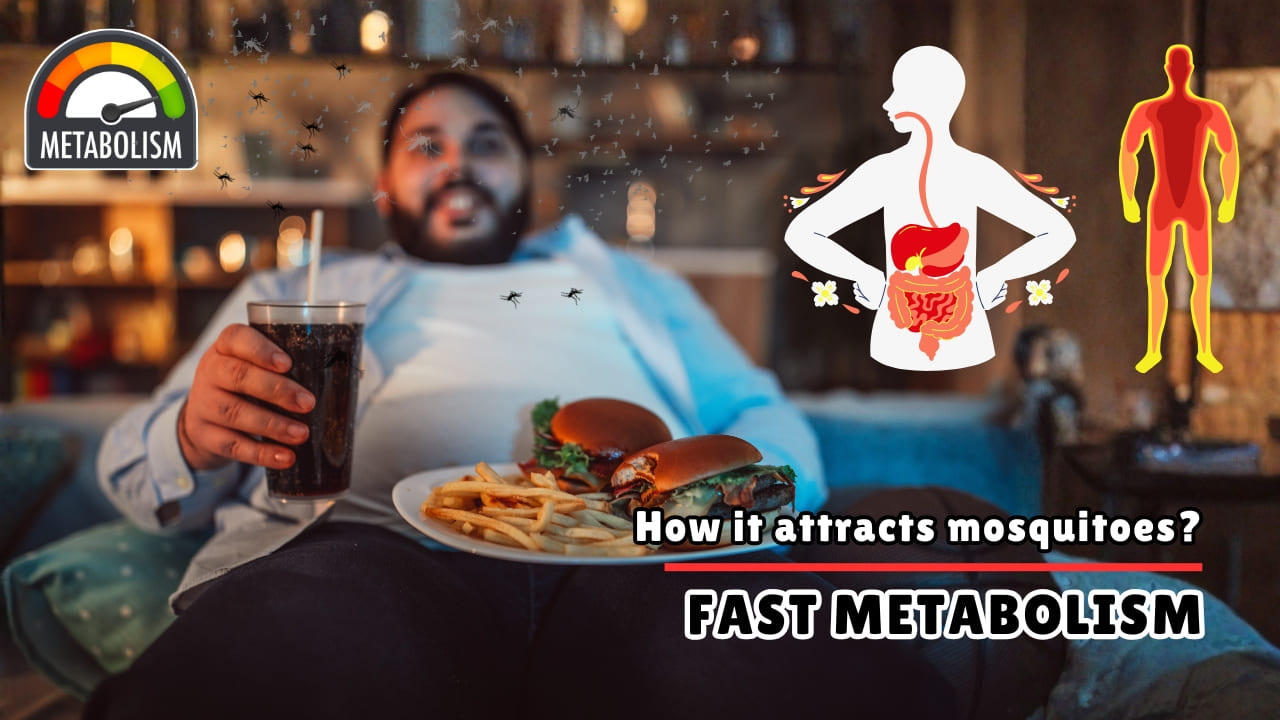
Introduction to “How Fast Metabolism Attracts Mosquitoes?”
Ever notice you get bitten more after a run? Or that you consistently end up with more bites than the person sitting right next to you? It’s not random. And if people in your life have suggested it might be your metabolism — they’re not entirely wrong, but the full picture is more layered than that.
Metabolism is often used as a catch-all explanation for things people can’t quite explain about their bodies. In the case of mosquito attraction, though, there’s actual science connecting metabolic rate to several of the signals mosquitoes use to find a host. Whether a fast metabolism makes you more attractive to mosquitoes — and how much it matters compared to everything else — is what this article is actually about.
Does a Fast Metabolism Attract Mosquitoes?
The honest answer is: indirectly, yes — but it’s not metabolism itself that mosquitoes are responding to. Mosquitoes cannot detect your metabolic rate. What they can detect — with remarkable precision — is carbon dioxide, body heat, and skin-derived chemical compounds. And a faster metabolism produces more of all three.
So the relationship is real, but it runs through several biological intermediaries. Higher metabolic activity means more energy consumption, more cellular respiration, more CO₂ exhaled, more heat generated, and more sweat produced. Each of those outputs is something mosquitoes actively use when hunting for a host.
It’s not a direct one-to-one relationship, and metabolism is far from the only variable. But dismissing it entirely would also miss what the science actually shows.
How Mosquitoes Find You (The Host-Seeking Behavior)
Mosquitoes use a sequential, layered detection system to locate hosts. Understanding it makes the metabolism connection much clearer.
- Carbon dioxide (CO₂): The primary long-range signal. Mosquitoes detect CO₂ through specialized neurons in their maxillary palps — sensory organs near the mouthparts. Research shows they can track a CO₂ plume from up to 50 meters away, flying upwind toward the source with goal-directed precision.
- Body heat: A secondary, close-range cue. Once within a meter or two, mosquitoes use infrared-sensitive pit organs to detect heat radiating from skin. Warmer skin surfaces are more detectable and more appealing.
- Skin odor and sweat compounds: The final targeting layer. Lactic acid, ammonia, uric acid, and various volatile organic compounds (VOCs) produced by skin bacteria fine-tune host selection at very close range. According to entomologists, these compounds are what explain why mosquitoes choose one person over another when CO₂ and heat are similar.
These three layers work in sequence — CO₂ from a distance, heat at mid-range, chemical compounds at close range. Metabolism influences all three.
The Link Between Metabolism, CO₂, and Mosquito Attraction
Every cell in your body produces CO₂ as a byproduct of aerobic respiration — the process of using oxygen to extract energy from glucose. The faster your metabolism runs, the more energy your cells are burning, and the more CO₂ they generate as a result.
This CO₂ enters the bloodstream, gets transported to the lungs, and is exhaled with every breath. A higher metabolic rate means more CO₂ produced per minute, a higher concentration in each exhale, and a denser, more persistent plume in the surrounding air. That is why larger, taller, and obese individuals are more frequently bitten by mosquitoes.
Scientific studies indicate that CO₂ output scales predictably with metabolic rate. Basal metabolic rate (BMR) — the energy your body burns at complete rest — increases with muscle mass, body size, and certain physiological conditions like pregnancy and fever. All of these are associated with elevated mosquito attraction in the research literature.
Table 1: How Metabolic Factors Influence Mosquito Attraction Signals
| Metabolic Factor | What Happens Physiologically | Effect on Mosquito Attraction | Strength of Evidence |
|---|---|---|---|
| Increased CO₂ output | Higher energy use → more cellular respiration → more CO₂ exhaled per breath | Stronger, wider-ranging CO₂ plume detected from up to 50 meters | Strong — well-established in entomology literature |
| Elevated body temperature | Higher metabolic rate generates more heat; skin surface temperature rises | Mosquitoes detect infrared radiation at close range — warmer skin is more detectable | Moderate — heat is a secondary cue, not primary trigger |
| Increased sweat production | Thermoregulation response to elevated metabolic heat — eccrine glands activate | Sweat carries lactic acid, ammonia, and uric acid — all documented mosquito attractants | Strong — lactic acid confirmed as close-range attractant in multiple studies |
| Lactic acid release | Produced during aerobic and anaerobic metabolism; released through sweat | Significantly increases mosquito landing rates at close range | Strong — Journal of Chemical Ecology, multiple peer-reviewed confirmations |
| Higher breathing rate | Faster metabolism demands more oxygen — respiratory rate increases | More frequent exhalation means continuous, dense CO₂ plume renewal | Moderate — compounding effect on top of CO₂ volume increase |
| Skin microbiome activity | Metabolically active skin bacteria produce volatile organic compounds (VOCs) | Specific VOC profiles influence mosquito host preference at very close range | Emerging — growing body of research, not fully characterized |
Does a Fast Metabolism Rate Increase Body Heat and Sweat?
Yes — and both matter for mosquito attraction, though at different stages of the detection sequence.
Metabolic heat is generated as a byproduct of every biochemical reaction in the body. The more reactions happening — which scales with metabolic rate — the more heat produced. This raises core body temperature and, critically, the temperature of the skin surface that mosquitoes can detect from nearby.
Sweat is the body’s thermoregulatory response to that excess heat. When skin temperature rises, eccrine glands activate and produce sweat to cool the surface through evaporation. That sweat is not just water — it carries lactic acid, ammonia, uric acid, and various skin-derived compounds that have been independently confirmed as mosquito attractants.
Research published in the Journal of Chemical Ecology confirmed that lactic acid in particular significantly increases mosquito landing rates. It’s not just a minor signal. It’s a meaningful close-range attractant that compounds the CO₂ effect — meaning someone who is both exhaling more CO₂ and sweating more lactic acid is effectively a more prominent target at every stage of the mosquito’s approach.
Real-World Situations Where Fast Metabolism Affects Mosquito Bites
- After exercise: Physical activity spikes CO₂ output five to tenfold over resting levels, raises body temperature, and increases sweat production dramatically. The effect lasts beyond the workout — elevated metabolic rate and residual skin compounds persist for some time after exercise ends. This is the clearest real-world demonstration of metabolism driving mosquito attraction.
- Pregnancy: Pregnant women exhale approximately 21% more CO₂ than non-pregnant adults, partly due to increased metabolic demands and partly due to greater lung volume displacement. Research shows mosquitoes land on pregnant women at significantly higher rates — a finding that has been replicated in field studies in malaria-endemic regions.
- Active vs sedentary people: A person who is generally active and metabolically engaged will have higher resting CO₂ output and more consistent lactic acid in their sweat than someone sedentary. Over an evening outdoors, that difference accumulates. It’s subtle compared to the exercise effect, but it’s there.
- Children vs adults: Children have higher metabolic rates relative to body size than adults. Combined with thinner skin, higher activity levels, and lower awareness of exposure, this contributes to children often getting bitten more than nearby adults.
Other Factors That Matter As Much As — or More Than — Metabolism
Metabolism is a real contributor, but it does not operate in isolation. Several other factors influence mosquito attraction with equal or greater effect.
Table 2: Mosquito Attraction Factors — Impact, Metabolism Link, and Controllability
| Attraction Factor | Relative Impact | Metabolism Link | Can You Control It? |
|---|---|---|---|
| CO₂ output | Very High — primary trigger | Direct — higher metabolism = more CO₂ | Partially — reduce activity during peak hours; use repellents |
| Body size / mass | High — larger bodies exhale more CO₂ | Indirect — larger bodies often have higher BMR | No — but clothing coverage reduces exposed surface area |
| Lactic acid / sweat | High — significant close-range attractant | Direct — metabolic byproduct released in sweat | Yes — shower after exercise; avoid outdoor activity during peak hours |
| Body heat | Moderate — secondary close-range cue | Direct — higher metabolism raises skin temperature | Partially — loose, light clothing reduces heat signature |
| Skin bacteria / VOCs | Moderate — influences host preference | Indirect — metabolically active skin produces more VOCs | Partially — regular washing reduces VOC buildup on skin |
| Blood type | Moderate — Type O reportedly more attractive | None — genetic, not metabolic | No — fixed genetic trait |
| Pregnancy | High — elevated CO₂ and body heat | Direct — pregnancy raises metabolic rate and CO₂ output by ~21% | No — but repellent use is safe and recommended |
| Clothing color | Low-Moderate — dark colors more visible to mosquitoes | None — visual factor only | Yes — wear light-colored, loose-fitting clothing outdoors |
- Body size: Larger bodies produce more CO₂ regardless of metabolic rate per unit mass. Body mass is one of the most consistent predictors of mosquito attraction in the literature — larger individuals are simply exhaling a denser plume.
- Genetics and blood type: Research indicates Type O blood is associated with higher mosquito attraction compared to Type A or B, though the mechanism isn’t fully understood. Genetic factors also influence skin microbiome composition, which shapes the VOC profile mosquitoes respond to.
- Skin bacteria: The specific bacterial communities living on your skin are a major determinant of your personal odor profile. Some bacterial profiles are highly attractive to mosquitoes; others are not. This is largely genetic and microbiome-driven rather than metabolic.
- Alcohol consumption: Studies show that even one beer increases mosquito attraction — possibly through effects on skin temperature, ethanol in sweat, or CO₂ output. It’s a real effect documented in controlled trials.
- Clothing color: It is a visual cue mosquitoes use at close range — dark colors like black, navy, and red make you more visually detectable once they’re already tracking your CO₂ plume. Switching to light-colored clothing won’t stop them from finding you, but it does reduce that final visual confirmation that brings them in for the landing.
How to Reduce Mosquito Attraction — Science-Based Tips
You cannot lower your metabolic rate as a mosquito-prevention strategy, and you wouldn’t want to. But you can manage when and how you expose yourself, and you can reduce the chemical signals that compound the metabolic effect.
Table 3: Science-Based Strategies to Reduce Mosquito Attraction
| Strategy | How It Reduces Attraction | Most Effective For |
|---|---|---|
| Apply DEET or picaridin repellent | Disrupts mosquito’s ability to detect CO₂ and skin odor cues | All exposure scenarios — primary defense |
| Avoid outdoor activity at dawn and dusk | Reduces overlap with peak mosquito activity windows | People who exercise outdoors; high-metabolism individuals after workouts |
| Shower after exercise | Removes lactic acid, ammonia, and sweat compounds from skin surface | Post-exercise outdoor exposure; reduces close-range attractants significantly |
| Wear light-colored loose clothing | Reduces visual detection and body heat radiation; covers skin surface | Daytime outdoor exposure; reduces both heat signature and bite access |
| Use fans outdoors | Disrupts CO₂ plume and physically impedes weak-flying mosquitoes | Patios, outdoor dining, backyard evenings — highly underrated method |
| Eliminate standing water nearby | Reduces local mosquito population — less exposure regardless of attraction level | Home environment; compound effect when combined with personal repellents |
The most overlooked tip on this list is the outdoor fan. Mosquitoes are genuinely poor flyers — a modest breeze of 1–2 mph disrupts their approach. It also disperses the CO₂ plume before it can form a coherent, trackable gradient. It costs nothing if you already own a fan, and it works.
📰 Must Read,
✔️ Things That Attract Mosquitoes to Your Home
✔️ Do Outdoor Lights Attract Mosquitoes? How to Reduce Nighttime Activity?
Conclusion
A fast metabolism does make you somewhat more attractive to mosquitoes — but the relationship is indirect. What mosquitoes actually respond to is the downstream output of metabolic activity: more CO₂, more body heat, more sweat, and more lactic acid. Faster metabolism means more of all four.
That said, metabolism is one variable in a complex equation. Body size, genetics, skin bacteria, blood type, and activity level all contribute independently. The person who always gets bitten more isn’t necessarily the one with the fastest metabolism — they’re the one producing the strongest combination of CO₂, heat, and chemical signals at the time mosquitoes are active.
The practical takeaway is straightforward:
✔ Use DEET or picaridin repellent — the most effective single intervention regardless of your metabolic profile
✔ Shower after exercise — removes the lactic acid and sweat compounds that amplify close-range attraction
✔ Avoid outdoor activity at dawn and dusk — peak mosquito activity windows
✔ Wear light-colored loose clothing — reduces heat signature and limits exposed skin
✔ Use fans outdoors — disrupts CO₂ plumes and impedes mosquito approach
✔ Eliminate standing water around your home — reduces the local population you are attracting in the first place
Metabolism contributes. It is not destiny. And most of what it contributes can be managed with the right habits.
Frequently Asked Questions (FAQs)
Q. Does eating certain foods speed up metabolism and attract more mosquitoes?
Indirectly, possibly. Foods that temporarily raise metabolic rate — spicy food, caffeine, large meals in general — cause a short-term uptick in CO₂ and body heat. Alcohol is the clearest documented example. Even one beer has been shown in controlled trials to increase mosquito attraction, likely through ethanol in sweat and mild increases in skin temperature. It’s a real effect, just not a large one compared to exercise or body size.
Q. Are children bitten more than adults because of metabolism?
Metabolism plays a part. Children have higher metabolic rates relative to their body size than adults do — their cells are burning energy faster to support growth and development. They’re also more active, sweatier during play, and less likely to notice or avoid mosquitoes. Thinner skin may also make their heat signature slightly more detectable. It’s several factors stacking together, not just one.
Q. If I lose weight and lower my metabolic rate, will mosquitoes bite me less?
Not in any meaningful way worth pursuing for that reason. The metabolic contribution to mosquito attraction is real but modest compared to other factors like genetics, skin bacteria, and blood type — none of which change with weight loss. You’d also be reducing muscle mass alongside fat, which could actually lower your metabolic rate in ways that aren’t particularly helpful. Honestly, a good repellent does more for mosquito protection than any metabolic change would.
Q. Does thyroid function affect mosquito attraction?
Potentially yes, and it’s an underexplored angle. The thyroid regulates metabolic rate — hyperthyroidism speeds everything up, including CO₂ production, body temperature, and sweat output. Someone with an overactive thyroid is essentially running their metabolism at a consistently elevated level, which maps directly onto higher mosquito attraction signals. Hypothyroidism does the opposite. It hasn’t been studied specifically in the context of mosquito bites, but the physiological logic is sound.
Q. Does metabolism slow down at night, and does that affect mosquito bites?
Metabolism does dip slightly during sleep — breathing slows, body temperature drops a little, CO₂ output decreases. But mosquitoes are most active at dawn and dusk, not deep in the night, so the timing overlap is complicated. The species that do bite at night — like Anopheles, the malaria vector — are so well adapted to nighttime hunting that the modest metabolic slowdown during sleep probably doesn’t reduce their effectiveness much. Bed nets matter far more than metabolic state here.
Q. Can stress increase your metabolism enough to attract more mosquitoes?
Stress does raise metabolic rate temporarily — cortisol and adrenaline both elevate heart rate, increase respiration, and drive up CO₂ output. It also raises skin temperature slightly. Whether this translates into a measurably higher mosquito bite rate in real-world conditions hasn’t been studied directly. But the physiological mechanism is there. Chronic stress also alters skin microbiome composition over time, which is a separate pathway that could influence attraction independently.
Q. Do people with diabetes attract more mosquitoes?
There’s some evidence suggesting yes. Diabetes — particularly poorly controlled Type 2 — affects skin chemistry in ways that may influence mosquito attraction. Elevated blood glucose changes the volatile compounds released through breath and skin. Some small studies have found differences in mosquito landing rates between diabetic and non-diabetic individuals. The research is not conclusive yet, but it’s a plausible connection given how much mosquitoes rely on skin chemistry for host selection at close range.
Q. Does caffeine affect how much mosquitoes are attracted to you?
Caffeine mildly raises metabolic rate and slightly increases heart rate and body temperature for a few hours after consumption. Whether that translates into more bites is genuinely unclear — no strong study has isolated caffeine as a mosquito attractant the way alcohol has been studied. Caffeine also increases urination, which could marginally affect hydration and sweat composition. It’s probably a negligible factor compared to exercise or body size, but it’s not zero either.
Editorial Team & Contributors

Raashid Ansari, Founder, Content Researcher & Author - MosquiTalk
Not an entomologist — just a genuinely curious writer who started researching mosquitoes and couldn't stop. What began as casual reading about repellents and bite prevention gradually turned into a deep ongoing dive into vector biology, disease epidemiology, animal health impacts, and the real science behind mosquito control. Everything published here is carefully edited, and written with one purpose: giving readers accurate, accessible information they can actually trust and use to protect themselves, their families, and their pets, birds and cattle.
Active across social platforms, regularly publishes, and genuinely invested in spreading mosquito awareness where it matters most. Because informed readers make better decisions — and better decisions save lives.