
Table of Contents
Introduction to Mosquito Feeding Biology
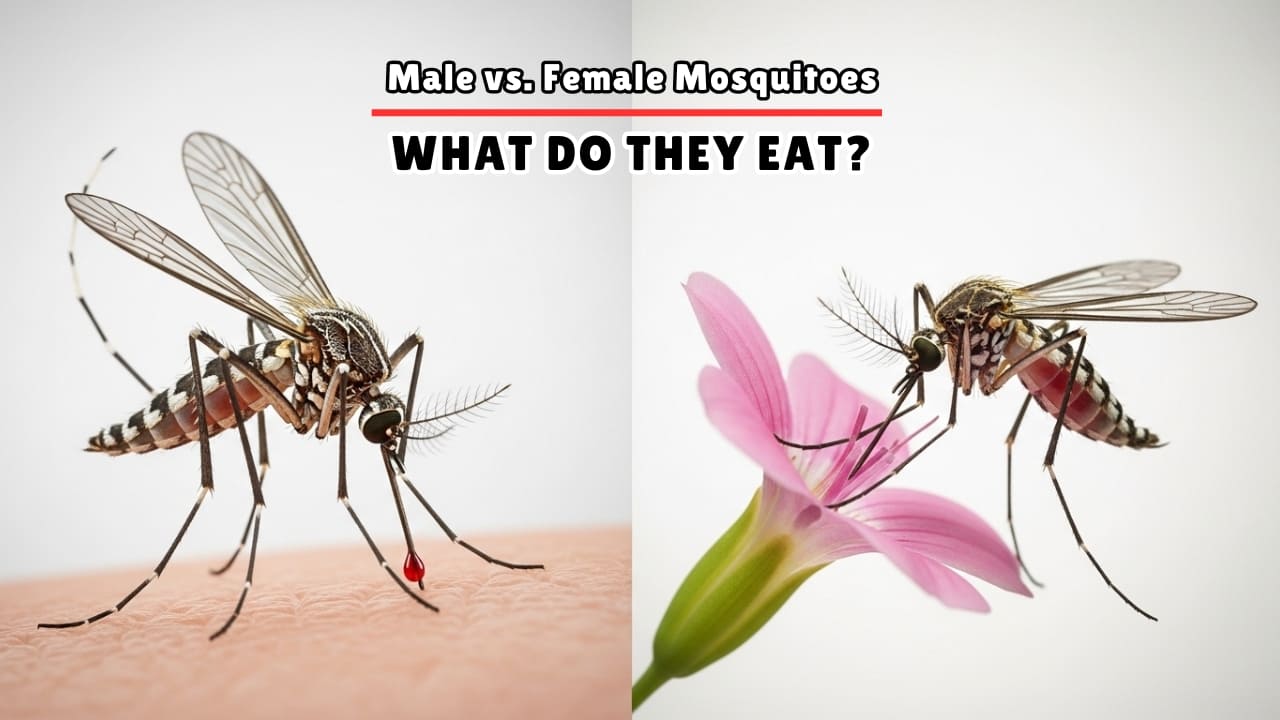
Most people know female mosquitoes bite. Fewer people know why — or what males are actually doing instead. The answer lives in biology, not behavior. It’s not preference, not aggression, not even hunger in the traditional sense. It’s reproduction, down to the molecular level.
This article breaks down the full picture of “What do mosquitoes eat?” into: the hormonal triggers, the feeding anatomy, the sensory systems, and the real reason males never needed any of it.
Why Only Female Mosquitoes Bite — Biological & Reproductive Science
1. Blood Is Not Food. It’s a Reproductive Tool.
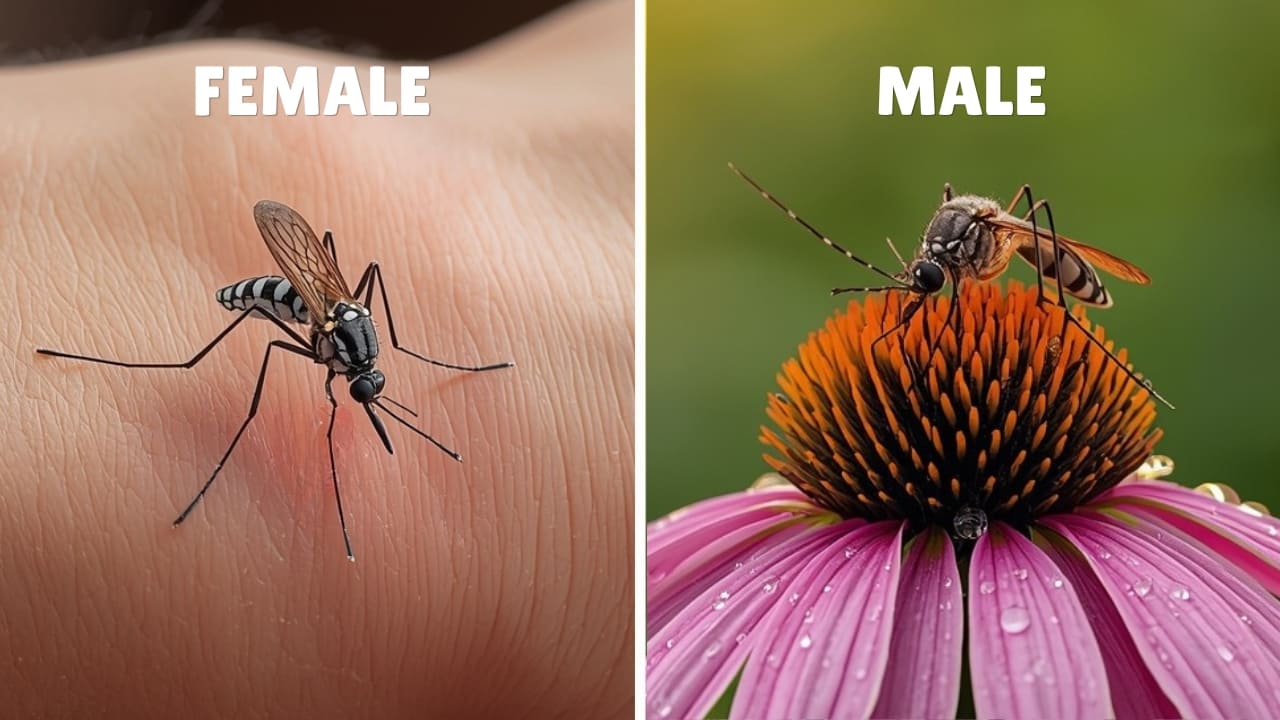
Female mosquitoes do feed on plant sugars just like males do. Nectar, fruit juices, honeydew — that’s their actual energy source. Blood isn’t consumed for energy in the conventional sense. It’s consumed for protein.
Specifically, blood delivers amino acids that the female’s body cannot synthesize in sufficient quantities on its own. Those amino acids — particularly vitellogenin precursors — are the raw material for yolk protein synthesis. Without them, egg development stalls. Completely.
2. The Gonotrophic Cycle — How Reproduction Drives the Bite
The gonotrophic cycle is the reproductive loop that governs a female mosquito’s entire adult life. Each full cycle consists of four stages:
- Host-seeking — the female actively searches for a warm-blooded host
- Blood feeding — she takes a blood meal large enough to trigger egg development
- Resting and digestion — blood is processed; protein signals egg maturation
- Oviposition — she lays eggs, then the cycle resets
This cycle repeats throughout her lifespan. In Aedes aegypti, a single cycle takes roughly 2–4 days depending on temperature. In cooler conditions it can stretch longer. But it always restarts. The female keeps biting, keeps laying.
What’s important here is that blood feeding isn’t optional for most species. It’s the biological trigger that initiates egg production. Without that signal, the ovaries don’t develop past an early stage.
3. Hormonal Triggers — What Actually Happens After a Blood Meal
Once blood enters the midgut, a hormonal cascade fires. The midgut distension alone — the physical stretching from the blood volume — triggers the release of a neuropeptide called ovary ecdysteroidogenic hormone (OEH). That signal reaches the ovaries, which then produce ecdysteroids (specifically 20-hydroxyecdysone).
Ecdysteroids work in combination with juvenile hormone (JH) to regulate vitellogenin gene expression in the fat body. The result is a rapid, massive synthesis of yolk protein that gets transported into developing oocytes.
This is not a slow process. In Aedes aegypti, peak vitellogenin levels are reached within 24 hours of a blood meal. The molecular clock starts ticking the moment she pierces your skin.
Why Male Mosquitoes Don’t Bite — Missing Biology, Not Missing Motivation
Male mosquitoes don’t bite because they physically cannot — and because they have no biological need to. Their mouthparts are structurally incapable of piercing skin. The stylets (the needle-like cutting tools inside the proboscis) are much shorter and less rigid in males. They’re designed for probing soft plant tissue, not penetrating dermis.
More importantly, males don’t produce eggs. The entire hormonal and metabolic machinery that converts blood protein into yolk — it doesn’t exist in males. Even if a male could somehow pierce skin and draw blood, the blood would do nothing useful. There’s no ovary to respond, no vitellogenin synthesis pathway to activate.
The bite is a female adaptation built entirely around reproduction. Males simply don’t have the same reproductive demands.
What Do Male Mosquitoes Eat — Sugar Feeding Explained
1. Nectar Is the Real Mosquito Diet
Both male and female mosquitoes are fundamentally nectar feeders. Flowers, fruits, plant exudates, honeydew secreted by aphids — all of these are active food sources. The carbohydrates from these sources are metabolized into glycogen and fat, which fuel flight, mating, and basic survival.
Males feed almost exclusively this way throughout their entire adult life. There’s no secondary food source. No blood meal, no alternative protein source — just plant sugars, continuously.
2. Energy Metabolism in Male Mosquitoes
The energy demands of male mosquitoes are actually quite specific. Males spend a large part of their time in mating swarms — hovering in defined locations, waiting for females. This sustained hovering burns significant energy.
Nectar-derived sugars are converted to trehalose (the primary sugar in mosquito hemolymph) and then to flight muscle fuel as needed. Males that can’t find enough sugar don’t just get sluggish — they die. Starvation in males happens faster than in females because females can occasionally switch to blood for emergency protein, though blood alone won’t keep a female alive.
Do Female Mosquitoes Also Feed on Sugar?
Yes. This part gets glossed over constantly. Female mosquitoes feed on plant sugars too — they need that energy for flight and basic metabolic function, same as males. Blood alone isn’t enough to keep them alive.
The distinction is that females add blood to their diet when they’re ready to reproduce. Sugar sustains them. Blood triggers egg development. Both are part of the female feeding profile. Males just never developed the blood-feeding side of that equation.
How Female Mosquitoes Bite — The Feeding Mechanism Explained
1. Proboscis Anatomy — What’s Actually Inside That ‘Needle’
The proboscis looks like a single needle. It’s not. It’s a bundle of six specialized stylets enclosed in a flexible sheath called the labium. Each stylet has a distinct function, and together they form one of the most efficient natural blood-extraction systems in existence.
The six components are the labrum (food canal), the hypopharynx (salivary canal), two maxillae (cutting tools), and two mandibles (stabilizers and anchors). The labium itself doesn’t pierce — it guides, then folds back and out of the way once feeding begins.
2. Step-by-Step Female Mosquito Feeding Process: What Happens During a Bite
- The female lands on skin and extends her labium, pressing the stylet bundle to the surface.
- The mandibles begin an alternating, saw-like motion — they don’t stab straight down, they work through tissue laterally, reducing resistance and pain.
- The maxillae follow, widening the path. Together the four cutting stylets create a channel into the dermis.
- Once the stylet tip reaches a blood vessel, the labrum begins drawing blood upward through suction generated by the pharyngeal pump.
- Simultaneously, the hypopharynx injects saliva into the wound site. This is a critical step.
- The female feeds until her midgut reaches capacity — typically 2–3x her body weight in blood — then withdraws.
3. The Role of Saliva — Anticoagulants and Anesthesia
Mosquito saliva is pharmacologically complex. It contains apyrase, which breaks down ADP and ATP to prevent platelet aggregation. It contains vasodilators that expand blood vessels at the bite site, increasing blood flow. And it contains compounds with local anesthetic-like properties — which is why most people don’t feel the bite in real time.
The anticoagulant proteins prevent blood from clotting inside the feeding channel. Without them, the stylets would clog almost immediately. The saliva essentially keeps the supply line open for the full duration of feeding.
This saliva is also the delivery mechanism for pathogens like Plasmodium, dengue virus, and West Nile virus — but that’s a whole separate topic.
How Females Locate Hosts — The Sensory System
Female mosquitoes use a layered detection system to find warm-blooded hosts. From a distance — up to 50 meters — they track elevated CO₂ plumes from respiration. As they get closer, body heat (infrared radiation) becomes detectable. At very close range, skin chemicals including lactic acid, ammonia, and carboxylic acids provide species-specific and individual-level signals.
The antennae and maxillary palps carry olfactory receptor neurons tuned specifically to these host-associated compounds. The compound eyes detect movement and contrast. It’s a multimodal targeting system — and it’s extremely effective.
Males have antennae too, but their olfactory system is tuned differently — primarily for detecting female pheromones during mating swarms, not host cues. The hardware is similar; the software is completely different.
Female vs. Male Mosquito Feeding Systems — Key Biological Differences
| Feature | FEMALE Mosquito | MALE Mosquito |
| Primary food source | Plant nectar + blood (for reproduction) | Plant nectar only |
| Bites humans/animals? | Yes — essential for egg development | No — biologically incapable |
| Mouthpart structure | Proboscis with sharp stylets for piercing skin | Proboscis adapted only for plant feeding |
| Protein requirement | Required — blood amino acids fuel egg production | None — carbs alone are sufficient |
| Host detection organs | Heat, CO₂, and chemical receptors — highly developed | Minimal — not needed for feeding |
| Feeding triggers | Hormonal (ecdysone, juvenile hormone) + egg maturation | Hunger / energy depletion only |
| Lifespan relevance | Must feed on blood at least once per gonotrophic cycle | Lives entirely on sugar energy |
1. Mouthpart Differences (Structural)
| Structure | Female Function | Male Function | Key Difference |
| Labrum | Draws blood upward through food canal | Sips nectar/plant fluids | Females have sharper tip |
| Hypopharynx | Injects saliva with anticoagulants | Delivers saliva (minimal) | Anticoagulant proteins female-only |
| Mandibles | Pierce and anchor into skin | Greatly reduced / vestigial | Males lack functional mandibles |
| Maxillae | Saw through tissue to reach blood vessel | Reduced, not used for piercing | Serrated only in females |
| Labium | Guides stylets, folds back during feeding | Acts as guide channel | Same basic structure |
2. Sensory Differences Tied to Feeding
The difference in feeding behavior between sexes maps directly onto sensory biology. Female antennae carry significantly more olfactory sensilla — hair-like chemoreceptor structures — that are tuned to host-associated compounds. Male antennae have dense mechanoreceptor hairs (Johnston’s organ) tuned to the wingbeat frequency of females, not to CO₂ or lactic acid.
This isn’t just a quantitative difference. It’s a qualitative one. Different receptor proteins, different neural pathways, different behavioral outputs. The female smells a human. The male hears a female.
Key Takeaways — Quick Scientific Summary
- Female mosquitoes bite to obtain blood protein — not for food energy, but to fuel egg development through the gonotrophic cycle.
- The hormonal trigger for egg development (OEH → ecdysteroids → vitellogenin synthesis) is directly activated by blood meal digestion. Without blood, the ovaries don’t mature.
- Male mosquitoes survive entirely on plant sugars — nectar, honeydew, fruit exudates. They have no reproductive reason to seek blood, and their mouthparts are structurally incapable of piercing skin.
- Both sexes feed on sugar. Blood feeding is an additional, female-only behavior tied exclusively to reproduction.
- The biting mechanism involves six specialized stylets working in coordination, with saliva performing anticoagulant and vasodilator functions to maintain blood flow during feeding.
- Host detection in females uses a multi-sensory system (CO₂, heat, skin chemicals) that is fundamentally absent in males — the sensory organs serve completely different functions across sexes.
📰 Must Read,
✔️ Is Being a Mosquito Magnet Genetic? Can You Inherit Mosquito Attraction from Parents?
✔️ Ankle Biter Mosquito: How to Get Rid of Ankle Biter Mosquitoes
Frequently Asked Questions (FAQs)
Q. Do male mosquitoes ever bite humans?
No. Male mosquitoes are physically incapable of biting humans or any vertebrate. Their mouthparts — specifically the mandibles and maxillae — are reduced and not structured for piercing skin. There’s no hormonal pathway that would make blood useful to them either. The idea of a biting male mosquito is biologically impossible under normal circumstances.
Q. Can female mosquitoes survive without blood?
For basic survival — yes, for a while. Female mosquitoes can live on plant sugar alone and will do so when hosts aren’t available. But without a blood meal, they cannot develop viable eggs. Reproduction stalls completely. So blood isn’t a survival requirement in the immediate sense, but it’s absolutely required for the species to reproduce. A female that never bites will live and die without passing on her genes.
Q. Do all female mosquitoes bite?
The vast majority do — but not all. There are a small number of autogenous mosquito species (and specific autogenous strains within otherwise anautogenous species) that can produce a first clutch of eggs using stored nutrients from the larval stage, without a blood meal. Culex pipiens has well-documented autogenous populations. However, these are exceptions. Most female mosquitoes require at least one blood meal per gonotrophic cycle to produce any eggs at all.
Q. Why don’t male mosquitoes need blood?
Because they don’t reproduce the same way. Males produce sperm, which requires far less protein than the large, yolk-rich eggs females produce. The carbohydrate energy from plant sugars is more than sufficient to fuel sperm production, mating flight, and all other male biological functions. The protein-heavy yolk synthesis pathway that females rely on simply doesn’t exist in male physiology. Blood would provide protein they have no mechanism to use.
Q. What do male mosquitoes eat exactly?
Primarily floral nectar — sucrose, fructose, and glucose from flowers. They also consume honeydew, the sugar excretion produced by aphids and scale insects on plant surfaces. In some environments, rotting fruit and plant sap are additional sources. Whatever the source, the goal is the same: carbohydrate energy to sustain flight, metabolism, and mating activity.
Q. How long does a female mosquito take to feed?
A complete blood meal typically takes between 2 and 4 minutes, depending on species and host accessibility. During that time, the female can ingest 2–3 times her own body weight in blood. The pharyngeal pump drives intake at a remarkably efficient rate, and the saliva’s anticoagulant compounds ensure the blood keeps flowing throughout the feeding event.
Q. What do mosquitoes eat besides blood?
Plant nectar, fruit sugars, honeydew from aphids. That’s the actual everyday diet for both males and females. Blood is reproductive fuel — not a food source in the traditional sense.
Q. Do big mosquitoes eat little mosquitoes?
No. Mosquitoes don’t prey on each other. They eat the same as the rest — nectar and plant sugars. Size doesn’t change the diet. A bigger mosquito is just a bigger nectar sipper.
The large “mosquitoes” people assume are predators are usually crane flies — totally different insect, completely harmless.
Q. What do the big mosquitoes eat?
Same as the rest — nectar and plant sugars. Size doesn’t change the diet. A bigger mosquito is just a bigger nectar sipper.
Q. What do mosquito’s larvae eat?
Mosquito larvae live underwater and eat constantly. They filter-feed on algae, bacteria, decomposing organic matter, and microorganisms floating in the water. Basically anything microscopic and edible gets swept into their mouths through tiny brushes near their head.
Some species go further — older larvae will eat smaller larvae if food runs short. It’s not common but it happens.
Editorial Team & Contributors

Raashid Ansari, Founder, Content Researcher & Author - MosquiTalk
Not an entomologist — just a genuinely curious writer who started researching mosquitoes and couldn't stop. What began as casual reading about repellents and bite prevention gradually turned into a deep ongoing dive into vector biology, disease epidemiology, animal health impacts, and the real science behind mosquito control. Everything published here is carefully edited, and written with one purpose: giving readers accurate, accessible information they can actually trust and use to protect themselves, their families, and their pets, birds and cattle.
Active across social platforms, regularly publishes, and genuinely invested in spreading mosquito awareness where it matters most. Because informed readers make better decisions — and better decisions save lives.