
Table of Contents
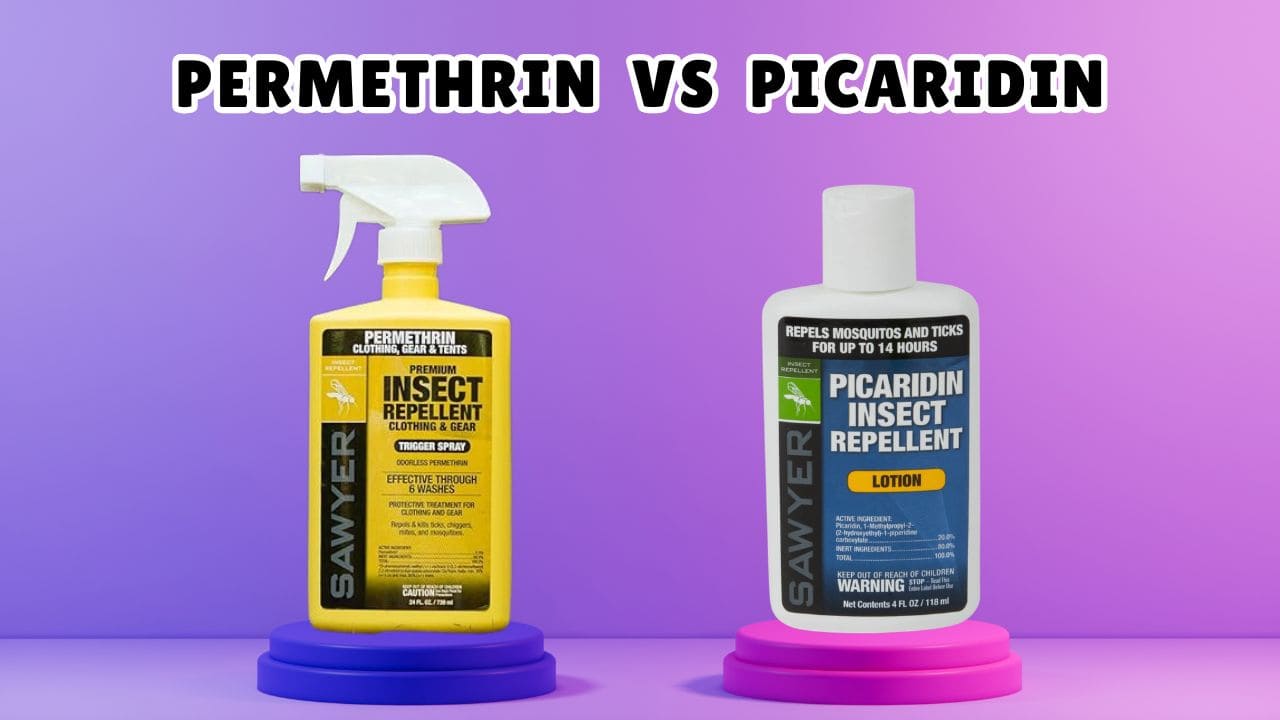
Introduction to Permethrin and Picaridin
Every summer, the same question comes up. You’re heading out — whether it’s a backyard barbecue, a camping trip in the Appalachians, or an evening walk in a humid Florida suburb — and you reach for bug protection. And then you freeze at the store shelf, staring at two very different products: permethrin and picaridin.
Which one actually works? Are they even comparable? Is one of them dangerous? And — the big one — which is better, permethrin or picaridin, for your specific situation?
The truth is, they’re both powerful tools for mosquito and tick prevention. But they work very differently, they’re used differently, and they’re not interchangeable. Understanding the difference between permethrin and picaridin could genuinely be the thing that keeps you safe from mosquito-borne illnesses like West Nile virus, Dengue, and Lyme disease.
Let’s break it all down.
What Are Permethrin and Picaridin? A Quick Overview
Before we get into the deep comparison, it’s worth understanding what each of these compounds actually is. They’re not in the same chemical family. They don’t work the same way. And honestly, lumping them together just as “bug sprays” misses the point entirely.
What Is Permethrin?
Permethrin is a synthetic pyrethroid — a lab-made version of a natural insecticide derived from chrysanthemum flowers. It’s been used in agriculture, medicine (it’s in lice treatments), and military applications for decades.
Key thing to know: Permethrin is an insecticide, not just a repellent. It kills insects on contact — mosquitoes, ticks, flies, even chiggers — rather than just warding them off.
It’s approved by the EPA for use on clothing, gear, and outdoor fabrics. Not on skin. That’s a critical distinction.
The CDC recommends permethrin-treated clothing as a frontline defense in high-risk areas.
What Is Picaridin?
Picaridin (also spelled icaridin in Europe) is a synthetic compound developed in the 1980s and modeled after a natural compound found in black pepper plants. It was approved for use in the U.S. in 2005 and has since become one of the leading alternatives to DEET.
Key thing to know: Picaridin is a repellent, not an insecticide. It works by creating a vapor barrier around the body that interferes with insects’ ability to detect you — essentially making you invisible to mosquitoes.
It’s applied directly to skin and clothing. It’s odorless (or nearly so), non-greasy, and doesn’t damage plastics or synthetic fabrics the way DEET sometimes does.
Permethrin and Picaridin: How Does Each One Work?
1. Permethrin: The Insecticide Approach
When a mosquito or tick lands on permethrin-treated fabric, it absorbs the chemical through its exoskeleton. This triggers hyperexcitation of the insect’s nervous system — basically overstimulation — causing paralysis and death. Fast. Effective.
Permethrin binds tightly to fabric fibers and maintains effectiveness through multiple wash cycles. A treated garment can stay protective for up to 6 weeks or 6 washes, whichever comes first.
Here’s what makes it unique — it doesn’t just repel. It creates a “hot foot” effect — insects are repelled before they even bite, or they’re knocked down when they do land.
2. Picaridin: The Stealth Repellent
Picaridin doesn’t kill insects. What it does is block the chemical receptors that mosquitoes use to detect their hosts. Mosquitoes find you through CO₂ exhalation, body heat, and lactic acid in your sweat. Picaridin essentially jams that signal.
Applied to skin, a 20% picaridin concentration can provide protection for up to 8 to 12 hours against mosquitoes. It’s effective against a wide range of insects including mosquitoes, ticks, gnats, and biting flies.
The World Health Organization (WHO) lists picaridin as a recommended active ingredient for personal protection against vector-borne diseases.
Permethrin vs Picaridin: Side-by-Side Comparison
Here’s a quick reference table to see the key differences between permethrin and picaridin at a glance:
| Feature | Permethrin | Picaridin |
|---|---|---|
| Chemical Type | Synthetic pyrethroid | Synthetic compound |
| How It Works | Kills & repels on contact (clothing/gear only) | Repels via vapor barrier on skin/clothing |
| Application | Applied to clothing, gear, tents | Applied directly to skin or clothing |
| Duration | 6 weeks or 6 washes on fabric | 8–12 hours on skin |
| Mosquito Protection | Excellent (kills on contact) | Very good (repels without killing) |
| Tick Protection | Excellent | Good |
| Water Resistance | High on treated fabric | Water-resistant formulas available |
| Skin Safety | Not for direct skin application | Safe for direct skin use |
| Child Safety | Safe on clothing for children 2+ | Safe for children 2 months+ |
| Pregnancy Safety | Consult doctor; avoid direct skin use | Generally considered safe |
| Pets (Cats) | TOXIC to cats (wet application) | Safe around pets |
| Odor | Low once dry | Nearly odorless |
| Best Use Case | Treated clothing, hiking, camping gear | Everyday use, travel, skin application |
Effectiveness: Which Actually Works Better Against Mosquitoes and Ticks?
This is where things get nuanced. And a little controversial.
Studies consistently show that permethrin-treated clothing significantly reduces tick bites. A 2017 study published in the Journal of Medical Entomology found that people wearing permethrin-treated clothing were 73 times less likely to be bitten by ticks than those wearing untreated clothing. That’s a remarkable number.
For mosquitoes, permethrin on clothing is excellent but not complete protection — exposed skin still needs a repellent. That’s where picaridin steps in.
Picaridin’s Head-to-Head Performance
Picaridin at 20% concentration performs comparably to DEET 25% to 30% for mosquito repellency — which is genuinely impressive. Several independent studies, including research by the American Mosquito Control Association (AMCA), have confirmed this.
It’s especially effective against Aedes aegypti (the Dengue and Zika mosquito) and Anopheles (the malaria-carrying species) — both of which are increasingly relevant to US travelers.
Picaridin also tends to last longer on skin compared to DEET at equivalent concentrations, especially in hot, humid conditions.
The Combination Strategy Wins
Here’s what many public health professionals recommend and what experienced hikers and travelers tend to do in practice:
- Wear permethrin-treated clothing — pants, shirt, socks, hat.
- Apply picaridin to exposed skin — face, neck, hands, arms.
This dual approach — permethrin and picaridin used together — provides layered defense and is backed by CDC guidance for travel to areas with high mosquito-borne disease risk.
Safety Profile: Is Permethrin or Picaridin Safe for Humans?
Let’s be real. Most people asking this question aren’t just curious — they’re worried. And that’s fair. You’re putting a chemical on your body or your kids’ clothes. You want to know it’s safe.
Is Permethrin Safe for Humans?
When used as directed on clothing and gear, permethrin has an excellent safety profile for humans. It’s poorly absorbed through skin, and any that does get absorbed is rapidly broken down by the body.
The EPA classifies permethrin as “likely to be carcinogenic to humans” only at high dietary doses in rodent studies — the exposure level from treating your hiking pants is nowhere near that threshold.
However: Permethrin should never be applied to skin while wet. Once it dries on fabric, it’s largely inert to humans. But handling it during application warrants care — gloves are recommended.
Is Picaridin Safe for Humans?
Yes — picaridin is considered one of the safest repellents available. It doesn’t absorb well through skin, it doesn’t irritate eyes or mucous membranes the way DEET can, and it doesn’t have the same smell or plastic-degrading properties.
The EPA classifies picaridin as low toxicity. There are no restrictions on use by pregnant or breastfeeding women beyond general advice to consult a healthcare provider — a much softer warning than you’d get with some other pesticides.
It’s approved for use on children as young as 2 months old (at 10% concentration), which is a meaningful data point for parents.
Permethrin or Picaridin: Which Is Safer for Kids?
Both can be used safely with children when directions are followed. Picaridin is arguably the easier choice for children — direct skin application, nearly odorless, non-greasy. For permethrin, parents should treat clothing ahead of time and let it dry completely before dressing children.
Picaridin vs Permethrin for Specific Use Cases
1. Best for Hiking and Camping
Permethrin wins here. Pre-treating your gear — tent, backpack, sleeping bag exterior, clothing — provides passive protection without having to reapply. When you’re sweating hard on a trail, having chemical protection baked into your gear is more reliable than skin application.
Pair it with picaridin on exposed skin for full coverage.
2. Best for Everyday Use
Picaridin is the winner for everyday wear. It’s easy to apply, doesn’t smell, doesn’t ruin fabrics, and is effective for 8+ hours. Perfect for evening walks, outdoor dining, beach trips, or yard work.
3. Best for Travel to High-Risk Regions
Both. Seriously. If you’re traveling to a dengue-endemic country, a Zika-affected region, or malaria zones, CDC and WHO both recommend treated clothing plus skin-applied repellent. Permethrin and picaridin together is the recommended approach.
4. Best for Tick Prevention
Permethrin is significantly more effective against ticks than picaridin. Ticks tend to climb upward on clothing before finding exposed skin — permethrin-treated socks, pants, and shoes are your best defense.
Studies from the Centers for Disease Control and Prevention show permethrin-treated shoes and socks alone can reduce tick contact by up to 74%.
5. Best for People Who Hate the Smell or Texture of Bug Spray
Picaridin. It’s genuinely almost odorless, absorbs quickly, and doesn’t leave the greasy film that DEET is famous for. If you’ve ever avoided bug spray because it felt gross, picaridin is worth trying.
How to Use Permethrin and Picaridin Correctly
This matters. A lot. Incorrect application reduces effectiveness and can introduce unnecessary risk.
1. How to Apply Permethrin to Clothing?
- Lay clothing on a flat surface outdoors or in a well-ventilated area.
- Hold the spray 6 to 8 inches from the fabric and apply evenly.
- Treat all sides, including seams and cuffs.
- Allow to dry completely — typically 2 to 4 hours before wearing.
- Wash treated items separately from untreated clothing.
- Reapply after 6 washes or 6 weeks of use.
You can also purchase pre-treated clothing from brands like Insect Shield, ExOfficio, and Sawyer — these treatments are bonded more deeply into the fabric and can last through 70+ washes.
2. How to Apply Picaridin to Skin?
- Apply to all exposed skin, avoiding eyes and mouth.
- Spray onto hands first, then apply to face to avoid inhalation.
- Do not apply under clothing.
- Reapply as needed, or after heavy sweating or swimming.
- Wash off with soap and water once you’re indoors.
Environmental Impact: What Happens When These Chemicals Enter Nature?
This doesn’t get talked about enough.
Permethrin is highly toxic to aquatic organisms — fish, aquatic insects, and especially bees. Washing permethrin-treated clothing sends small amounts into wastewater, and while treatment plants catch most of it, it’s worth knowing. Avoid washing treated clothing excessively or in ways that might enter waterways directly.
Picaridin has a better aquatic safety profile. It degrades more readily in the environment and is considered less toxic to non-target species at typical use concentrations.
Neither is perfectly benign. Both should be used thoughtfully.
Which Is Better — Permethrin or Picaridin? The Honest Answer
The “which is better” question doesn’t have a single answer, and anyone who gives you one without context is oversimplifying.
Here’s how to think about it:
- Choose permethrin if you want long-lasting protection baked into your gear, especially for ticks, camping, hiking, or travel to endemic regions.
- Choose picaridin if you want a skin-applied repellent that’s safe, effective, nearly odorless, and good for everyday or family use.
- Use both if you want maximum protection — this is the CDC-recommended approach for high-risk environments.
They’re not competitors. They’re complements. Thinking of permethrin and picaridin as an either/or choice is like asking whether you should wear a seatbelt or drive carefully — both, obviously.
What Experts and Health Authorities Say
The CDC recommends using EPA-registered insect repellents including picaridin, and treating clothing and gear with permethrin for protection against ticks and mosquitoes.
The WHO includes picaridin (icaridin) in its list of recommended personal protection measures for vector-borne diseases in endemic regions.
The American Academy of Pediatrics (AAP) approves the use of picaridin for infants 2 months and older, with attention to concentration and application method.
Dr. Natasha Bhagat, an entomologist at Rutgers University, has noted publicly that “permethrin-treated clothing is one of the most underutilized tools in tick prevention — people just don’t know about it.”
That gap between what’s recommended and what people actually do is part of why tick-borne diseases like Lyme continue to rise across the northeastern US.
Final Takeaway: Don’t Wait Until You’re Bitten
Mosquito-borne disease is not a travel problem. It’s increasingly a local problem. West Nile virus cases are reported in US states every year. Lyme disease is at record numbers. Dengue fever has seen locally transmitted cases in Florida and Texas.
The good news? Protection is accessible, affordable, and genuinely effective when used correctly. Permethrin and picaridin are two of the best tools we have — and using them together gives you the kind of layered defense that public health professionals actually recommend.
Stop guessing. Stop grabbing whichever spray looks familiar. Get a bottle of picaridin for your skin and treat your outdoor gear with permethrin. Do it before your next hike, camping trip, or summer evening on the porch.
Your future self — the one who didn’t get bitten — will thank you.
💬 We’d Love to Hear From You: Have you tried permethrin-treated clothing, or do you swear by picaridin on skin? Have a tip for other readers dealing with intense mosquito seasons? Drop your experience in the comments below — your real-world insight could help someone else stay protected this summer.
Frequently Asked Questions (FAQs)
Q. Can I use picaridin and permethrin together?
Yes — and you should if you’re in a high-risk area. Apply picaridin to your skin and wear permethrin-treated clothing. This is the gold-standard layered protection approach endorsed by the CDC.
Q. Is picaridin better than DEET?
They’re comparable in effectiveness. Picaridin at 20% is roughly equal to DEET 25–30%. Many users prefer picaridin for its lack of smell, non-greasy texture, and fabric compatibility — it won’t melt plastic watch bands or synthetic fabrics.
Q. Does permethrin wash out of clothing?
Yes, gradually. Consumer permethrin spray treatments last about 6 washes or 6 weeks. Professionally treated clothing (like Insect Shield products) can withstand up to 70 washes, as the treatment is bound more deeply into the fiber.
Q. Is permethrin safe for dogs?
Yes, permethrin is used in some dog flea and tick treatments. But it is highly toxic to cats — never use permethrin-treated products on or near cats.
Q. What concentration of picaridin is most effective?
For mosquitoes: 20% concentration provides the longest protection (8 to 12 hours). For shorter outdoor activities, 10% picaridin provides 3 to 4 hours of protection. For ticks, 20% is recommended.
Editorial Team & Contributors

Raashid Ansari, Founder, Content Researcher & Author - MosquiTalk
Not an entomologist — just a genuinely curious writer who started researching mosquitoes and couldn't stop. What began as casual reading about repellents and bite prevention gradually turned into a deep ongoing dive into vector biology, disease epidemiology, animal health impacts, and the real science behind mosquito control. Everything published here is carefully edited, and written with one purpose: giving readers accurate, accessible information they can actually trust and use to protect themselves, their families, and their pets, birds and cattle.
Active across social platforms, regularly publishes, and genuinely invested in spreading mosquito awareness where it matters most. Because informed readers make better decisions — and better decisions save lives.