
Key Takeaways on Genetic Mosquito Attraction
Introduction
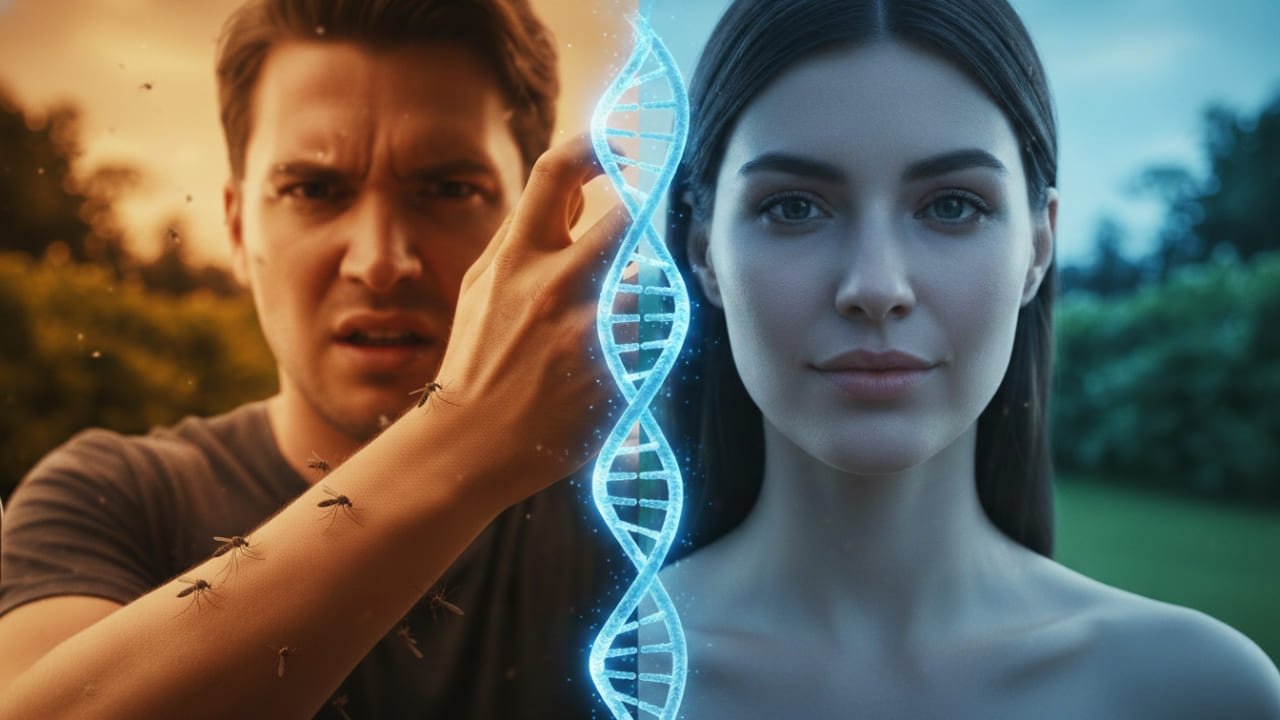
You’re sitting outside with friends. Everyone’s relaxed. But by the end of the evening, you’ve counted a dozen bites while the person next to you has zero. It’s not bad luck. And it’s not a coincidence that this keeps happening to you specifically.
The question of whether mosquito attraction is genetic has moved well beyond folk wisdom. The science is increasingly clear: your DNA plays a meaningful — sometimes dominant — role in how irresistible you are to mosquitoes. Understanding why starts with understanding how mosquitoes find you in the first place.
Why Do Mosquitoes Bite Some People More Than Others?
Mosquitoes don’t pick hosts randomly. They are highly efficient sensory hunters, guided by a combination of chemical, thermal, and visual signals. From up to 50 meters away, a mosquito can begin tracking a host based on volatile chemical plumes.
The variability between individuals is enormous. Research has shown that some people emit significantly more attractive chemical signals than others — and that this difference is largely stable over time. It’s not about hygiene. It’s about biology.
Table 1 below summarizes the key factors that influence mosquito attraction and their relative impact:
| Factor | Relative impact | Explanation |
|---|---|---|
| CO₂ output | Very high | Larger individuals or those with higher metabolism exhale more CO₂, triggering host-seeking behavior. |
| Body odor / skin chemistry | Very high | Genetically influenced volatile compounds attract mosquitoes from a distance of up to 50 meters. |
| Skin microbiome | High | Bacteria on skin produce chemical signals; microbiome diversity has a heritable genetic component. |
| Lactic acid | Moderate – high | Produced via exertion and metabolism; detected by mosquito olfactory receptors, amplifies CO₂ effect. |
| Blood type | Low – moderate | Some evidence for Type O secretor preference; findings are inconsistent across species and studies. |
| Body temperature | Moderate | Warmer skin temperature increases host detectability at close range via thermal sensing. |
Is Mosquito Attraction Genetic? The Scientific Answer
Yes — and the evidence is stronger than most people realize. The most compelling data comes from twin study using wind tunnel experiments, particularly a landmark study to measure actual mosquito landing rates on identical versus fraternal twins.
Identical twins, who share nearly 100% of their DNA, showed very similar attractiveness scores. Fraternal twins, who share roughly 50% of DNA, showed much greater divergence. This design effectively separates genetic influence from environmental influence.
The heritability estimate derived from this research sits at approximately 67%, meaning two-thirds of the variation in mosquito attraction between individuals can be attributed to genetics. That’s a substantial genetic signal.
Table 2 outlines how genetic and non-genetic factors compare in their contribution to mosquito attractiveness:
| Type | Examples |
|---|---|
| Genetic / Inherited | Skin chemical profile, microbiome diversity, metabolic CO₂ rate, sebum composition, lactic acid secretion rate |
| Non-Genetic / Environmental | Exercise intensity, clothing color, alcohol consumption, pregnancy, ambient temperature, perfume/skincare products |
How Genetics Influence Mosquito Attraction: Biological Mechanisms
Genetics don’t attract mosquitoes directly — they shape the biological outputs that mosquitoes detect. Several interconnected systems are involved.
i) Body Odor and Genetic Factors
Your skin continuously releases hundreds of volatile organic compounds (VOCs). The specific mixture is partly determined by your genes — particularly those influencing sebaceous gland activity, fatty acid metabolism, and the major histocompatibility complex (MHC). Mosquitoes detect these compounds with extraordinary sensitivity through olfactory receptors tuned to specific molecules.
People with a more ‘attractive’ VOC profile likely have a genetic predisposition to produce higher concentrations of the compounds mosquitoes prefer.
ii) Carbon Dioxide Production and Metabolism
CO₂ is one of the primary long-range cues mosquitoes use to locate hosts. Humans exhale CO₂ constantly, but the amount varies by body size, metabolic rate, and level of physical activity. Larger individuals and those with faster metabolisms produce more CO₂ — and metabolic rate has a heritable component.
Pregnant women also exhale more CO₂ and are well-documented as preferential mosquito targets, which is consistent with the CO₂ hypothesis.
iii) Skin Microbiome and Mosquito Attraction
The trillions of bacteria living on your skin are not passive. They metabolize your skin secretions and produce their own chemical byproducts, some of which are directly attractive to mosquitoes. Studies have shown that individuals with lower skin microbiome diversity tend to be more attractive to mosquitoes.
Critically, microbiome composition is not purely environmental — it has a heritable component influenced by genetics. So the ‘skin bacteria’ explanation and the ‘genetics’ explanation are not mutually exclusive; they are connected.
iv) Lactic Acid and Chemical Signals
Lactic acid is produced naturally through cellular metabolism and accumulates with physical exertion. It acts synergistically with CO₂, enhancing mosquito attraction. Genetic variation in metabolic efficiency influences baseline lactic acid levels, independent of exercise.
Additionally, the rate at which lactic acid diffuses through the skin and evaporates as a volatile signal may vary between individuals — another biologically determined difference.
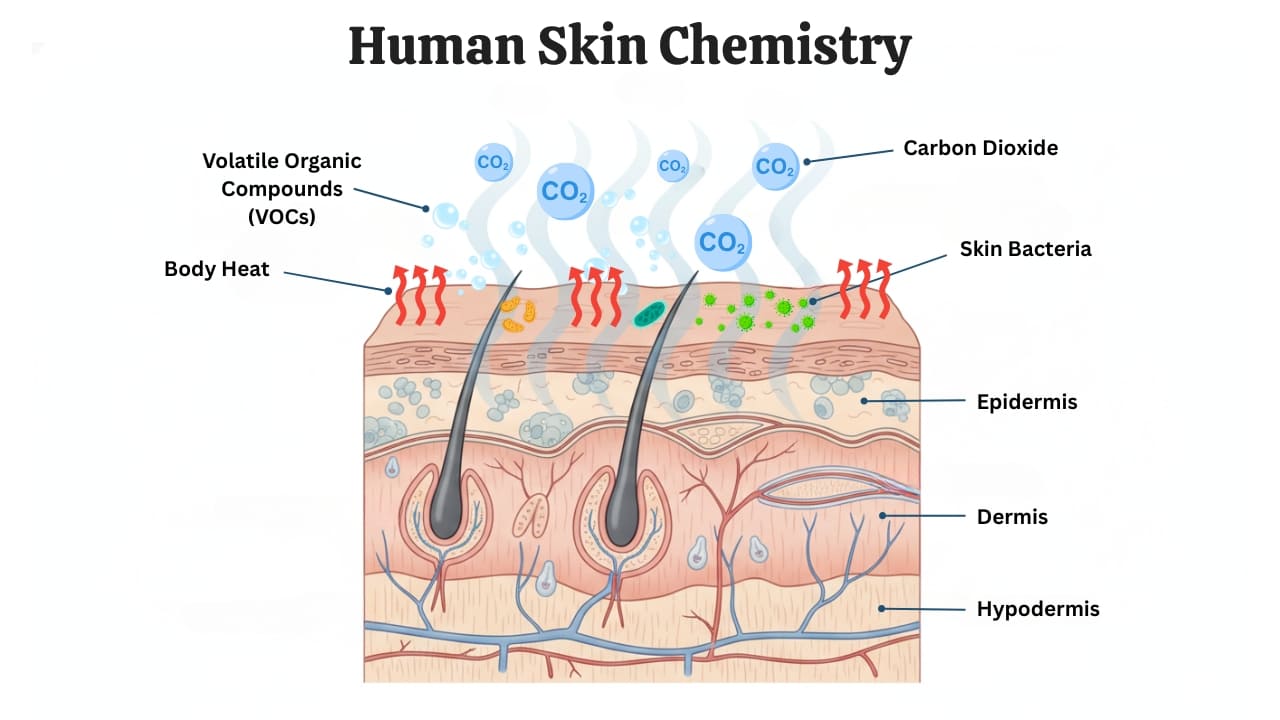
Image Credit: Illustration by Author
Table 3 provides a detailed breakdown of the five primary biological mechanisms and their genetic ties:
| Mechanism | Genetic Link | Mosquito Detection Method |
|---|---|---|
| Volatile Organic Compounds (VOCs) | Yes — gene-regulated skin chemistry | Detected via olfactory receptors from meters away |
| Carbon Dioxide | Partially — tied to metabolic rate | CO₂-sensitive neurons trigger host-seeking behavior |
| Skin Microbiome Profile | Yes — microbial diversity has heritable component | Bacterial metabolites create attractive odor signatures |
| Lactic Acid Concentration | Partially — metabolic and exercise-related | Detected in tandem with CO₂; amplifies attraction |
| Sebum Composition | Yes — gland activity is genetically influenced | Fatty acids in sebum are direct attractants |
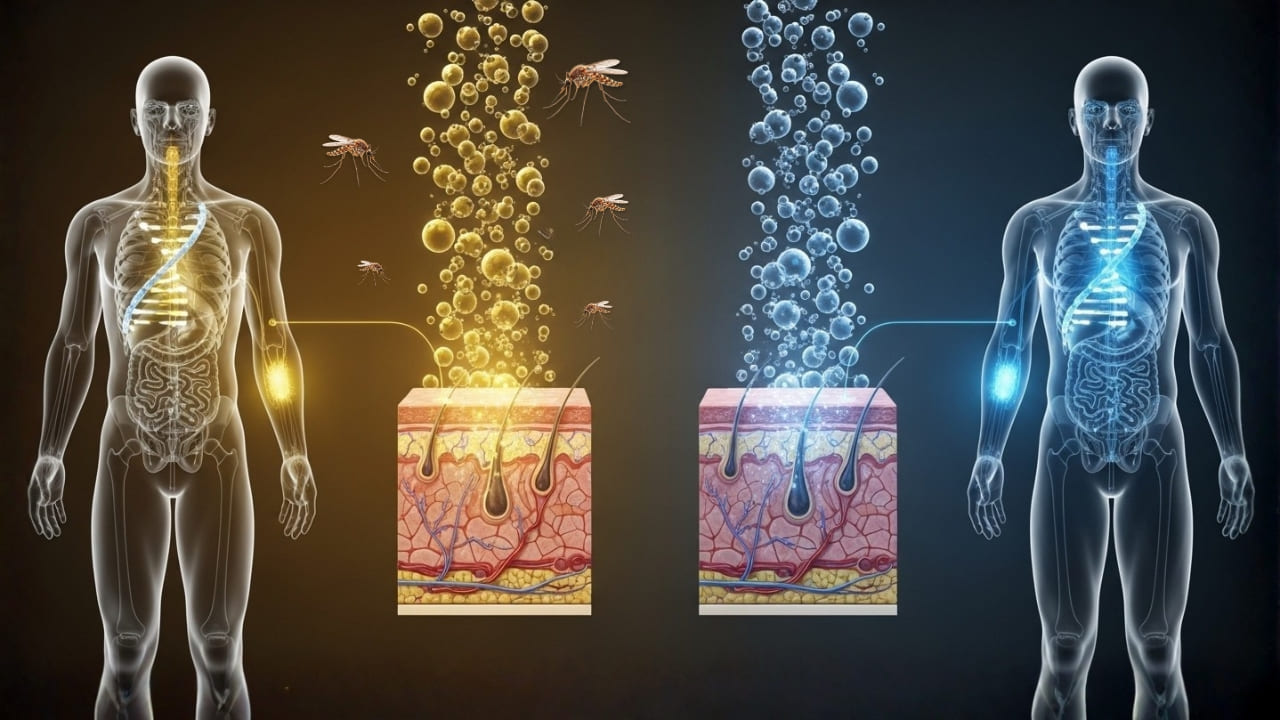
What you’re looking at below isn’t just a visual — it’s basically the whole explanation made visible in one image.
Those two figures represent two different people. Same environment, same evening, same mosquitoes flying around. But one of them is releasing a much denser cloud of chemical signals from their skin — and that’s the person getting bitten. The other one? Barely registering on the mosquito’s radar.
The DNA strand rising from inside each figure is the starting point. That’s where the difference originates — not on the skin surface, not in what they ate for dinner. Inside. In the genetic code they were born with.
And those floating particles drifting off the skin — those are real. Volatile organic compounds, released constantly, invisibly, by every human body. You can’t see them. Mosquitoes absolutely can. They’re following that chemical trail from meters away before they even get close enough to land.
The mosquito in the image isn’t confused. It knows exactly which person it wants.
Two people, one environment — different genes, different chemical output, different mosquito response.
Image Credit: Illustration by Author
Can You Inherit Mosquito Attractiveness from Your Parents?
The short answer is yes — partially. You don’t inherit a single ‘mosquito magnet gene,’ but rather a combination of traits that collectively shape how attractive you are to mosquitoes. These include your skin chemistry profile, microbiome predisposition, and metabolic characteristics — all of which have heritable components.
Twin study data provides the clearest evidence for this inheritance. The table below summarizes the key findings:
| Study Aspect | Finding | Implication |
|---|---|---|
| Identical (MZ) Twins | ~85% concordance in mosquito attractiveness | Strong genetic component confirmed |
| Fraternal (DZ) Twins | ~50% concordance | Shared environment has partial influence |
| Heritability Estimate | ~67% | Most variation in attraction is genetically driven |
| Key Volatile Compounds | Identified ~30 chemicals | Profile inherited; high attractors had distinct compound ratios |
Genetic Contribution to Mosquito Attraction
Estimated heritability (%) across six gene-linked biological factors
Sources: Twin study heritability estimates — PLOS ONE (2015); VOC profile & skin microbiome genetics — PubMed; sebum & lactic acid secretion genetics — Journal of Investigative Dermatology. Values represent approximate heritability contributions based on published peer-reviewed research.
It’s worth noting that heritability estimates don’t mean destiny. A person with a genetically high-attraction profile can still reduce their appeal through behavioral strategies. Genetics set a baseline — they don’t lock in an outcome.
Blood Type and Mosquito Attraction: Myth vs. Science
Few topics in this space attract more confident misinformation than blood type. The claim that Type O individuals are dramatically more attractive to mosquitoes is widespread — but the underlying evidence is considerably weaker than the confidence with which the claim is usually stated.
Some studies have found slightly elevated landing rates for Type O secretors (individuals who release blood type antigens through their skin). But the effect size is small, results are inconsistent across studies and mosquito species, and the mechanism is not well characterized.
| Blood Type | Claim / Study Observation | Scientific Verdict |
|---|---|---|
| Type O | Some studies show slightly higher mosquito landing rates | Weak evidence; not consistent across studies |
| Type A | Lower attraction in certain lab conditions | Insufficient evidence to generalize |
| Type B | Intermediate levels of attraction reported | No strong mechanistic explanation identified |
| Type AB | Least studied; limited data available | Cannot draw conclusions |
Blood type is at best a minor contributing variable. It does not reliably explain why some people get bitten far more than others. Skin chemistry and microbiome differences are far more predictive.
Other Non-Genetic Factors That Affect Mosquito Bites
Genetics explain a large share of variation in mosquito attractiveness — but not everything. Several environmental and behavioral factors meaningfully amplify or reduce your baseline attractiveness.
Key non-genetic modifiers include:
- Exercise and sweat: Physical activity raises body temperature, increases lactic acid output, and produces more CO₂ — temporarily making you more attractive.
- Alcohol consumption: Even one or two drinks measurably increases mosquito landing rates, possibly via increased skin temperature and altered ethanol-related VOC output.
- Clothing color: Dark-colored clothing is more visually detectable by mosquitoes, which rely partly on contrast against the horizon for close-range host identification.
- Pregnancy: Elevated CO₂ output and changed skin chemistry make pregnant women more attractive targets across multiple mosquito species.
- Ambient temperature: Warm environments allow chemical signals to volatilize more efficiently, increasing detectability.
Are Some People Naturally ‘Mosquito Magnets’?
Yes — and ‘mosquito magnet’ is not just casual slang. It refers to a scientifically documented phenomenon: a subset of individuals consistently attracts mosquitoes at rates far above average, regardless of environmental conditions.
Research suggests that highly attractive individuals may produce a unique chemical signature — not just more of certain compounds, but a specific ratio of attractants with fewer natural repellents. Studies have identified that low-attractiveness individuals may inadvertently produce compounds that suppress mosquito host-seeking behavior.
In other words, some people are mosquito magnets not only because they emit more attractive signals, but because they emit fewer repellent ones. Both sides of this equation appear to be genetically influenced.
Can You Reduce Genetic Mosquito Attraction?
You cannot currently change your genetic profile through any available medical intervention. However, you can significantly reduce the behavioral and environmental factors that compound your genetic baseline.
The strategies below are ranked by evidence strength:
| Strategy | Target Factor | Evidence Level |
|---|---|---|
| Use DEET or Picaridin repellents | Odor masking | Strong — widely validated in field studies |
| Shower before outdoor activity | Skin bacteria, lactic acid | Moderate — reduces temporary chemical signals |
| Wear light-colored, loose clothing | Heat signature, visual cues | Moderate — reduces visual and thermal detection |
| Avoid alcohol before outdoor exposure | Skin temperature, ethanol output | Moderate — alcohol increases skin attractiveness |
| Use fans or air movement outdoors | CO₂ plume dispersal | Practical — disrupts odor trail mosquitoes follow |
| Apply unscented skincare products | Added chemical attractants | Low–Moderate — fragrance can attract certain species |
Note: No repellent or behavioral strategy will completely neutralize a strong genetic attraction profile, but evidence-based approaches can meaningfully reduce bite frequency in practice.
Conclusion
So, is mosquito attraction genetic? The evidence is clear: yes, substantially. Twin studies estimate heritability at around 67%, driven by genetically influenced skin chemistry, microbiome diversity, metabolic rate, and lactic acid output. You can inherit a predisposition to be a mosquito magnet from your parents — not through a single gene, but through the complex biological profile those genes collectively produce.
That said, genetics is not the whole story. Environmental and behavioral factors layer on top of your genetic baseline — either amplifying or dampening it. The science of mosquito attraction is still evolving, and future research may eventually identify specific gene variants as targets for novel repellent strategies.
For now: if you’ve always suspected the mosquitoes are out to get you specifically — they probably are, and your DNA might be partially to blame.
📰 Must Read,
✔️ Things That Attract Mosquitoes to Your Home
✔️ Do Outdoor Lights Attract Mosquitoes? How to Reduce Nighttime Activity?
Frequently Asked Questions (FAQs)
Q. Why do mosquitoes always bite me and not the person next to me?
It really comes down to your body chemistry. You’re probably emitting more CO₂, lactic acid, or certain skin compounds that mosquitoes pick up from meters away. It’s not random — some people genuinely produce a more “attractive” chemical cocktail, and that’s largely genetic. Annoying, but true.
Q. Is being a mosquito magnet actually genetic, or is that just a myth?
It’s very much real. Twin studies have shown that identical twins attract mosquitoes at nearly the same rate — far more consistently than fraternal twins. Researchers estimate around 67% of the variation in mosquito attractiveness between people comes down to genetics. So yes, you can kind of blame your parents for this one.
Q. Can my blood type make me more attractive to mosquitoes?
You’ve probably seen this floating around — that Type O people get bitten more. There’s a small amount of research suggesting it, but honestly the evidence is weak and inconsistent. Blood type secretors (people whose blood antigens show up in skin secretions) may have a slight effect, but it’s nowhere near as significant as your overall skin chemistry. Don’t reorganize your life around your blood type for this.
Q. Can I reduce how attractive I am to mosquitoes, even if it’s genetic?
You can’t change your DNA, but you can interrupt the signals. DEET and picaridin repellents work by masking your odor profile. Showering before outdoor time, wearing loose light-colored clothing, and skipping alcohol before an evening outside all help reduce the compounding factors. Genetics sets a floor — behavior determines how much above that floor you actually sit.
Q. Which specific genes influence how attractive you are to mosquitoes?
This is where the science gets honest — we don’t have a clean gene list yet. Research points toward genes involved in fatty acid metabolism, the MHC complex (which shapes body odor), and sebum production. These genes influence the volatile compounds your skin releases. The specific gene variants responsible are still being isolated, and it’s genuinely active research territory right now.
Q. If my identical twin is a mosquito magnet, does that mean I am too?
Almost certainly yes, and this is actually how researchers confirmed the genetic link in the first place. Twin studies using wind tunnel experiments showed identical twins had roughly 85% concordance in mosquito attractiveness — meaning mosquitoes made nearly the same choices with both twins. Fraternal twins dropped to around 50%. That gap is the genetic signal. Pretty hard to argue with that design.
Q. Can a DNA test tell me if I’m genetically prone to mosquito bites?
Not yet — no consumer DNA test currently flags this specifically. The genetic architecture behind mosquito attraction involves multiple genes interacting together, not a single variant you can just look up. As research matures and more volatile compound pathways get mapped back to specific genes, this might become possible. For now, your bite history is honestly the most reliable indicator.
Q. Do genetic factors affect how your skin smells to mosquitoes?
Yes, and this is one of the more fascinating parts. Your genes — particularly those tied to the major histocompatibility complex — influence the exact blend of volatile organic compounds your skin continuously releases. Mosquitoes detect this blend with extraordinary sensitivity. Two people standing side by side are essentially broadcasting different chemical signals, and the difference in that broadcast is largely written in their DNA.
Q. Is low mosquito attractiveness also genetic — or just lucky?
Genuinely genetic, and arguably more interesting than the attraction side. Some people don’t just emit fewer attractive compounds — they actually produce natural chemical repellents through their skin. Studies have identified that low-attractiveness individuals carry a distinct VOC profile with compounds that suppress mosquito host-seeking behavior. That repellent output appears to run in families. So some people are just naturally protected, and their genes deserve the credit.
Q. If mosquito attraction is genetic, can gene therapy ever fix it?
Theoretically interesting, practically nowhere near there. The trait is polygenic — meaning many genes contribute small effects rather than one gene driving the whole thing. Targeting it with gene therapy would be extraordinarily complex, and frankly it wouldn’t be a medical priority anytime soon. The more realistic near-term path is using genetic research to develop better synthetic repellents that mimic the natural compounds low-attractiveness people already produce.
Editorial Team & Contributors

Raashid Ansari, Founder, Content Researcher & Author - MosquiTalk
Not an entomologist — just a genuinely curious writer who started researching mosquitoes and couldn't stop. What began as casual reading about repellents and bite prevention gradually turned into a deep ongoing dive into vector biology, disease epidemiology, animal health impacts, and the real science behind mosquito control. Everything published here is carefully edited, and written with one purpose: giving readers accurate, accessible information they can actually trust and use to protect themselves, their families, and their pets, birds and cattle.
Active across social platforms, regularly publishes, and genuinely invested in spreading mosquito awareness where it matters most. Because informed readers make better decisions — and better decisions save lives.