
Table of Contents
Do Mosquitoes Die After They Bite You?
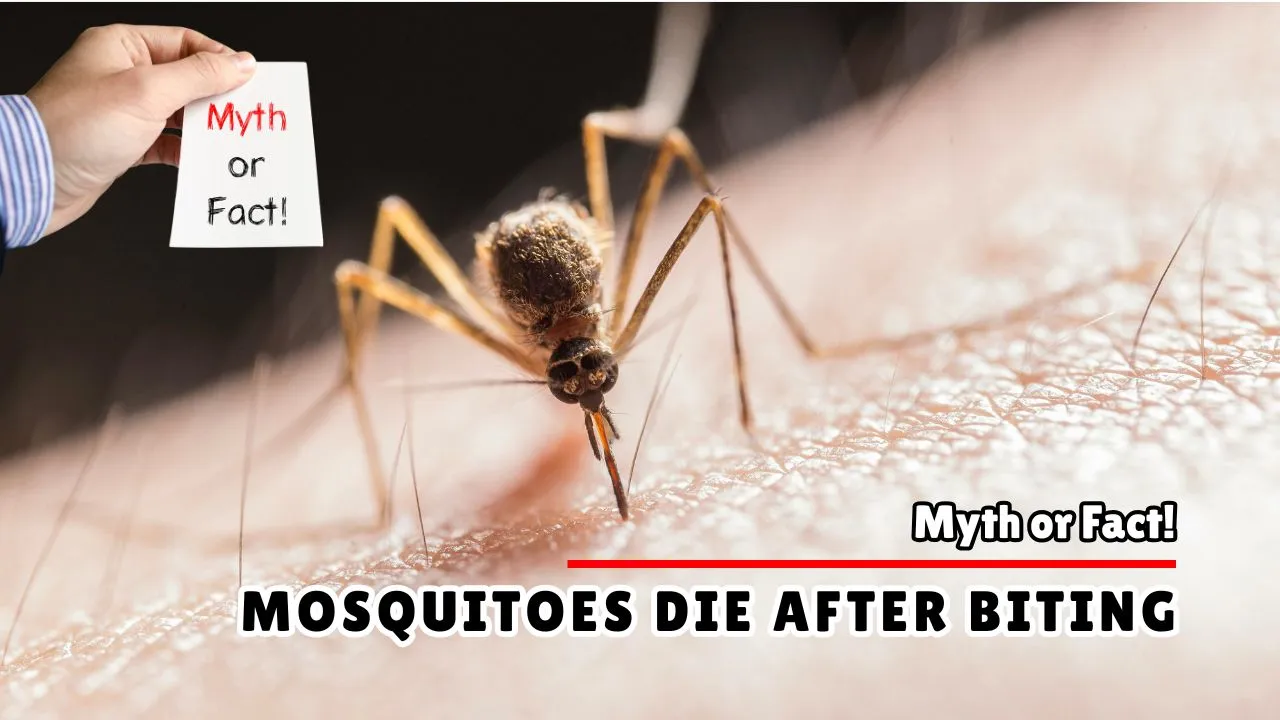
People often ask whether do mosquitoes die after biting and it is one of the most common questions, among the reasons is that people mix mosquitoes with bees. The simple and correct answer is: No, mosquitoes do not die after biting. In order to get the blood needed for egg production, female mosquitoes bite humans as well as animals several times during their lifetime and at the same time they remain alive.
Check out these facts as we go along: How do mosquitoes stay alive after biting, how do their feeding mechanism works, and what is the connection of biting with their life cycle and reproduction?
Understanding Mosquito Feeding Behavior
Only female mosquitoes bite and feed on humans or other animals as they require the blood that contains proteins and iron in order to produce eggs. Males are the ones that do not bite; as their diet consists of nectar and other plant sugars only.
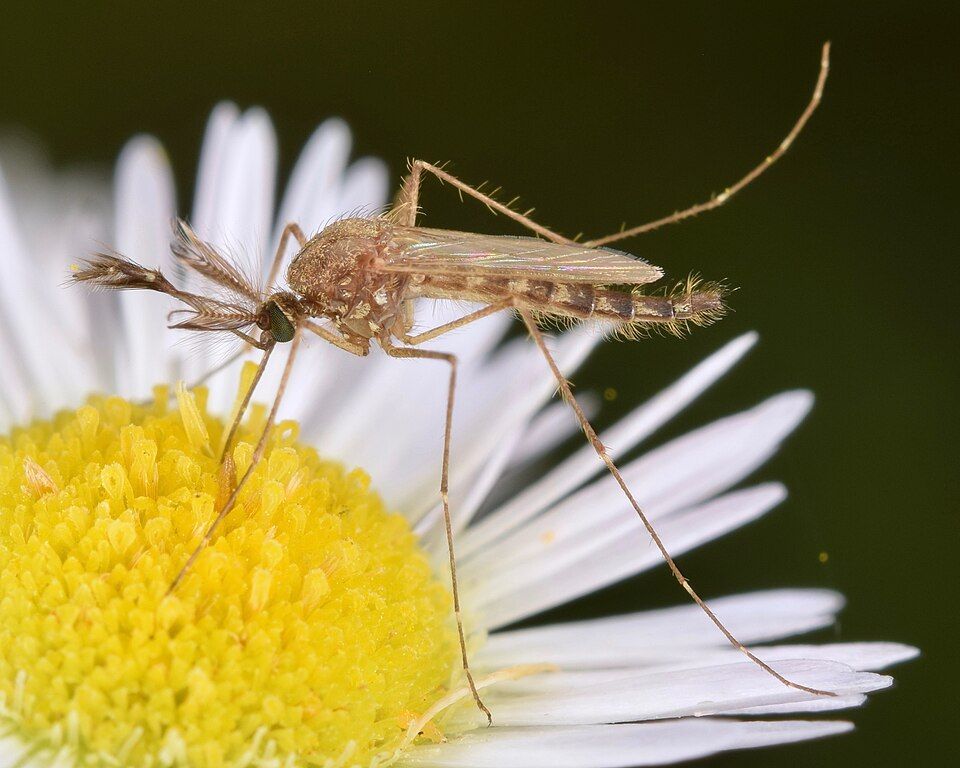
Image Credit: Wikimedia Commons, Christina Butler from Georgia, United States
A female mosquito’s mouthparts, or the proboscis, are cleverly designed and highly efficient when it comes to skin penetration and blood extraction. The proboscis is very delicate and designed in such a way that the mosquito can insert it in the skin and draw the blood without causing any harm to the proboscis.
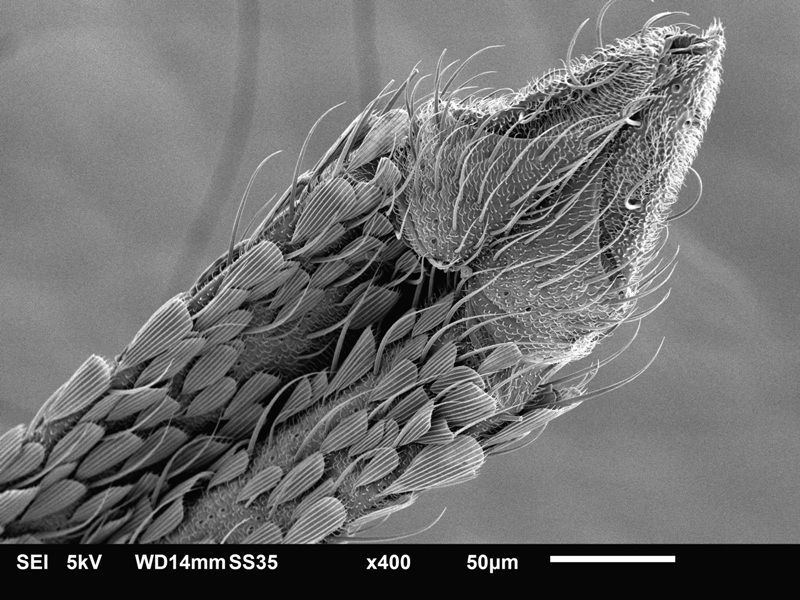
Image Credit: Wikimedia Commons, Judyta Dulnik
If we compare the sting of a honeybee which is barbed and thus, it gets stuck in the skin after the sting, which is why the bee dies. Whereas a mosquito’s proboscis is thin, flexible, and made to be used many times without it being broken or worn out.
While a female mosquito is on your skin she probes with her proboscis for a small blood vessel. She makes an injection of her saliva that contains anticoagulants and enzymes, which keep the blood from clotting and make the area less sensitive — this enables her to feed as she wants and as fast as she likes, without any immediate detection, and that is why the bite itches afterwards.
This complete feeding mechanism ensures that mosquitoes can repeatedly do a bite throughout their lifespan without getting hurt.
Why Do Mosquitoes Need to Bite?
It is the female mosquitoes that feed on blood meals. As they need nutrients from blood mainly proteins and iron, which are essential for egg production, hence they need to feed only when they want to produce a new batch of eggs.
In order to digest the blood and lay her eggs in nearby standing water or damp places, a female mosquito after a blood meal, chooses a hidden place to rest. After that, she will be looking for another blood meal so as to go over the process again.
Depending on the species and the environmental conditions, a female mosquito can go through this behavior of feeding and laying eggs over her lifespan which can be from a several days to a couple of weeks.
Since the biting is indispensable to the mosquito’s reproductive process, it wouldn’t make sense for it to die after each bite.
Comparison to Other Insects: Why Mosquitoes Don’t Die After Biting
It is quite possible that the myth about mosquitoes dying after biting is the result of a misleading example of honeybees and a few wasps that lose their stinger and die right after that.
- Honeybee stingers are equipped with barbed structures which latch tightly on the skin of the victim. When the bee tries to fly off, the stinger and the tissues of the abdomen that are connected, get separated causing the bee to die.
- On the other hand, mosquitoes has a long, sharp, and non-barbed proboscis which it can pull out without getting hurt.
Therefore, the female mosquitoes can still be alive after they feed on blood several times as biting does not bring about any physical harm to them.
How Long Do Mosquitoes Live and How Many Times Can They Bite?
The average lifespan of a female mosquito varies by species and conditions, but typically ranges from two weeks up to a month. Some species in tropical climates can live even longer.
Within this period, a female will go out looking for blood meals multiple times – sometimes she can do this five or six times or even more – to get the necessary nutrients for egg development, and then lay several batches.
The frequent feeding is one of the reasons why mosquitoes are a powerful vehicle of mosquito-borne diseases like malaria, dengue fever, Zika virus, and West Nile virus. With each bite, transmission of infection is highly probable.
Factors That Can Kill Mosquitoes
While mosquitoes don’t die itself after biting; there are, however, other things which contribute to the death of the mosquitoes., including:
- Predators: Birds, bats, dragonflies, and other insects prey on mosquitoes.
- Environmental Conditions: Very hot or very cold weather, shortage of water, or destruction of the habitat are the main causes of lowered mosquito populations.
- Human Intervention: The methods that humans employ to rid themselves of the pests include the use of insecticides, repellents, mosquito traps, and physical swatting.
Consequently, the survival of mosquitoes largely depends on the success they have at hiding from their predators and surviving through different natural hazards rather than the physiological damage caused by biting.
Scientific Studies on Mosquito Feeding and Survival
Several experiments through scientific research method have checked and recorded the feeding proficiency of the mosquitoes as well as their survival rate after a number of blood meals.
- Research on Aedes aegypti mosquito species has shown that females can take up to several blood meals within their life span and still live on to lay more eggs.
- The structure of the mosquito is such that the proboscis is very strong and well designed; as a result, it can be seen that even after repeated piercing, there is no damage.
These findings confirm the knowledge that biting behavior in mosquitoes is sustainable and it is also a part of their reproductive cycle that has been passed down through generations.
Why It Matters: Public Health and Mosquito Control
One of the main reasons why prevention and the whole process of mosquito control become so important and complicated is the fact that mosquitoes are able to live after they have bitten.
- While a mosquito is able to bite several different hosts during its lifetime which lasts several weeks, diseases have a greater chance of being transmitted by them.
- Control of mosquito populations has to be efficient at different stages of their lives – starting from the eggs, larvae, pupae, and finally adults.
- The individual methods of protection against the bites (i.e. repellents and nets) revolve mainly around the prevention of bites as the way of stopping the chain of disease transmission.
The knowledge of the life cycle of mosquitoes is a major factor to support the use of integrated control strategies that do not depend on the killing of mosquitoes as the sole method of prevention.
How Long Do Mosquitoes Live After They Bite You?
A female mosquito can live for a few days to even several weeks after biting you, depending on her species and the environment. The blood she takes does not make her life shorter; on the contrary, it is the main source of nutrients for her reproductive cycle as it contains proteins and iron for egg development.
Actually, after eating, she is usually inactive for a couple of days as she is digesting the blood and the rest of the eggs are maturing. When they are ready, she deposits them in water that is not flowing and then goes out looking for more blood to have more egg-laying cycles.
In an ideal situation, the females can have a lifespan of up to 4-6 weeks or even more if they are kept indoors at a constant temperature and humidity with access to sucrose and hosts for blood.
In addition to the factors mentioned above, survival of a mosquito after a blood meal can also depend on the availability of sugar, predators, and insecticides. Male mosquitoes only feed on nectar and live only about a week.
Females, however, need the blood as a source of energy for the production of several egg batches. The scientific researches show that in the laboratory some species can live up to 56 days.
As a result, the bite does not cause any immediate injury or death, but it is an opportunity for the female mosquito to carry on with her lifecycle and be able to bite a number of different hosts during her lifespan, which is why mosquito control is so difficult and important for disease prevention.
📰 Must Read,
✔️ Rain, Hot or Cold – What Weather Do Mosquitoes Enjoy?
✔️ Blood Type Preferences: What Blood Type Do Mosquitoes Like?
Frequently Asked Questions (FAQs)
Q. At what temperature do mosquitoes die?
Once the temperature drops under 60°F (16°C), mosquitoes slow down their movement significantly and at temperatures lower than 50°F (10°C) they become unable to function. Consequently, the majority of adult mosquitoes are killed by the cold; however, there are species which can survive by going to sleep as eggs (dormant) or hiding in safe places. Besides, a heat over 100°F (38°C) that is too intense for mosquitoes may also lead to their death as a result of water loss from their bodies.
Q. Do mosquitoes die in the cold or Winter?
Most mosquitoes either die or become inactive in the cold winter periods. Adults usually freeze to death in the open air and, thus, only those that have found sheltered places or have become dormant survive. Several mosquito species, for instance, those that lay eggs or that live in water, can exist in a resting state during winter and thereby hatch and grow when the temperature goes up, thus, they help in the renewal of the population every year.
Q. Are there any people at higher risk for severe reactions to mosquito bites?
Those most likely to suffer from the most serious consequences are children, poorly immunized adults, and those particularly sensitive to mosquito bites. Moreover, the residents and travelers who are encountering a new mosquito population for the first time may have enlarged reactions, which will be including swelling, fever, and in rare cases, allergies called Skeeter syndrome.
Q. How soon after a mosquito bite can disease symptoms appear?
Symptoms vary depending on the infection. To illustrate, the signs of malaria usually manifest 10–15 days after the bite, whereas the symptoms of dengue and Zika may appear after a few days, and some mosquito-borne viruses can have symptoms within a week or be completely symptomless.
Q. Are there rare complications or long-term effects from mosquito bites?
Most of the time, the reactions are slight and the people quickly recover. However, there are some who might get infections as a result of scratching, very rare severe allergic reactions (anaphylaxis) and secondary complications caused by mosquito-borne diseases (e.g. rash, joint pain, neurological symptoms, and even organ failure in the case of severe dengue or malaria).
Q. Do different mosquito species have different feeding and biting behaviors?
Definitely. There are mosquitoes that would like to hurt you at night; others, such as the Aedes species, that give you a bite during the day. Their selection of a host, hours of operation, and preferred habitats vary considerably and have an impact on the probability of acquiring the disease as well as the measures taken to control it.
Editorial Team & Contributors

Raashid Ansari, Founder, Content Researcher & Author - MosquiTalk
Not an entomologist — just a genuinely curious writer who started researching mosquitoes and couldn't stop. What began as casual reading about repellents and bite prevention gradually turned into a deep ongoing dive into vector biology, disease epidemiology, animal health impacts, and the real science behind mosquito control. Everything published here is carefully edited, and written with one purpose: giving readers accurate, accessible information they can actually trust and use to protect themselves, their families, and their pets, birds and cattle.
Active across social platforms, regularly publishes, and genuinely invested in spreading mosquito awareness where it matters most. Because informed readers make better decisions — and better decisions save lives.