
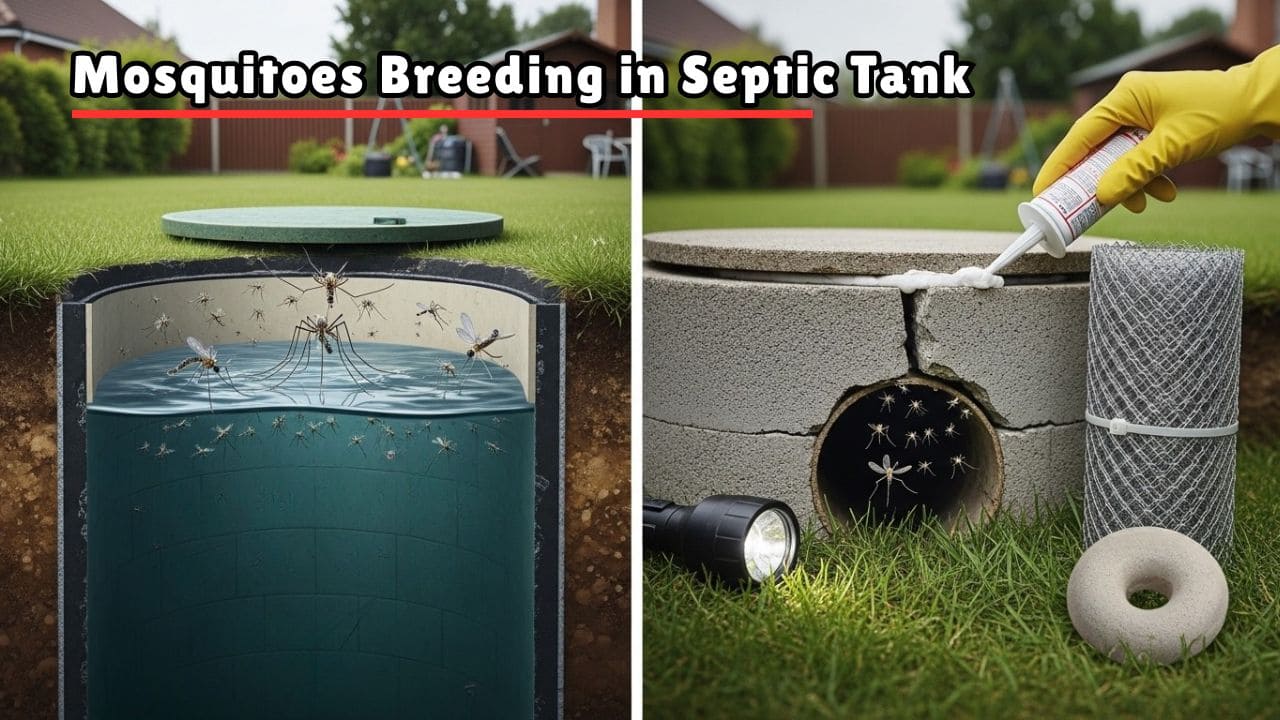
Introduction to Mosquitoes Breeding in Septic Tanks
If you live in a warm, humid climate — I’m talking South Asia, Southeast Asia, parts of Africa, or even the southern US — mosquitoes breeding in your septic tank is not a hypothetical problem. It’s a real, recurring nightmare.
I’ve managed a two-tank septic system on my property for over 18 years. And I’ll tell you honestly: the first time I noticed a swarm coming out of the inspection lid during the monsoon season, I panicked. Didn’t know what I was dealing with. Took me two full seasons of trial, error, and some serious research to finally get it under control.
This guide covers everything I know — and everything that actually works — about how to prevent mosquitoes breeding in water tanks and septic systems. No fluff. No filler. Just the stuff that holds up.
Why Septic Tanks Become Mosquito Breeding Grounds?
Most people don’t think of their septic tank as a mosquito habitat. But think about it for a second.
Mosquitoes need stagnant water to lay eggs. They need organic matter. They need warmth and low light. Your septic tank — especially if it’s aging, poorly sealed, or not regularly maintained — gives them exactly that.
The Culex mosquito species in particular (responsible for West Nile virus transmission) is well-documented as a septic tank breeder. According to the U.S. Centers for Disease Control and Prevention (CDC), Culex mosquitoes readily breed in polluted, stagnant water — which is essentially what the liquid layer inside your septic tank is.
Here’s where the entry points usually are:
- Cracked or missing inspection lids
- Broken or absent outlet baffles
- Faulty or unsealed vent pipes
- Overflow areas or flooded drain fields
- Abandoned or poorly decommissioned tanks
The problem is worse than most homeowners realize. The larvae develop inside the tank, and adult mosquitoes emerge and spread into your living area — often without anyone connecting it to the tank.
Signs You Have Mosquitoes in Your Septic Tank
Before you can fix the problem, you need to confirm it. Here are the tell-tale signs I’ve learned to recognize:
- Heavy mosquito activity near the septic tank area, especially at dusk
- Visible larvae (wrigglers) in the scum or liquid layer when you open the inspection cover
- Adult mosquitoes emerging from inspection lids, vent pipes, or risers
- Unusual mosquito density inside the house despite exterior treatment
- Buzzing or movement near vent stacks on the roof
How to Prevent Breeding of Mosquitoes in Septic Tank: Step-by-Step Guide
This is the section you came for. Let me walk you through everything — starting with the most impactful fixes and working down.
1. Seal All Entry Points — This Is Non-Negotiable
The single most effective thing you can do is cut off mosquito access entirely. If they can’t get in, they can’t breed.
- Inspect every inspection lid, access port, and riser cap. Replace cracked, broken, or loose covers immediately.
- Use tight-fitting, gasketed lids — foam-sealed plastic risers are inexpensive and widely available.
- Check the condition of outlet and inlet baffle seals. Cracked concrete baffles on older systems are a huge vulnerability.
- Seal vent pipe openings with fine-mesh stainless steel screens (18×18 mesh minimum). These allow gases to vent while blocking mosquito entry.
I replaced all my old concrete lids with polyethylene riser covers about eight years ago. Haven’t had a single mosquito emergence from those access points since.
2. Use Mosquito Dunks — Safe, Effective, and Affordable
Bacillus thuringiensis israelensis (BTI) is a naturally occurring soil bacterium that kills mosquito larvae specifically. It doesn’t harm humans, pets, beneficial insects, or the septic system’s bacterial ecosystem.
Mosquito Dunks — small donut-shaped tablets containing BTI — can be dropped directly into the septic tank through the inspection port. One dunk treats up to 100 square feet of water surface for 30 days.
- Drop 1–2 dunks directly into the tank every 30 days during mosquito season
- Safe for use in systems with active bacterial treatment
- Registered with the US EPA as a reduced-risk pesticide
- Available at most hardware or garden stores — very low cost
3. Maintain Proper Tank Levels and Pump Regularly
An overfull tank creates overflow conditions where stagnant water accumulates around the lid area, access risers, or drain field. That surface water becomes prime mosquito real estate.
The general recommendation from most state health agencies — including guidelines from the Florida Department of Health and Texas Commission on Environmental Quality — is to pump residential septic tanks every 3 to 5 years depending on household size.
- Schedule routine pumping and inspection
- Don’t let solids build beyond 1/3 of tank capacity
- Check for and repair any effluent leaks or ponding above the drain field
Neglected pumping schedules are one of the most common reasons septic tanks become mosquito hotspots. I’ve seen it happen with neighbors who pushed their pump schedule by just two years. The mosquito issue followed almost immediately.
4. Repair or Upgrade Vent Pipes
Vent pipes are essential for releasing gases from the tank — but they’re also direct entry points if not properly screened.
- Inspect vent stacks on the roof annually
- Install 18-mesh or finer stainless steel screens at the vent opening
- Check for cracks or gaps where the vent pipe meets the tank or building structure
- Replace old clay or concrete vent sections with PVC — far easier to seal and maintain
5. Eliminate Surface Water Near the Tank
Even if the tank itself is well-sealed, standing water in the surrounding area can breed mosquitoes just as effectively.
- Regrade soil around the tank to promote drainage away from the lid area
- Avoid watering plants or lawns directly over the septic footprint
- Clear any pooling after heavy rain within 24–48 hours
- Check that gutter downspouts don’t discharge near the drain field
This one seems obvious but people miss it all the time. Fixed my tank completely, then kept getting mosquitoes — turned out a neighbor’s irrigation was pooling 3 feet from my inspection lid. One drainage fix resolved it.
6. Apply Chemical Larvicides When Necessary
When biological control alone isn’t cutting it — especially during high-rainfall months — chemical larvicides may be appropriate. Methoprene-based products (like Altosid) are insect growth regulators that prevent larvae from maturing.
- Use only EPA-registered products formulated for septic or wastewater use
- Follow label directions exactly — don’t assume “more is better”
- Consult your local mosquito control district for product recommendations
Seasonal Mosquito Control: What to Do and When
Mosquito pressure isn’t constant year-round, but your prevention routine should be consistent. Here’s a simple seasonal calendar I follow:
- Pre-Monsoon / Spring: Full inspection of all lids, seals, vent screens. Drop Bti dunks. Check pump schedule.
- Peak Summer / Monsoon: Monthly BTI refresh. Check for overflow or surface pooling after storms. Increase inspection frequency to every 2 weeks.
- Post-Monsoon / Fall: Drain any standing water. Re-inspect vent pipe screens. Final pump check if due.
- Winter / Dry Season: Light maintenance only. Seal any cracks. Check for new lid damage from freeze-thaw if applicable.
What NOT to Do: Common Mistakes That Make It Worse
I’ve seen people try things that either don’t work or actively harm their septic system. Here’s what to avoid:
- Pouring bleach, oil, or gasoline into the tank — destroys your bacterial culture and is environmentally harmful.
- Using aerosol insecticide foggers near the tank or vent pipes — just drives adult mosquitoes away temporarily; doesn’t address larvae.
- Leaving inspection lids open “to check” for extended periods — every minute counts during peak season.
- Assuming new construction is safe — new installs still need screening and sealing of vent pipes.
- Ignoring the drain field — overflow ponding there is just as dangerous as the tank itself.
☎️ When to Call a Professional
Some situations are beyond DIY. Know when to escalate.
- You’ve sealed everything and still see larvae or adult emergence — there may be a hidden crack in the tank walls or a submerged pipe breach
- Tank is backing up or showing signs of drain field failure — requires licensed septic technician
- You suspect the tank was improperly decommissioned by a previous owner — call your local health department
- Mosquito-borne illness cases (dengue, West Nile, malaria) in your area — contact your municipal vector control agency for professional assessment
Your state or local health department is also a valuable resource. Agencies like the California Department of Public Health, Texas DSHS, and similar bodies publish free guidance on residential septic mosquito control.
Quick Reference: Mosquito Prevention Checklist for Septic Tanks
- Inspect and replace cracked or poorly fitting lids
- Screen all vent pipe openings with 18-mesh or finer
- Drop BTI (Mosquito Dunks) into the tank monthly during mosquito season
- Pump tank every 3–5 years — more frequently for larger households
- Eliminate any surface water or pooling near the tank footprint
- Re-inspect after every heavy rain or storm
- Use only EPA-registered larvicides if chemical treatment is needed
- Document and track all maintenance for future reference
Final Thoughts: Don’t Wait for the Swarm
Here’s the honest truth — most mosquito problems I’ve seen in septic systems are entirely preventable. They happen because homeowners don’t think about the tank until something goes wrong.
But once you understand how mosquitoes get in, how they breed, and what stops them, you realize this isn’t complicated. It’s a matter of sealing, screening, and staying on schedule.
I’ve been doing this for almost two decades. The system I’ve described above has kept my property nearly mosquito-free during some of the worst monsoon seasons I can remember. It costs almost nothing compared to the alternative — which is a full-blown infestation, potential disease risk, and expensive tank repairs from neglect.
Start with the basics: check your lids, screen your vents, and drop a Bti dunk. Do that this week. Not next month.
If you’ve dealt with mosquitoes in your septic tank or water storage system, I’d genuinely love to hear what worked for you — or what didn’t. Drop your experience in the comments below. Real-world knowledge from homeowners like you is exactly how we all get better at this.
This guide reflects personal experience and publicly available guidance from recognized health and environmental agencies. Always consult a licensed septic professional and your local health department for advice specific to your system and region.
Editorial Team & Contributors

Raashid Ansari, Founder, Content Researcher & Author - MosquiTalk
Not an entomologist — just a genuinely curious writer who started researching mosquitoes and couldn't stop. What began as casual reading about repellents and bite prevention gradually turned into a deep ongoing dive into vector biology, disease epidemiology, animal health impacts, and the real science behind mosquito control. Everything published here is carefully edited, and written with one purpose: giving readers accurate, accessible information they can actually trust and use to protect themselves, their families, and their pets, birds and cattle.
Active across social platforms, regularly publishes, and genuinely invested in spreading mosquito awareness where it matters most. Because informed readers make better decisions — and better decisions save lives.