
Introduction
You spray mosquito repellent on your arms before heading outside. Your dog brushes against your leg. Your cat jumps onto your lap twenty minutes later. It’s an ordinary evening — and it’s also one of the most common ways pets get exposed to DEET without anyone realizing it happened.
DEET is the most widely used insect repellent in the world. It works well on humans. The problem is that dogs and cats are not small humans, and their bodies process chemicals very differently. What is a routine application for you can be a genuine toxicity event for them.
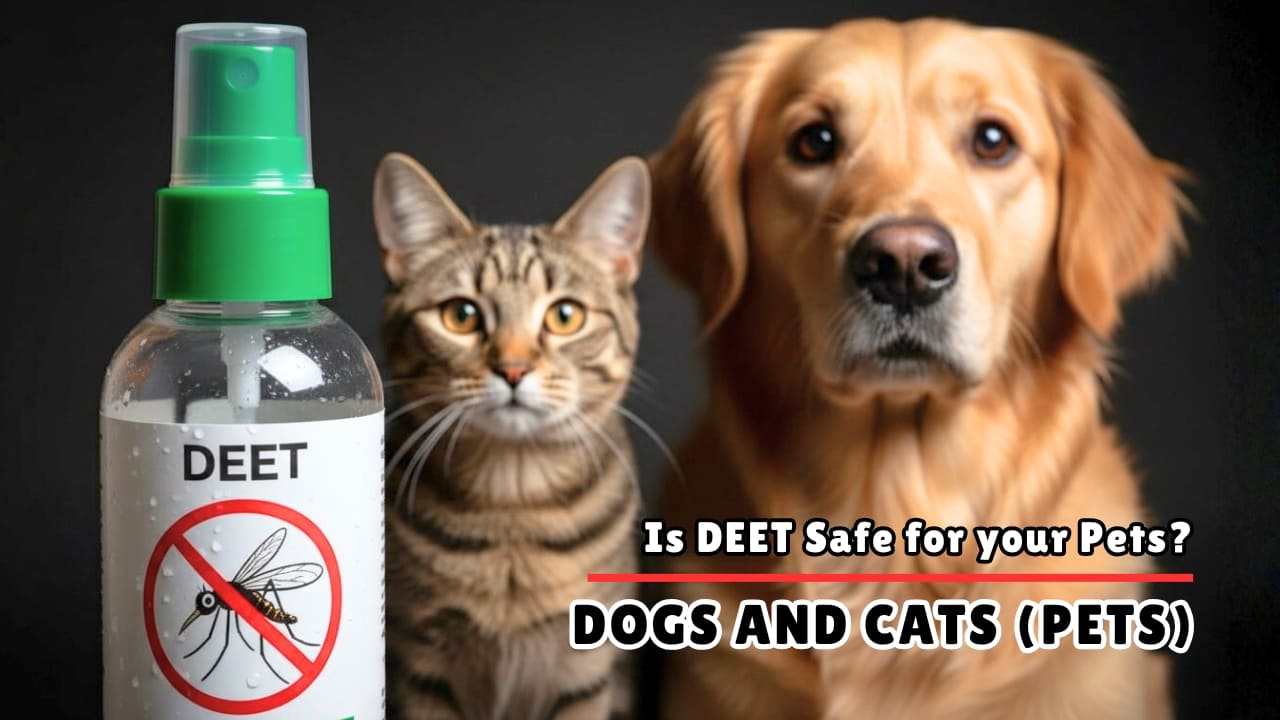
The short answer to whether DEET is safe for dogs and cats: NO. It should never be applied directly to pets, and even indirect exposure — through licking treated skin, for example — carries real risk. The details matter though, because risk scales with exposure level, concentration, and species.
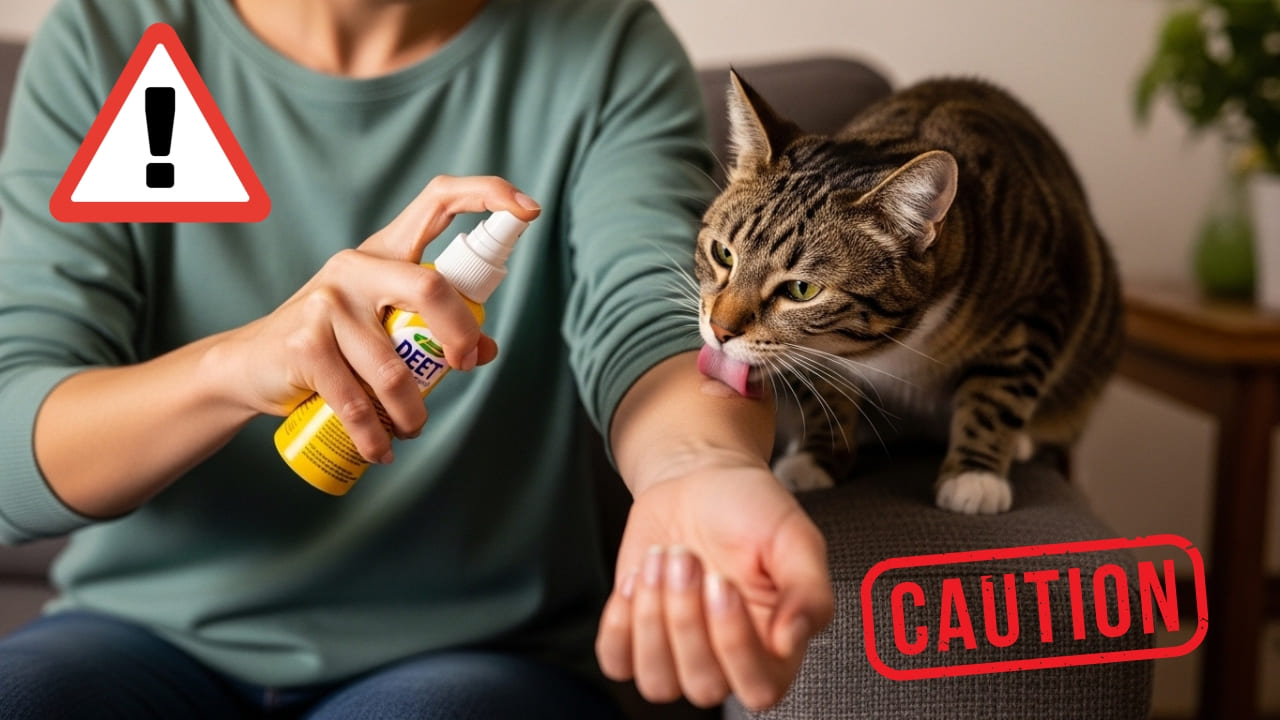
Image Credit: Illustration by Author
Is DEET Safe for Dogs and Cats?
No — but the degree of risk depends on the animal, the concentration of DEET, and how the exposure happened. Cats are significantly more sensitive than dogs for reasons rooted in their liver biology. Dogs can handle more before showing severe symptoms, but that is not a reason to be relaxed about it.
The EPA classifies DEET as slightly toxic in humans when used as directed. In pets, the threshold for harm is considerably lower. Veterinary toxicology studies show that both dogs and cats can develop neurological symptoms from DEET exposure — tremors, seizures, loss of coordination — particularly with repeated or high-dose contact.
High-concentration DEET products — 30% or above — are more dangerous than lower-concentration formulations, but there is no safe level for direct application on pets. Even products labeled as low-concentration can cause problems if a cat grooms itself after contact or a dog licks treated skin repeatedly throughout the day.
Table 1: DEET Sensitivity in Dogs vs Cats — Key Differences
| Factor | Dogs | Cats |
|---|---|---|
| DEET Toxicity Risk | Moderate — toxic but less sensitive than cats | High — significantly more sensitive due to liver enzyme deficiency |
| Primary Exposure Route | Licking treated human skin; direct contact | Grooming fur after contact; licking owner’s skin |
| Liver Metabolism | Can metabolize DEET, but slowly — accumulation risk with repeated exposure | Deficient in glucuronidation pathway — cannot safely break down DEET |
| Skin Absorption | Moderate absorption through skin | Higher absorption — thinner skin and grooming behavior increases dose |
| Onset of Symptoms | 30 minutes to several hours depending on dose | Can be faster — sometimes within 30 minutes of exposure |
| ASPCA Poison Control Classification | Toxic — especially at higher concentrations (>10% DEET) | Toxic — all concentrations warrant caution |
| Can DEET Be Applied Directly? | No — never apply human DEET products to dogs | No — absolutely not under any circumstances |
How Pets Are Exposed to DEET?
Most DEET exposures in pets are accidental. Pet owners rarely apply repellent directly to animals — the more common scenarios are quieter and easier to overlook.
- Licking treated human skin — the most frequent exposure route. A dog or cat licks your arm, leg, or hand after you have applied DEET. Even a small amount ingested this way can trigger mild to moderate symptoms.
- Contact with treated clothing or bedding — pets sleeping on fabric that has been sprayed with repellent absorb DEET through skin and fur, especially cats who groom themselves afterward.
- Direct application by mistake — some pet owners apply human repellent to their pets, believing it is safe at low concentrations. It is not.
- Inhalation from aerosol sprays — spraying DEET indoors or in a confined space with pets present exposes them to concentrated mist, which is absorbed through mucous membranes and the respiratory tract.
- Proximity during application — applying DEET spray near a pet, even without direct contact, can result in skin and fur deposition that the pet then grooms off.
Cats are particularly vulnerable to the grooming exposure route. Their meticulous self-grooming means that any substance that lands on fur — directly or via contact with treated surfaces — will likely be ingested. This is why cats are disproportionately represented in DEET toxicity cases reported to animal poison control centers.
Why DEET Can Be Toxic to Dogs and Cats (The Science)
DEET — N,N-diethyl-meta-toluamide — works as a repellent by disrupting insect olfactory receptors. In humans, the nervous system tolerates this compound reasonably well at standard concentrations. In dogs and cats, the same compound interacts with the central nervous system in ways that can cause real harm.
The primary mechanism is neurological. DEET inhibits acetylcholinesterase — the enzyme responsible for breaking down acetylcholine, a key neurotransmitter. When this enzyme is suppressed, acetylcholine accumulates at nerve junctions, causing overstimulation of the nervous system. The result is the tremors, twitching, and seizures seen in severe cases.
Why cats are more vulnerable:
Cats lack the glucuronidation enzyme pathway that both humans and dogs use to metabolize and clear a range of compounds including DEET. This metabolic deficiency — well documented in veterinary pharmacology — means DEET accumulates in a cat’s system faster, stays longer, and reaches toxic concentrations at lower doses than it would in a dog or human.
Dogs have this pathway, but it is less efficient than in humans. Repeated small exposures — a dog licking treated skin daily for two weeks, for example — can result in cumulative effects even if no single exposure caused visible symptoms.
Skin absorption is also a factor. Both species absorb DEET through the skin, particularly in areas where fur is thin. Cats additionally absorb compounds through grooming, effectively dosing themselves orally in addition to any dermal absorption.
Symptoms of DEET Toxicity in Pets
Symptoms follow a predictable pattern from mild to severe depending on the dose and how quickly the exposure is addressed. Knowing what to watch for is the difference between catching a problem early and dealing with a crisis.
Table 2: DEET Toxicity Symptoms by Severity Level
| Severity | Symptoms | What It Means | Action Required |
|---|---|---|---|
| Mild | Drooling, licking lips, mild vomiting, skin irritation at contact site | Low-level exposure; body attempting to expel the substance | Wash skin thoroughly; monitor closely; call vet if symptoms persist |
| Moderate | Repeated vomiting, lethargy, disorientation, unsteady walking, dilated pupils | Significant absorption; nervous system beginning to react | Contact vet immediately — do not wait to see if it resolves |
| Severe | Muscle tremors, seizures, collapse, difficulty breathing, loss of consciousness | Serious neurological toxicity — medical emergency | Emergency vet immediately. Call ASPCA Poison Control: (888) 426-4435 |
One thing worth noting: cats often hide discomfort better than dogs. A cat that has been exposed to DEET may not show obvious symptoms immediately but could be quietly deteriorating. If you know exposure happened — even minor contact — watching closely for the first few hours matters more than waiting for obvious signs.

Image Credit: Illustration by Author
What to Do If Your Pet Is Exposed to DEET
Speed matters here. The faster you act, the lower the total absorbed dose and the milder the outcome tends to be.
1. Wash the contact area immediately. Use mild dish soap and lukewarm water to remove DEET from skin or fur. Do this thoroughly but calmly — scrubbing hard can increase absorption through irritated skin.
2. Prevent further licking or grooming. Use an e-collar if you have one. If not, keep the pet occupied or physically restrained while you clean the area.
3. Do not induce vomiting unless instructed. Unlike some toxins, inducing vomiting at home for DEET exposure is not universally recommended. Call poison control first.
4. Call the ASPCA Animal Poison Control Center. (888) 426-4435 — available 24 hours. There is a consultation fee, but it is worth it. Have the product label ready — concentration of DEET matters for their assessment.
5. Go to the vet if symptoms appear. Any vomiting, trembling, disorientation, or unusual behavior after DEET exposure is a reason to seek veterinary care that day. Do not wait overnight.
Safe Mosquito Repellent Alternatives for Pets
The good news is that effective protection for pets from mosquitoes — and the heartworm disease they transmit — does not require DEET. Several vet-approved options exist, and some work better than any topical repellent anyway.
Table 3: Mosquito Repellent Options for Pets — Safety and Effectiveness Guide
| Product / Method | Safe for Dogs | Safe for Cats | Notes |
|---|---|---|---|
| Veterinary-prescribed monthly preventives (e.g. Simparica, NexGard) | Yes | Cat-specific only | Best overall protection; also covers fleas, ticks, and heartworm prevention |
| Permethrin-based products (dog-specific) | Yes (dog-specific only) | Never — highly toxic to cats | Effective but cats must be kept away from treated dogs until dry |
| Pet-safe repellent sprays (picaridin-based, vet approved) | Some — check label | Rarely — consult vet | Look for products specifically labeled safe for pets; avoid essential oil formulas |
| Mosquito-proof environment (nets, screens, outdoor fans) | Yes | Yes | Highly effective as supplementary method; no chemical exposure risk whatsoever |
| Citronella candles / diffusers | Use with caution | Avoid | Outdoor use with good ventilation only; citronella is toxic to cats in concentrated form |
| Essential oil repellents (tea tree, eucalyptus, lavender) | Generally No | No — toxic | Many essential oils are toxic to both dogs and cats regardless of labeling as ‘natural’ |
| DEET-based human repellents | Never | Never | Toxic to both species at any concentration — never apply to or around pets |
Always consult your veterinarian before starting any new preventive product. Products vary by region, pet weight, and health status. Never use dog-specific products on cats.
Monthly veterinary preventives are the most reliable option for most pet owners. Products like Simparica Trio, NexGard Spectra, and Revolution Plus (for cats) provide heartworm prevention — the primary disease risk from mosquito bites in pets — as well as flea and tick control. They are dosed by body weight, tested specifically for each species, and prescribed by a vet who knows your animal.
Environmental control is underrated. Eliminating standing water around the home, using window and door screens, running outdoor fans (mosquitoes are poor flyers in moving air), and keeping pets indoors during peak mosquito hours — dawn and dusk — reduces exposure without any chemical contact at all.
Common Mistakes Pet Owners Make With Repellents
1. Applying human repellent directly to pets. The most dangerous mistake. No concentration of DEET is appropriate for pets. This includes products labeled as ‘low DEET’ or ‘gentle formula.’
2. Assuming ‘natural’ means safe for pets. Many essential oils — including eucalyptus, tea tree, citronella, lavender, and peppermint — are toxic to cats and irritating to dogs. Natural does not mean non-toxic. The ASPCA lists multiple essential oils as hazardous to pets.
3. Not accounting for grooming behavior. Applying repellent to yourself and then allowing a cat to sit on your lap or a dog to lick your hands is a real exposure route. Either apply repellent well before pet contact or wash treated areas before handling pets.
4. Using dog-specific products on cats. Some permethrin-based products are approved for dogs and are highly toxic to cats. Even a dog that has recently been treated with a permethrin product can transfer enough to a cat through grooming or close contact to cause serious harm.
5. Skipping year-round heartworm prevention. In many regions, mosquitoes are present year-round or their season has extended significantly due to climate change. Stopping monthly preventives in winter is a common mistake that leaves pets unprotected during unexpectedly warm stretches.
📰 Must Read,
✔️ Essential Oils That Repel Mosquitoes Better Than DEET
✔️ Is Eucalyptus Oil Safe for Dogs?
Conclusion
DEET is not safe for dogs or cats. That applies to direct application, repeated indirect exposure through licking, and any scenario where a cat — especially — comes into prolonged contact with treated skin or fabric.
The risk is real but manageable. Effective mosquito protection for pets does not require DEET at all. Monthly veterinary preventives handle heartworm and most mosquito-borne disease risk far more reliably than any topical repellent, and they are species-tested and vet-supervised.
The practical checklist for pet owners:
✔ Never apply DEET-based repellents to dogs or cats — no exceptions
✔ Apply repellent before leaving the house — not immediately before handling pets
✔ Wash treated skin before allowing pets to lick or groom contact areas
✔ Use monthly vet-prescribed preventives as the primary mosquito and heartworm protection strategy
✔ Avoid essential oil repellents around pets — natural does not mean safe
✔ Keep ASPCA Poison Control saved: (888) 426-4435
✔ If exposure happens — wash immediately, call poison control, and watch for symptoms
Your mosquito protection and your pet’s safety do not have to conflict. A little awareness of where the product goes after you apply it is usually all it takes.
Frequently Asked Questions (FAQs)
Q. Can I use DEET around my pet if I don’t apply it directly to them?
You can, but you need to be careful about it. Spraying DEET near a pet — especially indoors or in a small space — means they’re inhaling the mist and potentially getting it on their fur. Cats will groom it off. Dogs will lick whatever they can reach. The safer move is to apply it away from your pet, let it dry completely, and avoid close contact for at least 20–30 minutes after.
Q. What happens if my dog licks DEET off my skin?
It depends on how much and how concentrated the product was. A single quick lick of a low-concentration product might just cause some drooling or mild stomach upset. Repeated licking, or licking a high-DEET formula, can trigger vomiting, tremors, and in worse cases seizures. If you saw it happen — or even think it happened — call the ASPCA Poison Control line. Don’t wait for symptoms to decide whether it’s serious.
Q. Is there any mosquito repellent that is actually safe to put on dogs?
A few vet-approved topical repellents exist specifically formulated for dogs — some picaridin-based products and certain natural sprays have been tested for canine use. The key phrase is “specifically formulated for dogs.” Human repellents, even gentle ones, are not the same thing. Honestly though, monthly preventive medications from your vet do a better job of protecting against mosquito-borne disease than any topical repellent.
Q. My cat touched my DEET-treated clothing. Should I be worried?
Brief contact is lower risk than prolonged contact, but cats are a different animal when it comes to DEET sensitivity — literally. If your cat rubbed against your clothes and then immediately started grooming, that’s worth paying attention to. Watch for drooling, wobbling, or unusual lethargy over the next few hours. If anything looks off, call your vet. Cats metabolize DEET far more poorly than dogs do, so the bar for concern is lower with them.
Q. Can DEET cause long-term damage in pets even after a mild exposure?
A single mild exposure that resolves without treatment probably won’t cause lasting harm. The bigger concern is repeated low-level exposure — a dog that licks your DEET-treated legs every evening for weeks, for instance. That kind of cumulative intake can stress the liver over time. It’s one of those things that doesn’t look dangerous on any given day but adds up. Just another reason to make a habit of not letting pets near freshly-treated skin.
Q. Are cats really more sensitive to DEET than dogs?
Yes — significantly more. It comes down to liver chemistry. Cats are missing a key enzyme pathway — glucuronidation — that both dogs and humans use to break down and clear compounds like DEET. Without it, DEET accumulates in a cat’s system faster and lingers longer. What a dog might shake off with mild symptoms could hit a cat much harder. If you share your home with both, cats deserve the extra layer of caution.
Q. What should I do if I accidentally sprayed DEET on my pet?
First, don’t panic — but do act quickly. Wash the area immediately with mild dish soap and lukewarm water, thoroughly but gently. Keep your pet from grooming the spot while you’re cleaning it. Then call ASPCA Animal Poison Control at (888) 426-4435 — have the product label nearby so they can assess based on the actual DEET concentration. If tremors or vomiting start before you get through to anyone, go straight to the emergency vet.
Q. Does heartworm prevention eliminate the need to worry about mosquitoes and pets?
Mostly yes, for the disease side of things. Monthly heartworm preventives — the kind your vet prescribes — protect against the primary health risk mosquitoes pose to pets, which is heartworm disease. They don’t stop mosquitoes from biting, and they don’t protect against every mosquito-borne pathogen. But in practical terms, a pet on year-round heartworm prevention is far better protected than one wearing a repellent spray with no preventive coverage. Both together is ideal, obviously.
Editorial Team & Contributors

Raashid Ansari, Founder, Content Researcher & Author - MosquiTalk
Not an entomologist — just a genuinely curious writer who started researching mosquitoes and couldn't stop. What began as casual reading about repellents and bite prevention gradually turned into a deep ongoing dive into vector biology, disease epidemiology, animal health impacts, and the real science behind mosquito control. Everything published here is carefully edited, and written with one purpose: giving readers accurate, accessible information they can actually trust and use to protect themselves, their families, and their pets, birds and cattle.
Active across social platforms, regularly publishes, and genuinely invested in spreading mosquito awareness where it matters most. Because informed readers make better decisions — and better decisions save lives.