
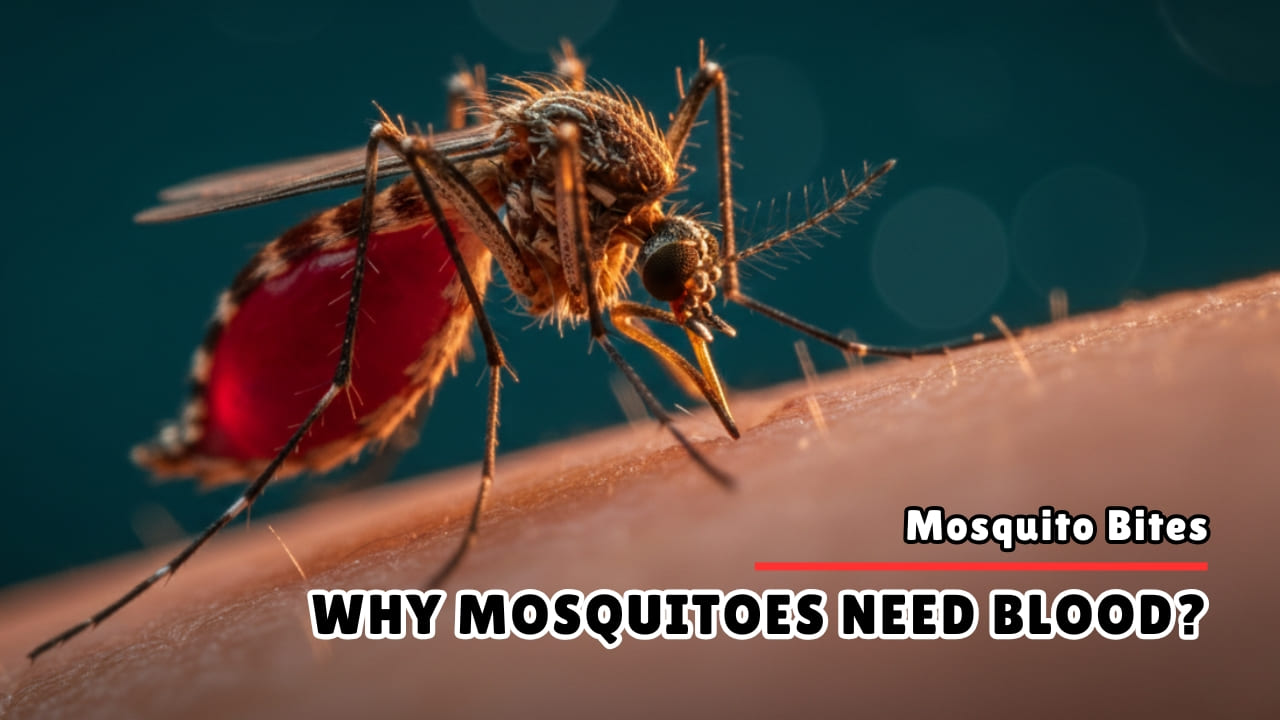
The Itch That Begs a Question: Why Do Mosquitoes Bite?
You’re sitting outside on a warm evening when that familiar high-pitched whine reaches your ear. Before you can react, a mosquito has landed, fed, and left you with a welt that will itch for days.
Most people blame mosquitoes for ruining summer. But few ask the more interesting question: why do they bite in the first place? Is blood essential for their survival, or is something else driving this behavior?
The answer is more biologically fascinating than most people realize — and understanding it can help you protect yourself more effectively.
The Direct Answer: Why Do Mosquitoes Need Blood?
Mosquitoes do not need blood to survive. Both male and female mosquitoes feed on nectar and plant sugars for energy. Only female mosquitoes bite, and they do so specifically to obtain proteins and nutrients from blood that are essential for producing viable eggs. Blood feeding is tied to reproduction, not survival.
Do Mosquitoes Need Blood to Survive?
This is one of the most common misconceptions about mosquitoes. The answer is no — not for day-to-day survival.
All adult mosquitoes, both male and female, feed on plant-based carbohydrates: flower nectar, fruit juices, and honeydew secreted by aphids. These sugars provide the energy they need to fly, mate, and carry out basic biological functions.
Blood is a specialized resource. Female mosquitoes seek it out only when they are preparing to reproduce. Without a blood meal, a female mosquito can still live out her normal lifespan of roughly two to four weeks — she simply will not be able to lay eggs.
Research published in journals of medical entomology confirms that sugar feeding is the primary energy source for both sexes, while blood feeding serves a distinct reproductive purpose.
Why Only Female Mosquitoes Bite? Reason why Mosquitoes Suck Blood
Male mosquitoes lack the physical anatomy to bite. Their mouthparts, known as a proboscis, are not structured to pierce skin. Female mosquitoes possess a specialized, needle-like proboscis that can penetrate the skin of a host and locate a blood vessel.
The Nutritional Imperative: Why Females Need More Than Sugar
The biological purpose of a female mosquito’s life is singular: mate and reproduce. Every anatomical and behavioral adaptation she possesses — her sensory organs, her piercing mouthparts, her blood-seeking drive — exists in service of this reproductive imperative.
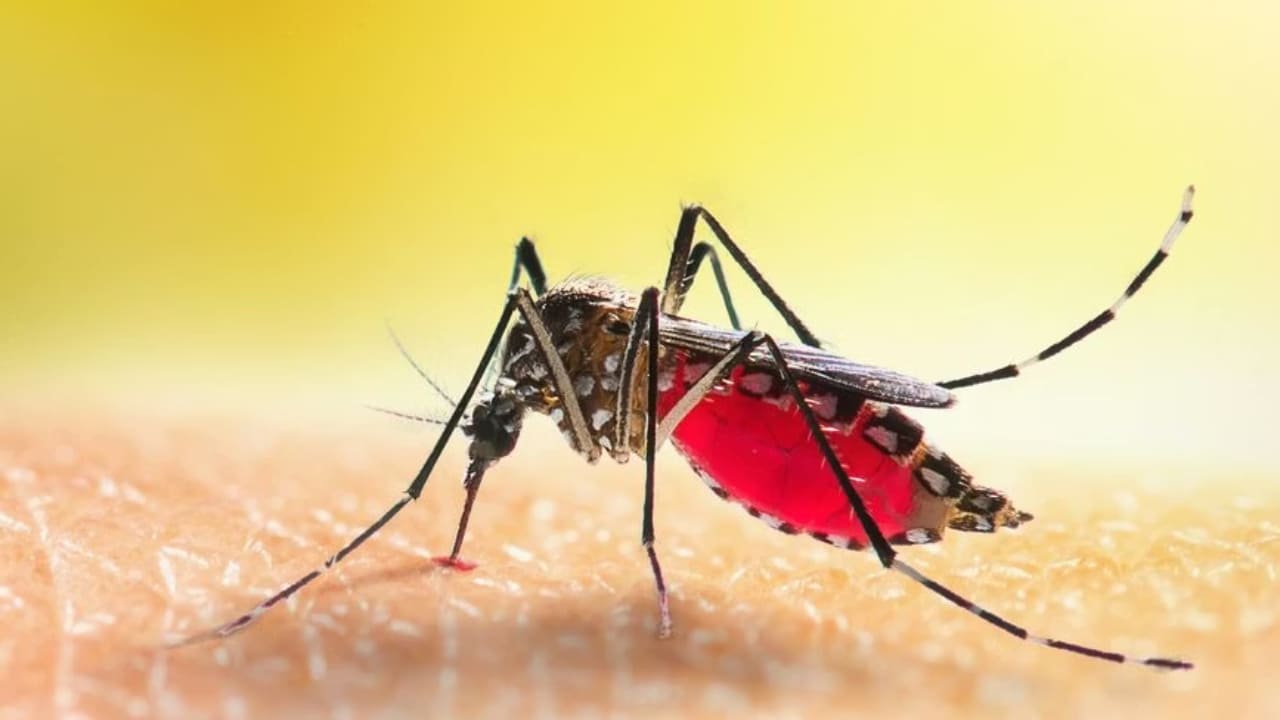
Plant sugars provide energy for flight and basic metabolism, but they are nutritionally insufficient for egg production. Blood is the only natural source that delivers the complete nutritional profile a female mosquito requires to reproduce. Specifically, blood supplies three categories of nutrients that plant-based feeding cannot:
- Amino acids and proteins: Vertebrate blood is approximately 7% protein by weight, rich in albumin, globulins, and fibrinogen. These are broken down into amino acids that the mosquito’s fat body (an organ analogous to the liver) uses to synthesize vitellogenin — the primary yolk protein essential for egg viability.
- Iron (via hemoglobin): Red blood cells contain hemoglobin, an iron-rich protein. The mosquito’s digestive system extracts this iron, which plays a direct role in oocyte (egg cell) maturation. Research published in the Journal of Experimental Biology has identified iron as a key regulator of mosquito reproductive signaling.
- Lipids and micronutrients: Blood plasma contains lipids, cholesterol, and trace micronutrients that support the development of the egg’s outer chorion (protective shell), ensuring eggs can survive in aquatic environments after being laid.
This nutritional dependency is reflected in the female mosquito’s considerably longer lifespan. While male mosquitoes live only 1–2 weeks — long enough to mate — females live 2–8 weeks depending on species and environmental conditions.
The extended lifespan is not incidental. It is a biological necessity: females need sufficient time to locate hosts, complete multiple blood-feeding and egg-laying cycles (gonotrophic cycles), and maximize reproductive output.
A single female mosquito can complete multiple gonotrophic cycles during her lifetime. Each cycle follows the same sequence: blood meal → egg development (2–3 days) → oviposition (egg-laying) → return to host-seeking. This cycle can repeat 3–5 times or more, meaning one female can lay between 150 and 1,500 eggs over her lifetime — all fueled by blood.
From an evolutionary standpoint, this asymmetry between male and female lifespan is common in species where the female bears the full biological cost of reproduction. In the mosquito’s case, that cost is blood — and her entire physiology has been optimized over millions of years to meet it.
The Role of Proteins in Egg Development
The critical driver behind blood-seeking behavior is protein. Specifically, female mosquitoes require blood proteins to trigger and support vitellogenesis — the biological process of producing yolk proteins in eggs.
A blood meal provides critical nutrients including amino acids and iron that the female’s ovaries cannot synthesize on their own. Without these nutrients, the eggs either fail to develop or remain infertile.
According to entomological research, a single blood meal can allow a female mosquito to produce anywhere from 50 to 300 eggs in a single batch, depending on the species and the size of the blood meal obtained.
Hormonal Triggers
When a female mosquito takes a blood meal, it triggers a chain of hormonal changes inside her body. Two key hormones — ecdysteroids and juvenile hormones — switch on and begin driving the maturation of her eggs. These hormones are only released in response to blood, not sugar. This is the biological reason why no amount of nectar or plant feeding can replace a blood meal — her reproductive system is hardwired to respond to blood and blood alone.
What Happens If Mosquitoes Don’t Get Blood?
If a female mosquito cannot obtain a blood meal, her reproductive cycle stalls. The egg follicles fail to mature and she will not oviposit (lay eggs). This directly impacts population growth.
Under laboratory conditions, female mosquitoes deprived of blood meals still survive on sugar and remain active — searching for hosts — but produce no offspring. This is a critical distinction: blood deprivation limits reproduction, not lifespan.
In some species, females can produce a small first batch of eggs without a blood meal (autogeny), drawing on protein reserves stored during larval development. However, subsequent egg batches always require blood feeding. The Culex pipiens mosquito, a major carrier of West Nile virus, has been studied extensively for this autogenous capacity.
The Mosquito Life Cycle Explained
Understanding why mosquitoes need blood is inseparable from understanding their life cycle. Mosquitoes undergo complete metamorphosis in four stages.
- Egg: Females deposit eggs on or near standing water. Eggs are often laid in clusters called rafts or individually, depending on species.
- Larva: Hatched larvae (wrigglers) live in water, breathing through a siphon tube. They feed on microorganisms and organic matter. This aquatic stage lasts 4-14 days.
- Pupa: The pupal stage (tumbler) is a non-feeding transitional phase lasting 1-4 days, during which the adult body forms.
- Adult: Adults emerge from the water. Males live 1-2 weeks. Females live 2-4 weeks and begin seeking blood meals within days of mating.
The blood meal is the engine that drives the egg-laying cycle. After each blood meal, a female can repeat the process multiple times during her lifespan, potentially biting multiple hosts.
How Mosquitoes Find Humans?
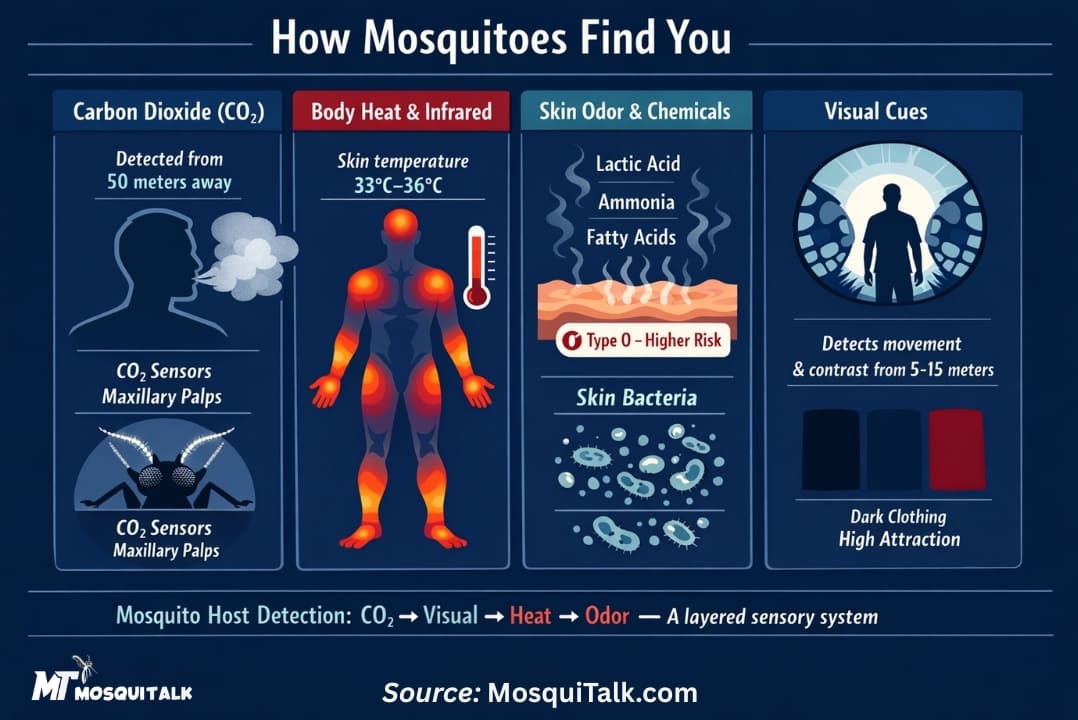
Female mosquitoes use a sophisticated array of sensory cues to locate a suitable blood host. Humans are particularly detectable due to several biological factors.
Carbon Dioxide (CO₂)
Humans exhale carbon dioxide with every breath. Female mosquitoes have specialized CO₂ receptors on their maxillary palps that can detect CO₂ plumes from up to 50 meters away. Higher CO₂ output — common in larger individuals or during physical exertion — makes a person more detectable.
Body Heat and Infrared Radiation
Once a mosquito gets within about 1 centimeter of your skin, it stops relying on smell and CO₂ and switches to heat detection. Tiny heat-sensing neurons in its antennae pick up the infrared radiation your body naturally emits. The human body holds a core temperature of 37°C (98.6°F), but your skin surface is cooler and uneven — typically ranging from 33°C to 36°C depending on the body part, how active you are, and how close your blood vessels sit to the surface. Mosquitoes exploit this variation precisely.
Areas like the wrists, ankles, neck, and temples, where blood vessels run closest to the skin, radiate slightly more heat — and that’s exactly where mosquitoes aim. Scientists have even identified the specific molecular sensor behind this behavior, a protein called the TRPA1 ion channel, confirming that heat-tracking is hardwired into the mosquito’s nervous system, not random at all.
Once a mosquito gets close enough, body heat becomes its GPS. When you exercise, your skin gets warmer, your blood vessels expand toward the surface, and you radiate more heat — all of which make you a much easier target than someone sitting still.
This is also why pregnant women, who naturally run slightly warmer and breathe out more CO₂, tend to attract significantly more mosquitoes. And in the dark, when mosquitoes can’t rely on vision at all, heat becomes their primary guide — essentially steering the proboscis toward the warmest, most vascularized patch of skin available, the same way a heat-seeking system locks onto the hottest point in its range.
Skin Odor and Chemical Compounds
Human skin emits a complex mix of volatile compounds including lactic acid, ammonia, and various fatty acids. Studies published in journals such as PLOS ONE have shown that specific combinations of these compounds are highly attractive to mosquitoes.
Blood type also plays a role. Research suggests people with Type O blood may be bitten more frequently. Additionally, bacteria on the skin that metabolize these compounds influence individual attractiveness to mosquitoes.
Visual Cues
Mosquitoes are not blind hunters — vision plays a meaningful role, particularly in the initial stages of host detection. Research shows that Aedes aegypti mosquitoes can visually detect hosts from up to 5–15 meters away, responding strongly to dark, high-contrast objects against lighter backgrounds. This is why wearing dark colored clothing — black, navy, or deep red — has been associated with increased mosquito attraction.
Movement amplifies this effect significantly; a moving dark object triggers a stronger visual response than a stationary one, as motion helps mosquitoes distinguish a live host from the surrounding environment. Their compound eyes are not designed for fine detail, but they are highly sensitive to contrast and motion — enough to lock onto a potential host before smell and heat sensors take over at closer range.
Disease Transmission: The Real Cost of a Blood Meal
The mosquito’s blood-feeding behavior is directly responsible for making it the deadliest animal on Earth, according to the World Health Organization (WHO). When a female mosquito feeds on an infected host and then bites another, she can transmit pathogens through her saliva.
Key Mosquito-Borne Diseases
- Malaria: Caused by Plasmodium parasites and transmitted by Anopheles mosquitoes, malaria remains one of the deadliest infectious diseases on the planet. The parasite travels from the mosquito’s saliva directly into the human bloodstream, eventually invading and destroying red blood cells.
The WHO reported approximately 249 million malaria cases globally in 2022, resulting in over 600,000 deaths — the vast majority being children under five in sub-Saharan Africa. Symptoms include cyclical high fevers, chills, anemia, and in severe cases, organ failure and coma.
- Dengue Fever: Transmitted by Aedes aegypti and Aedes albopictus mosquitoes, dengue is the fastest-spreading mosquito-borne viral disease in the world. The CDC estimates 400 million infections occur annually across more than 100 countries, with around 40,000 deaths from severe dengue each year. Unlike malaria, there is no specific antiviral treatment — management is purely supportive.
A small percentage of cases progress to severe dengue (previously called dengue hemorrhagic fever), which causes dangerous internal bleeding, plasma leakage, and can be fatal without prompt medical care.
- Zika Virus: Also transmitted primarily by Aedes aegypti, Zika gained global attention during the 2015–2016 outbreak across the Americas. The virus is particularly dangerous not because of its direct effect on healthy adults — most infected people experience only mild symptoms or none at all — but because of its devastating impact on fetal development.
When a pregnant woman is infected, Zika can cross the placental barrier and cause microcephaly, a condition where the baby’s brain does not develop fully, along with other severe congenital neurological defects. The WHO declared Zika a Public Health Emergency of International Concern in 2016.
- West Nile Virus: Transmitted primarily by Culex mosquitoes, West Nile virus is the leading mosquito-borne disease in the continental United States, according to the CDC. The virus circulates between birds and mosquitoes, with humans as incidental hosts.
Most infected people — roughly 80% — show no symptoms at all. However, about 1 in 150 infections progresses to severe neurological illness, including encephalitis or meningitis, which can cause permanent disability or death. There is currently no vaccine or specific antiviral treatment available for humans.
- Chikungunya: Caused by an alphavirus and transmitted by Aedes aegypti and Aedes albopictus mosquitoes, chikungunya is named after a word in the Kimakonde language meaning “to become contorted” — a reference to the severe joint pain that characterizes the disease. While rarely fatal, the debilitating polyarthritis it causes can persist for months or even years after the initial infection, significantly reducing quality of life.
The WHO reports that chikungunya has been identified in over 60 countries across Asia, Africa, Europe, and the Americas, with outbreaks intensifying as Aedes mosquito populations expand into new regions due to climate change.
- Eastern Equine Encephalitis (EEE): Transmitted primarily by Culiseta melanura mosquitoes, EEE is rare but one of the most severe mosquito-borne diseases in North America. It causes inflammation of the brain (encephalitis), and according to the CDC, approximately 30% of people who develop neurological symptoms die from the infection. Those who survive often face significant long-term neurological damage.
While human cases average only 11 per year in the United States, the fatality rate makes it disproportionately dangerous compared to more common mosquito-borne illnesses.
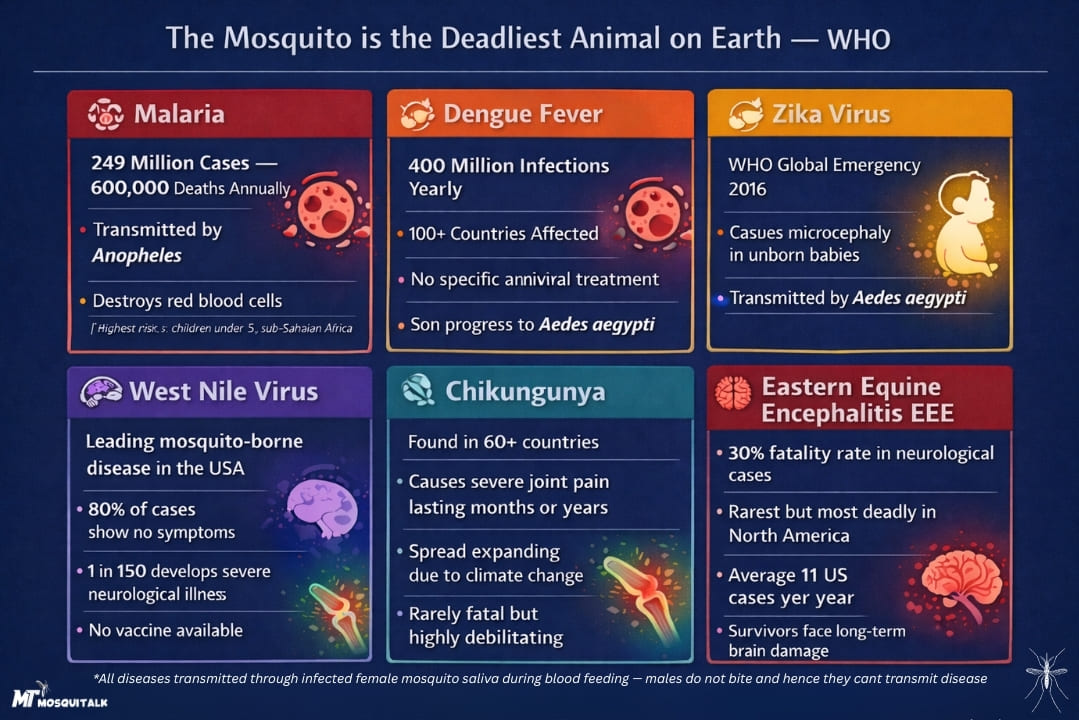
These diseases are not transmitted through a mosquito’s bite alone, but through the regurgitation of infected saliva during the blood-feeding process. This is why only blood-feeding females — not males — transmit disease.
Mosquito Myths vs. Facts
| MYTH | FACT |
| All mosquitoes bite humans. | Only female mosquitoes bite. Males feed exclusively on plant sugars. |
| Mosquitoes need blood to survive. | Blood is required for reproduction, not daily survival. |
| Eating garlic or vitamin B repels mosquitoes. | No peer-reviewed evidence supports these claims. EPA-registered repellents remain the most effective option. |
| Mosquitoes die after biting. | Mosquitoes do not die after biting — they can feed multiple times throughout their lifespan. |
| Mosquitoes prefer sweet blood. | Mosquitoes are attracted to CO₂, heat, and skin chemicals — not the sugar content of blood. |
| Bug zappers are effective at reducing mosquito populations. | Studies show bug zappers kill mostly non-biting insects. Mosquitoes are primarily attracted to CO₂ and odor, not UV light. |
Expert Insight: Mosquito Biology from an Entomological Perspective
From an entomological standpoint, blood-feeding in mosquitoes is a highly specialized evolutionary adaptation. The female mosquito’s sensory system — integrating olfactory, thermal, and visual cues — represents millions of years of co-evolution with vertebrate hosts.
The reliance on blood proteins for oogenesis (egg production) is consistent across nearly all 3,500+ species of mosquitoes studied. Disrupting this blood-reproduction link is one of the primary targets for next-generation mosquito control technologies, including sterile insect technique (SIT) programs and genetically modified mosquito releases studied by research institutions worldwide.
Researchers at institutions including the National Institutes of Health (NIH) are actively studying the molecular pathways that connect blood meal intake to egg development. A deeper understanding of these pathways may yield more targeted vector control strategies that reduce disease transmission without broad environmental impact.
Practical Takeaways: How This Knowledge Helps You
Understanding the biology behind mosquito biting behavior translates directly into more effective prevention strategies.
- Eliminate standing water: Females need water to lay eggs. Eliminating standing water — in pots, gutters, bird baths, and tires — breaks the reproductive cycle.
- Use EPA-registered repellents: DEET, picaridin, IR3535, and oil of lemon eucalyptus are scientifically validated to disrupt a mosquito’s host-detection system.
- Limit outdoor exposure during peak biting hours: Most species are most active at dawn and dusk, though Aedes mosquitoes bite aggressively during daylight hours.
- Wear protective clothing: Long sleeves, long pants, and light-colored fabrics reduce exposed skin surface area.
- Use physical barriers: Window screens and mosquito nets — particularly permethrin-treated nets — are highly effective, especially in high-transmission regions.
Summary
Mosquitoes do not drink blood to survive. Both sexes sustain themselves on plant sugars. Blood is a reproductive resource, sought exclusively by female mosquitoes to fuel egg production through a protein-dependent biological process.
This distinction matters: it explains why only half of all mosquitoes bite, why targeting reproductive biology is a key vector control strategy, and why eliminating breeding habitat is one of the most effective public health interventions available.
The mosquito’s blood-seeking behavior, refined over millions of years of evolution, has made it the most dangerous animal on Earth in terms of human mortality. Understanding the biology behind this behavior is the first step toward more effective personal protection and informed public health decisions.
Frequently Asked Questions (FAQs)
Why do mosquitoes bite humans specifically?
Mosquitoes detect humans through CO₂ exhalation, body heat, and skin odors including lactic acid and ammonia. Humans are large, warm-blooded mammals that are easily detectable — making them frequent targets alongside other mammals and birds.
Do male mosquitoes bite?
No. Male mosquitoes do not have the mouthpart anatomy required to pierce skin. They feed exclusively on nectar and plant sugars throughout their lifespan.
Can a mosquito bite kill you?
A mosquito bite itself is not lethal. However, pathogens transmitted through bites — such as the Plasmodium parasite that causes malaria — can be fatal, particularly in vulnerable populations without access to treatment.
Why do some people get bitten more than others?
Research suggests that individual attractiveness to mosquitoes is influenced by body size (higher CO₂ output), blood type (Type O may be preferred), skin microbiome composition, and levels of specific volatile compounds like lactic acid.
How many eggs can a mosquito lay from one blood meal?
Depending on the species and size of the blood meal, a female mosquito can lay between 50 and 300 eggs per batch. She can repeat this cycle multiple times in her lifespan, with each cycle requiring a new blood meal.
What happens to a female mosquito that never gets blood?
She will survive on sugar feeds but will be unable to produce viable eggs. Her reproductive cycle will not initiate, which directly reduces population growth but does not necessarily shorten her lifespan.
Do mosquitoes transmit HIV or other bloodborne diseases?
No. HIV and similar bloodborne pathogens cannot replicate inside a mosquito’s body and are digested along with the blood meal. The CDC confirms that mosquitoes do not transmit HIV.
Why do mosquito bites itch?
When a female mosquito feeds, she injects saliva containing anticoagulants to keep blood flowing. The human immune system responds to proteins in this saliva with a localized histamine reaction, producing the characteristic welt and itch.
