
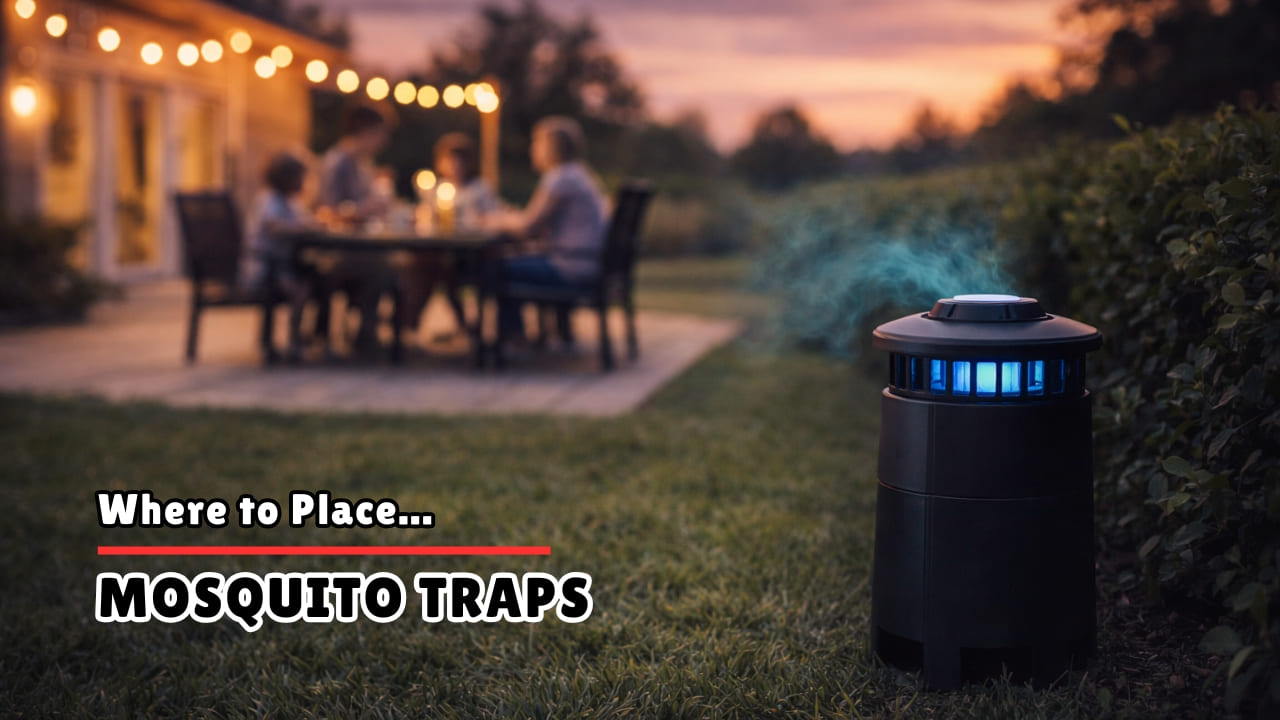
🚫 Mosquito Trap Placement Mistakes: What NOT to Do (And How to Fix It)
Experience and Expertise-backed tips and placement strategies to reclaim your yard — based on mosquito behavior, wind dynamics, and real-world testing.
You’ve spent the whole afternoon setting up the perfect backyard BBQ. The grill is hot, the drinks are cold, and your friends are arriving. Then it starts — that familiar high-pitched whine near your ear, followed by the first sting on your forearm. Within minutes, your guests are slapping at their ankles, your kids are running inside, and the party is effectively over.

Backyard BBQ ruined by mosquitoes
Sound familiar? You’re not alone. The CDC estimates that mosquitoes are responsible for more human deaths worldwide than any other animal — and even in non-tropical regions, they can make your outdoor spaces completely unusable during warm months.
You might have already invested in a mosquito trap, only to wonder: “Why isn’t this thing working?” Here’s the hard truth — placement is everything. A high-quality trap positioned in the wrong spot is almost useless. But position it correctly, and you can reclaim your yard.
This guide will show you exactly where to place mosquito traps for the best outdoor protection, based on mosquito behavior, trap science, and real-world results.
Why Mosquito Trap Placement Matters (The Science Behind It)
Most people treat mosquito traps like air fresheners — plug it in anywhere and hope for the best. That approach fails because it ignores how mosquitoes actually behave.
Mosquitoes are highly directional hunters. They navigate primarily by detecting carbon dioxide (CO₂) exhaled by humans and animals, body heat, and moisture. According to research published by the American Mosquito Control Association, mosquitoes can detect CO₂ plumes from up to 100 feet away, but they travel upwind toward the source in a zigzag pattern.
This means your trap must intercept mosquitoes before they reach you — not compete with you as the more attractive target. If your trap is sitting next to you on the patio, you’re going to lose that competition every single time.
Common Mistakes People Make (And Why Traps Fail)
Before we get to the right placements, let’s quickly cover what NOT to do. These are the mistakes that cause homeowners to give up on traps entirely:
- ❌ Placing the trap too close to where people sit — you become the competition, and you’ll always win (for the mosquito).
- ❌ Putting the trap in direct sunlight — heat disrupts CO₂ and scent-based attractants, and many trap components degrade faster in UV exposure.
- ❌ Ignoring wind direction — if the trap’s attractant plume blows away from mosquito sources, it won’t draw them in.
- ❌ Placing traps away from breeding zones — mosquitoes rarely travel more than 300 feet from where they hatched. Your trap needs to be near them, not near you.
- ❌ Neglecting maintenance — a full catch bag or depleted attractant is just an expensive decoration.
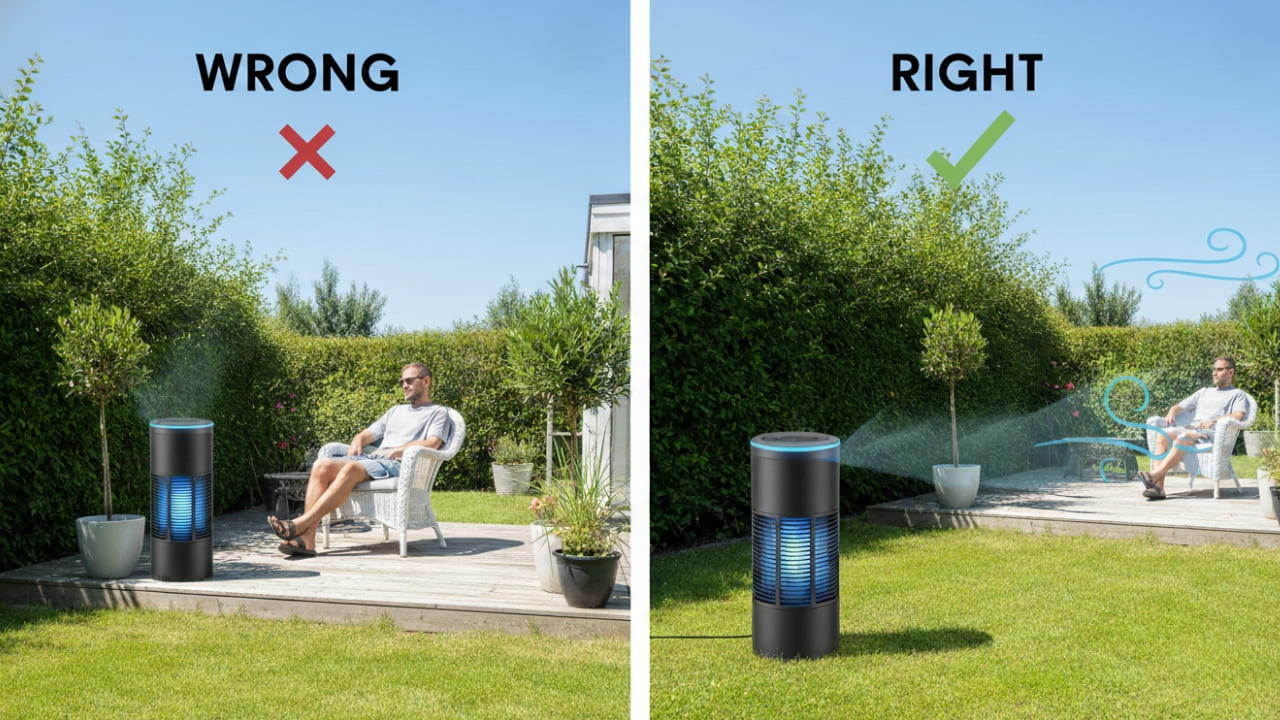
Common mistakes while placing mosquito traps
Have you made any of these mistakes with your current setup? Don’t worry — most people have. Let’s fix that.
Step-by-Step: Where to Place Mosquito Traps for Maximum Effectiveness
1. Distance from Seating Areas
Position your trap 30 to 40 feet upwind from where people gather. This creates an interception zone — mosquitoes following the CO₂ trail from your guests will hit the trap’s attractant plume first and get diverted.
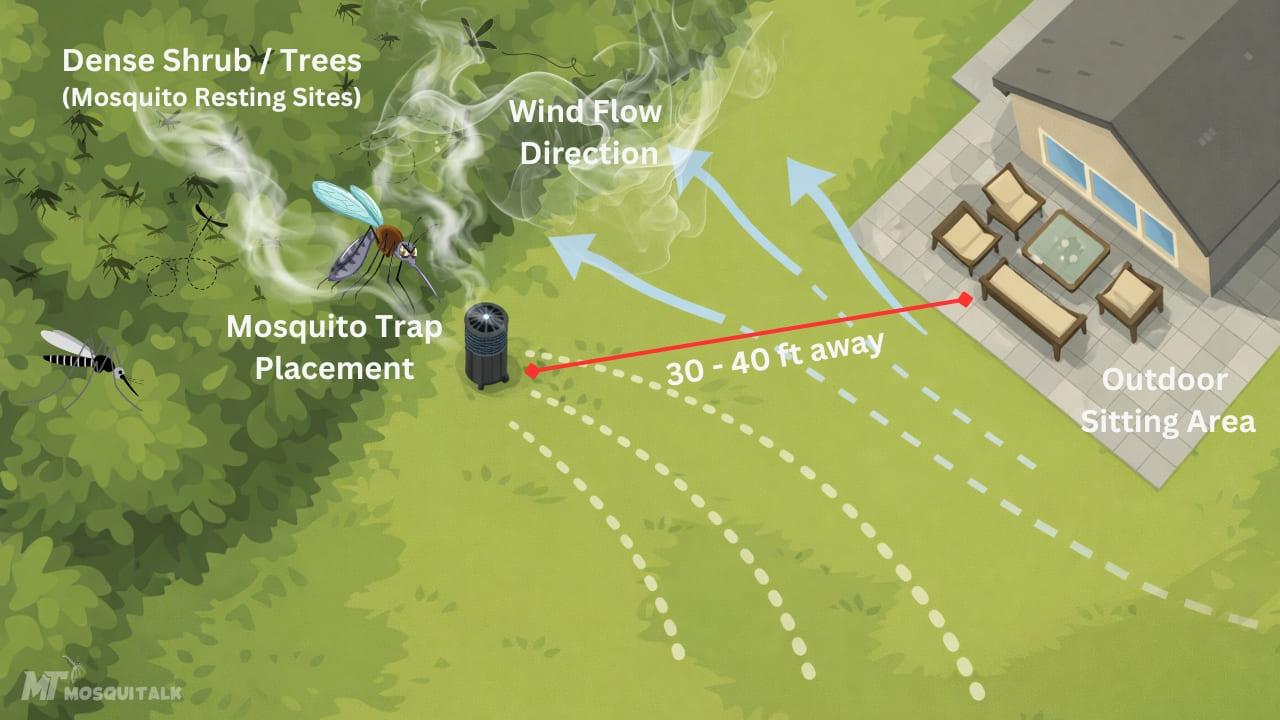
Where to Place Mosquito Traps in Yard
2. Shade Over Sun — Always
Mosquitoes are cold-blooded and prefer shaded, cooler environments during daylight hours. They rest in dense vegetation, under decks, behind shrubs, and in tall grass. Placing your trap in a shaded area where mosquitoes already congregate dramatically increases capture rates.
Avoid placing traps in open, sunny lawns — mosquitoes rarely travel through hot, exposed spaces by day. A spot near a hedgerow, under a tree canopy, or beside a shaded fence line will outperform a sunny placement every time.
3. Wind Direction Considerations
Wind is your most powerful ally or your biggest enemy in mosquito trap placement. Mosquitoes fly upwind toward CO₂ sources, so your trap’s attractant must drift downwind toward mosquito breeding areas.
In humid climates like Florida or Louisiana, wind tends to shift more frequently — consider placing multiple traps to cover different wind directions.
4. Target Mosquito Breeding Zones
The EPA identifies standing water as the primary breeding ground for most residential mosquito species. Even small amounts — a clogged gutter, a bird bath, a decorative pot saucer — can produce thousands of mosquitoes.
Place traps within 30 feet of known breeding areas: low-lying wet areas, pond edges, rain barrels, tree holes, and dense ground cover. You’re targeting mosquitoes before they even think about flying toward your guests.
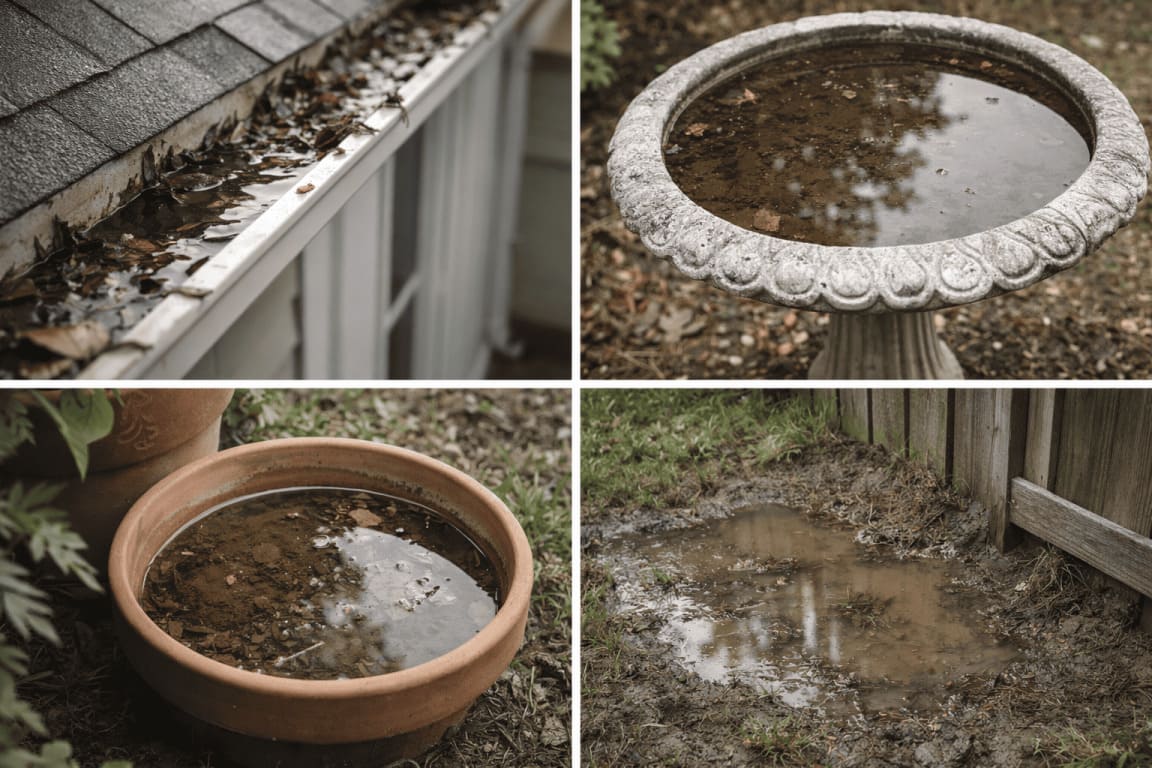
Breeding zones in your backyard
5. Property Perimeter Strategy
For larger yards, think in terms of zones. The goal is a layered defense: traps at your property’s edge intercept mosquitoes migrating in from neighboring areas or wooded zones, while traps near breeding sources tackle the local population.
If your yard borders woods, a creek, or a neighbor’s unmaintained lot, a trap at that boundary is essential — especially during peak mosquito hours at dawn and dusk.
Placement Based on Trap Type
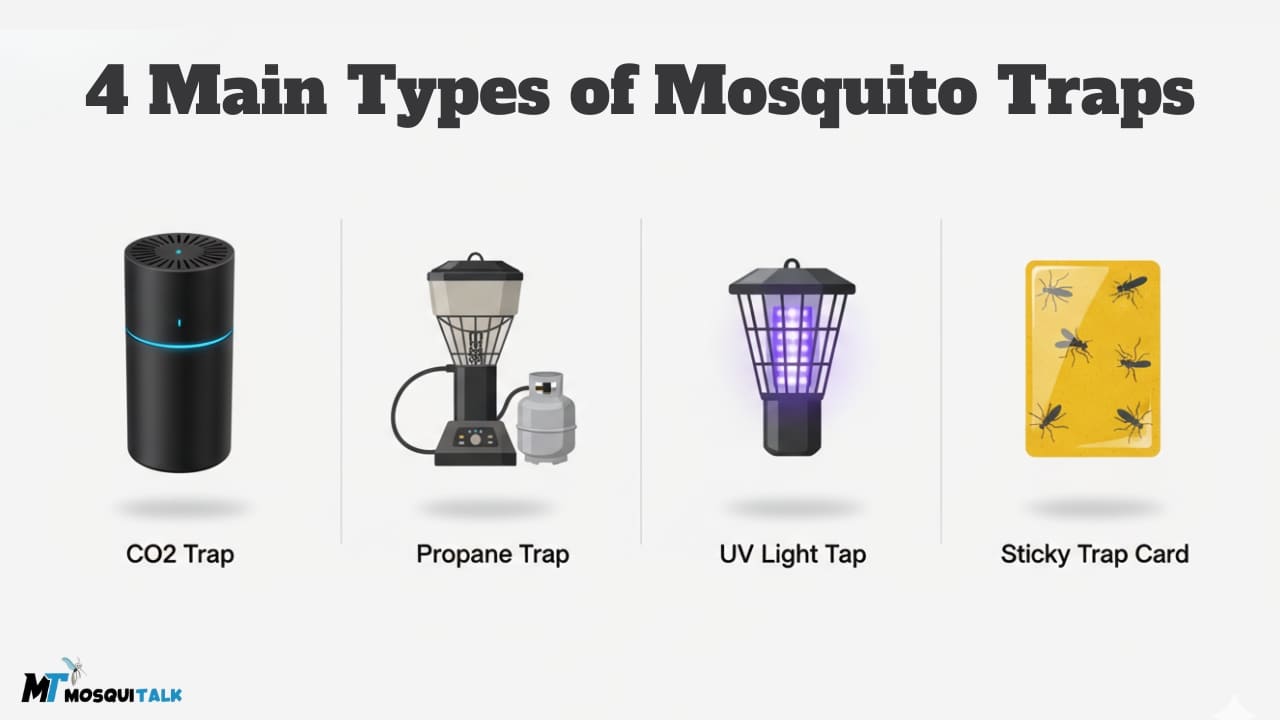
4 Main Types of Mosquito Traps
Not all traps work the same way, and optimal placement varies by trap type:
(e.g., Mosquito Magnet) — Mimic human breath. Place 30–40 ft upwind of gathering areas, near standing water. Run 24/7 to disrupt breeding cycles over 4–6 weeks.
Similar to CO₂ traps. Position upwind near breeding zones. Effective in large suburban yards; requires regular propane refills.
Attract using UV light. Place away from competing light sources (porch lights) at 3–6 ft height, near dense vegetation.
Passive monitoring tools. Best in small enclosed areas like screened porches. Place in shaded entry points where mosquitoes rest.
How Many Traps Do You Actually Need?
Yard size matters more than most homeowners realize. Here are general guidelines based on university extension recommendations:
| Yard Size | Recommended Traps | Placement Strategy |
|---|---|---|
| Small (under ¼ acre) | 1 quality CO₂/propane trap | Position correctly near breeding zone |
| Medium (¼–½ acre) | 2 traps | One near gathering area, one near breeding source |
| Large (over ½ acre) | 3+ traps | Perimeter, near water, between woods and living spaces |
More traps aren’t always better if they’re placed poorly. Two well-positioned traps will outperform five randomly placed ones every time.
Maintenance Tips to Keep Traps Effective
Even perfectly placed traps fail if they’re not maintained. Follow these practices to keep performance high all season:
- Empty the catch container weekly — a full bag reduces airflow and trap efficiency significantly.
- Replace attractants (octenol, CO₂ cartridges, or lures) on schedule — typically every 21 days. Expired lures are a common reason traps underperform.
- Clean the trap housing monthly to remove dead insects, dust, and debris that can block airflow.
- Run CO₂ and propane traps continuously during mosquito season rather than only when you’re outside — consistent operation disrupts the breeding cycle over time.
- Reassess trap placement mid-season — standing water sources change, vegetation grows, and prevailing wind patterns can shift.
The One Rule That Changes Everything
Find the breeding zones, read the wind, find the shade, and create an interception barrier. Do that, and your trap will perform the way it was designed to. Don’t do that, and no amount of technology will save your summer.
The mosquito season isn’t waiting. Take 20 minutes this weekend to walk your yard, identify your breeding zones, check your wind direction, and reposition your trap. That single action could be the difference between a summer spent hiding indoors and one spent actually enjoying your outdoor space.
We Want to Hear From You!
Every yard is different, and the mosquito battle is real. Drop a comment below and let us know:
- 📍 Where did you place your mosquito trap? Did our placement tips change your strategy?
- ✅ What has worked best in your yard — and what has completely flopped?
- 📝 Share your mosquito battle story — the more detail, the better. Your experience could help thousands of other homeowners finally win the war.
And if this guide helped you, share it with a neighbor — because a mosquito-free neighborhood starts one yard at a time.
