
Pool Maintenance Guide for Homeowners | Updated 2026
Table of Contents
You did everything right, but…still mosquitoes breeding on your pool cover
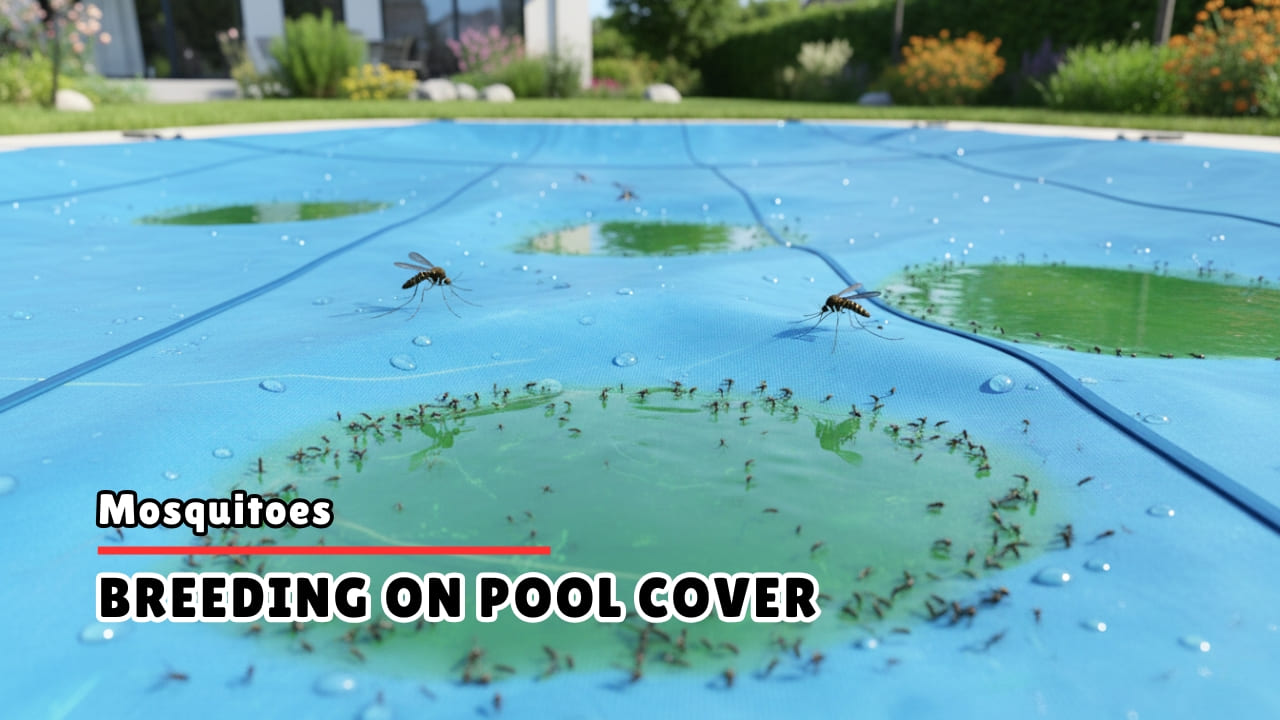
You covered your pool to protect it. You kept the yard tidy. You thought you were being a responsible homeowner — and yet, by midsummer, you’re swatting mosquitoes every time you step outside, your arms are covered in bites, and your backyard has become a no-go zone after dusk.
The culprit? That pool cover you trusted to keep things clean.
Mosquito breeding in pool covers is one of the most overlooked — and preventable — backyard hazards in the country. A single inch of standing water on a pool cover can produce hundreds of mosquito larvae within 48 hours. Multiply that across a summer, and you’re not just dealing with itchy bites. You’re potentially hosting disease-carrying insects that threaten your family’s health.
This guide will show you exactly why pool covers become mosquito nurseries, what risks that creates, and — most importantly — how to stop it.
Why Pool Covers Are a Mosquito’s Dream Home
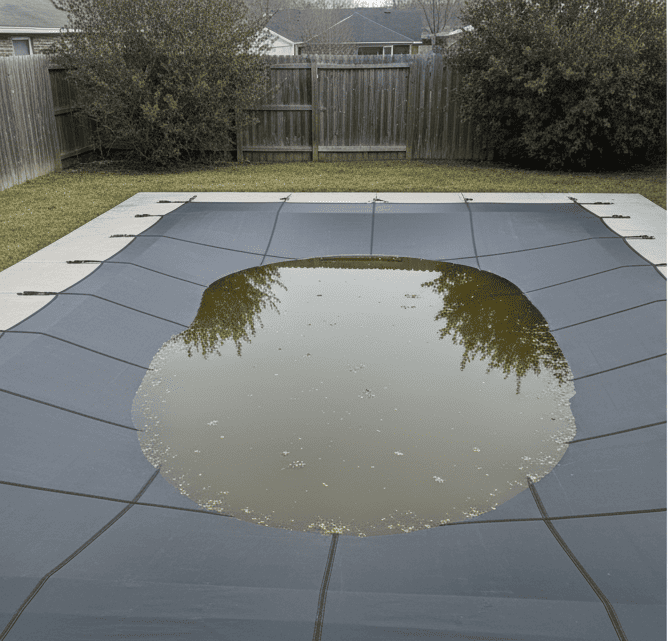
Mosquitoes don’t need a pond to breed. They need water — still, shallow, and undisturbed. Pool covers, particularly solid or mesh covers left unattended, create exactly that environment. Here’s what makes them so attractive:
- Standing water accumulation: Rain, dew, and debris create puddles that sit undisturbed on top of the cover.
- Warmth: Dark covers absorb sunlight and heat the water, accelerating mosquito larval development.
- Organic material: Leaves, pollen, and algae that collect on covers provide food for larvae.
- No predators: Unlike an open pond, pool cover water has no fish, frogs, or other natural mosquito predators.
According to the Centers for Disease Control and Prevention (CDC), mosquitoes only need about one teaspoon of water to lay eggs. A sagging pool cover after a rainstorm can hold gallons. If your pool has a cover and you’ve noticed mosquito breeding in pool cover areas, you’re not alone — and this is exactly the scenario that public health officials warn about every mosquito season.
The Health Risks You Can’t Ignore
This isn’t just about comfort. Mosquitoes are the deadliest animals on earth, responsible for more human deaths annually than any other creature. When mosquitoes breed near your home, the risks include:
- West Nile Virus: The most common mosquito-borne illness in the US. Symptoms range from mild fever to severe neurological illness.
- Eastern Equine Encephalitis (EEE): Rare but extremely dangerous, with a fatality rate of up to 30%.
- Zika Virus: Particularly dangerous for pregnant women and developing fetuses.
- Dengue Fever and Chikungunya: Increasingly reported in southern US states.
Stopping mosquitoes in your pool area isn’t just pool maintenance — it’s a genuine public health responsibility.
Step-by-Step: How to Stop Mosquitoes Breeding on Your Pool Cover
The good news: this problem is almost entirely preventable with the right habits and tools. Follow these steps systematically for effective pool mosquito prevention.
Step #1: Eliminate Standing Water Immediately
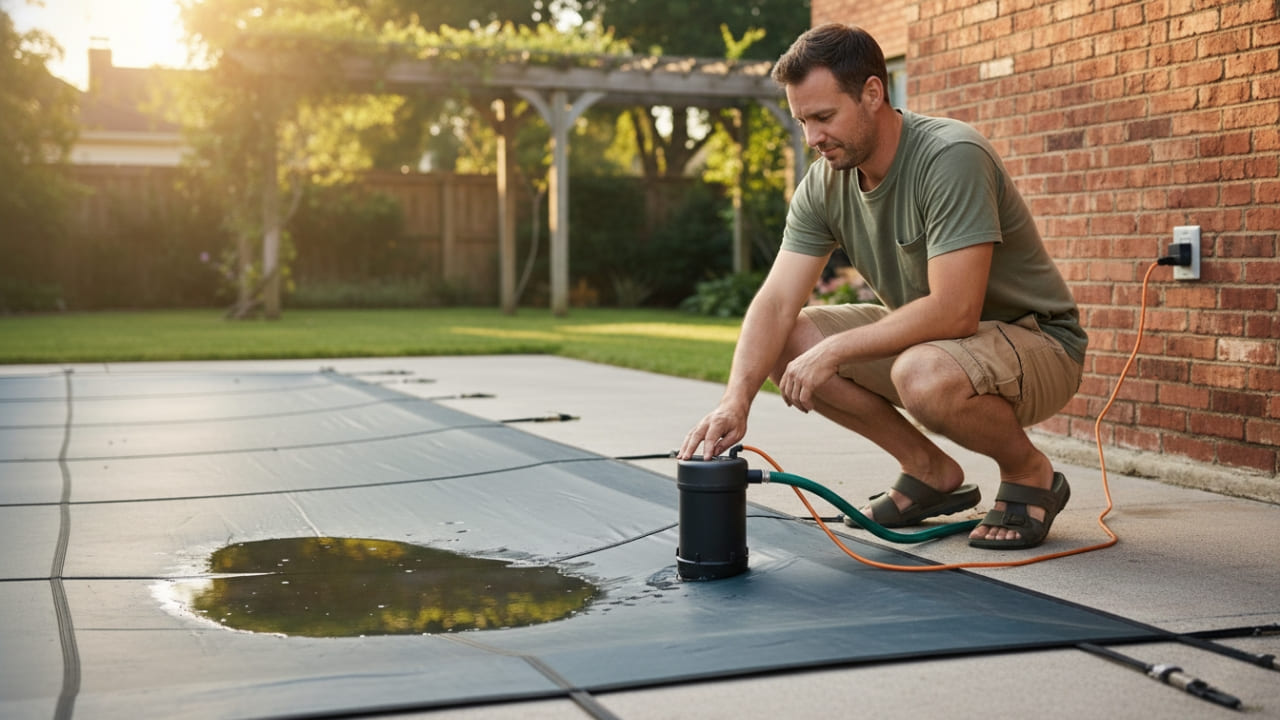
Your first line of defense is the simplest: don’t let water sit. After every rain, inspect your pool cover and remove accumulated water within 24 hours — before mosquito eggs can hatch into larvae.
- Use a submersible cover pump (also called a pool cover pump) to automatically remove water. These plug into a standard outlet and activate when water depth exceeds a preset level.
- Use a pool cover siphon or a wet/dry vacuum for smaller puddles.
- Tilt or re-tension your cover so water runs off rather than pooling. A properly fitted cover shouldn’t sag in the middle.
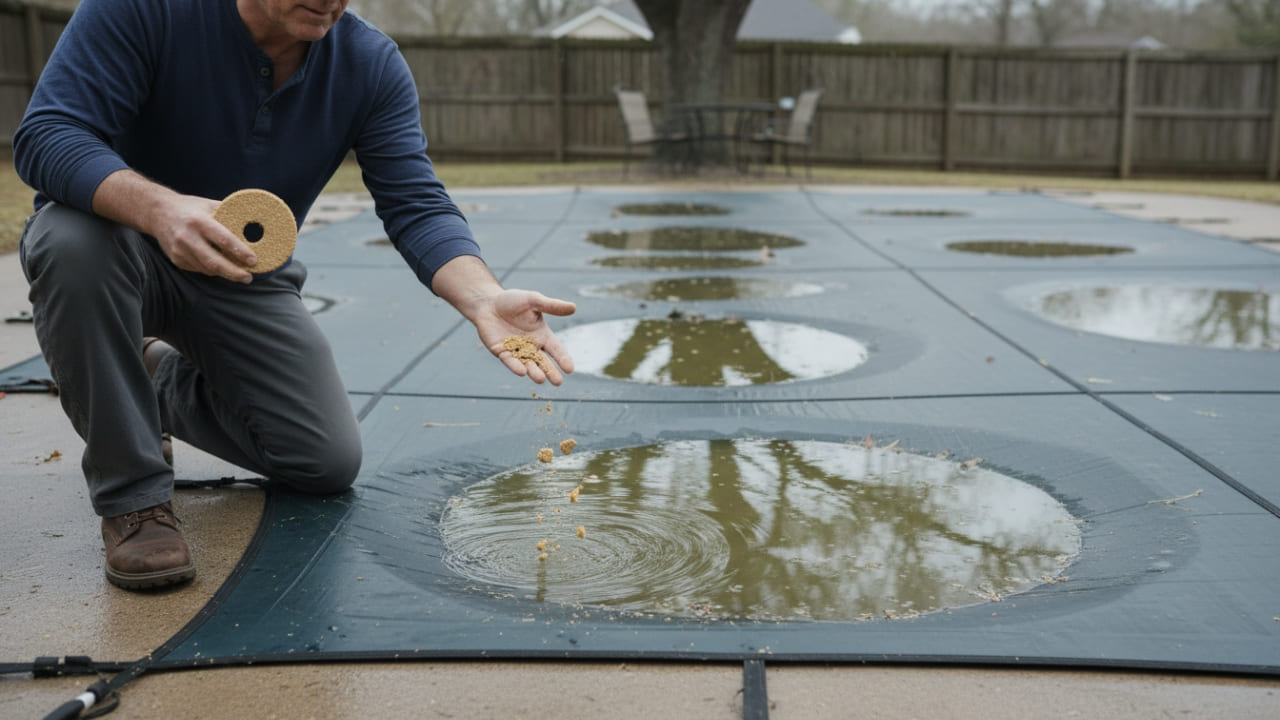
Step #2: Use Mosquito Dunks or Larvicide Tablets
If you can’t eliminate standing water entirely, your next move is to make it uninhabitable for mosquito larvae.
Mosquito Dunks contain Bacillus thuringiensis israelensis (Bti), a naturally occurring bacterium that kills mosquito larvae but is completely safe for humans, pets, birds, and fish. Drop one onto the water pooling on your cover — it lasts up to 30 days and breaks down safely.
This is the same approach recommended by the EPA and used by municipalities in standing water management programs. It’s one of the most expert-backed pool mosquito prevention strategies available to homeowners.
Step #3: Clean Your Cover Regularly
Debris on your pool cover — leaves, twigs, pollen — decomposes and creates an organic-rich soup that larvae thrive in. Remove debris at least once a week during peak mosquito season (late spring through early fall).
- Use a leaf blower, pool cover brush, or telescoping pole with a net.
- Hose down the cover periodically to flush off fine particles and algae.
- Store your pool cover properly when not in use — folded and kept off the ground where it can collect water.
Step #4: Upgrade to a Better Cover
Not all pool covers are created equal when it comes to mosquito prevention.
- Solid covers with a pump system are the gold standard. They prevent light from reaching the water (discouraging algae and larval food) and, when used with an automatic pump, eliminate standing water quickly.
- Safety covers with tight mesh allow water to drain through but can still trap debris on top. Choose mesh covers with the smallest weave possible.
- Avoid cheap tarps and ill-fitting covers that sag and collect water in deep pockets that are hard to pump out.
Step #5: Treat the Surrounding Area
Your pool cover is just one source. To truly stop mosquitoes in your pool area, address every potential breeding site within 300 feet of your home:
- Empty and scrub birdbaths, planters, buckets, and any container that holds water weekly.
- Clean clogged gutters, which are a prime mosquito breeding ground.
- Treat decorative ponds or water features with Bti dunks.
- Consider mosquito-repellent plants for landscaping: citronella, lavender, marigolds, and basil planted around the pool area can help deter adult mosquitoes.
Natural and Home Remedies That Actually Work
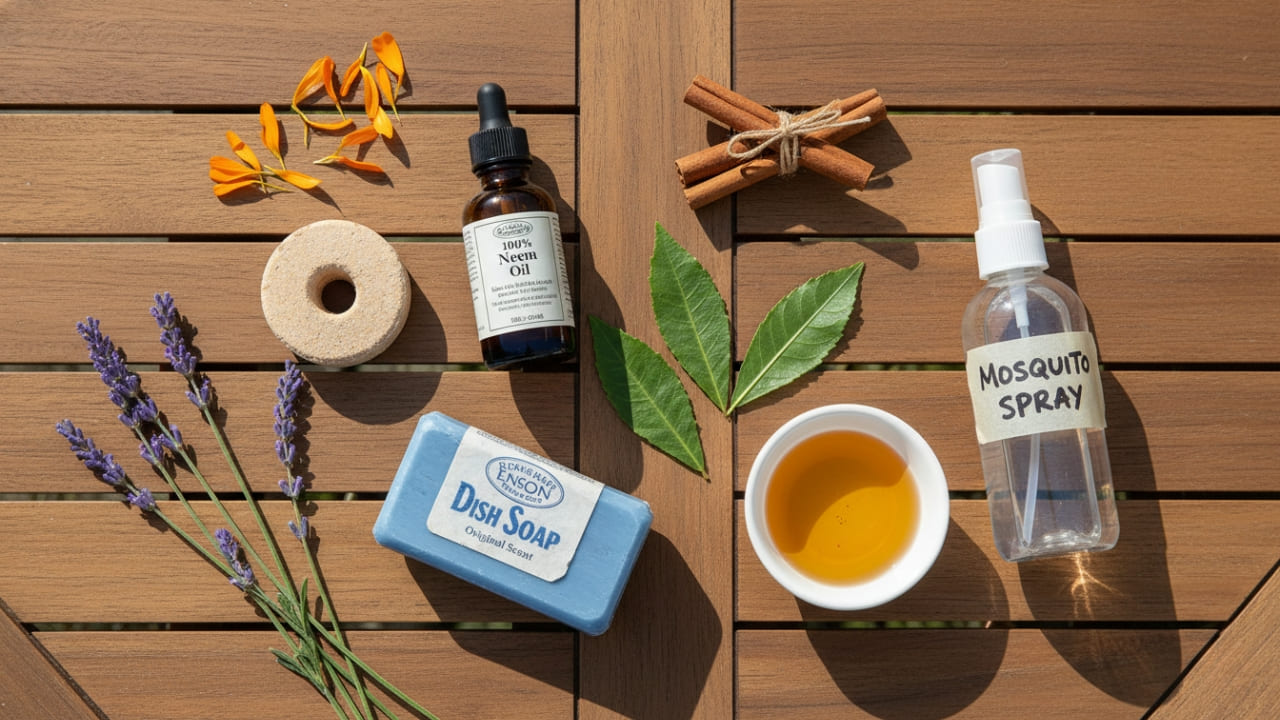
If you prefer low-chemical approaches, here are proven natural methods for pool mosquito prevention:
- Apple cider vinegar: Adding a small amount to standing water on your cover raises acidity and discourages egg-laying, though it’s less reliable than Bti.
- Dish soap: A few drops of liquid dish soap in pooled water breaks surface tension, drowning larvae that need to breathe at the water’s surface. Note: this works for water on the cover, not in the pool itself.
- Neem oil: A natural pesticide derived from the neem tree. Mixed with water and sprayed around pool edges and the cover’s surface, it disrupts mosquito larval development.
- Oscillating fans: Adult mosquitoes are weak fliers. A powerful outdoor fan near the pool area makes it difficult for them to land or breed nearby.
- Cinnamon oil: A 2004 study published in the Journal of Agricultural and Food Chemistry found cinnamon oil to be effective at killing mosquito larvae. Dilute it and apply to cover water.
Long-Term Solutions for Persistent Problems
If you’ve tried the basics and mosquitoes are still a serious problem, it may be time to invest in longer-term infrastructure.
- Automatic pool cover pumps: Set-and-forget devices that activate after rain. Quality units from brands like Little Giant or Wayne retail for $60–$150 and pay for themselves in peace of mind.
- Mosquito misting systems: Installed around yard perimeters, these spray a fine mist of pyrethrin-based repellent on a timed schedule. They significantly reduce adult mosquito populations.
- Professional mosquito treatment: Pest control companies offer seasonal barrier sprays using pyrethroid insecticides applied to vegetation around your yard. Results typically last 3–4 weeks per treatment.
- Bat and bird houses: Encouraging natural predators is a sustainable, chemical-free strategy. A single little brown bat can eat up to 1,000 mosquitoes per hour.
Expert Tips: What Pool Professionals Recommend
Experienced pool maintenance professionals consistently emphasize a few key principles:
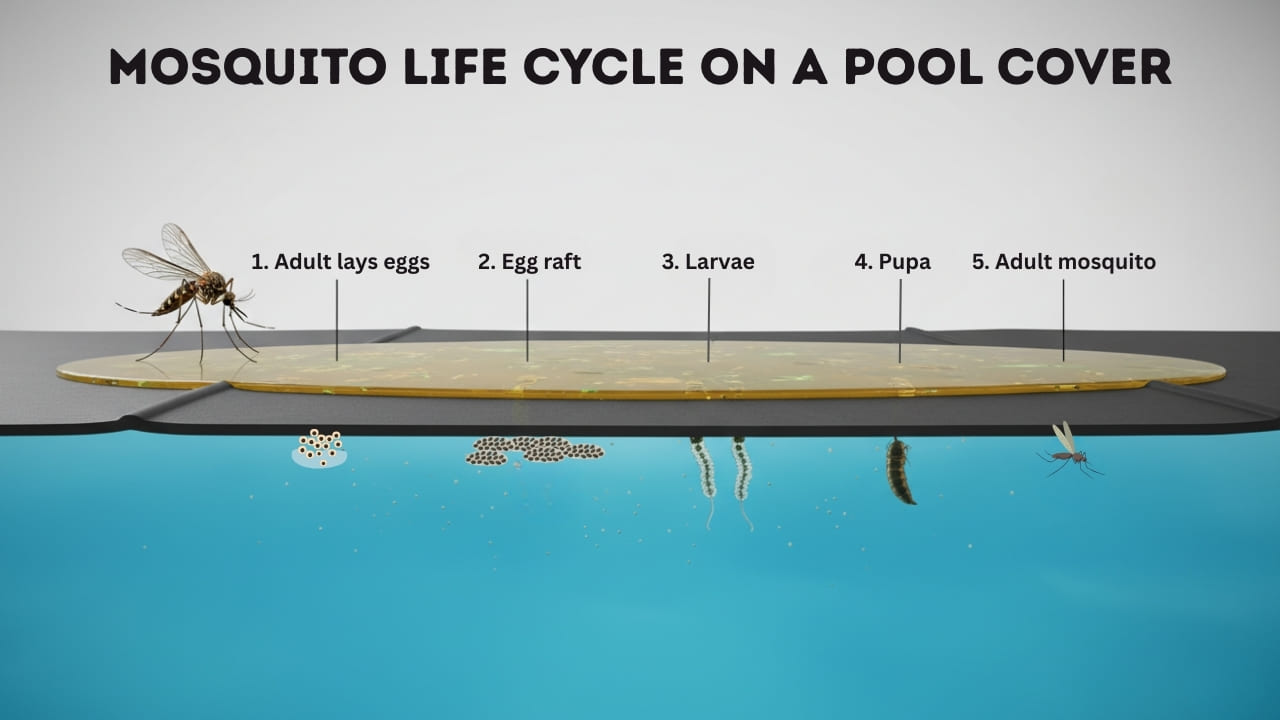
- Never let water sit for more than 48 hours. Mosquito eggs hatch into larvae within 24–48 hours. If you can deny them that window consistently, you break the breeding cycle entirely.
- Treat the cover, not just the pool. Homeowners often maintain perfect pool chemistry while ignoring the cover surface. Remember: your actual pool water, if properly chlorinated, won’t support mosquito larvae. The cover is the problem zone.
- Inspect weekly, act daily if needed. During peak mosquito season, make a habit of checking your cover every morning after rain. Five minutes of prevention beats a summer of infestation.
- Pair prevention with habitat removal. The most effective programs always combine source reduction (eliminating breeding sites) with larviciding (killing larvae in water you can’t drain). Don’t rely on just one strategy.
The American Mosquito Control Association (AMCA) recommends integrated mosquito management — combining biological, chemical, and environmental controls — as the most effective long-term approach for homeowners.
When to Start — and When to Be Most Vigilant
Mosquito season varies by climate, but for most of the US, the highest-risk window runs from May through September. Key moments to be especially vigilant:
- After heavy rain: Inspect and pump your cover within 24 hours.
- When opening your pool for the season: The cover may have harbored breeding populations over spring. Remove it carefully and treat or discard the water.
- When closing the pool in fall: Ensure the cover is tight and well-tensioned before leaving it for winter. A loose cover gathers more water and debris.
The Bottom Line: Your Pool Cover Shouldn’t Work Against You
A pool cover is supposed to protect your investment and keep your backyard enjoyable. But without proper maintenance, it silently becomes one of the most productive mosquito breeding sites on your property.
The solution doesn’t require expensive equipment or professional intervention to get started. It requires consistency and attention:
- Remove standing water within 24 hours of rain.
- Use Mosquito Dunks or natural larvicides as a backup.
- Clean and inspect your cover weekly.
- Address every standing water source in your yard.
Do that, and you’ll reclaim your backyard. Your pool will be the oasis it was meant to be — not a mosquito nursery.
Have you dealt with mosquito breeding in your pool cover? What worked for you? Share your experience in the comments — your tip might be exactly what another homeowner needs this summer.
