
Table of Contents
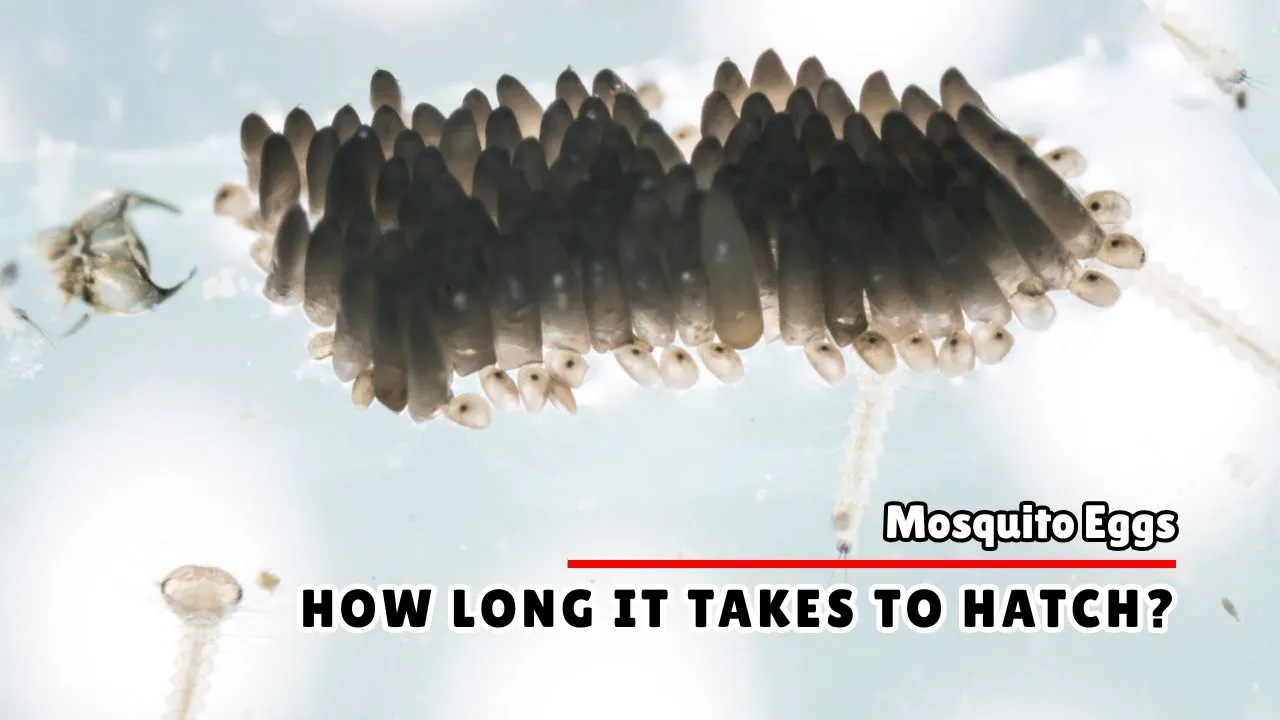
Mosquito eggs in most cases will hatch in 24–48 hours if conditions are optimal, although factors such as temperature, water availability, and species may prolong the time.
Overview of Mosquito Eggs Hatching Time
Most mosquito species lay eggs that get hatched quickly, that is, within one to two days counting from the moment the eggs come into contact with the water. Nevertheless, there are a few species whose eggs can remain dormant for several months or years if the environmental conditions are not favorable; for example, when eggs have been laid on dry land, waiting for it to be flooded in the future.
The speed of hatching depends mainly on the temperature, and warmer water makes the process go faster while cooler water slackens it.
Mosquito Life Cycle: 4 Life Stages
Mosquitoes progress through four major life stages:
- Egg (unhatched, dormant or active)
- Larva (“wriggler”)
- Pupa (“tumbler”)
- Adult (emerged, flying insect)
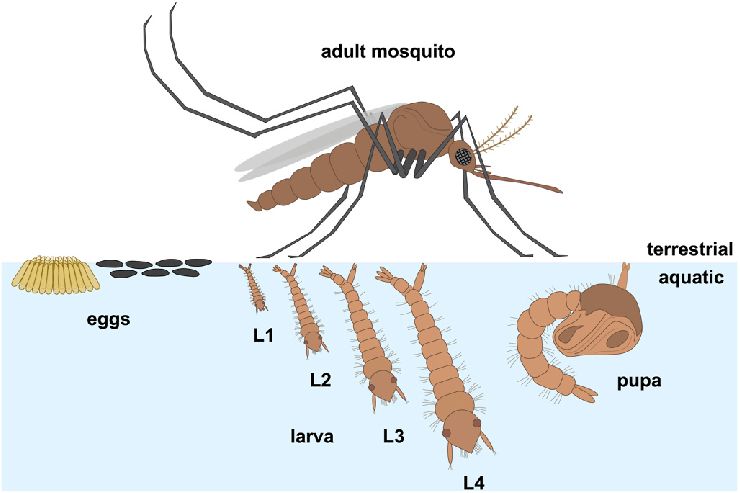
Image Credit: researchgate.net
Development of mosquito eggs is only possible if they are in water or on a watery surface; most eggs hatch in 24-48 hours, but in some cases, the eggs can postpone hatching themselves from dry conditions for a long time while waiting for the suitable moisture.
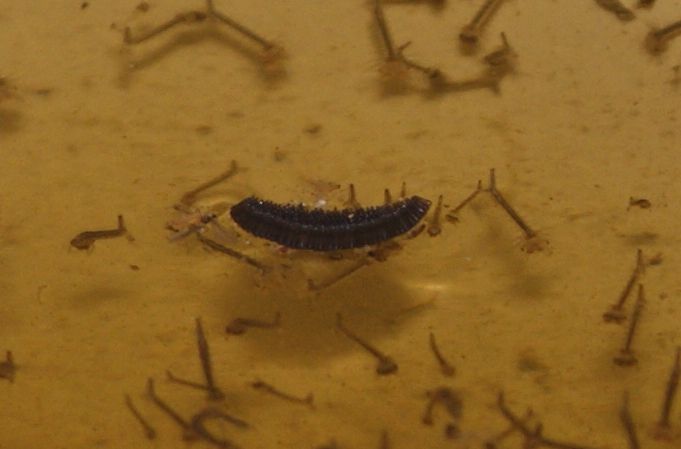
Image Credit: Wikimedia Commons, Küchenkraut
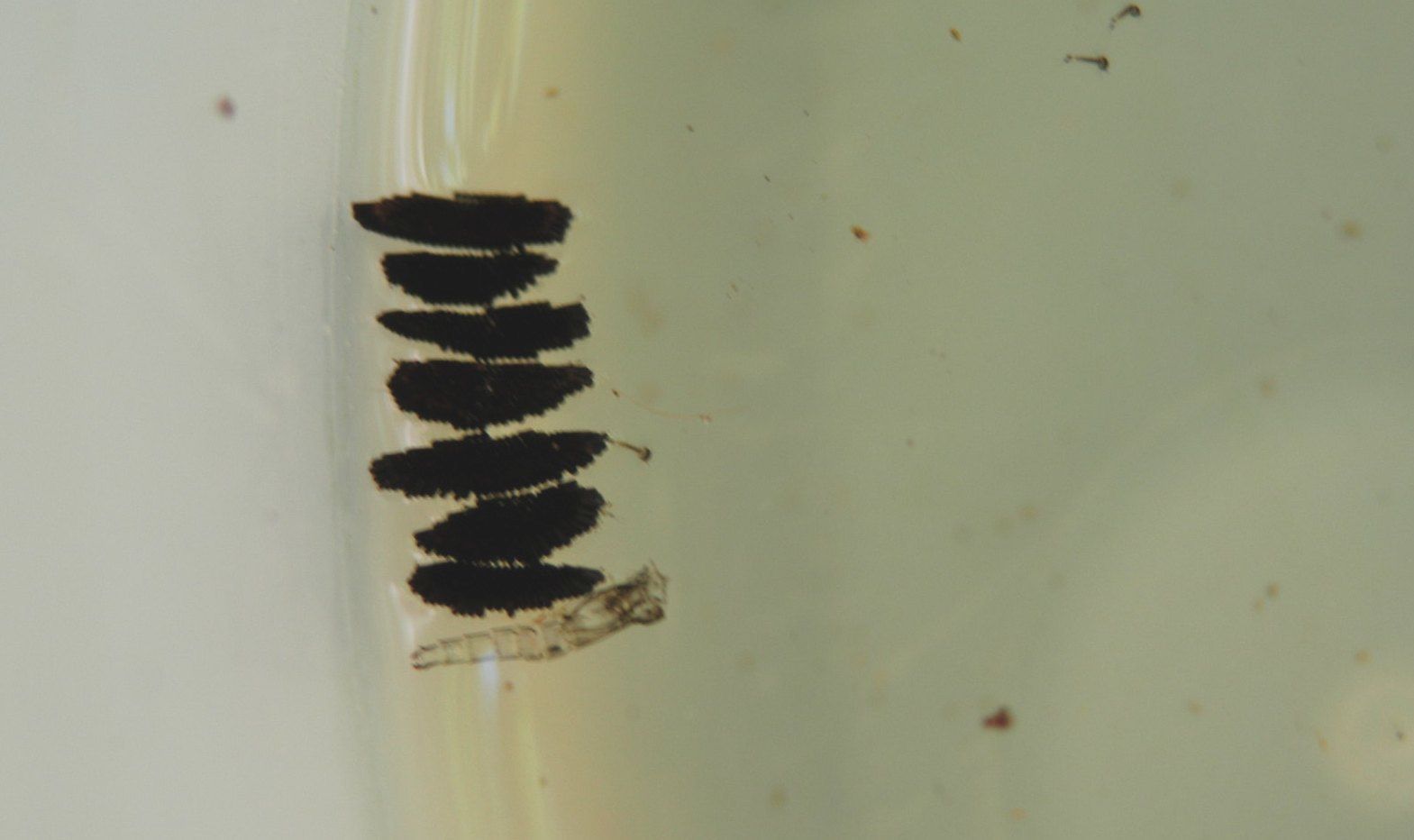
Image Credit: Flickr, Michelle Ress
Mosquito larvae develop through four stages of growth called instars (L1, L2, L3, L4) before they change into pupae. The following are the features of each stage:
- L1 (First Instar): Newly hatched larvae, the smallest in size, begin feeding on micro-organisms and decomposed matter that is found near the water surface.
- L2 (Second Instar): The larvae grow and molt for the first time thus gaining size, feeding, and activity also movement and food search intensify as a result of the larvae.
- L3 (Third Instar): These larvae are bigger in size, molting once again and showing even more vigorous wriggling in order to escape the predators; at the surface continue feeding and respiration.
- L4 (Fourth Instar): The last larval stage—biggest size, strongest and fastest feeding, most resistant to environmental conditions; now the larvae can turn into the pupal stage.
At the time of all instars, mosquito larvae need water for breathing and growing, they use the siphon for air intake at the surface. Once the L4 stage has been completed they become pupae and move to the next stage which is non-feeding and they will only be able to come out as adult mosquitoes.
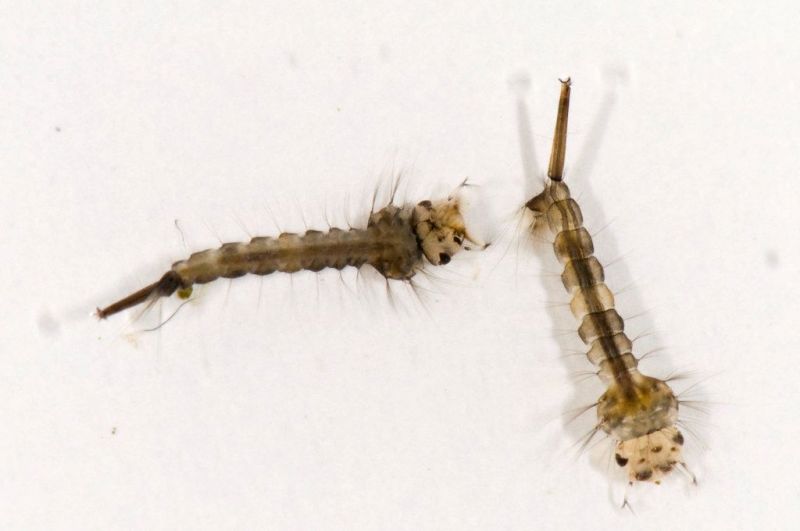
Image Credit: Flickr, Mark Yokoyama
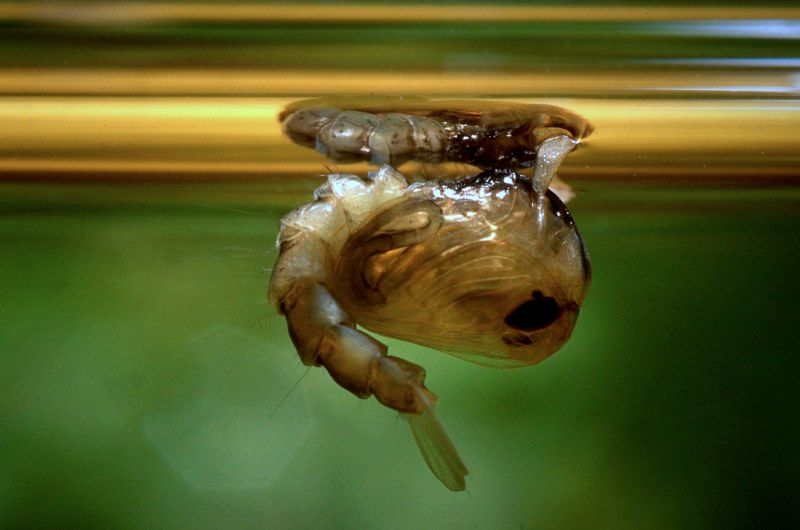
Image Credit: Flickr, Alberto Garcia
Factors That Affect Mosquito Egg Hatching Duration
1. Temperature
- Warm water will quicken the embryo’s growth, thus it will lead to quicker hatching (sometimes less than 24 hours).
- On the other hand, cold climatic conditions or cooler areas will slow down or stop the process of hatching, hence the eggs will stay in a dormant state until the suitable temperatures come back.
2. Mosquito Species
- Culex and Anopheles species usually hatch within a day or two after being submerged.
- Aedes, different from others, may lay eggs on wet lands, damp soils or places that are going to be flooded later. Such eggs can stay in the dormant stage for weeks, months, or even years and hatch only after the flooding.
3. Water and Moisture Levels
- Eggs that are on the water’s surface hatch in a rapid way.
- Eggs laid on mud, damp soil, or flood-prone areas will not hatch unless they are flooded, sometimes the delay is significant.
- Changes in water availability, for example, seasonal rain or irrigation, can act as a trigger for immediate hatching.
4. Oxygen and Light
- An essential requirement for the eggs is the presence of fresh oxygen filled water; on the other hand, the stagnant and polluted water may lose the hatching potential of mosquitoes.
- Some species’ eggs are sensitive to the pattern of the sunlight and mainly hatch in the dark and safe places so that they are not attacked by the predators.
Mosquito Eggs: Survival and Delayed Hatching
1. Diapause and Dormancy
Some mosquitoes, particularly Aedes, implement diapause—a non-active condition caused by factors like daylight and temperature. The diapause gives the eggs the ability to survive extreme drought, freezing, or dry living, and therefore, the eggs hatch only when water continues to return. It is a way to keep the population alive in the unpredictable climate.
2. Overwintering Eggs
Eggs laid in autumn may overwinter, hatching with the return of warmth and moisture in spring or summer. This adaptation allows mosquitoes to synchronize population surges with seasonal conditions.
There is a possibility of eggs that were laid in the autumn time to survive the winter and hatch with the coming of warmth and moisture in the spring or summer. This feature enables mosquitoes to get the timing right for the population surges with the right seasonal conditions.
Mosquito Egg Rafts and Hatching Synchrony
Mosquitoes of certain genera, such as Culex and Culiseta, lay eggs in clusters called egg rafts rather than individually. These egg rafts appear as small, dark specks or rafts floating on the water surface, typically about a quarter inch long and an eighth of an inch wide.
What is a Mosquito Egg Raft?
A mosquito makes an egg raft by gluing eggs together one at a time forming a bunch. One raft can have as few as 50 and as many as 400 eggs depending on the species. The eggs are bound together by a jelly-like material, an excretion of the female, that not only allows the raft to remain on the water but also on water that is not flowing or stagnant like ponds, barrels, ditches or swamps.
Structure and Composition of Egg Rafts
The eggs inside the raft are wrapped in a delicate outer shell named the chorion. Each egg comes with a set of features like micropyles for fertilization and air spaces that help in keeping the egg buoyant.
The gelatinous material found in the raft has the eggs tightly secured so that they do not spread away. This design is an assurance that the eggs stay on the water surface where oxygen exchange can take place which is very important for the growth of the embryos.
Hatching Synchrony in Egg Rafts
The most important characteristic of egg rafts is that the eggs are inclined to simultaneous hatching, that is, within 24 to 48 hours after being laid and exposed to conditions such as heat and moisture. This simultaneous hatching is an evolutionary survival advantage:
- It allows one huge bunch of larvae to be born all at once and therefore the number of predators which can consume them become overwhelmed, thus making survival chances for the young mosquitoes to be higher.
- It is a system that ensures larvae become active feeders and starters of growth programs as one and the same time, thus resources and social behavior like swarming are used in the most efficient way.
Benefits of Egg Rafts and Hatching Synchrony
- Protection: By floating on the water and keeping moisture, egg rafts safeguard individual eggs from sinking or being dried out.
- Survival: Hatching synchrony gives the advantage of sending a vast number of larvae into the environment. Consequently, predators do not have the opportunity to consume all of them.
- Dispersal: The rafts that are floating can be carried by the water flow, hence the eggs can be dispersed to a new place where the larvae have ample food and habitat.
Mosquito egg rafts refer to floating clusters of eggs that are sealed together with a gelatinous material enabling the eggs to stay on the water surface. These rafts hatch synchronously within 24–48 hours resulting in larval survival at the highest rate through predation dilution and environmental synchronization.
Such behavior is common to Culex and associated mosquito species and is geographically widespread. Besides, it is the main factor in their population dynamics and life cycle phase success.
Environmental Impacts on Mosquito Egg Hatching
i) Water Quality
If the water is of poor quality or polluted, the egg hatching can be delayed or completely stopped as a result of which embryos will not be able to develop properly. Aquatic plants and organic debris are sources of safe sites for eggs to be laid but at the same time they could also be the habitats of natural predators or competitors.
ii) Food Supply
Larval development after hatching depends on microorganism abundance in the water, which in turn can influence overall mosquito population dynamics.
iii) Human Influence
- Artificial containers, old tires, and stagnant puddles near houses are excellent breeding places that are responsible for the rapid development of the eggs and thus contributing to urban mosquito problem.
- Moreover, larvicides and water treatments can interfere with hatching, and thus be used as a strategy for the control of diseases transmitted by mosquitoes.
Timeline of Mosquito Egg Hatching and Life Cycle
Deep Reasoning: Why Mosquito Eggs Hatch Quickly
Mosquitoes produce a large quantity of eggs to deal with the high death rates of the larvae and adults. Fast hatching lowers the chances of predation, helps to coordinate larval feeding with the availability of resources, and thus survival in unstable habitats is increased.
The eggs that are put in the water will hatch at the same time as that will repel the predators and a bigger number of the offspring will be able to grow up to adulthood.
Living in dormancy and delayed hatching, populations of Aedes and also some other genera grow in a way that they match seasonal or environmental events, monsoon rains for instance. This ecological strategy allows mosquitoes to persist in habitats that experience cycles of flooding and drying.
📰 Must Read,
✔️ Mosquito Nest: How to Find Mosquito Nest in House?
✔️ What does Mosquito Larvae look like in Water?
Summary: How Long for Mosquito Eggs to Hatch?
Most ideally, larvae hatch from the eggs of mosquitoes within 24–48 hours. Nevertheless, the differences in the temperature, species, and water availability cause diverse results:
- Most common species: 24–48 hours in water
- Eggs laid on soil/dry sites: Weeks, months, or years until flooded
- Larval development: 4–14 days before pupation
- Controls: Removing stagnant water, employing larvicide, and managing breeding areas are the most effective methods to intervene
Mosquito egg hatching is a short, flexible procedure reflecting nature’s cycles that make mosquitoes one of the most persistent and globally impactful insect species.
Frequently Asked Questions (FAQs)
Q. Can mosquito eggs survive drying out before hatching?
Definitely, mosquito eggs of Aedes genus most probably can withstand the dry condition for months. While the eggs take a break from developing inside them, they are waiting for water to come and wake them up to hatch. This feature allows the eggs to prevail in unstable environments.
Q. How does moisture influence mosquito egg hatching?
For mosquito eggs, moisture is the most important thing without which they can neither hatch nor develop. Most of the time eggs are kept in a dormant state and dry until they are so lucky to come into contact with water. Then, the embryos take in the water which makes them grow and hatch within a day or two.
Q. What happens to mosquito eggs that do not hatch immediately?
Eggs that remain unhatched immediately undergoes a dormant mode or a paused state referred to as diapause. Located in this condition, the organism halts all further activities and the eggs stay alive but do not develop actively until the time when good conditions like the supply of water for them to recommence growth and release their young get met.
Q. How does water temperature impact mosquito egg development?
Mosquito egg development and hatching are accelerated if the water is warm, generally, the process takes place within 24 to 48 hours. On the other hand, cold water will slow down this process to the point where hatching will be delayed until the temperature gets higher again. The ideal temperature provides for fast growth and survival of a greater number of the embryos.
Q. Do mosquito eggs hatch faster in warm climates?
Yes. It takes less time for egg hatching in warmer temperatures, with eggs being able to hatch in 24–48 hours in many cases. In cold areas, the development process slows down and eggs may stay dormant for a very long time or not hatch at all unless it gets warm.
Q. How is mosquito egg hatching synchronized in egg rafts?
Mosquito egg rafts are piles of eggs that are laid together on the surface of water. All the eggs in the raft are hatched almost all at the same time, usually, the period between egg laying and hatching is one or two days. This synchronization allows the newborn larvae to survive the surrounding environment by overwhelming the number of predators.
Q. How temperature and salinity alter raft hatch timing?
The perfect temperature (24–30°C) helps in faster egg development, whereas a very hot or cold environment can delay and even stop eggs from hatching. The salt content in the water can also retard or stop the hatching of eggs in the raft and thus, fresh water is the best place for a raft to hatch.
Q. How do different mosquito species vary in their egg hatching times?
The eggs of the mosquitoes of the genus Culex are rapidly developed in the aquatic environment (1–2 days). The species belonging to Aedes are capable of laying eggs on dry land, which could only hatch after being submerged in water; hence, they are capable of waiting for weeks or months to hatch; thus species and habitats have a great impact on egg hatching time.
Editorial Team & Contributors

Raashid Ansari, Founder, Content Researcher & Author - MosquiTalk
Not an entomologist — just a genuinely curious writer who started researching mosquitoes and couldn't stop. What began as casual reading about repellents and bite prevention gradually turned into a deep ongoing dive into vector biology, disease epidemiology, animal health impacts, and the real science behind mosquito control. Everything published here is carefully edited, and written with one purpose: giving readers accurate, accessible information they can actually trust and use to protect themselves, their families, and their pets, birds and cattle.
Active across social platforms, regularly publishes, and genuinely invested in spreading mosquito awareness where it matters most. Because informed readers make better decisions — and better decisions save lives.