
Table of Contents
Mosquitoes seem to ignore some people completely while targeting others relentlessly. If you are someone who gets bitten constantly — at backyard gatherings, evening walks, camping trips — you are not imagining it. Some people genuinely attract more mosquito bites than others, and there is real biology behind it.
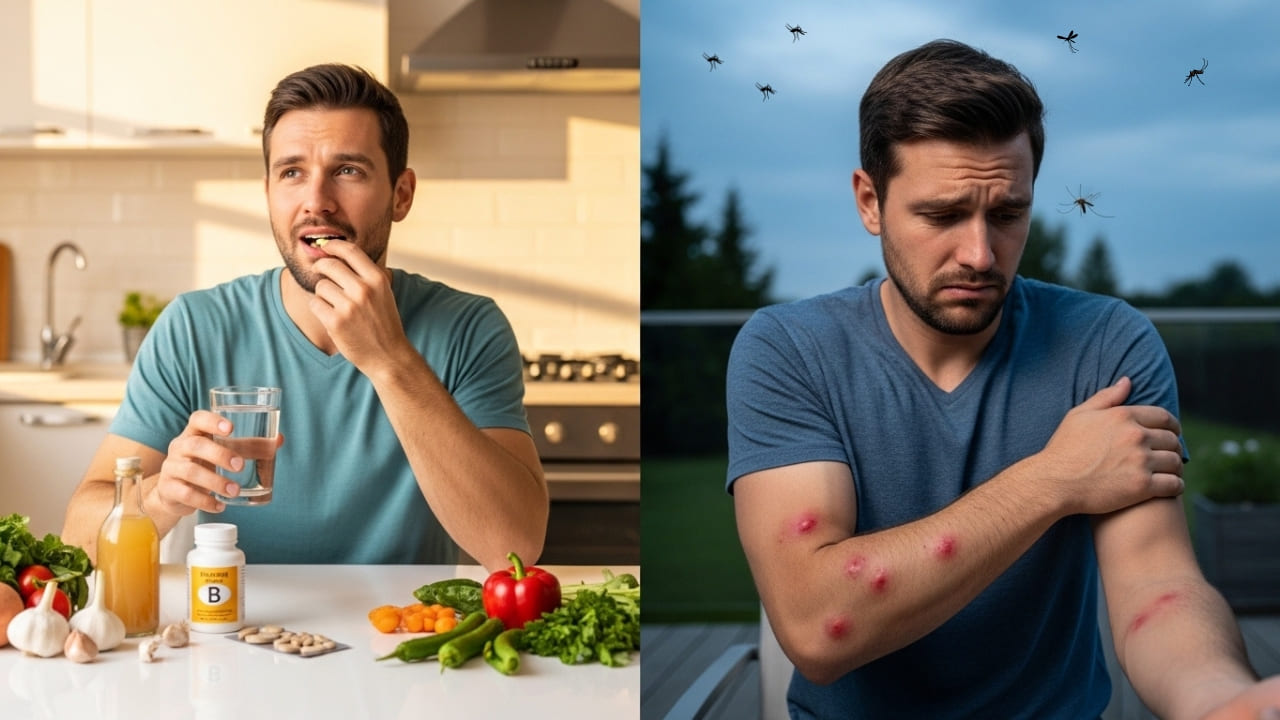
It is a genuinely frustrating experience. And it makes sense that people start looking for an internal solution. If mosquitoes are targeting your blood, your chemistry, your smell — why not change what is coming from inside? That line of thinking has fueled decades of claims about pills and vitamins to take orally to prevent mosquito bites or to repel them. Garlic tablets. Vitamin B1. B complex. Apple cider vinegar capsules.
The question is simple: is there anything you can actually take orally that prevents mosquito bites?
The honest answer is more complicated than most wellness websites will tell you. This article examines the biology behind mosquito attraction, looks at the most commonly claimed oral repellents, and separates what the science actually says from what is just wishful thinking.
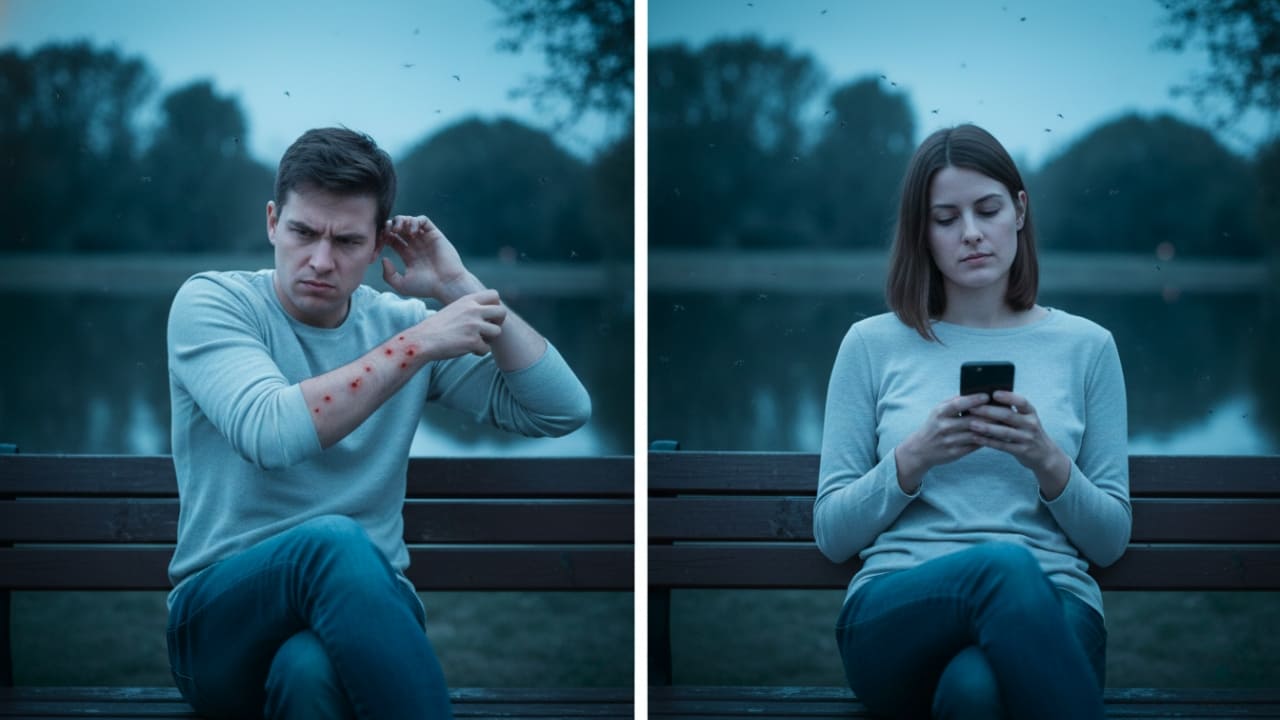
Image Credit: Illustration by Author
Why People Look for Oral Mosquito Repellents
The appeal is obvious. Topical sprays feel greasy. DEET has a chemical smell and causes skin irritation, rashes, or allergic reactions in many people. Applying repellent repeatedly throughout a camping trip or a long outdoor event gets tedious fast. The idea that a daily pill could handle it quietly, from the inside, is genuinely attractive.
Natural health trends have amplified this idea considerably. Social media is full of posts claiming that high-dose vitamin B12 creates a skin odor that mosquitoes hate, or that eating enough garlic will make you invisible to them. These claims circulate constantly. They get shared, repeated, and eventually treated as established fact.
Outdoor workers, hikers, travelers heading to tropical regions, parents of kids who seem to get eaten alive — these are the people most likely to go searching for a supplement-based answer. And the supplement industry has noticed. Products marketed as internal mosquito repellents are widely available despite the lack of clinical backing.
Do Oral Mosquito Repellents Actually Work? The Biology Says Probably Not
To understand why oral repellents are unlikely to work, you have to understand how mosquitoes find you.
Mosquitoes do not rely on sight alone. Their host-seeking process is layered and sophisticated. Carbon dioxide exhaled with every breath is detectable from over 15 meters away. Skin volatile organic compounds — lactic acid, ammonia, carboxylic acids, specific aldehydes — are processed by highly sensitive olfactory receptors. Body heat, body odor and moisture guide the final approach.
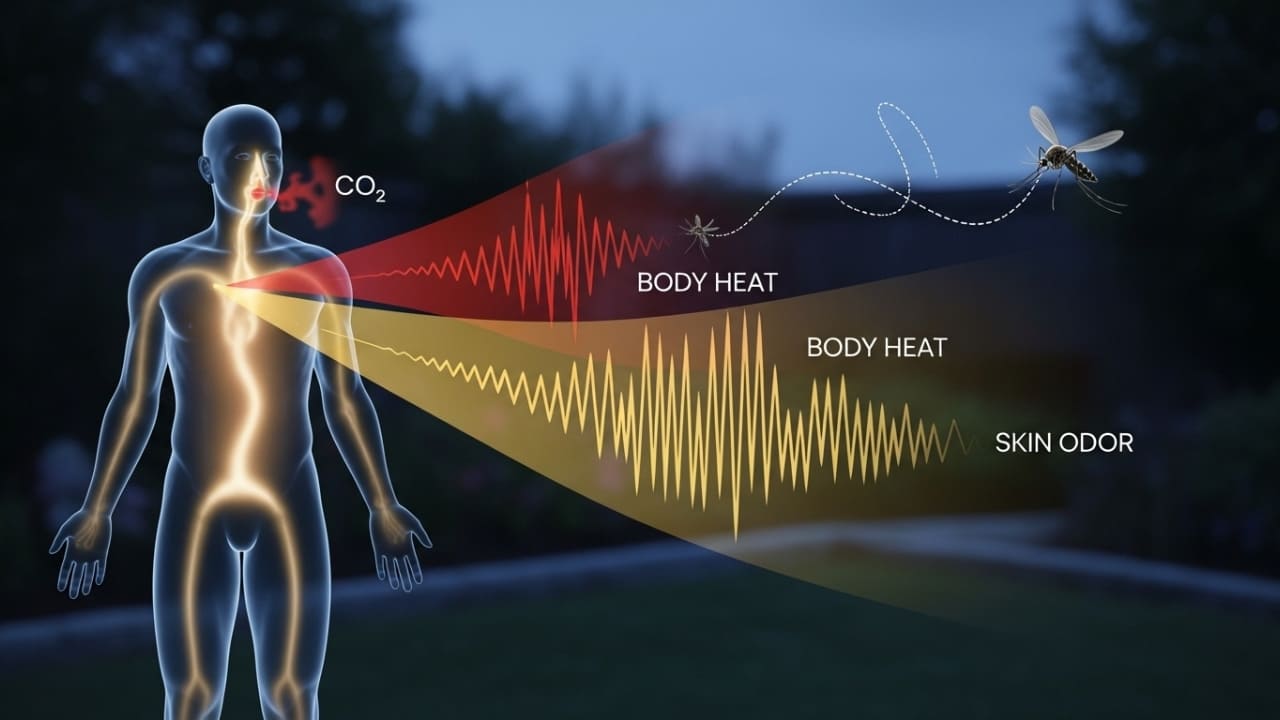
Image Credit: Illustration by Author
The key problem for any oral repellent strategy is metabolism. When you swallow a compound, your digestive system, liver, and kidneys process it. Most substances are broken down, conjugated, and excreted through urine. Very little of what you ingest actually reaches skin surface emissions in concentrations that would meaningfully alter what a mosquito detects.
For an oral substance to repel mosquitoes, it would need to survive metabolism, travel to skin tissues, and be released in quantities large enough to disrupt mosquito olfactory detection — all without causing side effects at those concentrations. That is a high biological bar. Most compounds simply do not clear it.
Vitamin B1 (Thiamine) and Mosquito Bite Prevention
Vitamin B1, also called thiamine, is probably the most persistent oral mosquito repellent myth in circulation. The theory goes like this: excess thiamine is excreted through the skin, creating an odor that is undetectable to humans but repellent to mosquitoes. It sounds plausible. It is not really supported.
A controlled study published in the Journal of the American Mosquito Control Association specifically tested this. Participants taking B1 supplements showed no significant difference in mosquito attraction compared to a placebo group. Other research has reached similar conclusions. There is no randomized controlled trial with consistent positive results.
The scientific consensus among entomologists and vector control researchers is that vitamin B1 supplementation does not reliably repel mosquitoes at standard or even high supplemental doses. The amount that actually makes it to skin surface emissions is simply not enough to register as a deterrent.
That said, thiamine is water-soluble and safe at normal supplemental doses, so people continue experimenting with it. Absence of harm is not the same as presence of effect. It does not work.
Vitamin B12 (Cobalamin) and Mosquito Bites: The Truth
Vitamin B12 has its own separate circle of claims online, distinct from B1 and general B complex. The theory follows a similar logic — that B12 supplementation alters body odor or skin chemistry in ways mosquitoes find repellent. Some posts specifically claim that B12 injections or high-dose sublingual tablets create a noticeable deterrent effect within days.
There is no peer-reviewed evidence supporting this. B12 is water-soluble and tightly regulated by the body — excess amounts are excreted through urine rather than accumulating in tissues or being released through skin. Unlike B1, which at least has been formally tested and found ineffective, B12 has not even reached the stage of being properly studied as a repellent. The claims exist entirely in the anecdotal space.
People who report fewer bites after starting B12 supplementation are most likely experiencing a placebo effect, seasonal variation, or coincidental changes in behavior — not a genuine chemical deterrent. B12 is essential for neurological health and worth taking if you are deficient. It will not stop mosquitoes.
Claims Supporting Garlic to Take Orally to Prevent Mosquito Bites
Garlic gets mentioned constantly in this conversation. The active compound is allicin, which does have documented effects in laboratory settings on various insects. The problem is translating that from a lab dish to a functioning human body.
When you eat garlic, allicin is rapidly metabolized. Some sulfur-containing byproducts do make it to breath and to a minor degree skin, which is why garlic breath is a real phenomenon. But the concentrations reaching skin surface at dietary levels are far below what any study has shown to produce a repellent effect on mosquitoes in field conditions.
Garlic Tablets to Prevent Mosquito Bites
Garlic tablets and concentrated allicin supplements are a step up from simply eating garlic at meals — but they do not change the outcome meaningfully. The higher allicin concentration in supplement form does push more sulfur compounds into circulation, but the liver still processes the majority of it before it reaches skin surface emissions.
Studies looking specifically at garlic supplementation for insect repellency have not produced results that hold up under controlled conditions. The tablet form is more convenient than raw garlic, but convenience does not make an ineffective mechanism effective.
There are occasional small studies suggesting minor effects, but none have been replicated at scale or under conditions resembling real-world exposure. Anecdotal reports are plentiful. Controlled evidence is not.
The same general problem applies to other food-based approaches — eating more citrus, taking herbal supplements, consuming spicy foods. The human body is remarkably good at processing and neutralizing these compounds before they influence what mosquitoes detect from your skin.
Is Liquid Garlic Different From Garlic Tablets or Raw Garlic?
Liquid garlic extract is often claimed to be more potent than tablets or raw garlic because allicin is more bioavailable in liquid form — and that part is actually true. The problem is that higher bioavailability does not fix the core issue. The liver still metabolizes the majority of it before anything meaningful reaches skin surface emissions.
Where liquid garlic shows the slightest real-world relevance is not as something you swallow but as a topical spray applied directly to skin, bypassing metabolism entirely — a few small studies suggest very short-duration repellent activity of around 20 to 40 minutes in that form. As an oral solution for mosquito bite prevention, liquid or not, the evidence simply is not there.
📚 Read More: What Foods can you Eat to Repel Mosquitoes? →
Other Supplements Often Claimed to Repel Mosquitoes
A few others come up regularly enough to address directly.
Vitamin B Complex
Often sold alongside B1 claims. No human clinical trials support B complex as a mosquito repellent. The B vitamins are water-soluble and excreted efficiently. Megadosing does not meaningfully change skin odor chemistry in ways mosquitoes respond to.
Apple Cider Vinegar
Frequently claimed to change body pH and alter attractant chemicals. The body tightly regulates blood and skin pH regardless of what you consume. Ingesting vinegar does not meaningfully shift the volatile compounds emitted from skin surface. Evidence is entirely anecdotal.
Herbal Supplements
Products containing neem, catnip extract, or essential oil capsules are marketed occasionally as internal repellents. Catnip’s active compound nepetalactone has shown repellent properties in topical applications, but oral bioavailability to skin surface at useful concentrations has not been demonstrated. Neem has some evidence in topical form. Oral? Not established.
Evidence Summary: Oral Claims vs. Topical Methods
| Substance | Claim | Evidence Status | Verdict |
| Vitamin B1 (Thiamine) | Makes skin odor unappealing to mosquitoes | Multiple RCTs found no significant effect. No consistent human evidence. | Myth — not supported |
| Garlic / Allicin | Allicin excreted through skin repels mosquitoes | Very limited lab data. No field trial evidence in humans at dietary doses. | Insufficient evidence |
| Vitamin B complex | Alters body chemistry to deter biting | No peer-reviewed human studies support this claim. | No evidence |
| Apple Cider Vinegar | Changes body pH or odor to repel mosquitoes | Anecdotal only. No scientific studies in humans. | No evidence |
| DEET (topical) | Disrupts mosquito olfactory receptors on contact | Extensive human trial data. CDC and WHO endorsed. | Strongly supported |
| Picaridin (topical) | Blocks odor detection at close range | Multiple efficacy studies. CDC recommended. | Strongly supported |
What to Eat to Reduce Mosquito Bites: Are There Any Real Options?
Most oral claims fall apart under scientific scrutiny. But that does not mean diet has zero role. A few dietary patterns show modest, plausible biological connections to mosquito attraction — not miracle cures, but worth knowing.
The honest framing: nothing you eat will replace a topical repellent. But certain foods may nudge your body chemistry in a less attractive direction for mosquitoes.
Foods That May Modestly Help:
- Tomatoes and tomato-based foods — Rich in thiamine (B1) naturally. While B1 supplements show no reliable effect, some researchers suggest dietary thiamine from whole foods behaves differently in the body than isolated supplements. Evidence is weak but biologically plausible.
- Chili peppers and capsaicin-rich foods — Capsaicin temporarily increases body temperature and alters sweat composition. Some early research suggests this may slightly modify skin volatile emissions. Effect is short-lived and modest at best.
- Foods high in zinc — Pumpkin seeds, chickpeas, lentils, beef. Zinc influences skin microbiome composition, and a healthier, more balanced skin microbiome has been loosely associated with lower mosquito attractiveness in small studies. Not conclusive, but biologically sensible.
- Apple cider vinegar in food (not supplements) — As a condiment or dressing, negligible effect on body chemistry. As an oral supplement capsule, also negligible. Neither form has clinical backing, but it does no harm as a food ingredient.
- Staying well hydrated — Not a food exactly, but dehydration concentrates certain skin volatile compounds. Adequate hydration keeps skin emission chemistry closer to baseline. Low-evidence but zero downside.
Foods That Likely Make Things Worse:
- Alcohol — Consistently linked in research to increased mosquito attraction. Raises skin temperature, increases ethanol emissions through skin, and elevates CO₂ output slightly. Beer in particular has been specifically studied with measurable effects on attractiveness.
- High-sugar foods and drinks — Some evidence suggests elevated blood sugar levels can alter sweat chemistry in ways mosquitoes find more attractive. Effect is indirect and individual.
- Bananas — A persistent internet claim that bananas attract mosquitoes. Evidence is anecdotal and not supported by controlled research. Probably not worth avoiding.
The Realistic Takeaway
No single food will protect you from mosquito bites. Diet alone is never going to outperform a topical repellent. But reducing alcohol before outdoor evenings, staying hydrated, and eating a diet that supports a healthy skin microbiome are all low-effort, zero-risk adjustments that may take the edge off — slightly.
Think of it as background support, not frontline defense.
Why Mosquito Attraction Varies Between People
This is worth spending a moment on, because it explains why some people get wrecked by mosquitoes and others barely notice them.
Research into mosquito host preference has identified several consistent factors. CO₂ output varies with body size and metabolic rate — larger people and pregnant individuals produce more, which increases detection range. Skin microbiome composition influences which volatile compounds are present on the skin surface; certain bacterial communities produce compounds that are more attractive to specific mosquito species.
Blood type O has been associated with higher mosquito preference in some studies, though the mechanisms are not fully understood. Exercise increases lactic acid production, body heat, and CO₂ output all at once — a triple signal that significantly elevates attractiveness. Alcohol consumption has also been linked to increased biting rates, possibly through changes in skin temperature and ethanol emissions.
None of these factors are easily modified by swallowing a supplement. Body odor chemistry is shaped by genetics, microbiome, and metabolic patterns that no pill currently addresses at the level mosquitoes operate on.
What Actually Works to Prevent Mosquito Bites
The evidence-based answer is not glamorous, but it is consistent across decades of research.
Topical repellents applied directly to skin remain the most effective individual-level protection. DEET at concentrations of 20 to 30 percent provides several hours of reliable protection and has an extensive safety record when used as directed. Picaridin is comparably effective, with a lighter feel and no plasticizer properties. Oil of lemon eucalyptus is the strongest plant-based option with CDC endorsement and reasonable duration of effect.
Environmental controls — eliminating standing water, using window screens, running fans to disrupt mosquito flight — work at the situational level and reduce exposure without requiring any skin application.
Permethrin-treated clothing provides protection through contact repellency and is especially useful for extended outdoor exposure.
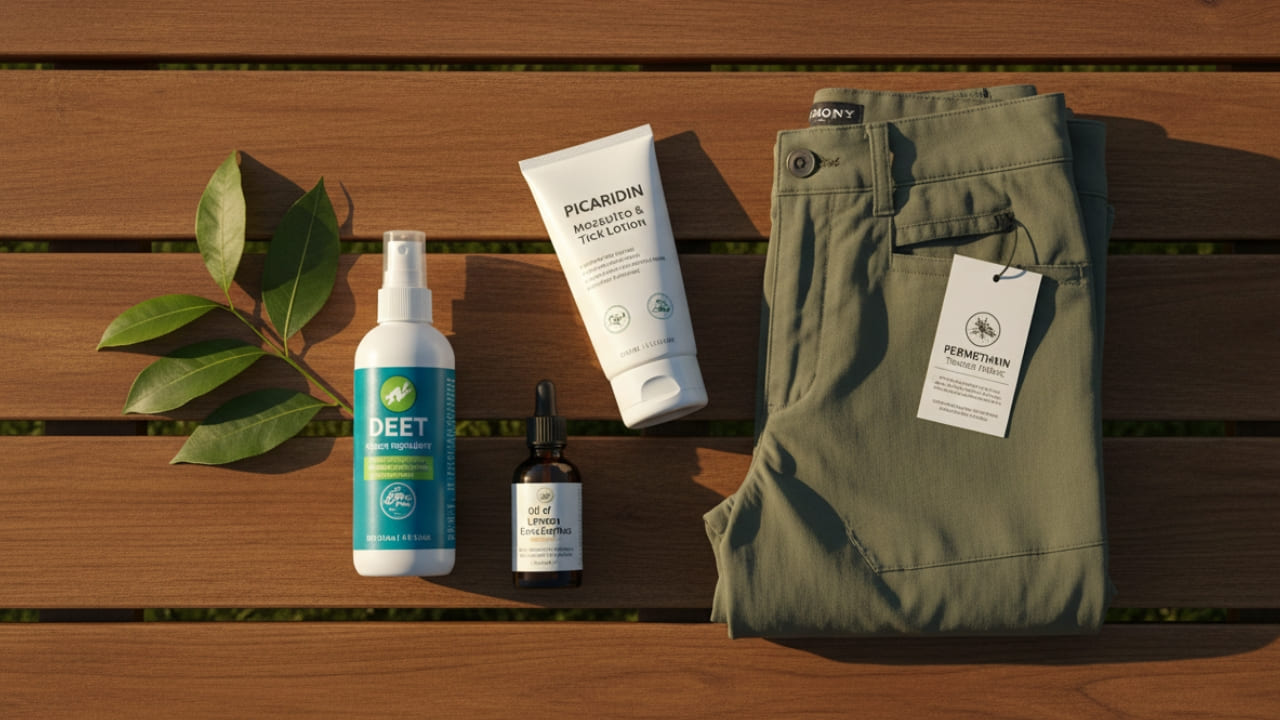
Image Credit: Illustration by Author
These are not exciting answers. They do not have the appeal of a daily supplement. But they work, which is what matters when you are trying to enjoy your yard in August.
📰 Must Read,
✔️ 12 Hacks to Make Your Mosquito Spray Last Longer Outdoors
✔️ Essential Oils That Repel Mosquitoes Better Than DEET
Conclusion
There is currently no pill, vitamin, or oral supplement with consistent scientific evidence proving it prevents mosquito bites.
Vitamin B1 has been tested and found ineffective in controlled conditions. Garlic works conceptually in a lab but not in a body. Apple cider vinegar and B complex supplements have no credible human trial data supporting mosquito repellent effects. The biology of digestion and metabolism makes it genuinely difficult for any ingested compound to alter skin emissions at the concentrations needed.
If you are someone who gets bitten constantly, that experience is real and worth taking seriously. The answer just is not in a supplement bottle. It is in a well-placed repellent, a fan on the patio, and a yard with no standing water.
The science on this is not particularly controversial. It is just not what most people want to hear.
Frequently Asked Questions (FAQs)
-
Q. Is there any pill that actually prevents mosquito bites?
Honestly, no. Nothing available over the counter has consistent clinical evidence behind it. People try B1, B12, garlic supplements — none of them have held up in controlled studies. The idea is appealing but the biology just does not cooperate.
-
Q. Does vitamin B1 really repel mosquitoes?
This one has been tested properly, which is more than most oral repellent claims can say. The results were not good. Multiple studies found no meaningful difference between people taking B1 and people taking a placebo. It gets repeated online constantly though, which is why it keeps feeling like established fact. It is not.
-
Q. Why do mosquitoes bite some people more than others?
Mostly body chemistry. CO₂ output, skin microbiome, lactic acid levels, body heat — mosquitoes are picking up on all of it simultaneously. Blood type O seems to play a role in some research. Exercise right before going outside is basically a mosquito invitation. It is genuinely not in your head if you always seem to get hit the worst.
-
Q. Does eating garlic keep mosquitoes away?
Not really. There is a kernel of biological logic to it — allicin does have insect-affecting properties in lab conditions. But your liver handles most of it before it gets anywhere near your skin surface. The mosquito is not going to notice you had garlic bread at dinner. Liquid garlic applied directly to skin is a slightly different story, but even then the effect is weak and short.
-
Q. Can drinking apple cider vinegar prevent mosquito bites?
No evidence for this at all. The body regulates its own pH tightly regardless of what you drink — apple cider vinegar does not change what your skin is emitting in any measurable way. It is one of those remedies that sounds logical on the surface but falls apart the moment you look at the actual physiology involved.
-
Q. Does alcohol make mosquito bites worse?
Yes, this one actually has some backing. Alcohol raises skin temperature, slightly increases CO₂ output, and pushes ethanol through skin emissions. Beer specifically has been studied. If you are already someone mosquitoes prefer, drinking outside is probably not helping your situation. Not saying avoid it — just worth knowing.
-
Q. What is the most effective way to prevent mosquito bites right now?
Topical repellent on exposed skin. DEET at 20 to 30 percent, picaridin, or oil of lemon eucalyptus if you want a plant-based option with actual evidence behind it. A fan running nearby disrupts their flight more than most people realize. And eliminating standing water around your yard deals with the source, which beats any repellent strategy long term.
-
Q. Are natural oral repellents safer than DEET?
Safe, yes. Effective, no. B vitamins and garlic supplements are harmless at normal doses. But safe and effective are two completely different things. DEET has decades of safety data when used correctly — the reputation it has is mostly undeserved. For people with genuine DEET skin reactions, picaridin is the cleaner alternative. An oral supplement that does nothing is not actually a safer choice, it just feels like one.
