
Table of Contents
Why Attract Dragonflies?
Dragonflies are really interesting insects that not only eat pests like mosquitoes but also make sure that garden ecosystems are balanced. Bringing dragonflies into your garden can be a natural way of enriching biodiversity and lowering the number of insect that cause you a nuisance.
Dragonflies need both aquatic and terrestrial plants for the different stages in their life cycle-from water larvae to flying adults. The guide mentioned here provides information about all the plants that attract dragonflies, even those that are used for shelter, source of food, and perching sites by these aerial hunters.
Dragonflies are natural predators that consumes hundreds of mosquitoes every day along with other small flying insects such as midges, flies, and gnats. Besides pest control, they also indicates healthy wetland and garden habitats. Having a dragonfly-friendly garden is a step to greater biodiversity, aesthetics, and your garden’s ecological balance.
Different Categories of Dragonfly-Attracting Plants
A] Aquatic Plants (Pond and Water-Edge Plants)
Dragonflies spend much of their early life underwater as larvae, so aquatic plants are the ones that are necessary for these creatures in the aspect of shelter, egg-laying, and growth.
1. Water Lily (Nymphaeaceae)
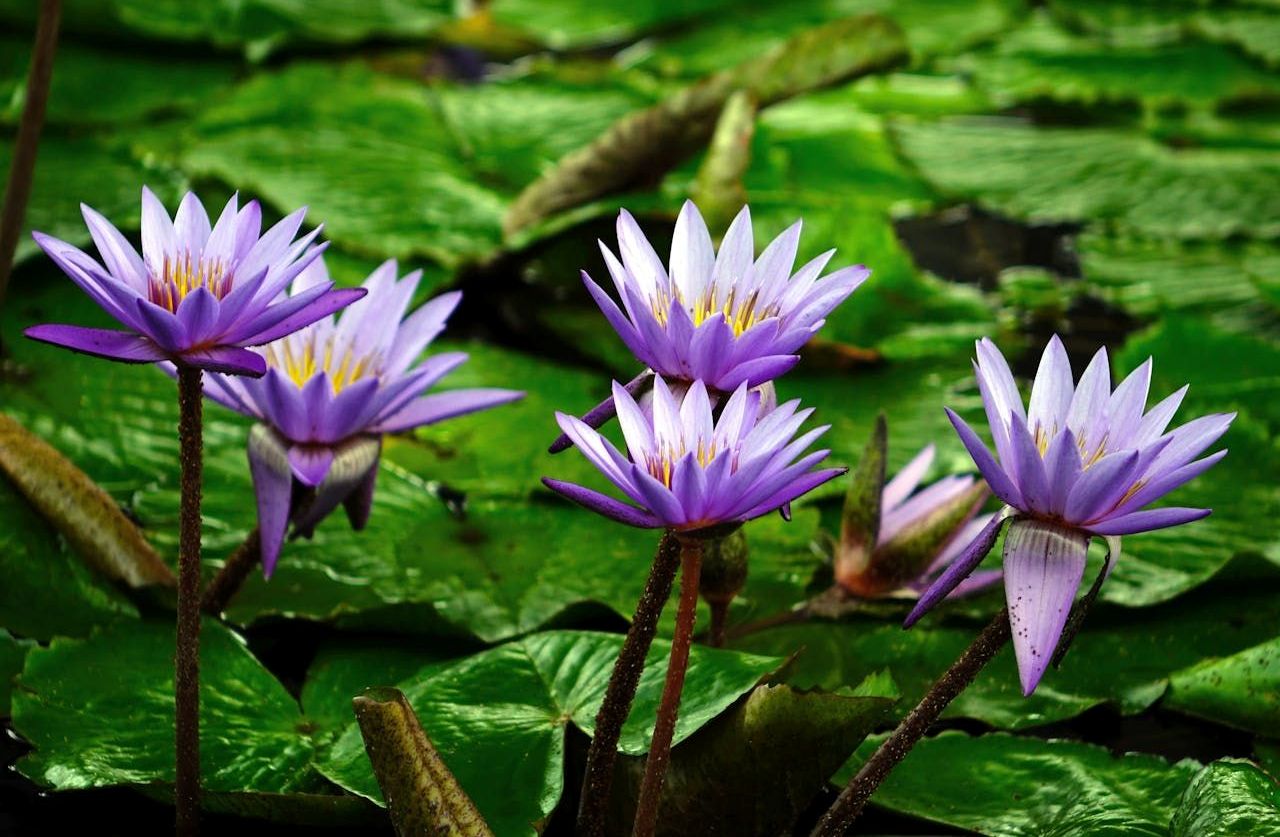
Image Credit: Pexels, Pixabay
Water lilies not only give dragonflies their cover from predators but also keep them in touch with the world above. Their big leaves become optimal resting places for adult dragonflies as they can perch and catch their prey nearby. The shade formed by these pads plays a major role in water temperature and light penetration, thus creating cooler areas which are very important for dragonfly larvae to survive in the water.
Dragonfly larvae are thus found between the completely submerged branches and roots of water lilies, in this place, they are sheltered from fish, which are their predators. Besides that, water lilies by means of their fragrant flowers lure in many pollinators which consequently feed the adult dragonfly indirectly.
The plant usually prospers in a very rich pond with no strong wind, an ample sun is exactly what it needs to flourish again when rooted in light substrates.
These plants do not only attract biodiversity, but also contribute greatly to water quality by minimizing the algae growth, and aesthetically water sceneries are made more beautiful by them – most importantly, these are the perfect environmental conditions that dragonflies need for their life cycle.
2. Pickerelweed (Pontederia cordata)
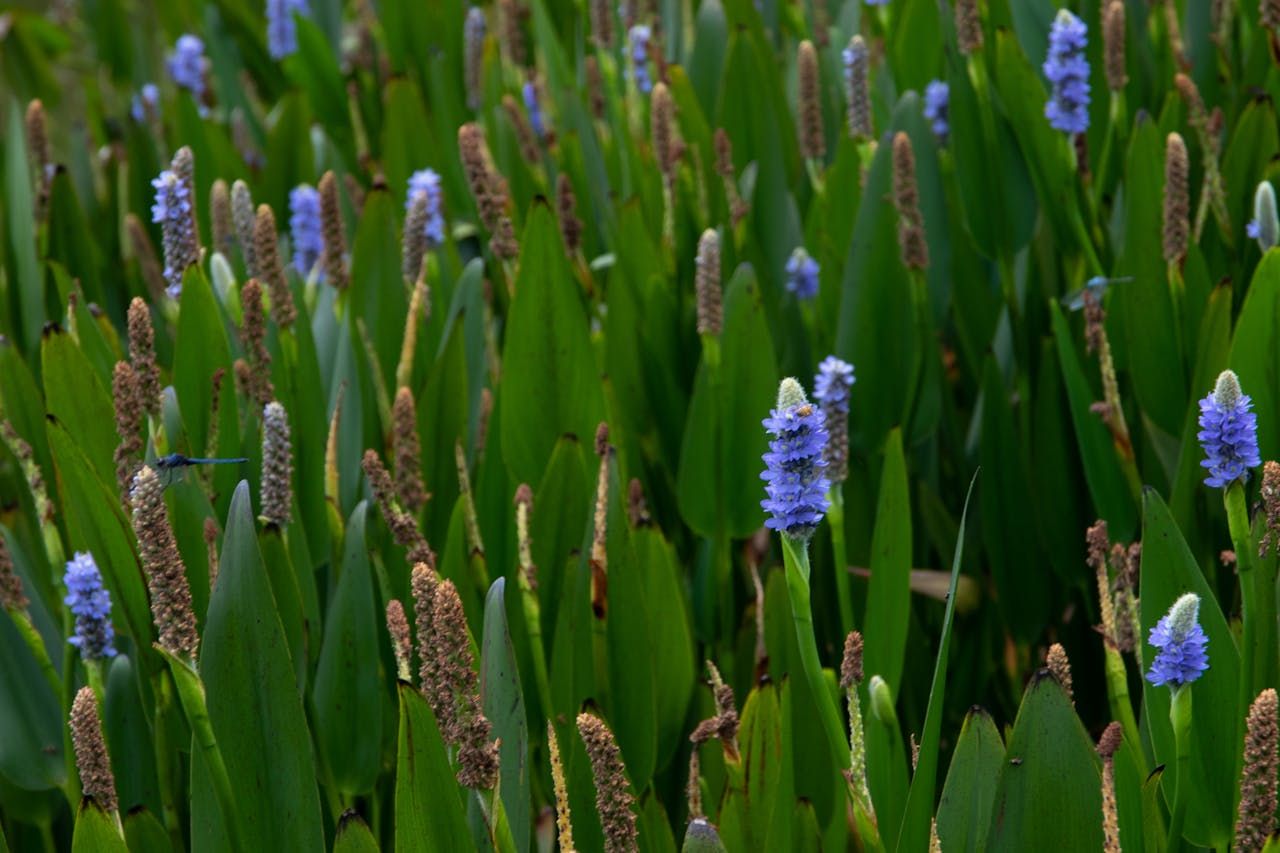
Image Credit: Pexels, Magda Ehlers
Pickerelweed is an eye-catching emergent aquatic plant that is originally from North America which grow along the edges of ponds and other wetlands. It provides not only the heart-shaped, glossy green foliage but also tall spikes of deep blue-purple flowers which bloom from late spring until fall.
Besides, for its nectar-rich flowers this plant makes a wonderful natural resource for pollinators such as bees and butterflies and the latter in turn provide a vast source of prey for adult dragonflies.
The tall, upright leaves and flowers of the plant serves as multipurpose structures which dragonflies use for resting and hunting. At the same time the deeply submerged stems and foliage of pickerelweed are the places where the larvae can find a shelter from violent water currents and other predators.
Moreover, pickerelweed is an excellent stabilizer of pond banks due to the presence of dense rhizomes, and this in turn improves water quality through the filtration of sediments and nutrients in excess.
Of course, planting pickerelweed in the shallow water or along the edges of a pond is a great way to provide dragonflies with the habitat they need – a combination of shelter, food availability, and opportunities for structural perching.
3. Broadleaf Arrowhead (Sagittaria latifolia)
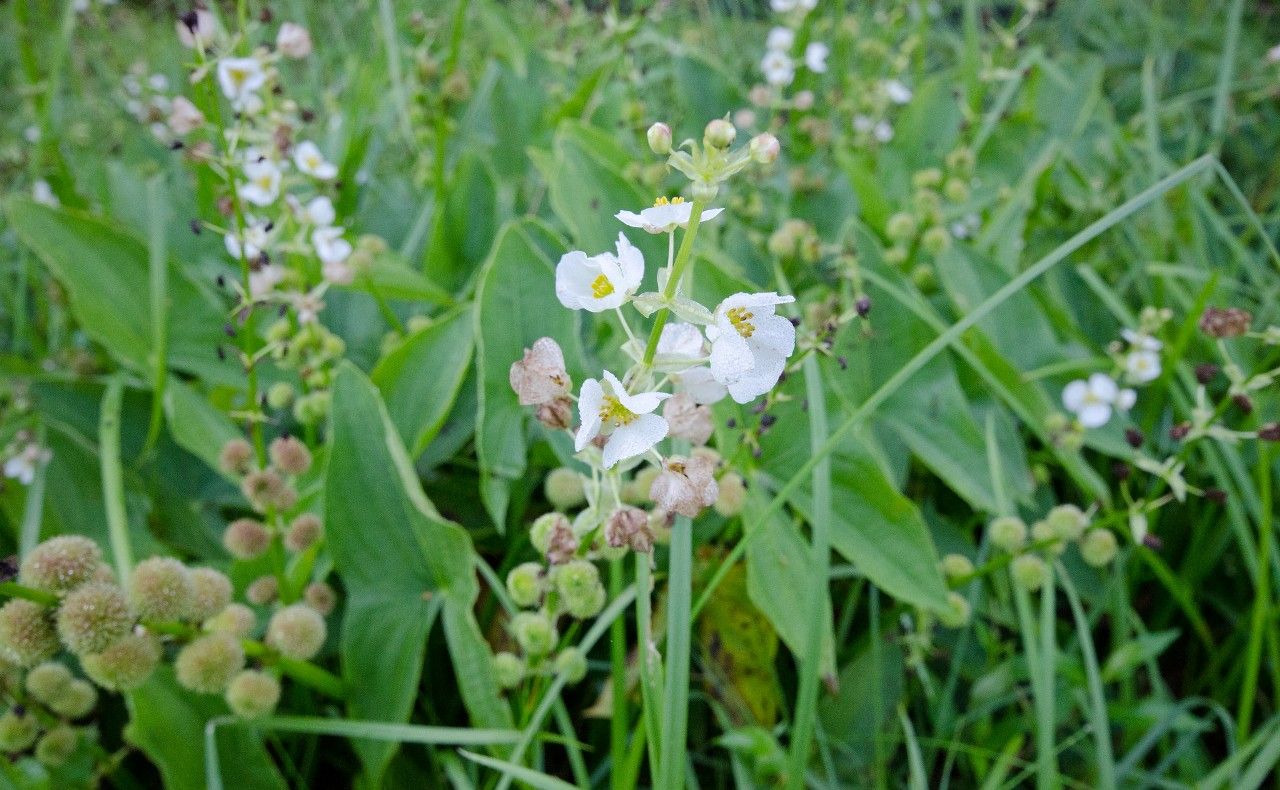
Image Credit: Flickr, Suzanne Cadwell
Broadleaf Arrowhead is a semi-aquatic, growing in marshes that can also be found in shallow lakes and river edges. The plant got its name from the unique, arrowhead-shaped leaves that characterize the species and are the most visible part of the plant as they stand above water on their strong stalks.
In the period from mid-summer to autumn, the small white flowers emerge and attract pollinators as prey for the dragonflies.
The leaves and stalks of the plant serve as natural perches for adult dragonflies, thus, they can easily sight their prey and also perform other activities like hunting and territorial defense. Besides the larvae are also protected in the submerged stems and root masses which are the places they can hide from aquatic predators such as fish.
From the ecological point of view, broadleaf arrowhead helps sediment stabilization in water bodies, supports aquatic biodiversity, and assures water quality. Homeowners who want to create a habitat rich in dragonflies and having a pond will get great advantages from the adaptability of this plant to different water depths and its strong native growth habit.
4. Water Horsetail (Equisetum fluviatile)
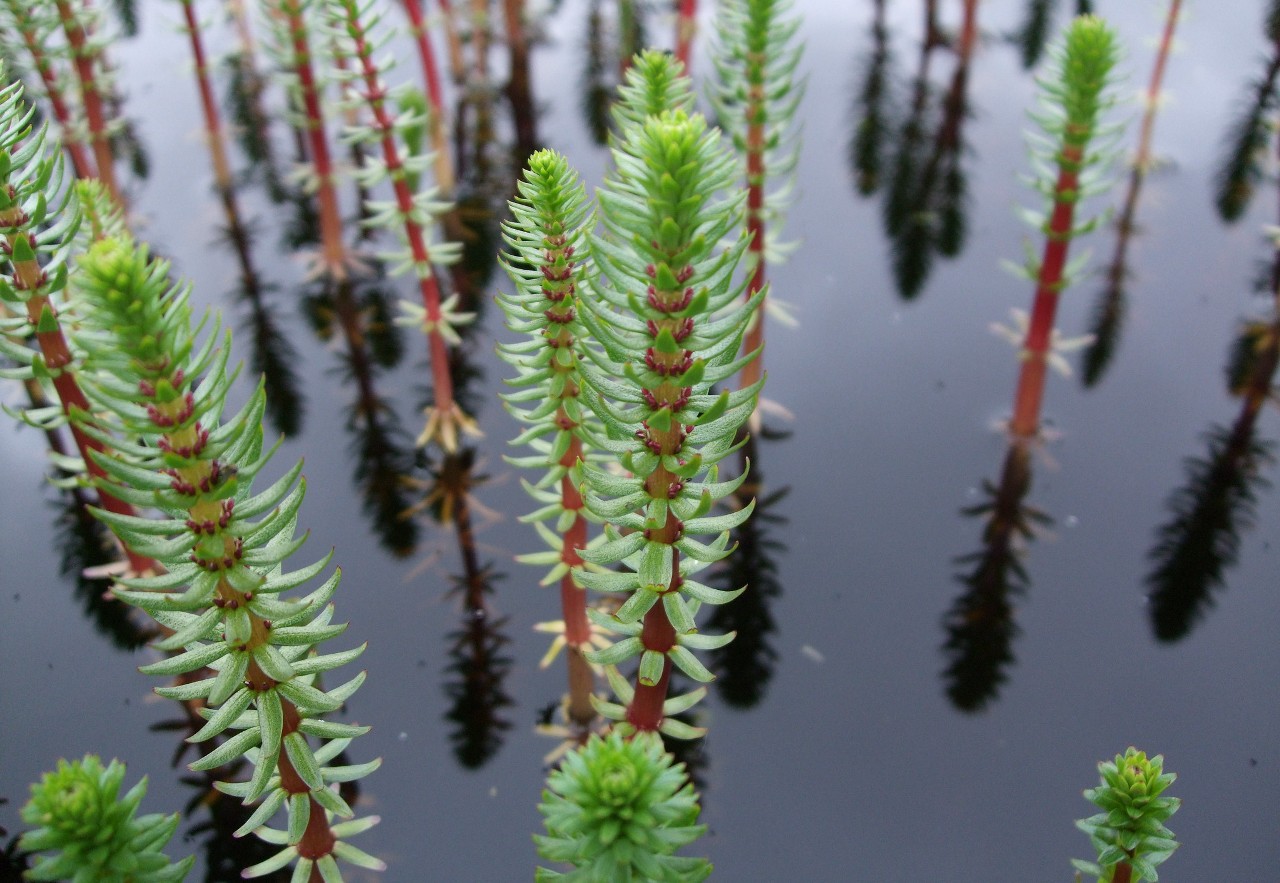
Image Credit: Flickr, Alaska Region U.S. Fish & Wildlife Service
Water Horsetail is a reed-like aquatic plant with green hollow, jointed stems that look like thin bamboo. It is a water plant that grows well in marshes, swamps, and shallow ponds. Horsetail to a large extent vegetates rapidly that it can invade practically all the area with its dense colonies either on wet soil or submerged conditions.
The straight, firm, and typical features of this plant are what make it common for the dragonflies as they can find several resting points for a short time and also easily start their flights. Their rooting and stem systems underwater become strong shelters for dragonfly larvae as they provide protection against predators and the force of water flow.
From the ecological point of view, horsetail, first of all, leads to bank stabilization, sediment retention, and water filtration. This elemental complexity in water bodies not only attracts dragonflies but also a variety of invertebrates and fish species.
Since the water horsetail grows very fast and takes up a fairly dense form, it is quite common to find it being used in wetland restoration and natural pond landscaping to create the habitats that can sustain dragonfly populations and thus ensuring their survival.
5. Cattails (Typha spp.)
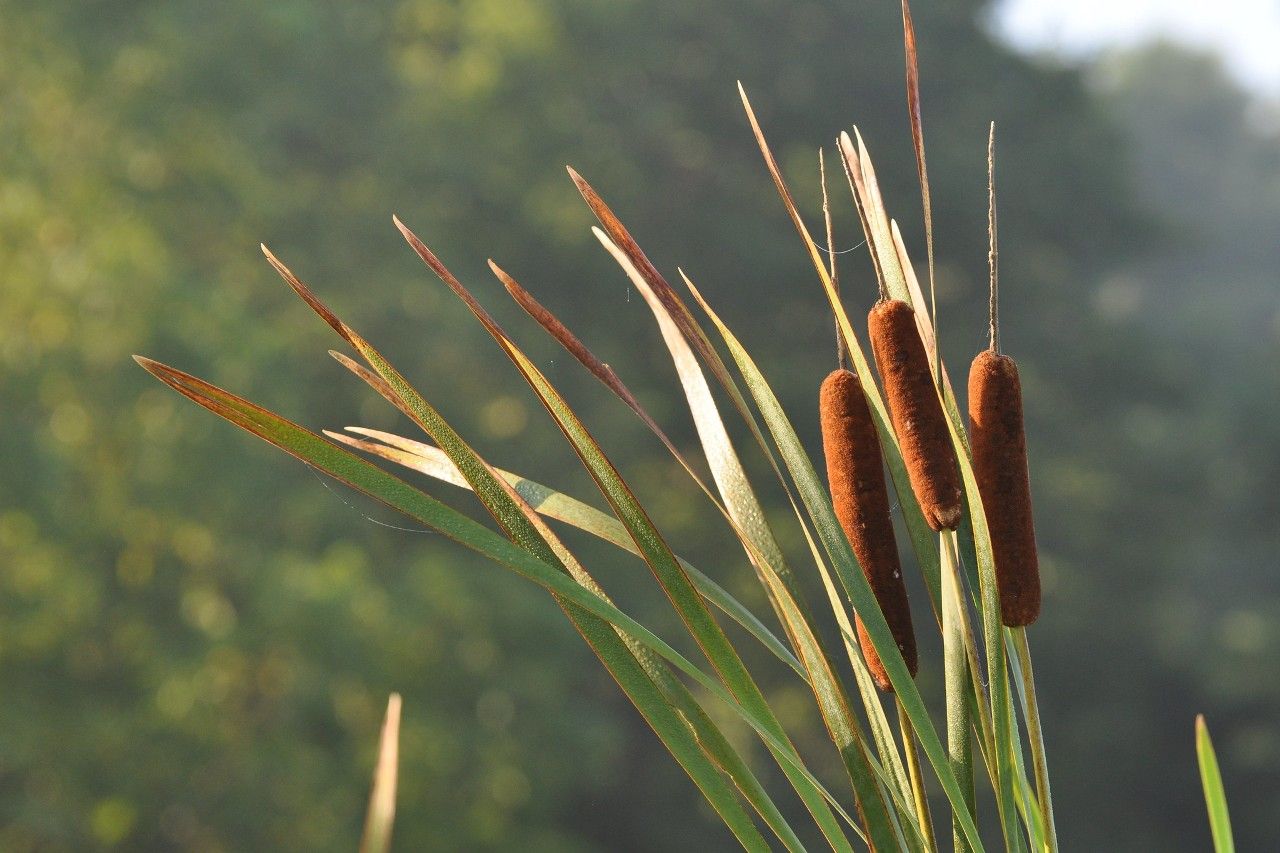
Image Credit: Flickr, Julie Falk
Cattails are tall, reed-like perennial plants that are found in marshes, lakeshores, and pond edges all over the world. Being identifiable with their cylindrical, brown, sausage-shaped flower spikes, cattails reach the height of 6 to 10 feet and thus, their colonies in the shallow water become tightly packed.
As for dragonflies, cattails are nothing less than a treasure. Their tall and firm stems are suitable perching places giving adult dragonflies a view of the surroundings for hunting, mating, and territorial activities. On the other hand, deep down there under the water, dense cattail root mats along with intertwined stems serve as a safe nursery for dragonfly larvae which protect them from both predators and turbulent water.
Moreover, cattails also have a positive effect on water quality. Plants remove nutrients through their roots and trap the sediments. Garden ponds and wetlands invariably draw on the planting of cattails to form natural barriers and complex aquatic habitats that, in turn, become attractive to dragonflies and other wildlife.
Due to their ecological and habitat functions, the cattails are the major components of the dragonfly-friendly places. Their efficient use as both shelter and perch along with their wide spread has made them the first choice to support dragonfly conservation and pest control.
B] Nectar-Rich Flowering Plants
Adult dragonflies eat small flying insects as their main diet, most of these insects are nectar-consuming. So, if you place these plants near a water body with a lot of nectar-producing plants or if you grow such plants in your garden, you will have a thriving ecosystem that will bring the dragonflies indirectly and at the same time that will sustain them.
Below we mention these plants in detail through which nectar and pollen are provided and, hence, the insects like butterflies, bees, and wasps that form the diet of dragonflies get attracted.
1. Black-Eyed Susan (Rudbeckia hirta)
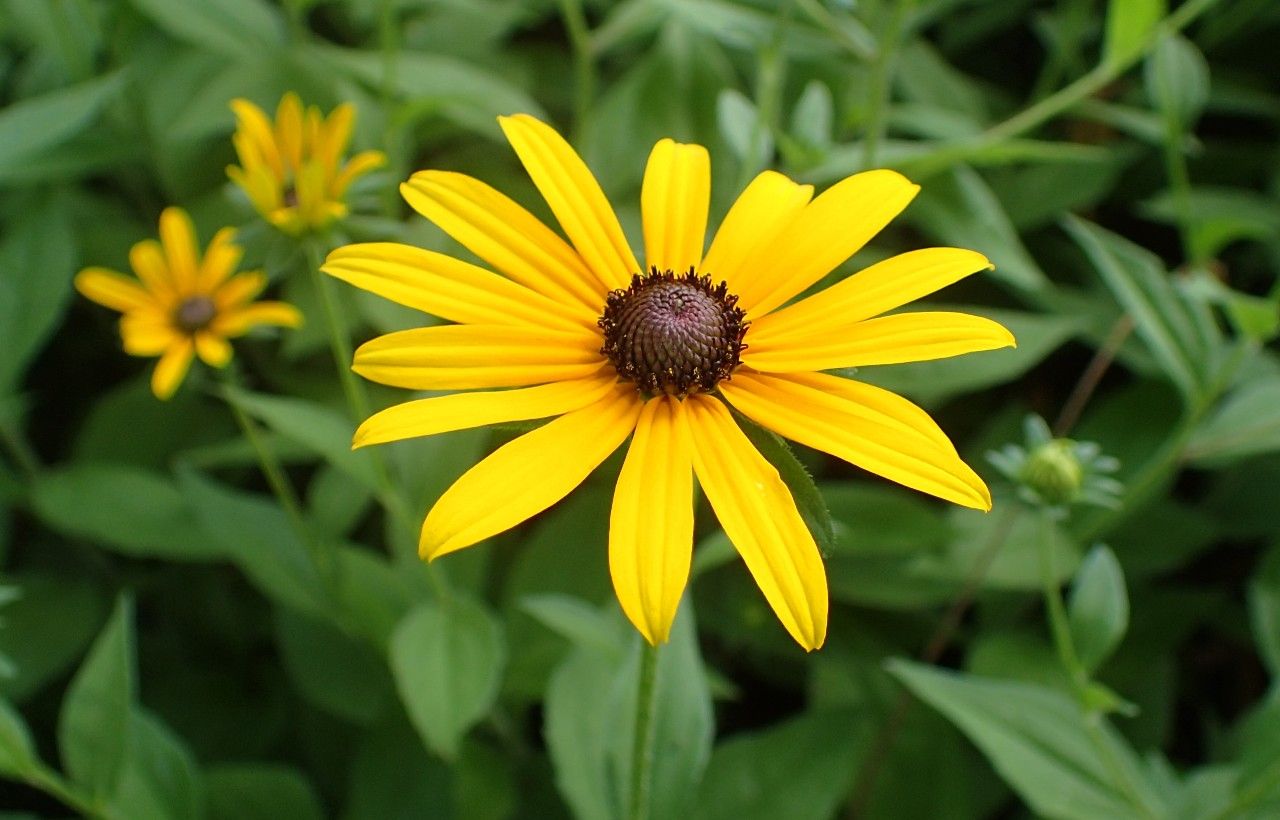
Image Credit: Wikimedia Commons, Kenraiz
One of the most eye-catching wildflowers is the Black-Eyed Susan, native to North America, with yellow rays around the dark brown center, is the distinctive feature of this.
Its easy cultivation and long flowering period from early summer to early fall make it very popular. It grows best in full sun and in well-drained soil. The big, open flower heads offer a wide range of pollinators the attraction—they are mainly butterflies, bees, and beetles. The latter mostly serve as food for dragonflies.
As a result, the energy of adult dragonflies is maximally utilized as they actively choose to hunt in the vicinity of these flowers. The plant is also extensively used in both landscape and ecological benefits, which makes it a perfect candidate to enhance the biodiversity of your garden and provide the support/facilitation of such insects that are your natural enemies.
2. Joe-Pye Weed (Eupatorium purpureum)
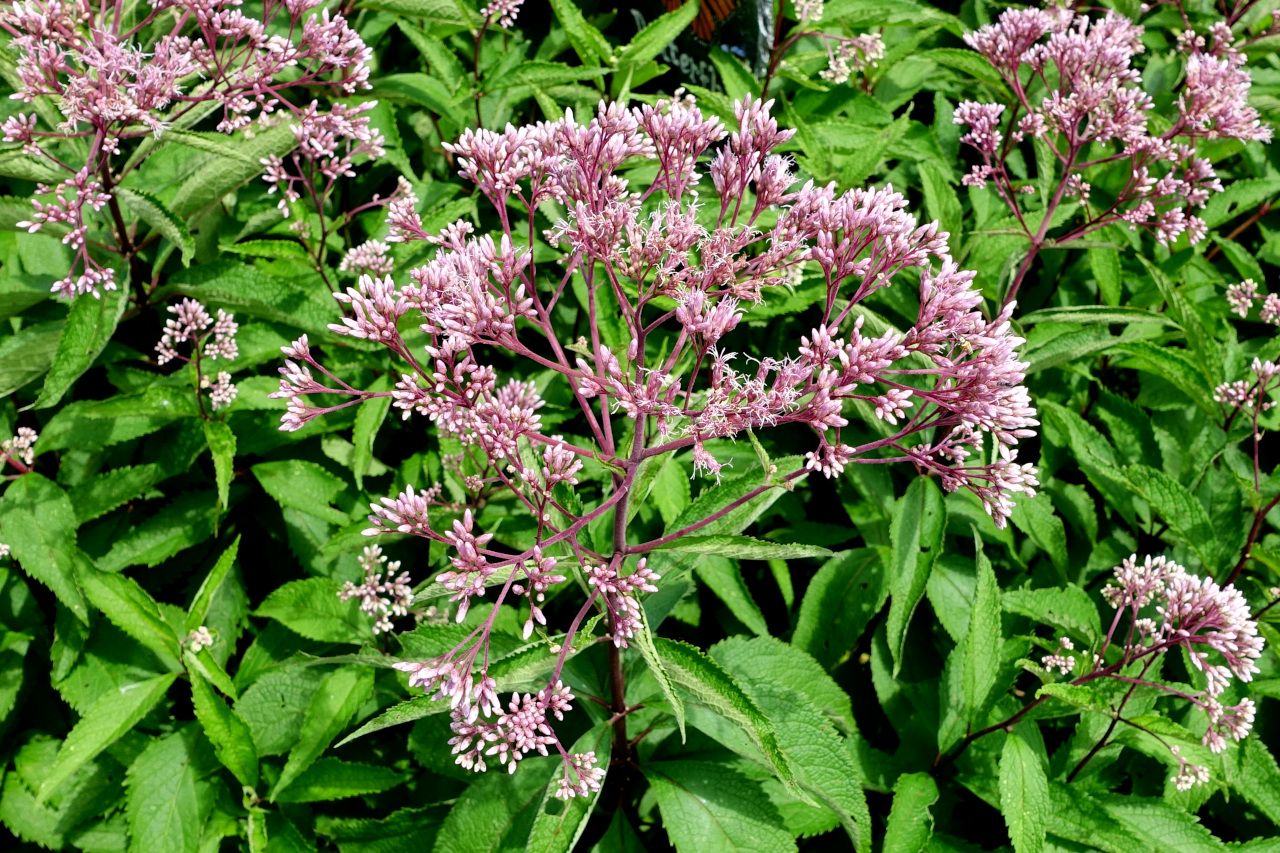
Image Credit: Wild Flowers Of The National Capital Region (www.wotncr.org)
Joe-Pye Weed is known to be a tall and sturdy herbaceous perennial that had its origin in the marshy meadows and swamps of North America. Growing large groups of beautiful, fragrant, dusty-pink to purple flowers, the plant gives out its bloom from mid-summer till the fall offering an extended source of nectar.
Besides bees and butterflies, which are the most common visitors of flowering plants for nectar, many other pollinators that are beneficial to the environment also find the nectar irresistible.
Additionally, the upright, hard shallow roots are great perching places for mature dragonflies, where they draw in, shoot out for their hunt, and check for territory.
Through the provision of an easy catch, thus, a food base, and the best landing spots, Joe-Pye Weed is an indispensable cooperator in the wetland-edge habitats and garden ponds, thus, sustaining dragonfly populations.
3. Swamp Milkweed (Asclepias incarnata)
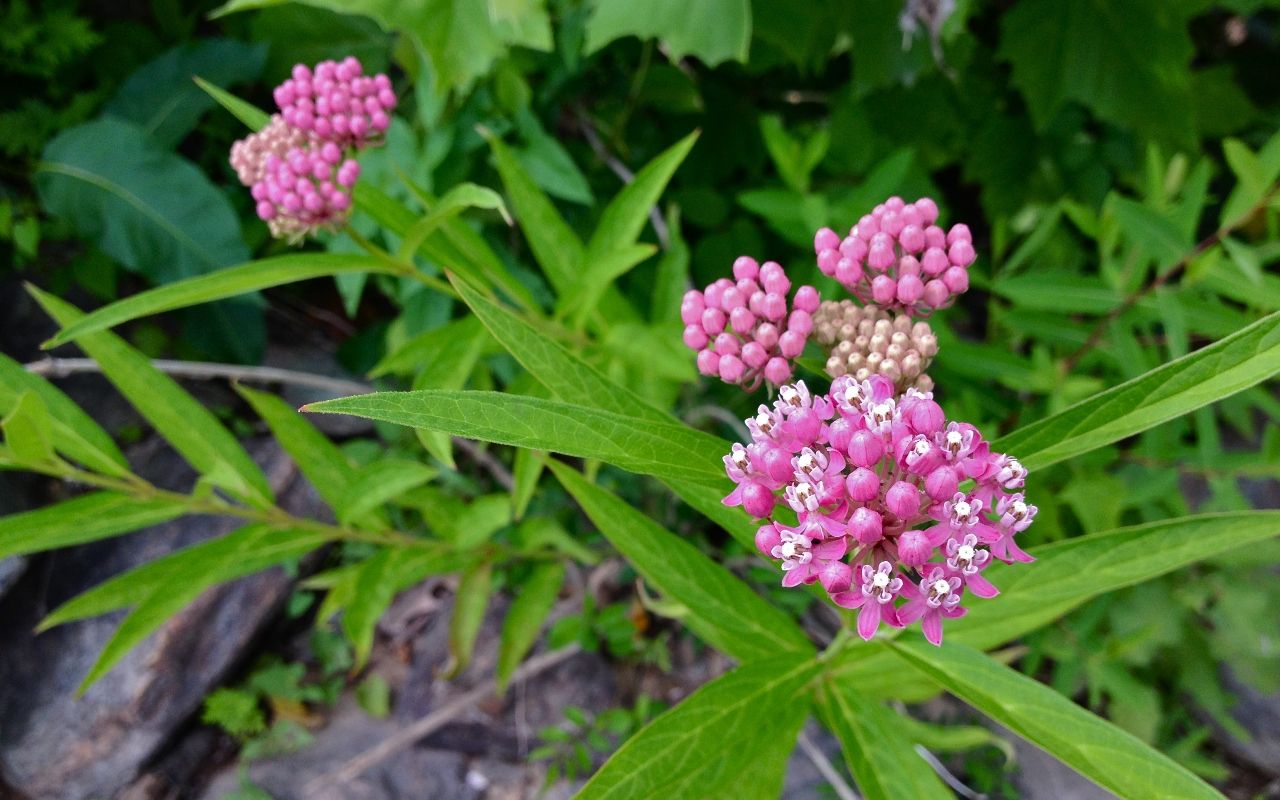
Image Credit: Wikimedia Commons, Fritzflohrreynolds
Swamp Milkweed grows well in moist to wet soils and is often seen at the edges of ponds and wetlands. It attracts an army of the most essential insect pollinators such as wasps, bees, and butterflies by producing a cluster of beautiful pink flowers that are loaded with nectar. The latter are the common prey of the predatory dragonflies.
The period of flowering of this species is the time when the dragonflies are the most active and thus it supports the prey populations. The plant also helps in wetland biodiversity and is a source of shelter for various insect’s life stages.
It is also a smart choice for those rain gardens or naturalized ponds areas aiming at a diverse insect and dragonfly presence since it is sun-loving and prefers moist habitats.
4. Meadow Sage (Salvia pratensis)
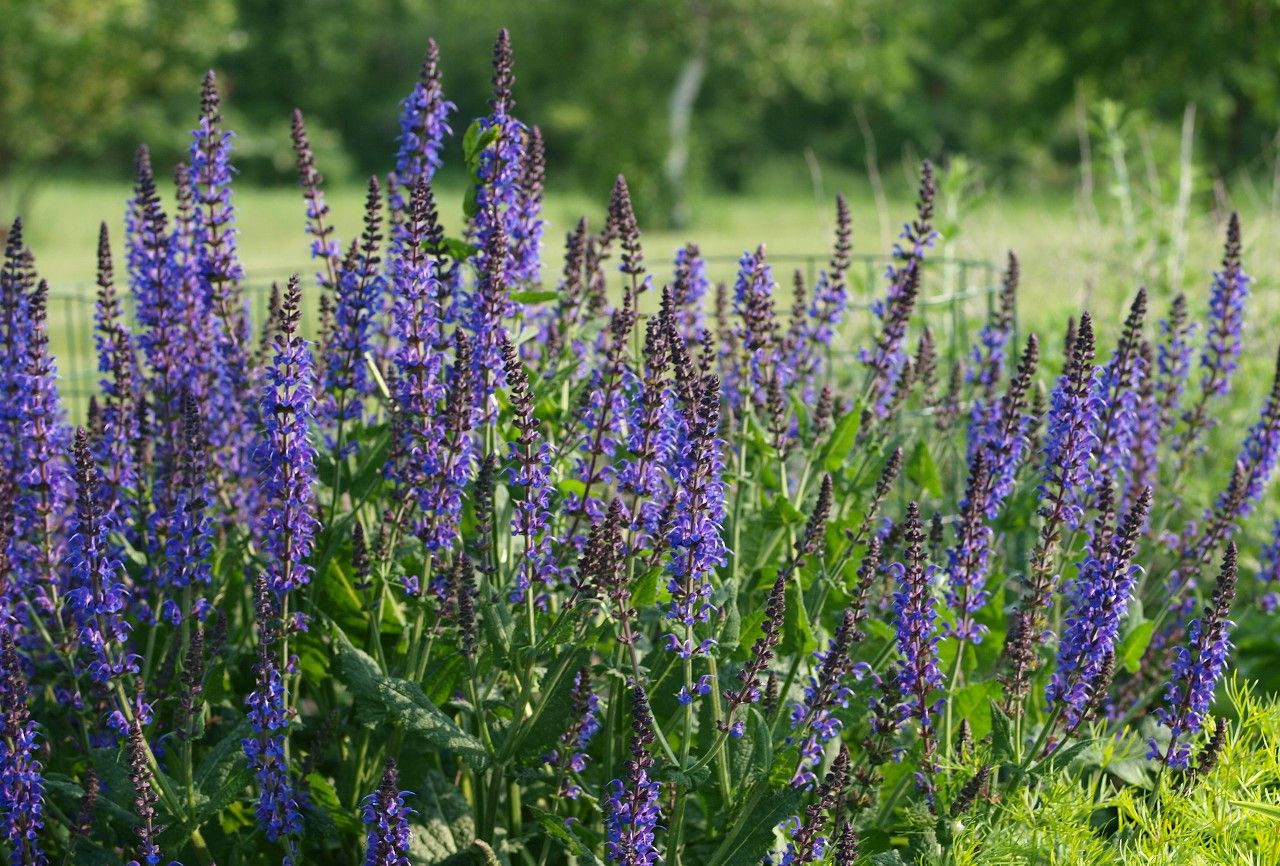
Image Credit: Flickr, F. D. Richards
Producing beautiful violet-purple flower-spikes Meadow Sage has all the elements for attracting hummingbirds, butterflies, bees, and any nectar-feeding insects, thus providing ample food for dragonflies too. They usually are the kind of perennials one can find in dry and fully sunny places made up of regular wildflower meadows or borders of other garden plants.
From this plant, bees get their nectar mainly in the late flowering period which happens to be the active dragonfly season. Besides attracting prey, Sage’s sturdy structure also allows dragon leaders to rest on it as they hunt and when they are being territorial.
The plant is so beautiful and tolerant of drought which makes it a good candidate for creation of biodiversity gardens that are expected to have a natural balance of predator-prey dynamics.
5. White Yarrow (Achillea millefolium)
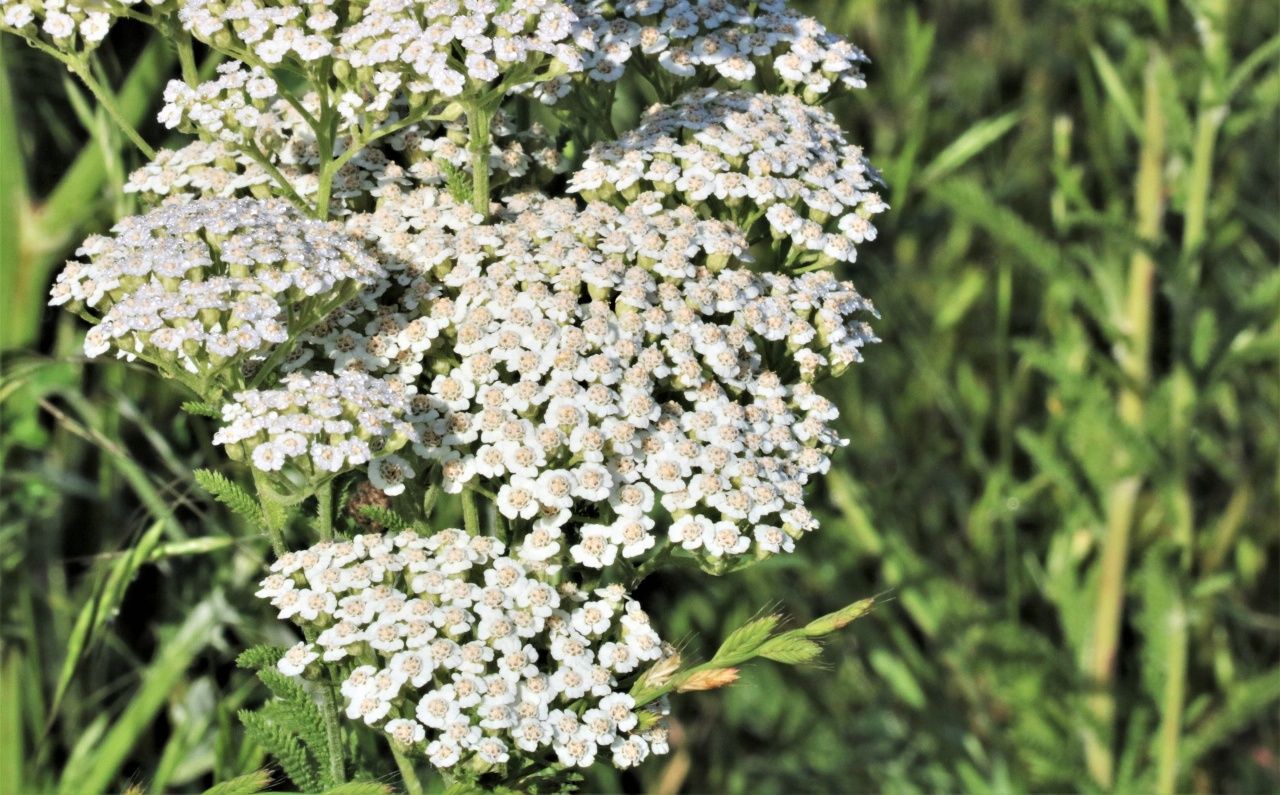
Image Credit: publicdomainpictures.net, Sheila Brown
Yarrow plants are characterized by having flat-topped clumps of tiny white flowers that are in full bloom throughout summer. These flowers provide nectar in such large quantities as a result of which different kinds of pollinators such as bees, flies, and butterflies are attracted and rely upon for their feeding.
One can also describe the yarrow plant as a remarkably hardy and low-maintenance one which can tolerate great variations in soil and sun exposure. While the dragonfly food supply is increased indirectly through hosting of the wide range of pollinating insects, the latter is the most important for achieving a natural balance that favors the good predatory insects.
Yarrow is the most common species among the several wildflower mixes that are used for restoring natural habitats or sustainable gardening with the aim of improving insect diversity and ecosystem resilience.
6. Borage (Borago officinalis)
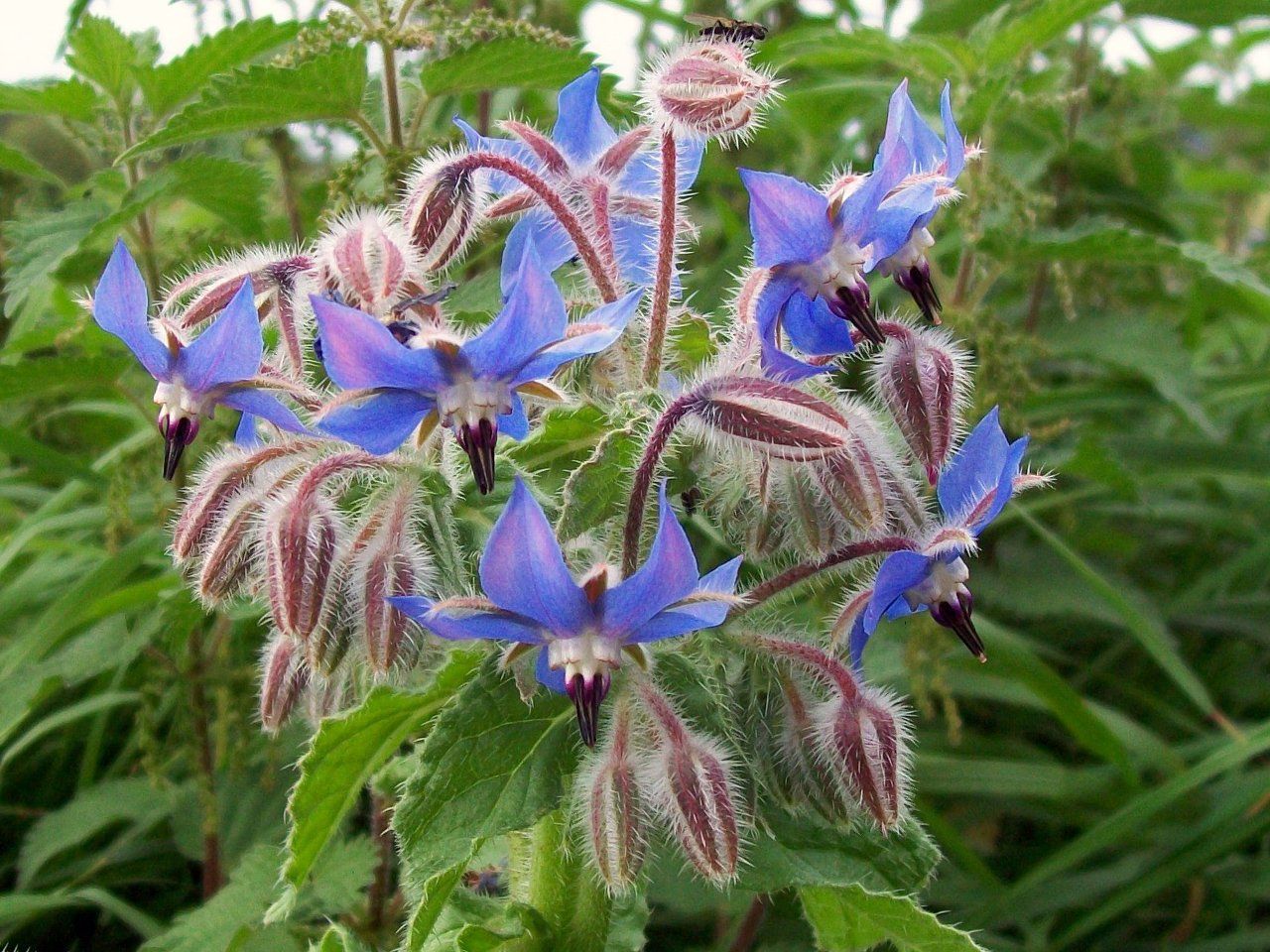
Image Credit: Wikimedia Commons, AnemoneProjectors
Borage is an annual herb that has a sky-blue, star-patterned flowers that has blooming period in the middle of the summer. Small pollinators may be found visiting the flower and these include honey bees, flower flies, and other nectar feeders that are an essential part of the diet of dragonflies.
The fast growth of the plant and its survivability in different soils make it very easy to add it to your garden in order to attract more insect biodiversity.
In addition to pollinators, at the same time borage also helps the soil to be healthier and thus natural pest control is achieved by supporting the populations of predators that are above the ground. Its qualities make it one of the pollinator-friendly and organic garden chemical-free and that is why it also provides additional value.
7. Purple Coneflower (Echinacea purpurea)
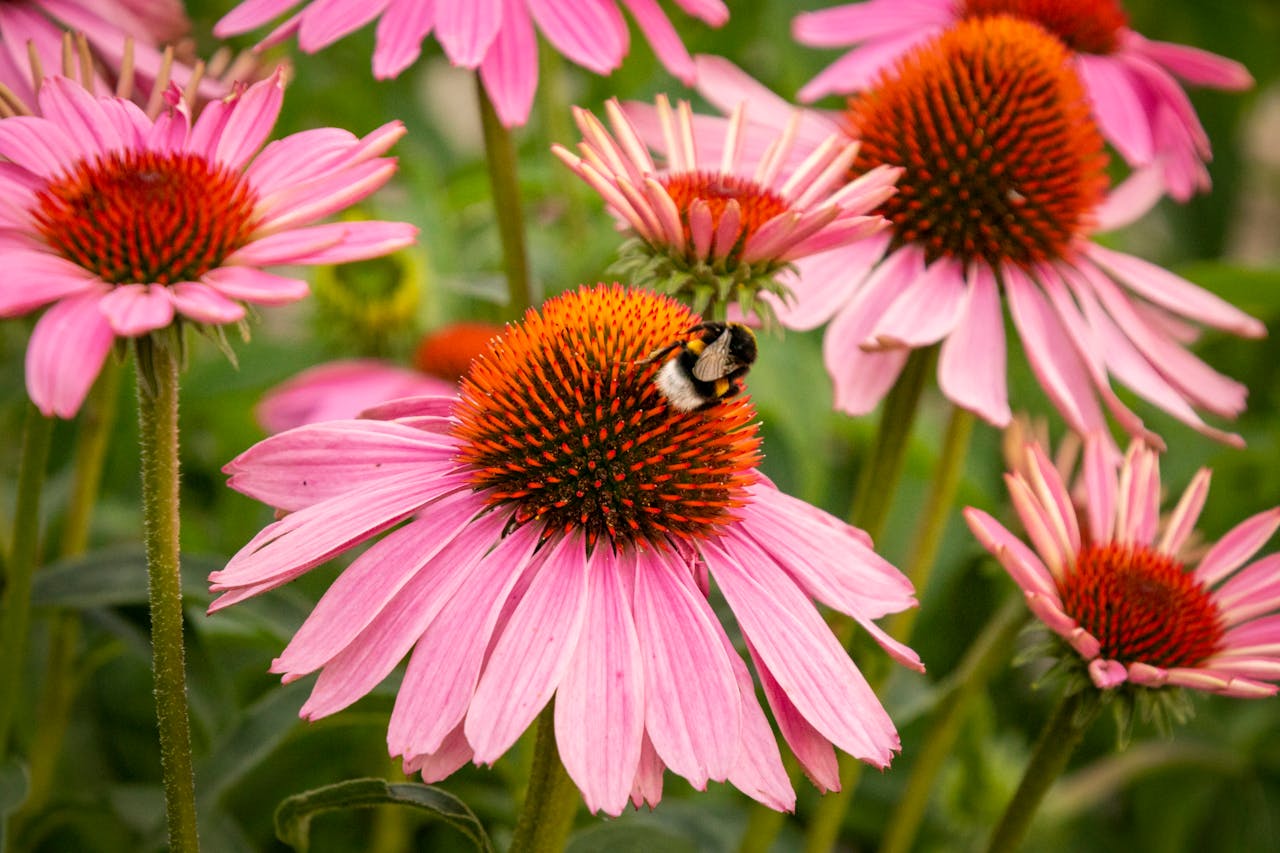
Image Credit: Pexels, Horst Joachims
Purple Coneflower is an original North American species with large flowers resembling daisies, with purple petals and an orange-brown center. The flowers full of nectar attract a wide variety of pollinators such as bees, butterflies, and beetles.
These insects represent the main prey for adult dragonflies. The plant is quite drought-resistant and prospers in a sunny place and with good drainage.
Having Purple Coneflower in gardens will not only provide a base of easily accessible prey for the insects thus allowing the dragonflies to play their natural role of pest suppression to occur.
8. Goldenrod (Solidago spp.) and Buttercups
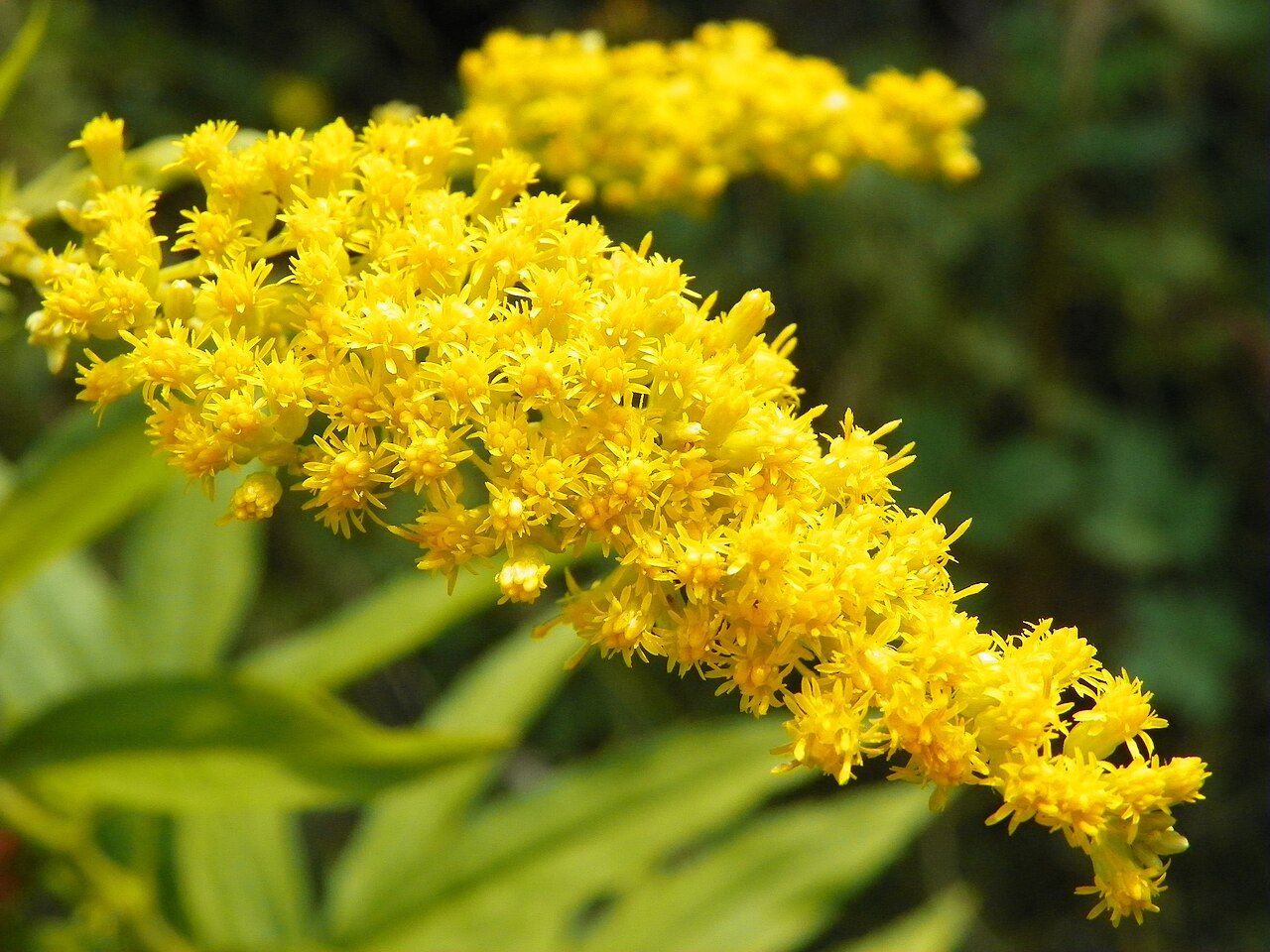
Image Credit: Wikimedia Commons, AnemoneProjectors
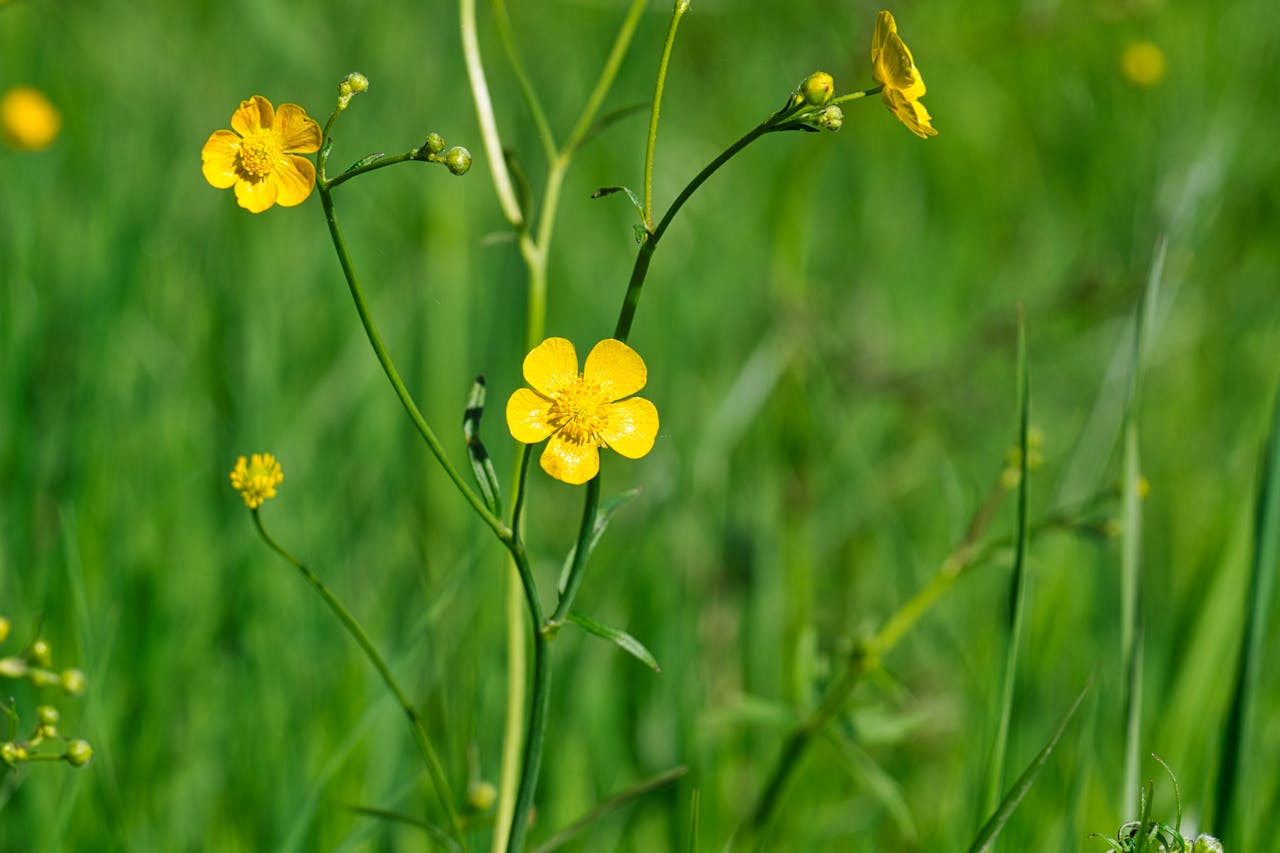
Image Credit: Pexels, Joerg Hartmann
They consist of a great number of tiny yellow flowers which are full of nectar and thus, they attract a large variety of insects like bees, wasps, moths, flies, etc. Buttercups with their bright yellow flowers are also attractive to a variety of nectar feeders.
Both plants flower in the late summer and fall, thus providing flying insect prey to dragonflies for a longer period. They are also good plants for naturalized gardens and meadows as they can grow in any soil and climate and are capable of sustaining ecological pest control and insect populations that are diverse in nature.
Creating a Nectar-Rich Habitat for Dragonflies
One way of making the habitat more attractive to dragonflies is by planting these nectar-rich species near the pond, stream or in the garden which has moist soil. This will provide a food source that is reliable and thus, the predators will be attracted and will continue to live there.
The use of this natural method of pest control results in great biodiversity, the gardens which have fewer chemical inputs become the habitats for pollinators and are an excellent place for dragonflies making the garden a green zone for dragonflies and a vibrant outdoor oasis.
C] Shrubs and Trees for Shelter and Shade

Image Credit: Pexels, Tom Fisk
Adult dragonflies are found to be inclined to and usually do seek refuge in places that are shady and at the same time, well protected. Growing some indigenous trees and shrubs in the periphery of the garden is a great idea as these are the very spots from where the young dragonflies can get away from their natural enemies as well as from harsh environmental conditions.
Besides, these plants create a habitat that is structurally complex and therefore are diverse in insects which is consequently one of the ways to keep a variety of prey for the feeding of adult dragonflies.
Moreover, shaded sections are very good in terms of the regulation of temperature as they usually provide rather cool microclimates during hot weather thus allowing dragonflies to keep their energy and avoid dehydration due to extreme heat.
These cool areas are of great significance in the middle of the day or in the summer months when the sun’s rays are very strong. In shades or even under some shrubs, dragonflies are able to take a rest without fear in between their hunting flights.
So, the designing of the landscape that takes into consideration the existence of both the open water edges with direct sunlight and the vegetative water edges will be able to provide maximum habitat suitability for dragonflies as their life stages and behavioral needs.
D] Plants That Provide Perching Sites for Dragonflies
Adult dragonflies are territorial and hunt from perches; tall rigid stems or branches are ideal.
1. Joe-Pye Weed
Joe-Pye Weed (Eupatorium purpureum) is a tall, native perennial known for its striking pink-purple flower clusters and upright, sturdy stems that can reach heights of up to 12 feet. This impressive height makes Joe-Pye Weed an ideal perch for adult dragonflies, giving them a prominent lookout point for hunting and defending their territory.
The nectar-rich flowers attract numerous pollinators such as bees and butterflies, which serve as food for dragonflies. Found naturally in moist meadows and wetland areas, Joe-Pye Weed is a valuable addition to gardens for both its ecological importance and its support for dragonfly populations.
2. Cattails and Rushes
Cattails (Typha spp.) and rushes (Juncus spp.) are typical water plants that often grow in thick stands at the edges of ponds and wetlands. Their tall, stiff stems are the ideal vertical structures that adult dragonflies use as perches from which they take, rest, and look out for their territories.
These plants, which are saturated with nutrients, not only become shelters for the larvae of dragonflies but also provide shelter for them among their roots and stems which are below the water surface.
By offering perching sites that are above the water and safe places for the nursery that are under the water, cattails and rushes are the main contributors to the constant population of dragonflies.
3. Meadow Sage and Sage Species
Meadow Sage (Salvia pratensis) along with the other species of sage, have these strong-stemmed, somewhat woody, robust plants that are just perfect for the dragonflies to come and rest on. These middle-height plants are generally seen in a sunny and well-drained area and their cute purple or bluish flowers arranged in pretty spikes always attracts the attention.
Dragonflies also use these woody stems as their resting spot in between their quick flights and they establish their territories here.
Besides the advantage of perching, these plants are very attractive to pollinators because of their nectar-rich flowers. This is indeed an excellent chain of the food net between pollinating insects which are the prey of dragonflies.
4. Tall Grasses and Native Reeds
Several types of tall grasses and natives reeds with their thin but tough upright stems are giving a variety of perching places to dragonflies. Plants like bluestem and feather grass not only offer a large number of viewing points at various heights but also make them suitable for dragonflies’ requirement of territory and food.
Besides, these plants are also adding habitat stability from the marsh and garden for the variety of insect communities.
The compatibility of perching locations and the increment of prey accessibility is leading to the presence of evenly distributed populations of the dragonflies in both natural and ecologically treated areas.
5. Broadleaf Arrowhead
Broadleaf Arrowhead (Sagittaria latifolia) is a half-water, large-leaved plant with typical arrowhead-shaped leaves, which are either floating or slightly protruded above the water surface. The big leaves are excellent landing spots for dragonflies as they can rest there safely between their flights or when they are stalking prey.
By providing stable, easily reachable resting places that are near the water, Broadleaf Arrowhead becomes the primary source of the presence of dragonflies in the fresh water areas, hence their survival.
6. Coreopsis
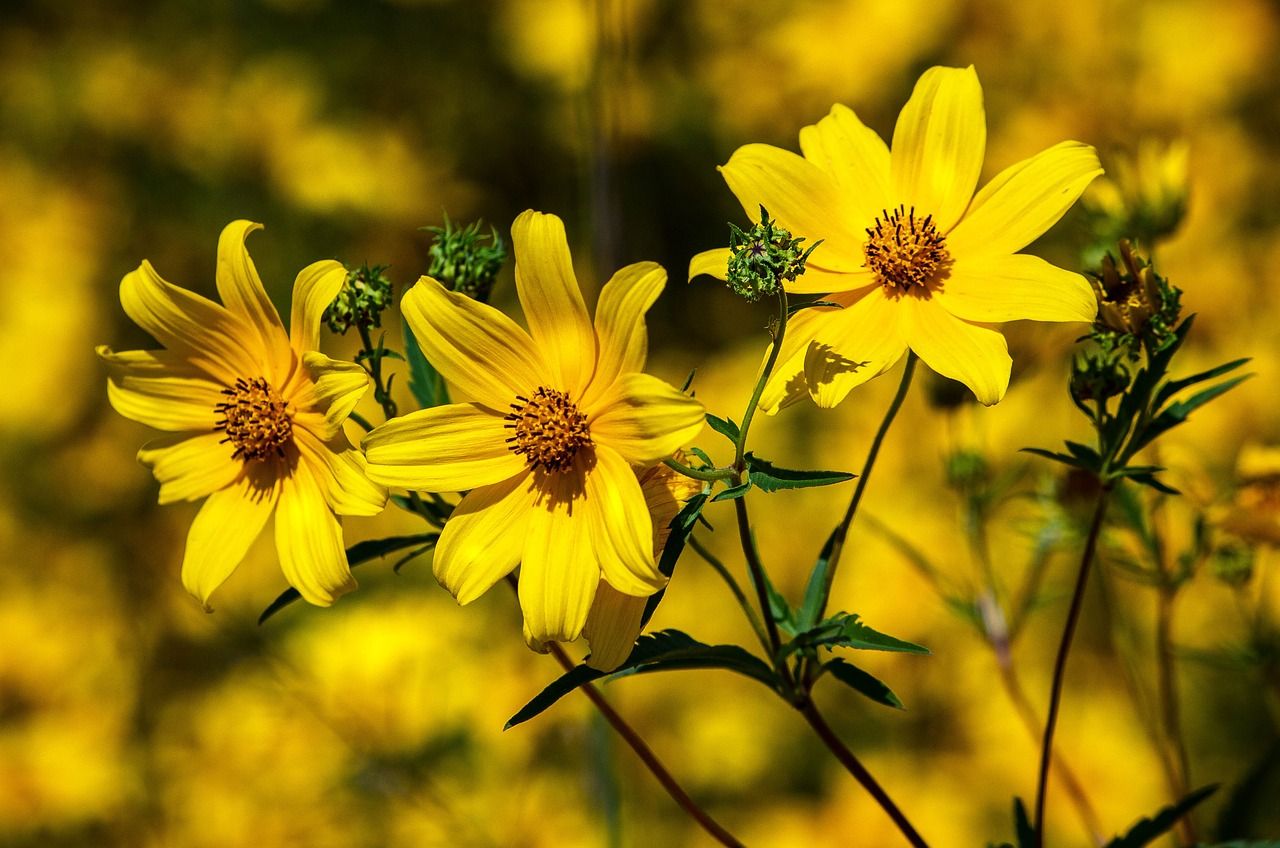
Image Credit: Needpix, JamesDeMers
Coreopsis or Tickseed as it is sometimes referred to, creates bright yellow daisy-like flowers that blooms from early summer to late fall. This plant brings in an abundance of pollinators amongst which are bees, butterflies, and other nectar-feeding insects that, in turn, serve as prey for dragonflies.
Dragonflies are often seen perching on Coreopsis’s flower heads and leaves as they are flat and open surfaces that offer them an easy access to rest. Because of its long-lasting bloom, it effectively helps the sustaining of insect populations, which is indirectly supporting the dragonflies.
7. Liatris
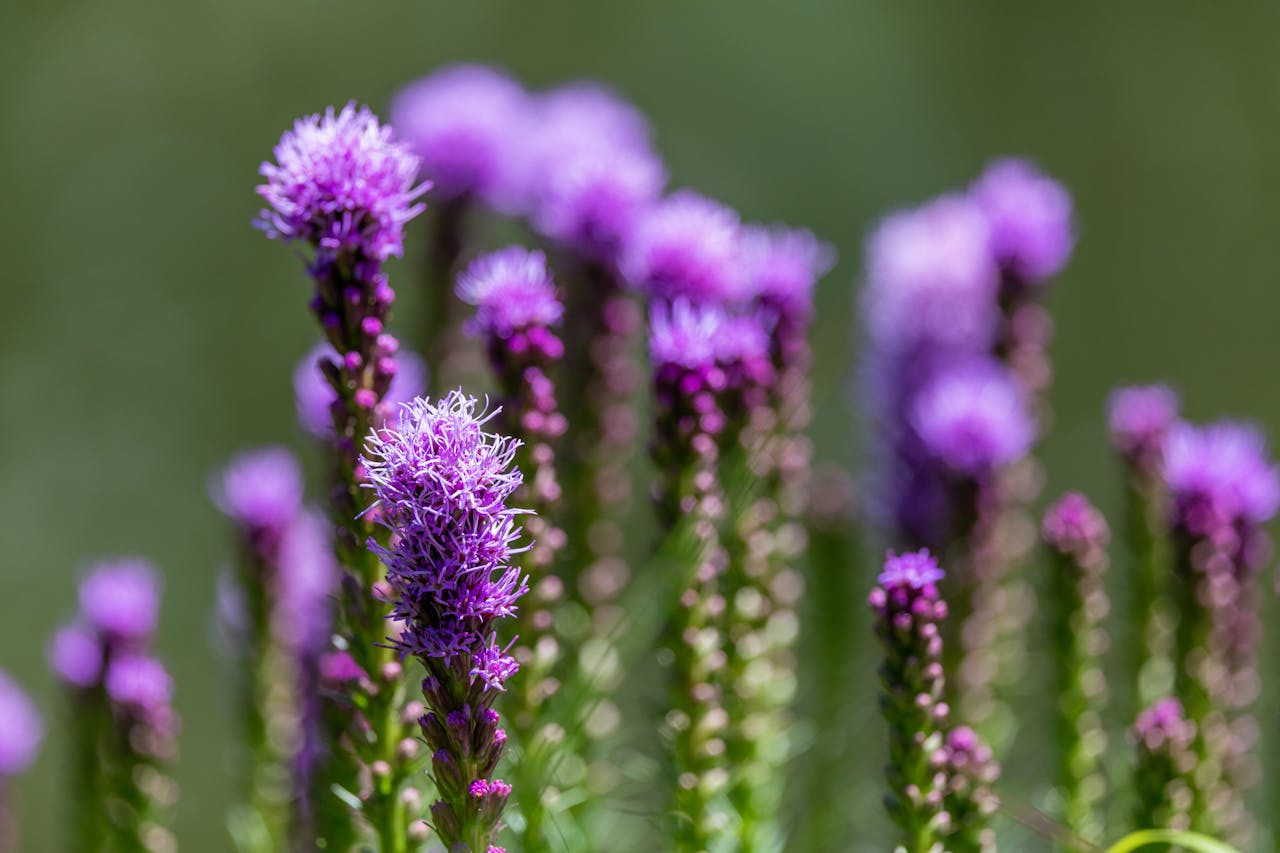
Image Credit: Pexels, Skyler Ewing
Liatris is known under the common names Blazing Star or Gayfeather is a tall perennial that has the purple flower on the top of the stems. The upright flower spikes not only provide excellent perching sites for dragonflies but the nectar also brings in the butterflies and the bees–that are the main prey species.
Growing in a sunny spot with well-drained soil, Liatris can give you the garden more habitable complexity by adding the vertical dimension thus making it more attractive to dragonflies.
8. Gladiolus
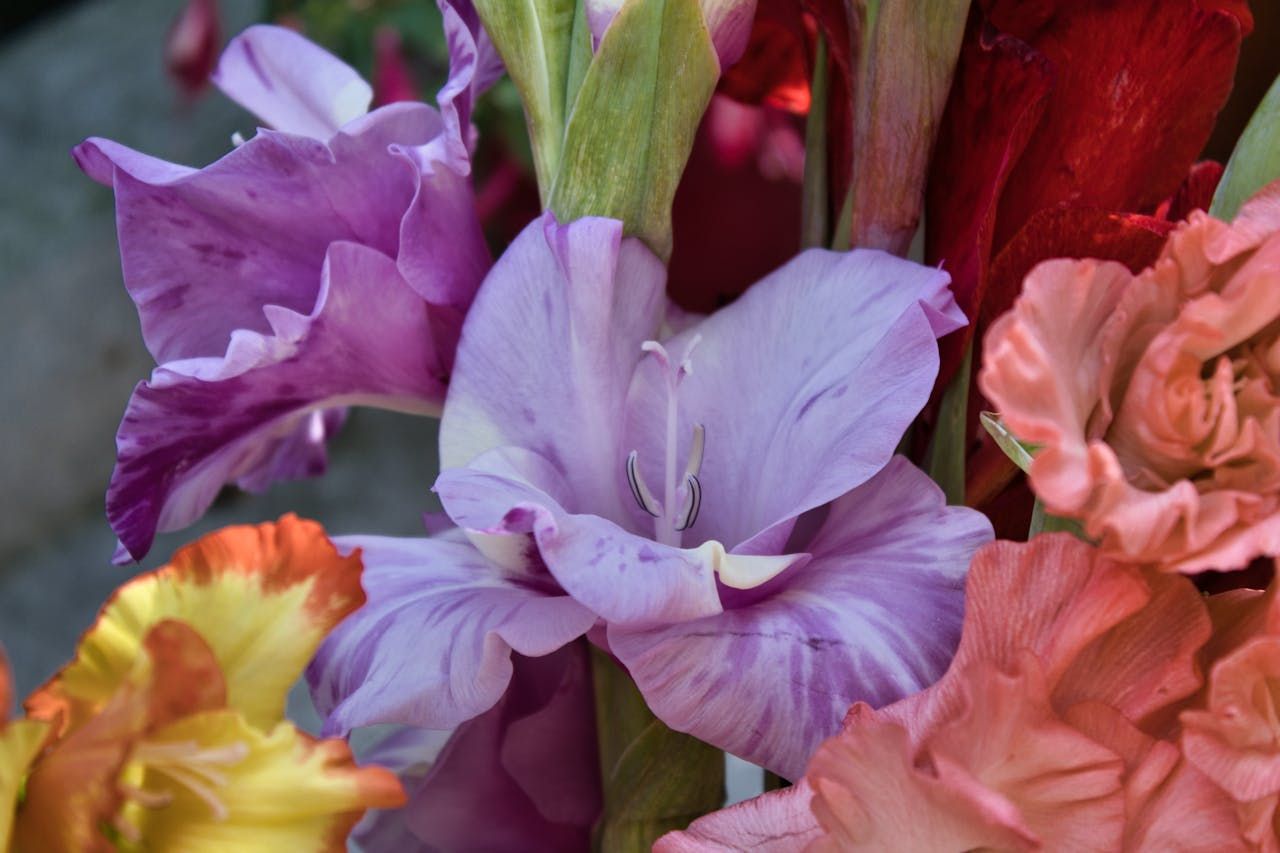
Image Credit: Pexels, Matea Gvozdenović
Gladiolus are the kind of plants that have tall, sword-like leaves and a spectacular colorful flower-spike of huge flowers. Though not many insects would choose to get their nectar from these flowers, the dragonflies can make use of their strong vertical form to alight for a while.
As a result, adult dragonflies that are close to water may make an unplanned visit to these plants to have an eye over the area especially when there are not enough tall plants around.
9. Hosta
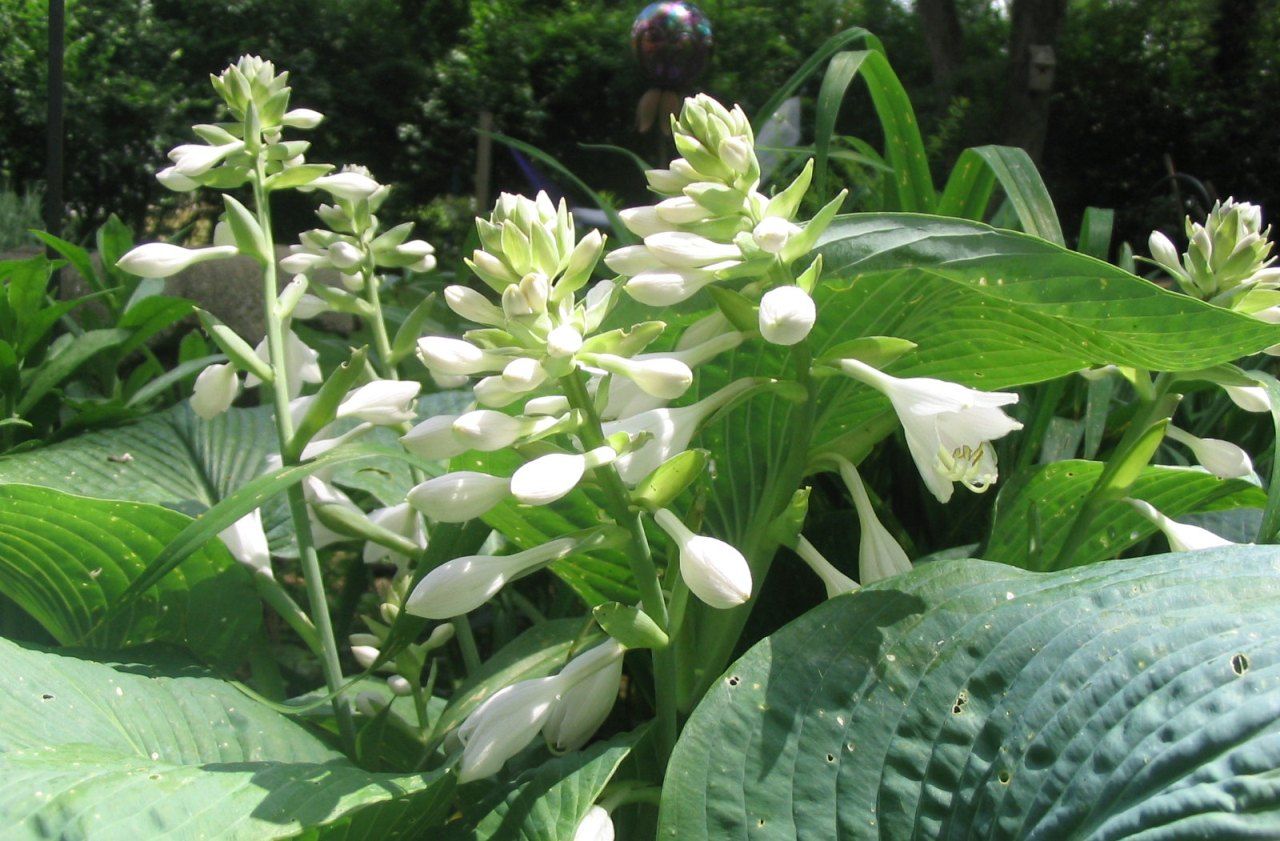
Image Credit: Wikimedia Commons, madaise
Hostas are shade-loving perennials that feature large leaves and have a spreading habit. While not being very attractive to insects in general, their big flat leaves can serve as resting places for dragonflies that are flying in the shade of the garden.
Besides adding to the variety of the perching substrates in the multi-layered garden habitats, their presence symmetrically complements the taller perching plants.
10. Day Lily (Hemerocallis)
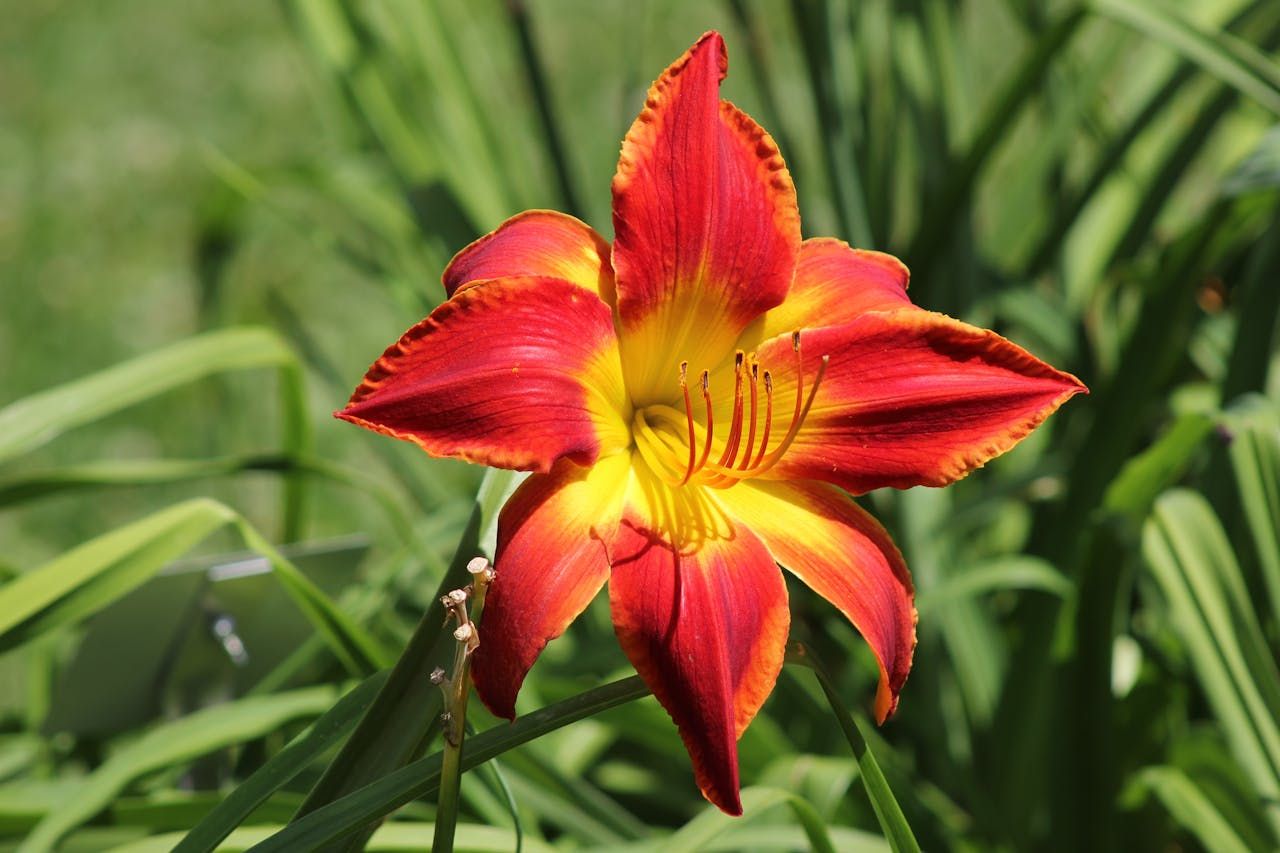
Image Credit: Pexels, alex ohan
Day Lilies have the ability to produce big and bright flowers of one day only that attract quite an array of pollinators like bees and butterflies. Though dragonflies never feed on flowers directly, they still get the advantage of the increased number of insect prey around.
The robust stalks and wide leaves can also be good for perching. Thus the conjunction of food attraction and perching possibilities turns Day Lilies into the most suitable plants for a dragonfly-friendly garden.
The introduction of a combination of tall, rigid-stemmed plants and broadleaf perching in and around ponds is a good strategy to support dragonfly hunting and territorial behaviors. This kind of vegetation improves the habitat complexity by affording dragonflies places from which to survey, rest, and also have easier access to prey insects.
Properly constructed perching plants are very important in the maintenance of healthy dragonfly populations in garden ponds, wetlands, and natural habitats.
How to Build a Dragonfly-Friendly Garden
- First, make a water feature of some type such as a pond or water garden. Stock it with aquatic plants to provide food and shelter for larvae.
- Have a variety of flowering plants that produce nectar to attract insects that will be preys of dragonflies.
- Take some tall native perching plants and grasses and put them near the water so you will have some resting and hunting place for the dragonflies.
- Grow some shrubs and small trees in your garden for shelter and shade.
- Save dragonflies and their prey by not using pesticides and herbicides.
📰 Must Read,
✔️ Do Hummingbirds Eat Mosquitoes?
✔️ How to Get Rid of Mosquitoes in Grass: Tips & Lawn Solutions
Conclusion
In order to attract dragonflies to your garden or backyard, you need to plant a thoughtful assortment of plants that will satisfy the various lifecycle needs of those insects. The dragonfly’s life is a successful habitat that connects the aquatic plants, nectar-producing flowers, and structural vegetation to fulfill all the necessities of the dragonfly’s life.
Plants that produce nectar for pollination, such as Black-eyed Susan, Joe-Pye Weed, and Swamp Milkweed, become the sources of attraction for an impressive number of butterflies, bees, and other pollinators, which are the adult dragonflies’ food supply.
Moreover, Water Lilies and Cattails as aquatic plants have been the major reasons for breeding and larval places. Hence, by promoting these species, your ecosystem will be the dragonfly’s favorite place as it will be more natural pest control, garden health, and biodiversity will be positively impacted.
One example can be taken from Joe-Pye Weed as it not only provides nectar but with its tall stems also provides dragons essential perching sites for hunting and displays of territories.
On the other hand, dense emergent plants like Cattails and Rushes create vertical structures whereas Sage and native tall grasses provide lookout points that make predation and mating behaviors possible.
In view of the above, the garden will be a convenient resting place for dragonflies if suitably structured by planting a variety of structural and nectar-rich plants near water bodies as this will provide ample opportunities for the dragonflies to rest, hunt, feed, and reproduce. This manner of habitat enhancement by the gardeners is a win-win situation for the dragonflies and the entire ecological community.
Frequently Asked Questions (FAQs)
-
How to attract dragonflies to your yard?
Dragonflies can be attracted to your garden by the creation of a suitable habitat. This can be a pond or a water garden; it should have shallow edges and aquatic plants for the best results. Nectar-rich flowers can be planted to attract the insects that the dragonflies consume. Ever-growing grasses and plants with tall rigid stems can be used for the purpose of shade and perches. The use of pesticides should be refrained from for the protection of dragonflies as well as their prey.
-
How to attract dragonflies without water?
It is hard to attract dragonflies without water as they lay their eggs in water and the larvae develop there. Nonetheless, you may position tall perching plants and nectar flowers so that the adults can have food and shelter. Build moist and shady places and put water-filled containers such as birdbaths, jars, and bowls as temporary water sources.
-
Name all perennial plants that attract dragonflies
Some of the perennial plants, always blooming and in season, that are the best attraction for dragonflies are Black-eyed Susan, Joe-Pye Weed, Swamp Milkweed, Meadow Sage, White Yarrow, Purple Coneflower, Goldenrod, Borage, Pickerelweed, Cattails, Broadleaf Arrowhead, and Liatris. These plants offer nectar for predatory insects and also provide resting and perching places.
-
What are plants that attract dragonflies in California?
Native plants like Blue-eyed Grass, California Poppy, Pacific Waterleaf, Red-flowering Currant, Coffeeberry, Cattails, Tule, and Pickerelweed and other aquatic flowering plants that attract dragonflies in California. Not only that, but such plants also provide nectar for dragonflies’ prey and the perching and breeding habitat that match the climate and ecosystems of California.
-
What are the plants that attract dragonflies in Florida?
In Florida, dragonflies can be attracted by the plants such as Pickerelweed, Swamp Milkweed, Joe-Pye Weed, Cattails, and Water Lilies. These plants offer the flowers rich in nectar that can be used as food for prey-insects and at the same time, they provide the aquatic and peripheral habitats which are the breeding and resting places suitable for perching and hunting.
-
What flowers attract dragonflies?
Flowers that attract dragonflies are those that draw pollinators like bees, butterflies, and wasps, which dragonflies eat. Examples include Black-eyed Susan, Joe-Pye Weed, Swamp Milkweed, Purple Coneflower, Coreopsis, and Liatris. Their nectar attracts many insects, providing food for dragonflies.
-
What are the plants that attract dragonflies in Texas?
Plants which are native to Texas such as Texas Bluebell, Black-eyed Susan, Indian Blanket, Blue Mistflower, and Cowpen Daisy are some of the plants that attract dragonflies in Texas. These plants provide the supply of insect prey and the diverse habitats which are located close to water bodies are very good and are helpful to dragonflies.
-
What smell are dragonflies attracted to?
Dragonflies are not attracted to any specific odors or scents but rather areas having plenty of flying insect prey. They rely mostly on their sight for spotting the prey and quick movements than on smelling odors. Nevertheless, plants that are attractive to pollinators are attracting dragonflies without doubt as they increase food availability for them.
-
What is the natural enemy of dragonflies?
Birds such as swallows, flycatchers, frogs, and fish are the main natural enemies of dragonflies. Spiders and large predatory insects like wasps and praying mantises that also prey on dragonflies are the other group of their enemies. Fish, turtles, and aquatic insects are the ones who kill dragonfly larvae.
-
What is the favorite food of dragonflies?
Dragonflies generally eat other insects that are as small as mosquitoes, flies, midges, and bees, as well as that which are larger like butterflies and even smaller dragonflies. They are the perfect hunters who grab their catch in the middle of the air using their keen eyesight and rapid flight.
-
Do dragonflies carry diseases?
Actually, dragonflies are not carriers of diseases which can be harmful to humans. They are good insects in the ecosystem as they lower the number of mosquitoes, which are seen as one of the most dreadful pests and carriers of diseases. Furthermore, dragonflies cannot bite or sting humans; thus, they are not a threat to us.
