
Table of Contents
Introduction
Most mosquito bites are straightforward. A small red bump, some itching for a day or two, and that is about it. But occasionally a bite goes in a different direction — it gets worse instead of better, the area spreads, and what started as a minor irritation becomes something that warrants real medical attention.
Infected mosquito bites are more common than most people realize, and one of the more serious outcomes is cellulitis — a bacterial infection that reaches deeper layers of the skin and can spread quickly if ignored. It is not rare. It is not something that only happens to people with underlying conditions.
Knowing the difference between a normal bite reaction, an early infection, and the signs of cellulitis after mosquito bite can genuinely change the outcome. This article covers all of it — causes, symptoms, treatment, and the specific warning signs that mean you need to see a doctor today, not tomorrow.
How Mosquito Bites Become Infected: Causes of Bacterial Skin Infection
The mosquito bite itself is not the infection. The bite creates a small break in the skin barrier — and that break is what opens the door.
When you scratch a mosquito bite, which almost everyone does, you can introduce bacteria into that wound. Bacteria living on the skin surface — most commonly Staphylococcus aureus (staph) and Streptococcus pyogenes, also known as Group A Streptococcus — are the primary culprits in infected mosquito bite cases. These bacteria are normally harmless on intact skin. Broken skin is a different story.
Environmental bacteria can also enter the wound, especially if the bite is scratched with dirty hands or fingernails, or if the bite area comes into contact with contaminated surfaces. Children are particularly prone to this for obvious reasons — they scratch without thinking, their nails carry all kinds of material, and the concept of leaving a bite alone is genuinely foreign to most kids under ten.
Poor wound hygiene makes everything worse. Not cleaning a bite, covering it improperly, or repeatedly breaking the skin through scratching creates ideal conditions for bacterial infection to develop and deepen.
What Is Cellulitis From a Mosquito Bite?
Cellulitis is a bacterial skin infection that goes deeper than the surface. Unlike a simple skin infection that stays near the top layer of skin, cellulitis involves the dermis and subcutaneous tissue — the deeper structural layers beneath what you can see.
Cellulitis is not a contained infection. The combination of bacterial activity and the body’s inflammatory response causes redness and swelling to expand outward from the original site — sometimes rapidly and visibly over the course of hours. The skin becomes warm, swollen, and increasingly painful. In more serious cases, the infection can involve the lymphatic system and, if left untreated, may progress to systemic infection.
The key distinction from a normal mosquito bite reaction is the progression. A regular bite gets better over a few days. Cellulitis from a mosquito bite gets worse. The redness spreads. The swelling increases. The pain deepens. That trajectory — worsening rather than improving — is the defining feature.
Early Signs of an Infected Mosquito Bite to Watch For
The tricky part is that early infection signs can look similar to a normal bite reaction, just more pronounced. Here is what to watch for specifically:
- Redness and bruising, that is spreading beyond the original bite site rather than staying contained
- Increasing warmth around and near the bite — more than the initial mild warmth a fresh bite produces
- Swelling that is growing rather than reducing after 24 to 48 hours
- Tenderness or pain when you press around the area
- Pus, cloudy fluid, or any discharge from the bite site
- Worsening itching combined with visible skin changes
The critical difference from a normal reaction is direction. A normal mosquito bite reaction peaks within the first 24 hours and then gradually improves. An infected mosquito bite keeps getting worse. If redness is still spreading after two days, that is not normal bite inflammation — that is a sign that bacteria have moved in.
Symptoms of Cellulitis From Mosquito Bites: When It Gets More Serious
If an infected mosquito bite progresses to cellulitis, the symptoms shift from localized to systemic. The body is now mounting a larger immune response, and you will feel it.
- Rapidly spreading area of red, swollen, warm skin — noticeably larger than a few hours ago
- Fever — often the clearest sign that an infection has moved beyond the surface
- Chills or general feeling of being unwell
- Swollen, tender lymph nodes near the bite site — armpit for arm bites, groin for leg bites
- Fatigue and body aches that feel disproportionate to what seems like a skin issue
- Red streaks extending outward from the bite — a sign of lymphangitis, a related but distinct condition where infection or inflammation is tracking through the lymphatic vessels. Lymphangitis can occur alongside cellulitis and significantly increases the urgency for medical evaluation
Those red streaks deserve particular attention. They are sometimes confused in casual conversation with other serious infections — the terminology matters less than the action. Red streaks radiating outward from any bite or wound require same-day medical evaluation without exception. Do not wait on that one.
Risk Factors for Mosquito Bite Infections: Who Is Most Vulnerable
Anyone can develop an infected mosquito bite, but certain groups face a meaningfully higher risk:
- Children — scratch constantly, have shorter fingernails that collect more debris, and are less aware of hygiene around bites
- People with diabetes — reduced circulation and immune response in extremities makes infection more likely and harder to resolve
- Immunocompromised individuals — anyone on immunosuppressive medications, chemotherapy, or with conditions affecting immune function
- People with chronic venous insufficiency or lymphedema — poor circulation in the legs creates higher infection risk from any skin break
- Elderly individuals — skin becomes thinner and less resilient, immune response slows, healing takes longer
- People with existing skin conditions — eczema or psoriasis compromises the skin barrier in ways that make infection easier to establish
For these groups especially, a mosquito bite that is not improving within 48 hours warrants earlier medical attention than it might for an otherwise healthy adult.
How to Treat an Infected Mosquito Bite at Home?
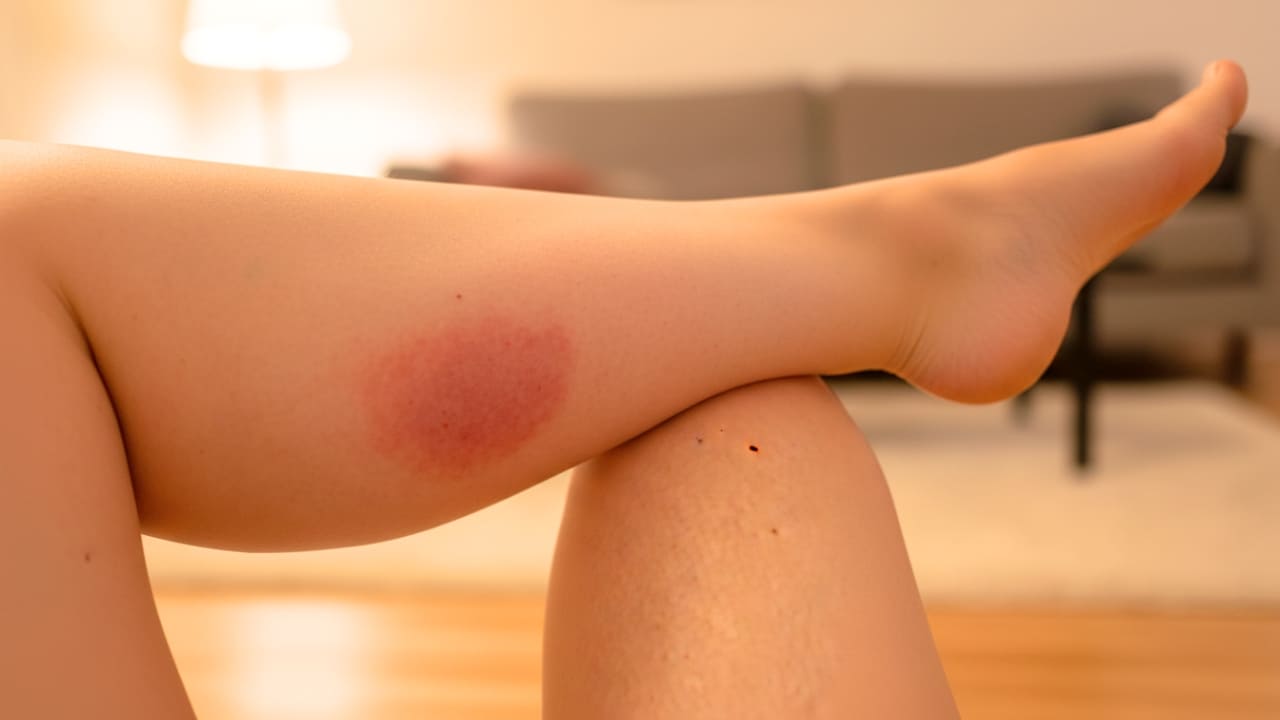
Image Credit: Celina Morgan, Florida
For early-stage infection — redness and mild swelling still contained near the bite, no fever, no spreading — home care is appropriate as a starting point.
- Clean the area gently with mild soap and warm water — do this at least twice a day
- Apply a topical antibiotic ointment such as bacitracin to help reduce bacterial load at the surface — avoid neomycin-containing products, as neomycin is a common contact allergen that can cause additional skin irritation on already inflamed skin
- Cover the bite with a clean bandage to prevent further contamination and reduce scratching
- Keep fingernails short and clean — this is not optional advice for children
- Apply a cool compress to reduce swelling and itching
- Take an oral antihistamine to manage the itch response and reduce the urge to scratch
- Monitor the area every few hours — draw a line around the edge of the redness with a pen and check whether it expands
That last tip — drawing a line around the redness — is genuinely useful and used in clinical settings. If the redness crosses your line within a few hours, that is objective evidence the infection is spreading and home care is not sufficient.
If the itching and swelling from a fresh bite are making it hard to leave alone, there are proven home remedies that can calm the reaction significantly within hours. Our guide on Home Remedies to Get Rid of Mosquito Bites Overnight covers the most effective options for fast relief — which matters, because less itching means less scratching, and less scratching means lower infection risk.
Medical Treatment for Cellulitis From Mosquito Bites
Once cellulitis is diagnosed or strongly suspected, medical treatment is not optional. This is not a situation that responds to home care alone.
Oral antibiotics are the standard first-line treatment for mild to moderate cellulitis, consistent with Infectious Diseases Society of America (IDSA) guidance. Cephalexin is the most commonly prescribed first-line antibiotic for non-MRSA cellulitis.
If MRSA (methicillin-resistant Staphylococcus aureus) is suspected — based on risk factors or failure to respond — your doctor will choose a different antibiotic accordingly. The specific agent and duration will be determined by your treating physician based on the clinical picture.
The full prescribed course of antibiotics should be completed as directed. Stopping early because symptoms have improved is one of the most common reasons cellulitis recurs or fails to resolve fully.
In more serious cases — high fever, rapidly spreading infection, failure to respond to oral antibiotics, or immunocompromised patients — intravenous antibiotics and hospital admission may be necessary.
In the most serious cases, infection can progress to sepsis — a life-threatening systemic response that can develop following bacterial spread beyond the skin. This outcome is uncommon but real, and it underscores why spreading cellulitis should never be left untreated.
Mosquito Bite vs Infected Bite vs Cellulitis: At-a-Glance
| Normal Bite Reaction | Early Infection Signs | Cellulitis — Seek Care Now |
| Small red bump at bite site | Redness spreading beyond the bite | Rapidly spreading red area |
| Mild itching for 1–2 days | Increasing pain and tenderness | Fever above 38°C / 100.4°F |
| Minor swelling around bite | Warmth around the bite area | Red streaks extending from bite |
| Resolves within a few days | Pus or cloudy discharge | Swollen lymph nodes |
| No systemic symptoms | Swelling worsening after 48 hours | Fatigue, chills, or body aches |
| Verdict: Monitor at home | Verdict: Begin home care, watch closely | Verdict: See a doctor immediately |
When to See a Doctor for an Infected Mosquito Bite: Clear Guidance
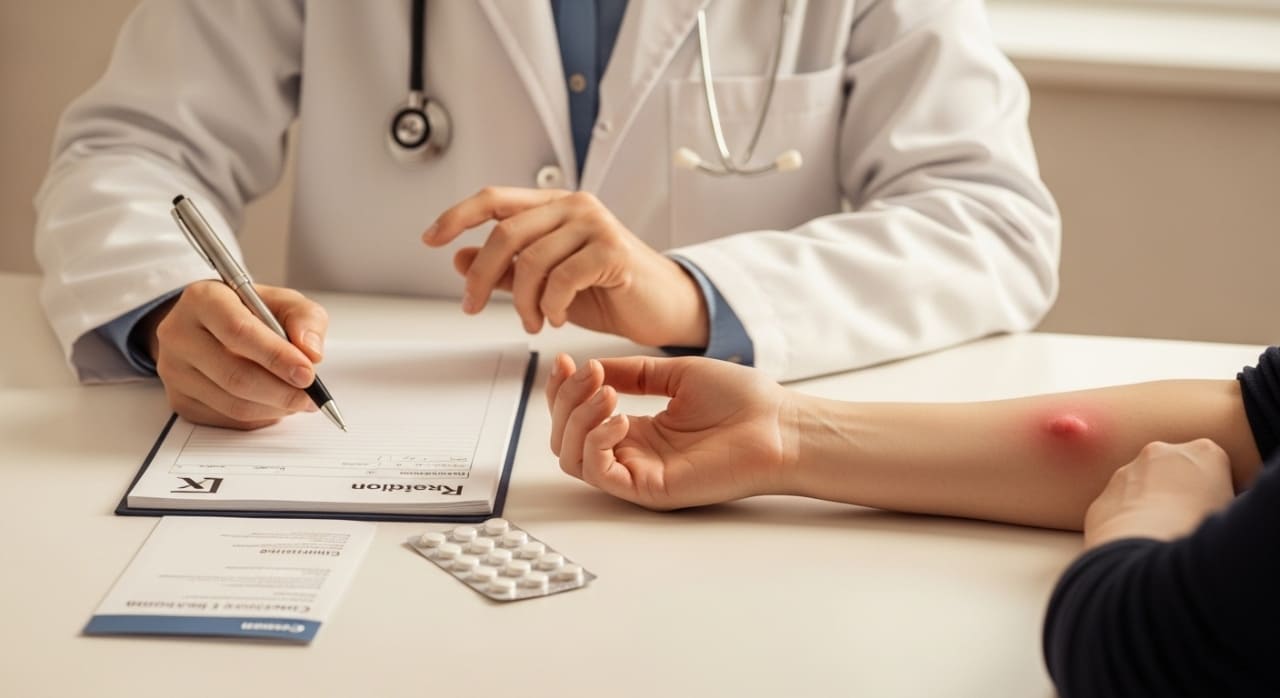
Image Credit: Illustration by Author
Some people wait too long. Others go too early. Here is a clear framework for when medical care is actually needed:
i) Go to a doctor or urgent care the same day if:
- Redness is spreading rapidly — especially if it has expanded significantly within a few hours
- Red streaks are radiating outward from the bite site in any direction
- You have any fever at or above 38°C / 100.4°F alongside spreading skin symptoms
- The bite site is draining significant pus or there is clear abscess formation
- You are diabetic, immunocompromised, or have a circulation condition and the bite is not improving
ii) Go to an emergency room if:
- You have a high fever above 39°C / 102°F with chills and feel systemically unwell
- Red streaks are spreading toward the torso
- You feel confused, have a rapid heart rate, or feel disproportionately unwell relative to what appears to be a skin issue — these may be early signs of sepsis
- A child under two years old has visible signs of bite infection with any fever
iii) Monitor at home and reassess in 24–48 hours if:
- Redness is contained to the immediate bite area
- There is no fever
- The bite is uncomfortable but not significantly worsening
- You have started appropriate home care and can check on it regularly
How to Prevent Infected Mosquito Bites
Prevention works at two levels — preventing mosquito bites in the first place, and preventing a bite that has already happened from becoming infected.
i) Preventing the bite from getting infected:
- Resist scratching — easier said than done, but it is the single most important thing
- Clean every bite with soap and water shortly after it occurs
- Apply topical antihistamine or hydrocortisone cream to reduce the itch response early
- Keep fingernails short and clean, especially for children
- Cover bites that are in areas prone to scratching or contact with surfaces
- Avoid picking at any scab that forms over the bite
For those who prefer a more natural approach to soothing bite reactions, certain essential oils have shown mild anti-inflammatory and calming properties that may help reduce itching before it leads to scratching. See our guide on What Essential Oils Can You Use for Mosquito Bites? for a full breakdown of which oils are worth trying and how to use them safely.
ii) Preventing mosquito bites to begin with:
- Use a CDC-recommended repellent — DEET, picaridin, or Oil of Lemon Eucalyptus applied to exposed skin
- Wear long-sleeved clothing in high mosquito environments, especially at dawn and dusk
- Use mosquito nets around sleeping areas in high-exposure settings
- Eliminate standing water around the home — this removes breeding sites and reduces local mosquito populations
- Keep window and door screens in good repair
The Bottom Line on Infected Mosquito Bites and Cellulitis
Most mosquito bites are harmless and resolve on their own within a few days. The problem starts when scratching introduces bacteria into the skin break, and infection takes hold.
Early infection is manageable with proper wound care. Cellulitis is more serious — it spreads, it causes systemic symptoms, and it requires antibiotics. The trajectory of symptoms is what matters most: a bite getting better is reassuring, a bite getting worse is a warning.
The red streaks rule is worth repeating one more time. If you see red streaks extending from a bite site, that is a same-day medical situation. Everything else has some room for monitoring. That does not.
Prevention is simple in principle — do not scratch, clean the bite, and use proper repellent to reduce bites in the first place. None of it is complicated. It just requires actually doing it rather than assuming a bite will take care of itself.
For bites that have already left behind marks or discoloration, see our related guide: How to Get Rid of Mosquito Bite Scars?
📰 Must Read,
✔️ 8 Home Remedies to Treat Mosquito Bites in Babies
✔️ Why do Mosquito Bites Itch More at Night Time?
Frequently Asked Questions (FAQs)
Q. Can mosquito bites get infected?
Yes — and it happens more often than people expect. The bite itself is not the infection. It is the scratching that follows. Breaking the skin introduces bacteria, and from there things can escalate quickly if the area is not kept clean. Most infections are preventable. Most people just do not take bites seriously enough to bother.
Q. What do mosquito bites look like when infected?
A normal bite is a small raised bump — pink, itchy, contained. An infected one looks angrier. The redness spreads beyond the original bump, the skin around it feels warm, and the swelling is noticeably bigger than it should be. You might see pus or fluid. The area is tender when you press it. It does not look like it is getting better — it looks like it is getting worse every time you check.
Q. How to tell if mosquito bites are infected?
The direction of change is the clearest signal. Normal bites improve within a day or two. Infected bites keep going in the wrong direction — more red, more swollen, more painful. If the redness is spreading outward, the skin feels hot, or there is any discharge, those are infection signs. Draw a line around the redness with a pen and check back in a few hours. If the redness has crossed your line, it is not resolving on its own.
Q. What to do with infected mosquito bites?
Clean the area with mild soap and warm water — do it properly, not just a quick rinse. Apply a bacitracin ointment and cover it with a clean bandage. Stop scratching. Monitor it closely every few hours. If it is spreading, warming up, or you develop any fever — stop home-treating and see a doctor. Early infection responds well to basic care. Infection that has had a day or two to establish itself often does not.
Q. What to use for infected mosquito bites
For early infection at home: bacitracin ointment, a clean bandage, and a cool compress for the swelling. An oral antihistamine helps reduce the itch that keeps making things worse. Avoid neomycin products — they are a common contact allergen and can make inflamed skin angrier. If the infection is progressing past the surface, a doctor will likely prescribe oral antibiotics. That is not something you can replicate with over-the-counter products.
Q. Why do my mosquito bites always get infected?
A few possible reasons. Scratching habitually and not realizing it — especially during sleep. Fingernails carrying bacteria to the bite site repeatedly. Underlying skin conditions like eczema that compromise the skin barrier and make infection easier to establish. Or in some cases, a suppressed immune response from medication, stress, or an underlying condition. If it happens consistently, it is worth mentioning to a doctor rather than assuming it is just bad luck.
Q. Can mosquito bites cause cellulitis?
Yes. Cellulitis is one of the more serious outcomes of an infected mosquito bite. It occurs when bacteria breach the skin surface and reach the deeper layers — the dermis and subcutaneous tissue. It causes spreading redness, significant swelling, skin warmth, and often fever. Unlike surface-level infection, cellulitis does not resolve with home care alone. It needs antibiotics, and sometimes hospital-level treatment if it progresses far enough.
Q. How to treat infected mosquito bites
Depends entirely on how far along the infection is. Early and mild — clean it, apply topical antibiotic, cover it, monitor it. Spreading redness, warmth, or any fever — see a doctor for oral antibiotics. Cellulitis with systemic symptoms — that is a same-day medical situation, not a wait-and-see one. The mistake most people make is staying in home-care mode for too long when the infection has already moved past what home care can manage.
Q. How long does it take for an infected mosquito bite to heal?
A mild surface infection treated promptly can resolve within three to five days with proper care. Cellulitis treated with antibiotics typically improves noticeably within two to three days of starting treatment, though the full course — usually seven to fourteen days — needs to be completed. Stopping antibiotics early because it looks better is one of the most common reasons cellulitis comes back. Incomplete treatment is not a shortcut, it is a setup for recurrence.
Q. Can you get MRSA from a mosquito bite?
Not from the mosquito bite itself — mosquitoes do not transmit MRSA. But scratching a bite with hands or nails that carry MRSA bacteria on the skin surface can introduce it into the wound. MRSA-related skin infections look similar to regular cellulitis but do not respond to standard antibiotics like cephalexin. If an infected bite is not improving after a few days of antibiotics, MRSA is one of the things a doctor will consider.
Q. Should I pop the blister or pus from an infected mosquito bite?
No. Draining it yourself breaks the skin further, introduces more bacteria, and can push the infection deeper into tissue. If there is significant pus or abscess formation, that needs to be assessed by a doctor who can drain it properly under controlled conditions if needed. What looks like a simple blister on the surface can be more involved underneath. Leave it alone and get it looked at.
Q. Can infected mosquito bites spread to other parts of the body?
The infection itself does not jump from bite to bite. But cellulitis can spread outward from the original site through tissue — and in serious cases, bacteria can enter the lymphatic system or bloodstream and cause systemic illness. Scratching an infected bite and then touching other areas of broken skin can transfer bacteria. The bigger concern is the infection deepening and spreading from the single original site rather than appearing in new locations.
