
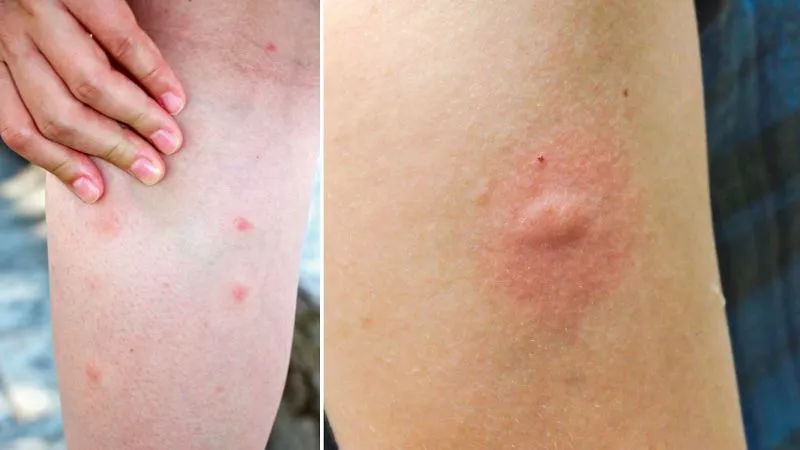
Mosquito bites are among the most frequent and annoying irritations that people experience all over the world. Apart from just annoying, mosquito bites are accompanied by various health risks since mosquitoes can transmit malaria, dengue fever, the Zika virus, and the West Nile virus besides the bites.
Over a long time, a lot of home remedies and natural cure proponents claiming that they can reduce mosquito bites in a natural way have been circulating and among them is the idea of Vitamin B12, as it claims that Vitamin B12 prevent mosquito bites or it is being a repellent for mosquitoes, which is one of the most popular one.
Nevertheless, is there some element of truth in this claim? If it is so, is vitamin B12 also known as cobalamin, capable of preventing mosquito bites?
This piece of article presents a detailed scientific review on vitamin B12 and the prevention of mosquito bites and elaborates on the history and reasons for its popularity as a home remedy, reviews recent scientific studies, and also indicates what really works to protect from mosquito bites.
This analysis leverages the most recent research together with the consensus of experts from the fields of entomology, public health, and medicine.
What Is Vitamin B12 and Its Health Importance?
Vitamin B12 is one of the eight needed B vitamins which are critical to human health. Its major functions are:
- DNA synthesis and cell division
- Formation of red blood cells
- Nervous system function and nerve health
- Metabolism of fats and carbohydrates
Vitamin B12 is naturally found in animal-based foods such as meat, fish, eggs, and dairy. Because it is almost absent in unfortified plant-based foods, vegans and vegetarians can be at risk of deficiency without supplementation or fortified foods.
Vitamin B12 deficiency can cause anemia, fatigue, cognitive issues, and nerve damage. Therefore, it is important to maintain adequate B12 levels through diet or supplements. Anyway, the biological roles of vitamin B12 do not have a direct connection with mosquito attraction or making insects stay away.
Do really Vitamin B12 Prevent Mosquito Bites?
No. The release of scientific evidence and the agreement of experts have declared that Vitamin B12 cannot keep mosquitoes from biting. Some time ago, the idea of a B vitamin complex in preventing mosquito bites might have been believed by travelers and cured only by the people’s hands. Today the performed experiments clearly show that vitamin B12 intake has no effect on the mosquito’s behavior nor the frequency of bites.
The Origin of the Vitamin B12 (Including other Vitamin B’s) Mosquito Repellent Myth
The concept that vitamin B could ward off mosquito bites was already known in the 1940s. First person stories of that time reported that taking vitamin B1 (thiamine) could diminish mosquito biting. The reason for this claim is probably that B vitamins can slightly change body odor due to metabolic changes.
The hypothesis was that the modification of skin secretions or chemicals in breath caused by vitamin B intake might drive away the mosquitoes. Later on, this notion evolved and practically it included all the B vitamins like vitamin B12.
That idea survived for quite some time and was transmitted among travel forums, home remedy books, and the common folklore. Some travelers are taking vitamin B supplements still and say that they are getting fewer bites. In addition to this, B vitamin rich foods such as the Marmite yeast spread were also believed to have protective properties.
Biological mechanism behind this phenomenon was still unclear and even skeptics could not refute it because of the lack of rigorous scientific proofs.
What Scientific Research Says About Vitamin B12 and Mosquito Bite Prevention
Controlled Studies and Experimental Evidence
Scientific experiments have been testing this theory in different ways for many years. Generally, they conduct controlled experiments using human volunteers who take vitamin B supplements, and then they compare the number of mosquito landings on these people with a placebo group.
A major 2005 research published in the Journal of the American Mosquito Control Association looked at how various vitamin B complex regimens affected the attraction of odor from the human skin to Anopheles stephensi mosquitoes, a malaria vector species. The study showed the following:
- There is no significant effect of vitamin B on mosquito attraction found by the researchers.
- There is a wide range of natural differences between individuals in the degree of attractiveness to mosquitoes that are not related to ingestion of B vitamins.
- The main reasons for mosquito attraction are breathing out carbon dioxide, body heat, and skin surface bacteria while vitamin supplementation is unlikely to affect them.
Oral B vitamins including vitamin B12 do not cause mosquito repellency nor do they reduce biting rates regardless of dosage or administration route as confirmed by more recent studies.
Systematic Reviews and Expert Consensus
One of the points of the 2022 scoping review which emphasized over 100 scientific documents on the possible function of thiamine (vitamin B1) as a repellent was that no evidence was found for any repellency against arthropods by oral thiamine or other B vitamins. The mode of action of insects is not changed by the vitamins taken as a supplement. In addition, it also concluded that vitamin B12 also lacks repellent properties.
Public health agencies such as the U.S. Centers for Disease Control and Prevention (CDC) and the World Health Organization (WHO) do not endorse vitamin B or other oral supplements as effective insect repellents.
Summary of Scientific Conclusions
- The supplementation of vitamin B12 does not lead to reduced mosquito attraction to humans.
- The occurrence of mosquito bites will not differ between vitamin B deficient individuals and those who have been given supplements.
- Mosquitoes mainly depend on physiological cues which are not influenced by vitamin levels, for example, carbon dioxide, body temperature, sweat, and skin microbiome odors.
- Oral vitamin B12 intake is not a substitute for topical repellents or protective measures.
Reasons Why Vitamin B12 Supplements Do Not Work as Mosquito Repellents
Vitamin B12 or any other B vitamin’s failure to prevent bites can only be understood if we go through the whole process of mosquitoes that show who their next victim is.
- Carbon dioxide (CO₂): Mosquitoes can track human breath emissions from quite a distance and since this is the only way to find the closest hosts, they stick to it. The consumption of vitamin B12 has no effect on this exhaled gas.
- Body heat: Mosquitoes are lured by the heat they identify from the body but vitamin supplements cannot change this.
- Skin odor: The human skin that is rich in bacteria produces many different volatile compounds. They are the direct result of the bacteria consuming the skin and the person’s own genes. Vitamin B12 does not really alter our skin chemistry in a way that mosquitoes would find uncomfortable i.e. they prefer it or they dislike it.
- Visual and humidity cues: Small movements, darkness, and certain sweat related moisture all give signals to the mosquito that it is time to move closer. No one thinks that a vitamin would have the power to change any of these.
Fundamentally, mosquitoes do what their basic, evolutionary sensory systems lead them to. These systems are, among others, characters of the CO₂ and other strong signals and are not changed by vitamin supplementation.
Examples Demonstrating the Lack of Effectiveness of Vitamin B12 on Mosquitoes
- Comparing human skin extracts taken before and after vitamin B12 administration, mosquito feeding preferences did not vary in a laboratory setting.
- An observational study that tracks diseases in the field notes that the incidence of mosquito borne diseases in persons taking vitamin B12 did not decrease significantly compared to the control group.
- Furthermore, some researchers have found that certain B vitamin rich foods may slightly entice mosquitoes due to the release of associated metabolic byproducts, thus unveiling the contradictory character of unsubstantiated claim of folk origin.
What Actually Works to Prevent Mosquito Bites?
As this myth is disproved, what other means tested by science would be used to decrease mosquito bites?
1. Use of Topical Insect Repellents
- DEET, picaridin, IR3535, and oil of lemon eucalyptus (OLE) based repellents are proven effective. These compounds interfere with mosquito receptors to confuse and deter them temporarily and safely.
- Do it as recommended on the skin of parts exposed to air and if you want continuous protection, reapply as often as needed.
2. Protective Clothing
- Covering skin with long-sleeved shirts, pants, socks, and hats creates physical barriers.
- Light colored tightly woven fabrics are good as they reduce mosquito landing and biting.
- Impregnated with permethrin, clothing provides longer lasting repellency.
3. Environmental and Behavioral Measures
- Eliminate stagnant water where mosquitoes breed (flowerpots, buckets, gutters).
- Use window and door screens or bed nets, especially in malaria-endemic regions.
- Avoid outdoor exposure during peak mosquito activity times such as dawn and dusk.
Integrating Vitamin B12 Into Your Health Regimen Without Expecting Mosquito Protection
While vitamin B12 provides essential body functions and is vital for nervous system health, energy production, and blood cell formation, it should be consumed as part of a balanced diet or supplementation when medically indicated — not as a mosquito bite prevention strategy.
If following a vegan or vegetarian diet, or experiencing symptoms of B12 deficiency (fatigue, numbness, memory issues), consult a healthcare professional to assess the need for supplementation.
📰 Must Read,
✔️ What Foods can you Eat to Repel Mosquitoes?
✔️ What Fish Eat Mosquito Larvae? List of Mosquito Larvae Eating Fish
Summary of Key Points
| Aspect | Fact/Science Summary |
|---|---|
| Does Vitamin B12 repel mosquitoes? | No. None of the scientific evidence supports it as an effective repellent. |
| Biological reasons | Mosquito attraction is driven by CO₂, heat, skin odors—not altered by vitamin B12. |
| Controlled studies | Confirm no reduction in mosquito bites after vitamin B12 intake. |
| Public health stance | CDC, WHO do not recommend vitamin B12 for bite prevention. |
| Effective protection methods | Use topical repellents, protective clothing, and environmental controls. |
| Vitamin B12 health role | Essential nutrient unrelated to insect bite prevention. |
Conclusion
In fact, to sum up, despite of an often repeated popular myth among the public, vitamin B12 is not a tool to fight off mosquito bites. A number of scientific and controlled trials have convergent findings that no B12 supplementation will affect the insect’s attraction or their behavior regarding biting. In other words, the biological mechanisms upon which mosquitoes lean are not overridden by vitamin intake.
If your main objective is to avoid mosquito bites then you should not rely on vitamin B12 supplement but rather on repellents that have been approved by science, such as DEET and picaridin, protective clothing including permethrin treated garments and the use of bed nets and reduction of breeding grounds for mosquitoes.
Vitamin B12 is, without a doubt, a very important nutrient of our bodies, and it is recommended that it is taken for the sake of the body’s nutritional benefits but it is not the case that it is the direct factor responsible for the elimination of mosquito bites.
