
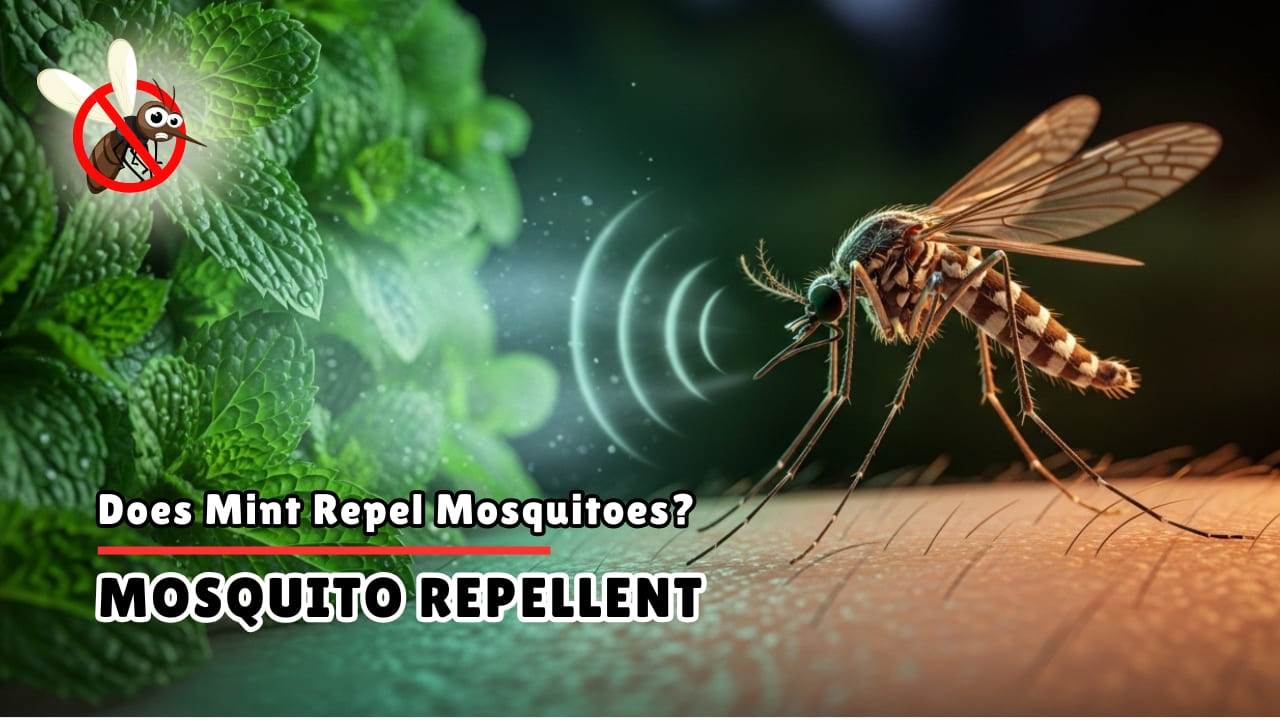
Walk through any gardening forum or natural living blog and you’ll find the same advice repeated with quiet confidence: plant mint near your windows, keep a pot on the balcony, rub a few leaves on your arms. The implication is clear — mosquitoes hate mint, and the plant alone is enough to keep them away.
It’s a nice idea. Mint smells good, grows easily, and requires almost no effort. The appeal of a natural solution that also looks and smells pleasant is completely understandable. But does it actually work? Is there real science behind mint as a mosquito repellent, or is this mostly garden folklore that’s been repeated so often it’s started to feel like fact?
The answer is more interesting — and more nuanced — than a simple yes or no. Mint does contain biologically active compounds that affect mosquito sensory systems. The evidence for concentrated mint essential oil as a repellent is real and documented. But the potted plant sitting on your patio? That’s where things get considerably more complicated.
Does Mint Keep Mosquitoes Away? The Evidence-Based Answer
Mint plants produce volatile aromatic compounds as part of their natural chemical defense system. These compounds — menthol, menthone, limonene, and others — are released into the surrounding air in small quantities, and research has confirmed that several of them interact with mosquito olfactory receptors in ways that are at minimum disruptive and in some cases genuinely repellent.

Image Credit: Illustration by Author
So yes, mint has a biological basis for repelling mosquitoes. The chemistry is real.
But a single undisturbed mint plant on a balcony releases these compounds at concentrations far too low to create meaningful protection against mosquitoes actively tracking carbon dioxide and skin odor plumes. The plant isn’t doing nothing — it’s just not doing enough on its own to matter in any practical sense. The concentration of volatile oils in the surrounding air from a living plant is a fraction of what’s required to interfere with mosquito navigation at the distances that matter.
The distinction between mint-the-plant and mint-the-concentrated-oil is the most important thing to understand here, and it’s the part that most gardening advice quietly skips over.
The Compounds in Mint That Actually Affect Mosquitoes
Mint’s repellent properties — to whatever degree they exist — come from its essential oil fraction. The primary compounds and their mechanisms:
- Menthol — the dominant compound in peppermint oil, menthol activates cold-sensitive TRPM8 receptors in some insects and appears to interfere with olfactory receptor neurons that mosquitoes use to detect host cues. It’s the compound most associated with the sensory disruption effect.
- Menthone — a ketone present alongside menthol in peppermint, menthone contributes to the overall volatile profile and has shown insect-repellent activity in several laboratory studies, though it’s less studied than menthol specifically.
- Limonene — a terpene found across many aromatic plants including mint, limonene has documented insecticidal and repellent properties across multiple insect species. It’s also present in citrus peels, which is why lemon eucalyptus oil is one of the few plant-based repellents with CDC recognition.
- Pulegone — found particularly in pennyroyal mint varieties, pulegone is one of the more potent insect-repellent compounds in the mint family and has been studied specifically for mosquito deterrence.
These compounds work by confusing or overstimulating the mosquito’s chemosensory system — the olfactory receptor neurons that it depends on to detect carbon dioxide, body heat signals, and the skin volatile compounds that guide it to a host. When these receptors are disrupted by competing aromatic signals, the mosquito’s ability to navigate toward a host degrades. It’s sensory interference rather than toxicity.
The critical variable is concentration. The effect is dose-dependent. Below a certain threshold, the interference is insufficient to redirect a host-seeking female. Above it — as studies on peppermint essential oil have demonstrated — the repellent effect becomes real and measurable.
Table 1 — Mint Varieties: Repellent Compound Comparison
| Mint Variety | Primary Repellent Compound | Menthol Content | Relative Repellent Strength | Best Use |
|---|---|---|---|---|
| Peppermint | Menthol, Menthone | 40–55% | High | Skin application, sprays |
| Spearmint | Carvone | < 1% | Low–Moderate | Garden planting, mild sprays |
| Pennyroyal | Pulegone | Trace | High (irritant risk) | Not for direct skin use |
| Cornmint | Menthol, Menthone | 70–80% | Very High | Essential oil extraction |
| Watermint | Mixed terpenes | 10–20% | Moderate | Garden planting |
Does Peppermint Oil Repel Mosquitoes? What the Research Shows
Peppermint essential oil has been studied more than any other mint-derived compound as a mosquito repellent, and the laboratory findings are genuinely encouraging.
Studies have demonstrated that peppermint oil applied to skin provides measurable repellent activity against Aedes aegypti and Culex mosquitoes, with protection times in controlled laboratory conditions ranging from roughly 90 minutes to over two hours at appropriate concentrations. That’s not comparable to DEET or picaridin — both of which provide significantly longer and more reliable protection — but it’s not nothing either. For a plant-derived compound, those are meaningful numbers.
The mechanism aligns with what we know about mint chemistry. Peppermint oil components, particularly menthol and menthone, interfere with the olfactory detection system mosquitoes use to track hosts. The concentrated oil creates a chemical environment around the skin surface that masks or disrupts the volatile organic compound signature mosquitoes are following.
The Limitations Are Real
Essential oils evaporate quickly. Skin application of peppermint oil loses effectiveness within one to two hours under normal conditions — faster in heat, humidity, or when sweating occurs. Re-application is frequent and the concentration needs to be meaningful, which brings its own considerations given that undiluted peppermint oil causes skin irritation in many people.
Laboratory conditions also tend to be optimistic. In the open, complex, variable environment of a real garden or patio, with wind disrupting volatile plumes and multiple competing scent sources, performance typically falls below controlled study results. This is true of most plant-based repellents, not just mint.
Mint Plants vs Crushed Leaves vs Essential Oil: Which Actually Works?
These three forms of mint are not interchangeable from a repellent perspective, and understanding why matters for setting realistic expectations.
A living mint plant releases its volatile oils passively and gradually into the surrounding air. The concentrations near an undisturbed plant are low — pleasant to humans, but insufficient to create the kind of sensory interference that redirects mosquitoes. The plant’s oils are primarily in the leaf tissue, not freely circulating in the air at meaningful concentrations.
Crushed mint leaves are considerably more effective than intact plants. Physical damage to the leaf releases essential oil from glandular trichomes — the tiny structures on the leaf surface that store it — resulting in a sudden, concentrated burst of volatile compounds.
Rubbing crushed leaves on skin or nearby surfaces creates a short-term localized effect. The concentration is higher, the mechanism is the same as with the oil, and the duration is still limited but meaningfully better than the passive plant.
Peppermint essential oil is the most concentrated and therefore most effective form. Properly diluted in a carrier oil or water-based spray and applied to skin or clothing, it provides the best repellent performance of the three. The gap between a potted plant and a properly applied essential oil spray is substantial — they are not equivalent options.
Table 2 — Mint Form vs Effectiveness
| Form | Volatile Release | Protection Duration | Repellent Strength | Practical Verdict |
|---|---|---|---|---|
| Live potted plant (undisturbed) | Passive, very low | Negligible | Very Low | Decorative value only |
| Freshly crushed leaves (on skin) | Burst release, moderate | 30–45 minutes | Low–Moderate | Quick field option |
| Homemade mint-leaf spray | Infusion, low concentration | 45–60 minutes | Moderate | Easy DIY, short reapplication window |
| Diluted peppermint oil | High concentration | 60–90 minutes | Moderate–High | Best plant-based option |
| Undiluted peppermint oil | Very high | 90–120 minutes | High | Skin irritation risk — always dilute |
How to Use Mint as a Natural Mosquito Repellent?
If you want to incorporate mint into your mosquito control approach, here’s what’s actually likely to help versus what’s largely decorative:
- Crush leaves near outdoor seating — run your hands through a nearby mint plant before sitting outside. The released oils create a short-term localized scent burst that may deter mosquitoes in the immediate vicinity.
- Make a simple mint spray — steep fresh mint leaves in boiling water, cool completely, strain, and transfer to a spray bottle. Apply to clothing and skin before going outside. This is a low-concentration essential oil infusion and provides mild, short-duration repellent effect.
- Diluted peppermint oil application — 10 to 15 drops of peppermint essential oil in 30ml of carrier oil or witch hazel applied to exposed skin. Reapply every 60 to 90 minutes. This is the most effective mint-based approach with actual research support.
- Plant mint alongside other aromatic herbs — a combination of mint, basil, lavender, and lemongrass near outdoor areas creates a layered aromatic environment that may have modest collective deterrent effect. No single plant is sufficient; the combination approach is more reasonable.
- Avoid expecting the plant alone to work — a pot of mint on the patio is pleasant, and not entirely useless, but it should not be your primary mosquito protection strategy if you live in an area with significant mosquito pressure.
Other Plants Used as Natural Mosquito Repellents
Mint is one of several aromatic plants that gardeners and natural living advocates commonly recommend for mosquito deterrence. The others worth mentioning:
Table 3 — Repellent Plants Comparison
| Plant | Key Volatile Compounds | Passive Release (Live Plant) | Oil Effectiveness | Notes |
|---|---|---|---|---|
| Peppermint | Menthol, Menthone | Low | Moderate–High | Most studied mint for repellence |
| Basil | Linalool, Eugenol | Moderate | Moderate | Stronger passive release than mint |
| Citronella Grass | Citronellal, Geraniol | Low | High | CDC-recognized when as oil |
| Lavender | Linalool, Camphor | Moderate | Moderate | Dual use — repellent and calming |
| Lemongrass | Citronellal, Geraniol | Moderate | High | Closely related to citronella |
| Rosemary | Camphor, Alpha-pinene | Low–Moderate | Moderate | Effective as burning smoke deterrent |
| Pennyroyal | Pulegone | Moderate | High | Toxic to pets — use with caution |
- Peppermint — contains 40 to 55 percent menthol in its essential oil — the compound most responsible for disrupting the olfactory receptor neurons mosquitoes use to track hosts. Laboratory studies document 90 minutes to two hours of protection when properly diluted and applied to skin. The live plant releases too little passively to matter; the oil is where the repellent effect actually lives.
- Spearmint — contains less than one percent menthol, relying instead on carvone as its primary volatile compound — which has some insect-deterrent activity but is considerably weaker than menthol against mosquitoes. Applied as a diluted oil it provides mild, short-duration repellent effect, noticeably less potent than peppermint. If repellence is the goal, spearmint is the weakest mint option worth considering.
- Pennyroyal — contains pulegone — one of the most potent insect-repellent compounds in the mint family, significantly stronger than menthol. It works well as a border plant for ambient deterrence, but direct skin application is not recommended due to pulegone’s toxicity, and it is genuinely dangerous to cats, dogs, and children. High potency, high caution.
- Citronella grass — is the source of citronella oil — one of the only plant-based repellents registered as a biopesticide by the U.S. Environmental Protection Agency — with primary compounds citronellal and geraniol that are among the most well-documented natural mosquito deterrents in entomological literature. The live plant releases these compounds at low passive concentrations, so real protection comes from the extracted oil rather than the garden specimen. Citronella candles and torches extend that effect into the immediate surrounding air but are largely neutralized by wind.
- Basil — releases higher concentrations of active volatiles — linalool and eugenol — from its leaves without being crushed than most other repellent plants, making it a stronger live-plant performer than mint in ambient outdoor conditions. Some studies have also shown larvicidal properties in basil leaf extracts, adding utility beyond just adult deterrence. Among common kitchen herbs, basil arguably earns its repellent credentials more convincingly than mint as a potted plant alone.
- Lavender — contains linalool and camphor — both documented to disrupt mosquito chemosensory detection — and is one of the better live-plant performers since warm sun on the flower heads increases volatile output noticeably. Diluted lavender oil on skin provides moderate protection comparable to spearmint in duration. Dried lavender retains meaningful volatile activity, making it one of the few repellent plants that works usefully indoors as sachets or bundles.
- Lemongrass — shares its primary compounds — citronellal and geraniol — with citronella grass and performs comparably in most laboratory repellent comparisons against Aedes and Anopheles species. Bruising or crushing the stems dramatically increases volatile release, creating a concentrated burst similar to crushing mint leaves. One of the better passive performers as a live garden plant in warm conditions.
- Rosemary — contains camphor, alpha-pinene, and 1,8-cineole — all with documented insect-deterrent activity — but its most practical repellent application is as a burning material rather than a live plant or skin-applied oil. Tossing fresh or dried sprigs onto an outdoor fire produces a fragrant smoke that deters mosquitoes in the immediate area more effectively than the undisturbed plant. The smoke application is where rosemary earns its place in a natural mosquito control strategy.
- Cornmint — is the primary commercial source of natural menthol worldwide, with an essential oil containing 70 to 80 percent menthol — considerably more than peppermint. That makes it the strongest mint variety for repellent use in concentrated oil form, though it’s rarely sold in garden centers under this name. If repellence rather than cooking is the goal, cornmint oil outperforms peppermint straight on chemistry.
- Watermint — is a parent species of peppermint and contains a mixed terpene profile with menthol content in the 10 to 20 percent range — above spearmint, below peppermint. It grows naturally in damp, waterlogged conditions, making it strategically useful planted near garden water features where mosquitoes already tend to congregate. Moderate repellent strength, but the placement advantage is genuinely practical.
All of these plants work on the same principle — volatile aromatic compounds that interfere with mosquito chemosensory systems. All of them face the same limitation: live plants in open outdoor conditions don’t release enough to provide reliable protection on their own.
📰 Must Read,
✔️ 40+ Plants that Keep Mosquitoes Away
✔️ 10 Best Hanging Plants that Keep Mosquitoes Away
Myth vs Reality: What Mint Plants Actually Do
The persistent belief that a mint plant near the door will keep mosquitoes away is understandable but largely optimistic. It comes from real chemistry extrapolated beyond what the delivery mechanism — a live plant in ambient air — can actually achieve.
What’s true: mint contains compounds that affect mosquito sensory systems. What’s exaggerated: that a potted plant at normal conditions creates meaningful protection. What’s misunderstood: the enormous difference in concentration between a live plant and a properly applied essential oil.
Mint as part of a broader mosquito management approach — alongside physical barriers, source reduction, DEET or picaridin repellents, and limiting outdoor exposure at peak hours — is sensible. Mint as a standalone solution in a high-mosquito environment is going to disappoint.
Final Verdict: Is Mint an Effective Mosquito Repellent?
Mint has a legitimate biological basis for mosquito repellence. The compounds are real. The mechanism — sensory disruption of mosquito olfactory systems — is scientifically grounded. And peppermint essential oil, used at appropriate concentrations and reapplied regularly, provides moderate and genuinely documented repellent activity.
The gap is in the delivery. A living plant releases too little to matter much in open outdoor conditions. Crushed leaves help short-term. Concentrated oil, properly applied, is where the real effect lives.
If you enjoy growing mint, grow it. Crush the leaves when you sit outside. Make a spray if you’re inclined. But pair it with something more reliable if you’re in an environment where mosquitoes are a serious problem — because mint is a contributor to a layered defense strategy, not a complete solution on its own. The biology supports cautious optimism, not unconditional enthusiasm.
📰 Must Read,
✔️ Plants That Attract Dragonflies to Your Garden
✔️ 5 Mosquito Repellent Plants Safe for Dogs
Frequently Asked Questions (FAQs)
Q. Does growing mint keep mosquitoes away
Growing mint in your garden or on your balcony contributes something real but falls well short of actual protection. The plant continuously releases volatile oils — menthol, menthone, limonene — into the surrounding air, but at concentrations that a mosquito actively tracking a CO₂ and body heat signal will simply override. Think of it as background noise rather than a barrier. Where growing mint genuinely helps is in giving you a constant supply of fresh leaves to crush and apply, which is the more effective delivery method. The plant is the raw material. The protection comes from what you do with it.
Q. Does spearmint repel mosquitoes?
Spearmint does have mosquito-repellent properties but is noticeably weaker than peppermint in this specific application. The key difference is menthol content — peppermint contains 40 to 55 percent menthol, while spearmint contains less than one percent, relying instead on carvone as its primary volatile compound. Carvone has some documented insect-deterrent activity but is considerably less potent against mosquitoes than menthol. Spearmint oil applied to skin will provide mild, short-duration repellent effect. It’s not ineffective, but if repellence is the goal, peppermint is the significantly stronger choice.
Q. Does mint actually repel mosquitoes or is it just a myth?
Mint contains real compounds — menthol, menthone, limonene — that interfere with mosquito olfactory receptors. So the chemistry is legitimate. The myth part is the potted plant on the balcony doing meaningful work on its own. The plant releases these compounds at concentrations far too low to matter. Concentrated mint oil applied to skin is a different story — that has actual research support.
Q. Which type of mint works best as a mosquito repellent?
Peppermint has the highest menthol content of the common mint varieties, which makes it the most studied and most effective for repellent purposes. Spearmint is milder and less potent. Pennyroyal mint contains pulegone — one of the stronger insect-repellent compounds in the mint family — but it’s also more irritating to skin and not recommended for direct application. For repellent use, peppermint oil is the practical choice.
Q. How long does peppermint oil repel mosquitoes?
In controlled laboratory settings, properly applied peppermint oil provides roughly 90 minutes to two hours of repellent protection. In real outdoor conditions — heat, wind, sweating — that window is shorter, often closer to 60 minutes before reapplication becomes necessary. It’s not comparable to DEET in duration, but for a plant-derived option it’s a genuinely functional window, especially for short outdoor exposure.
Q. Can you rub mint leaves directly on your skin to repel mosquitoes?
Crushing fresh mint leaves and rubbing them on exposed skin releases the essential oils directly and does create a short-term repellent effect. It works better than having the plant nearby undisturbed. The effect is mild and fades within 30 to 45 minutes as the oils evaporate, but it’s a reasonable quick option when you’re already in the garden and don’t have a spray on hand.
Q. Does growing mint indoors near windows help keep mosquitoes out?
Marginally at best. A live indoor mint plant releases volatile oils passively at very low concentrations — not enough to form the kind of chemical barrier that would deter a mosquito already tracking a CO₂ and body heat signal toward you. Crushing a few leaves near the window opening would be more effective than the plant sitting undisturbed. For actual entry prevention, fixing window mesh is considerably more reliable than any plant.
Q. Is peppermint oil safe to apply directly to skin?
Undiluted peppermint oil is too concentrated for direct skin application — it causes irritation and a burning sensation in most people. It should always be diluted in a carrier oil such as coconut or jojoba oil, or in witch hazel for a spray formulation. A working ratio is 10 to 15 drops of peppermint essential oil per 30ml of carrier. Keep it away from eyes and mucous membranes, and do a patch test first if you have sensitive skin.
Q. Does a mint spray work better than a mint plant for mosquitoes?
Significantly better. A properly made mint spray — whether a diluted essential oil blend or a strong mint-leaf infusion — delivers the active volatile compounds at concentrations the plant simply cannot match passively. The delivery mechanism is the entire difference. The chemistry in both is the same; the concentration reaching your skin and the air around you is not.
Q. Can mint plants be combined with other plants for better mosquito control?
Yes, and this is actually the more sensible approach. Planting mint alongside basil, lemongrass, and lavender creates a layered aromatic environment with multiple volatile compound profiles overlapping. Basil in particular releases higher concentrations of repellent volatiles passively than mint does, making it a stronger live-plant option. No single plant eliminates the problem, but a mixed planting combined with physical barriers and source reduction is a reasonable integrated approach.
Q. Do mosquito-repellent candles with mint or peppermint oil actually work?
They provide limited localised effect directly in the smoke or scent plume — roughly a one metre radius under calm conditions. Wind disperses that zone immediately, which is the main practical limitation outdoors. Citronella candles face the same constraint. In a screened porch or enclosed space with limited airflow, mint or peppermint candles contribute something useful. In an open yard or garden, their real-world impact is modest at best.
Q. Is mint-based repellent safe to use around children and pets?
Menthol and peppermint oil are generally considered safe for adults at appropriate dilutions. For children under two, most aromatherapists and pediatric guidance advise avoiding menthol and strong mint products near the face due to respiratory sensitivity. Cats are particularly sensitive to essential oils including peppermint — their livers lack the enzyme to metabolize certain terpenes, so mint oil diffusers or sprays used heavily indoors can be harmful to cats. Dogs tolerate it better but concentrated amounts should still be avoided.
