
Table of Contents
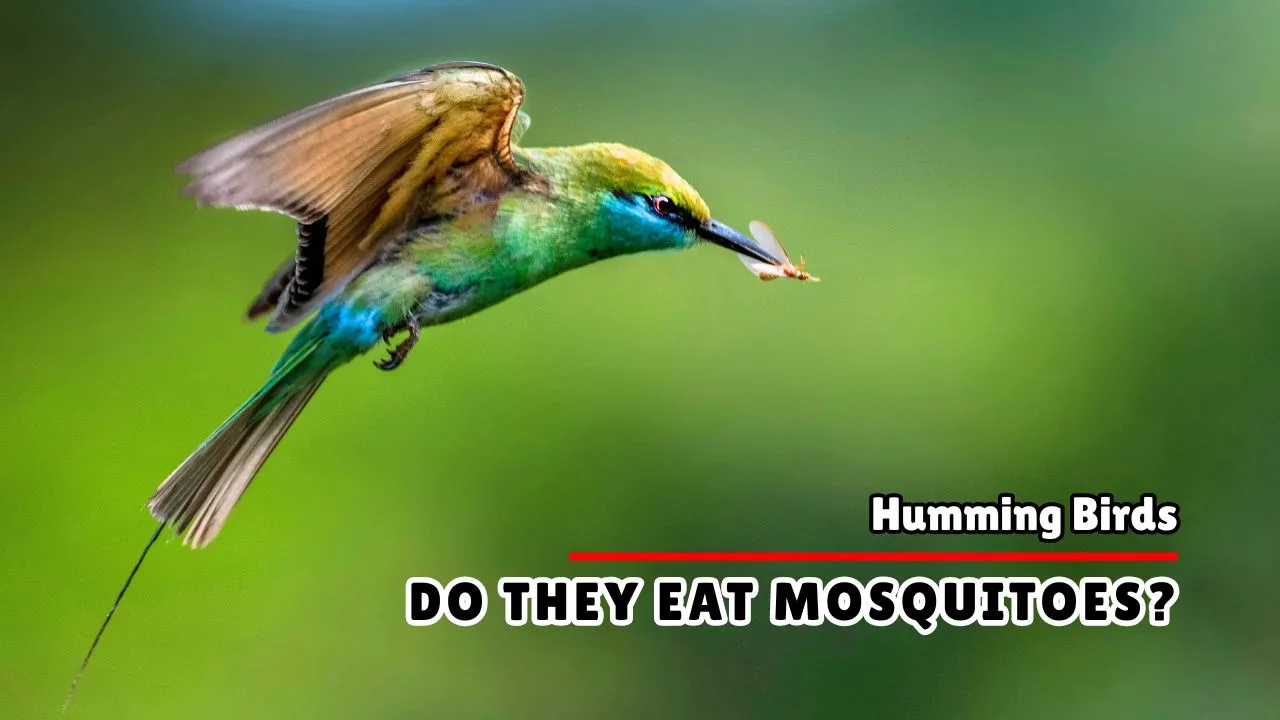
Hummingbirds are quite exceptional with their bright feathers and the amazing dexterity with which they can stay in midair to feed on nectar. One question that easily comes to the minds of the people who are interested in their food is the following: “Do hummingbirds eat mosquitoes?” The answer is yes—they do, but this is only one part of the birds’ insectivorous diet that is used as a source of nutrients alongside the feeding on nectar.
The Role of Mosquitoes in Hummingbird Diets
Hummingbirds need a diet which would provide both energy and necessary nutrients. Nectar is full of carbohydrates, which supply these little birds with the required energy. They perform the rapid wing movement and are very active, thus they consume a lot of energy.
However, nectar does not contain enough proteins, fats, and vitamins that the birds must get from insects and spiders. Hummingbirds have to eat mosquitoes to provide proteins and other nutrients which nectar cannot supply.
Scientific data and the findings of the research strongly support the observation of the fact that hummingbirds are daily insectivores and can indeed catch and consume 100s to over 1000 small insects a day. These small insects are such as ants, aphids, fruit flies, beetles, gnats, spiders, and mosquitoes. Mosquitoes make up part of this insect diet—particularly those that are readily available near the hummingbird’s feeding areas.
How Hummingbirds Catch Mosquitoes?
Hummingbirds are clever insect hunters and use the following methods:
- Flycatching: They fly close to the airborne insects and with their sharp and somewhat hooked beaks they catch the insects that are flying.
- Gleaning: They pick insects off leaves, flowers, or other surfaces.
- Spider Web Raiding: They take advantage of insects trapped in spider webs, including mosquito larvae, or adults that are caught by accident.
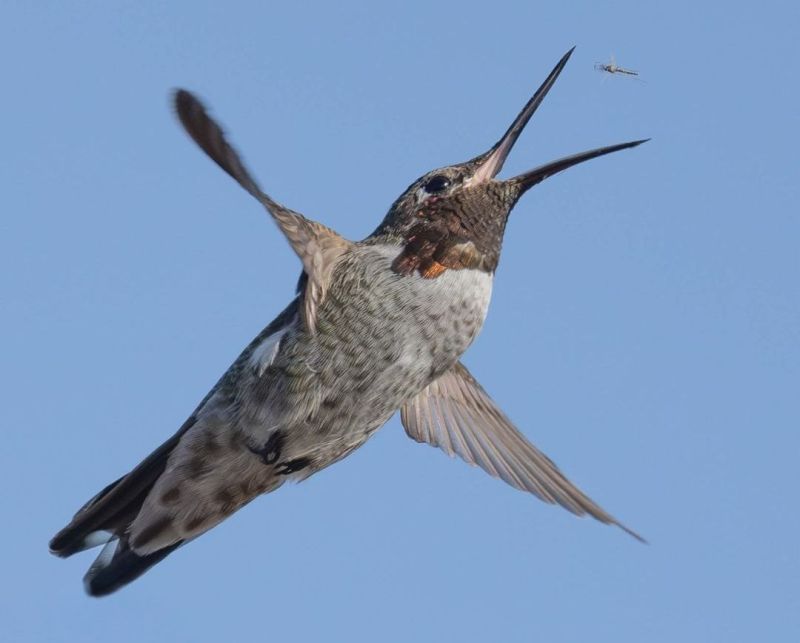
Image Credit: Creative Commons
Thanks to these different hunting methods, hummingbirds can effortlessly snatch mosquitoes and a diversity of small arthropods.
Nutritional Importance of Mosquitoes to Hummingbirds
Although mosquitoes make up only a small percentage of the insect prey, hummingbirds still eat them because it is a part of meeting their diet requirements:
- Protein: Required for muscle repair, feather growth, and reproductive functions.
- Amino Acids: Building blocks for many biological processes.
- Fats, Vitamins, and Minerals: These are for the general health and immune functions, which nectar alone does not provide.
Females and hummingbird babies, in particular, rely on protein more and so their insect intake goes up noticeably during the breeding period. That is when the help of mosquitoes and other small insects becomes indispensable.
Do Hummingbirds Control Mosquito Populations?
It is true that hummingbirds consume mosquitoes but their role in cutting down the mosquito populations on a large scale is almost zero. The rate of mosquito breeding is so fast and they produce so many eggs that it would be impossible for a hummingbird population to eat even a fraction of them. Besides that, animals such as bats, dragonflies, and some birds species that eat insects are more effective natural mosquito predators.
In addition, hummingbirds help to keep the populations of insects in their habitats balanced including that of mosquitoes which they do by lowering the numbers of some groups, especially in the local areas of gardens or yards where they are frequently found.
📰 Must Read,
✔️ Mosquito Eating Birds: 22+ Birds that Eat Mosquitoes
✔️ How to Keep Mosquitoes Out of Bird Bath?
Conclusion
Indeed, hummingbirds do eat mosquitoes; however, mosquitoes are just one of the many insect parts present in the hummingbird diet. These birds mainly rely on nectar for their energy but still consume a copious number of various insects including mosquitoes for the provision of nutrients which are absent in nectar. Their catching of mosquitoes is due to their astonishing flying skills and their unique beaks which make them very skilled in insect foraging.
Although not major mosquito predators, hummingbirds are essential members of the ecosystem which are responsible for pollination and insect population management.
Such a conclusion is reached on the basis of observations done by scientists, ecological research, and expert judgments by entomologists and ornithologists who study hummingbird feeding behaviors and diets
Frequently Asked Questions (FAQs)
-
How to attract more insect-eating hummingbirds?
One should plant native, multi-colored, tubular flowers that produce nectar to attract hummingbirds. The flower species may include bee balm, trumpet vine, and salvia.
In addition to flowering plants, it is suggested to provide clean sugar-water feeders with a 4:1 water-to-sugar ratio. The feeders need to be placed near flower clusters so that birds can fly back and forth easily. Organically grown yards are hummingbird-friendly because native insects provide protein for the birds. Pesticides should be avoided to provide enough insects for protein sources, offer fresh water sources, and keep feeders in safe, shaded spots for best results. -
How Many Mosquitoes Can a Hummingbird Eat Daily?
Hummingbirds generally consume a few hundred to thousand various insects a day, including mosquitoes. They do not go after mosquitoes only, but rather they include them in their insect diet. Their insect consumption especially during the breeding and the migration period to meet their protein needs.
-
What are the best plants to attract insect-eating hummingbirds?
Among the top most plants are petunias, scarlet bee balm, red columbine, bluestem penstemon, orange honeysuckle, and trumpet creeper. These plants have tube-shaped flowers full of nectar which also attract insects that the hummingbirds feed on, so that they can have a balanced diet.
