
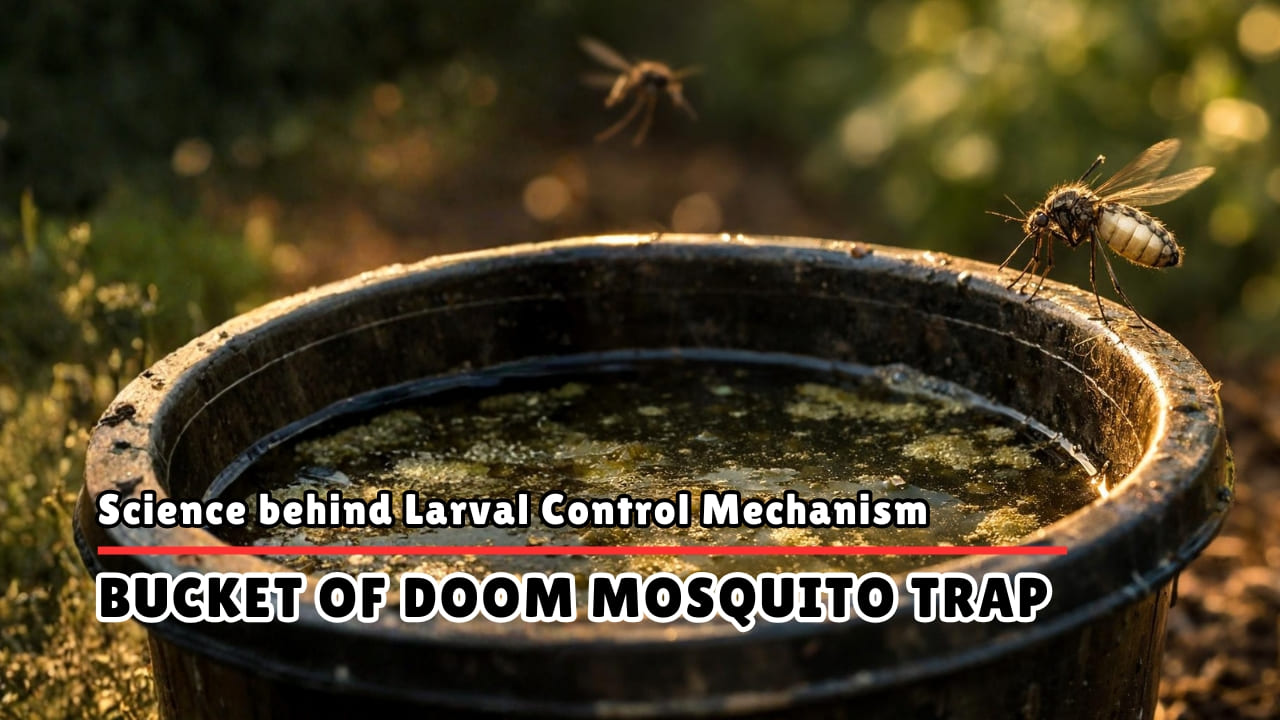
Introduction to Reproductive Engine Behind Exponential Mosquito Growth
How does a population of thousands appear in your yard within a week, seemingly from nothing? The answer is mathematics — reproductive mathematics. A single gravid female mosquito can deposit 100 to 300 eggs in a single oviposition event, and under the right environmental conditions, those eggs can reach adulthood in eight to ten days. Multiply that across multiple females, multiple breeding cycles, and multiple weeks, and the exponential curve becomes staggering.
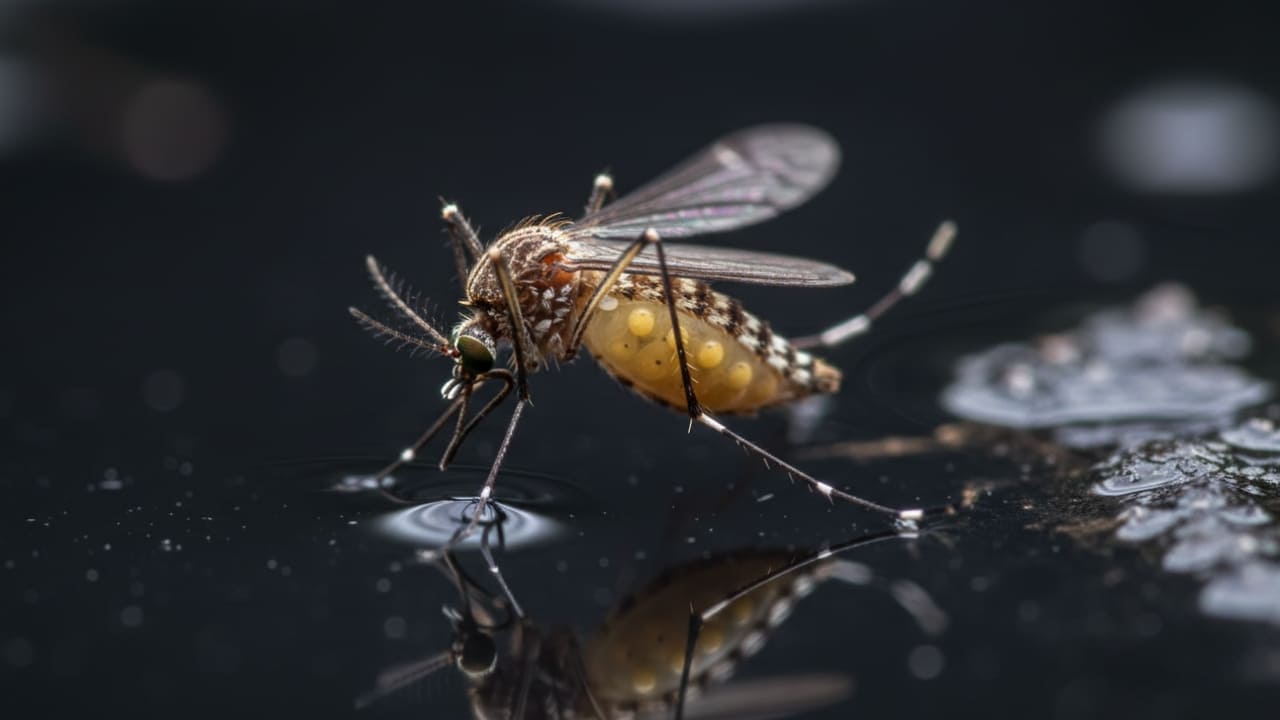
That is the mosquito breeding biology you are actually dealing with. Not individual insects — but a system. A breeding system with aquatic dependency at its core, hormonal precision governing every stage of development, and evolutionary instincts so finely tuned that gravid females can locate suitable oviposition sites from surprising distances.
The Bucket of Doom operates as a biological interception system — designed not to kill mosquitoes on contact, but to penetrate that system at its most vulnerable points. It exploits oviposition behavior, disrupts larval development at the endocrine level, and gradually collapses the reproductive cycle from the inside. Understanding how that works requires starting where the mosquito life cycle itself starts.
Understanding the Mosquito Life Cycle: The Aquatic Bottleneck
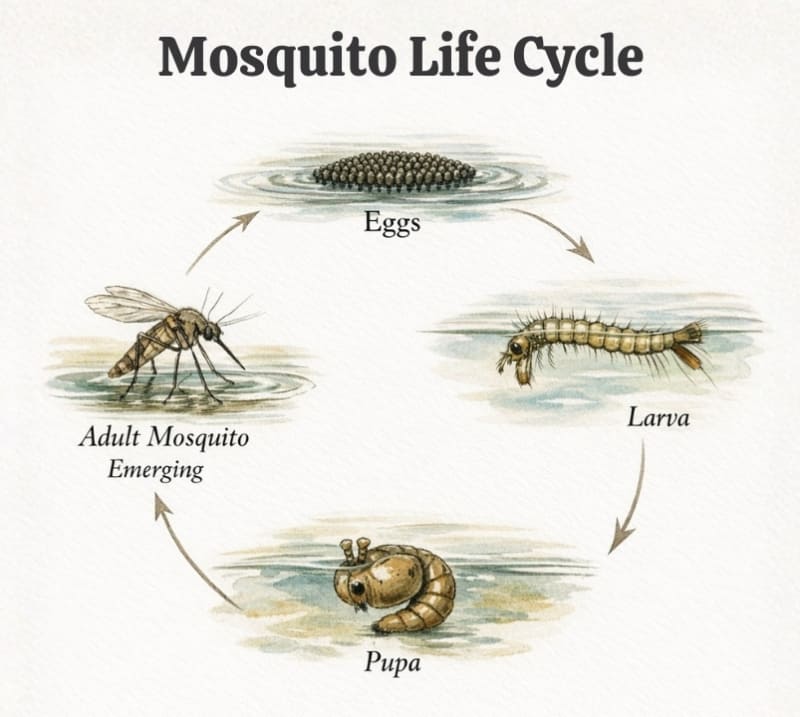
Mosquitoes are holometabolous insects, meaning they undergo complete metamorphosis across four distinct stages: egg, larva, pupa, and adult. Three of those four stages are entirely aquatic. That singular biological fact is the foundational vulnerability that the Bucket of Doom Mosquito Trap is built to exploit.
Eggs are deposited on or near water surfaces, depending on species. Culex mosquitoes lay eggs in floating rafts directly on standing water. Aedes species — including Aedes aegypti and Aedes albopictus — tend to deposit eggs just above the waterline in containers, where they can withstand desiccation until flooding activates hatching.
Once hydrated and in contact with appropriate microbial cues, eggs hatch into first-instar larvae within 24 to 48 hours.
Larvae progress through four instars, molting between each stage as they grow. They are filter feeders, consuming microorganisms, organic particulate, and algae suspended in the water column.
The larval stage typically spans four to seven days under optimal temperature conditions. Following the fourth larval instar, the organism undergoes a transition to the pupal stage — a non-feeding developmental phase that lasts roughly one to three days before adult emergence.
The pupa, often called a “tumbler” due to its characteristic motion, is not dormant. It is undergoing rapid internal reorganization — histolysis and histogenesis on a dramatic scale, rebuilding larval structures into adult morphology. The respiratory system restructures. Wings form. The entire body plan reorganizes. And then, if no interference occurs, an adult mosquito emerges at the water surface.
This aquatic dependency is a biological bottleneck. Remove the water — or chemically compromise what happens within it — and the entire reproductive pipeline collapses. Targeting adult mosquitoes is reactive and inherently inefficient; targeting larvae is proactive, systemic, and biologically informed.
Why Larval Stage Control Outperforms Adult Control
One larva killed is one adult mosquito eliminated — along with the hundreds of eggs that adult would have produced. Adult mosquito control, by contrast, targets organisms that have already completed development and may have already mated or oviposited.
The Centers for Disease Control and Prevention (CDC) and the World Health Organization (WHO) both recognize larval source reduction as a foundational pillar of integrated vector management for precisely this reason. Killing adults is damage control. Disrupting larval development is prevention.
Oviposition Behavior: The Behavioral Exploit the Bucket of Doom Relies On
A gravid female mosquito — one who has taken a blood meal and is carrying mature eggs — does not select a breeding site randomly. The process is deliberate, sensory, and evolutionarily refined over millions of years. She is evaluating multiple environmental signals simultaneously, and she will reject sites that don’t meet her criteria.
The primary attractants are organic. Microbial volatiles produced by bacterial communities in standing water are particularly compelling. Research in mosquito ecology has consistently documented that water with established bacterial biofilms — the kind that forms in dark, stagnant containers — generates chemical signatures that gravid females find irresistible.
These microbial communities produce a complex mix of short-chain fatty acids, ammonia derivatives, and other organic compounds that signal a nutrient-rich larval environment.
From an evolutionary standpoint, this makes sense. A female that deposits eggs in biologically rich water is maximizing her offspring’s probability of survival. Larvae need microorganisms to feed on. Water with established microbial communities is, in the mosquito’s sensory calculus, high-quality real estate.
Other cues include dark-colored containers — which absorb heat and may mimic the appearance of soil-shaded water — and containers positioned in partial shade. Visual contrast matters. So does the chemical profile of the water itself, including dissolved organics and certain gases produced during microbial decomposition.
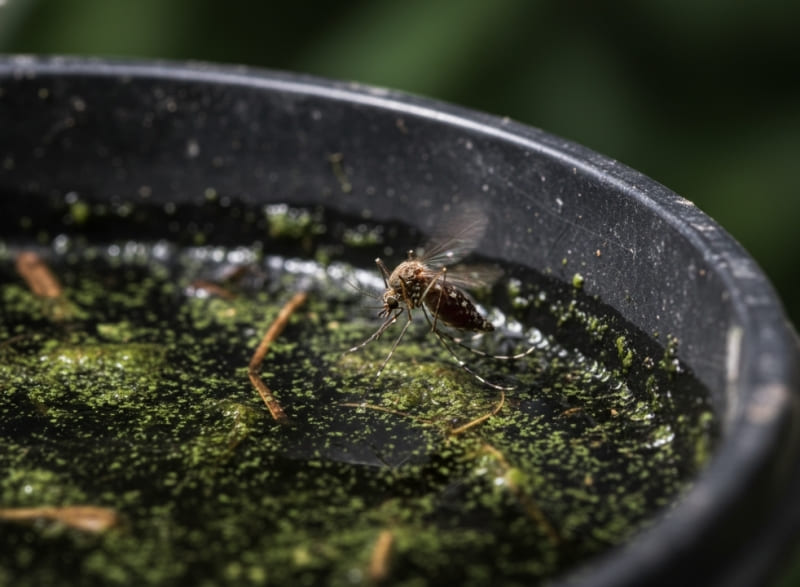
The Bucket of Doom Mosquito Trap is designed to replicate — and concentrate — precisely these attractant signals. It becomes the most attractive breeding site in the immediate environment, drawing in gravid females that would otherwise distribute their eggs across dozens of different sites. That concentration is strategic. It funnels oviposition into a controlled environment for reproductive cycle interruption.
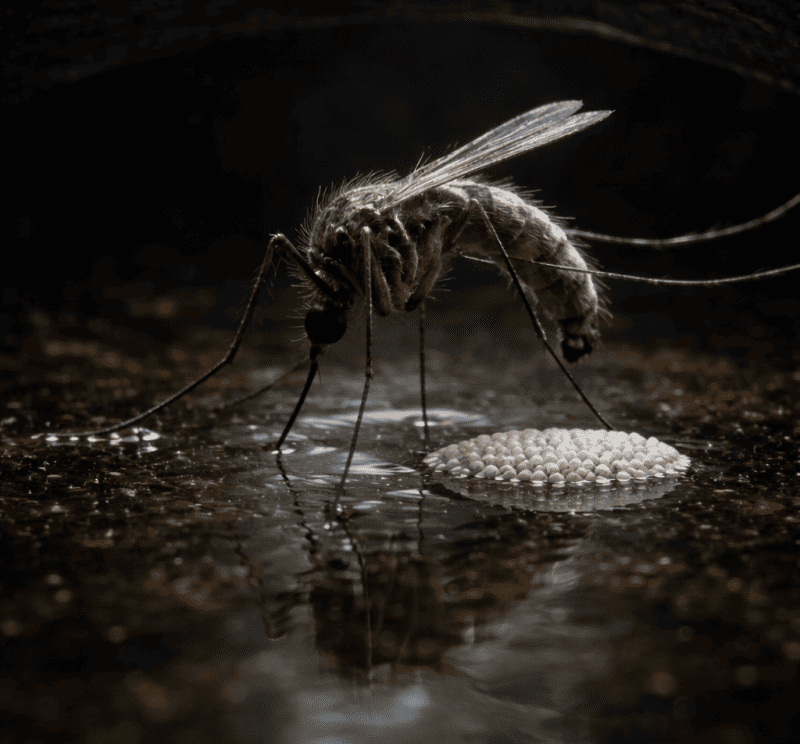
Image Courtesy: Illustration by Author
The Chemistry Behind the Bucket of Doom’s Disruption Mechanism
This is where the biology becomes truly interesting. Attracting gravid females is only half the mechanism. What actually kills the larvae — or rather, prevents them from ever becoming adults — operates at a level most people don’t consider: the hormonal level.
Insect Growth Regulators and Juvenile Hormone Mimicry
The active agent in most Bucket of Doom applications is an Insect Growth Regulator, or IGR — most commonly methoprene, a synthetic juvenile hormone analog. To understand why this is effective, you first need to understand the role of juvenile hormone in normal mosquito development.
Juvenile hormone (JH) is a sesquiterpenoid hormone produced by the corpora allata glands in insects. During the larval stages, juvenile hormone levels remain elevated, signaling the organism to remain in larval form — to molt into the next larval instar rather than transitioning toward metamorphosis.
As development progresses toward the final larval instar, JH titers naturally decline. This decline is the biological trigger that initiates pupation and, ultimately, adult emergence.
Methoprene mimics juvenile hormone with remarkable structural and functional precision. When larvae are exposed to methoprene in the aquatic environment, the compound binds to juvenile hormone receptors and maintains artificially elevated JH signaling — even as the larva’s natural developmental clock is trying to initiate the pupal transition.
The result is endocrine disruption at a critical developmental juncture. Larvae may reach the fourth instar — the final larval stage — but fail to successfully complete metamorphosis. The transition to pupal form is compromised or blocked.
Some larvae die outright during attempted molting. Others form non-viable pupae incapable of adult emergence. The outcome is pupal emergence inhibition — the mosquito life cycle is broken before it can complete.
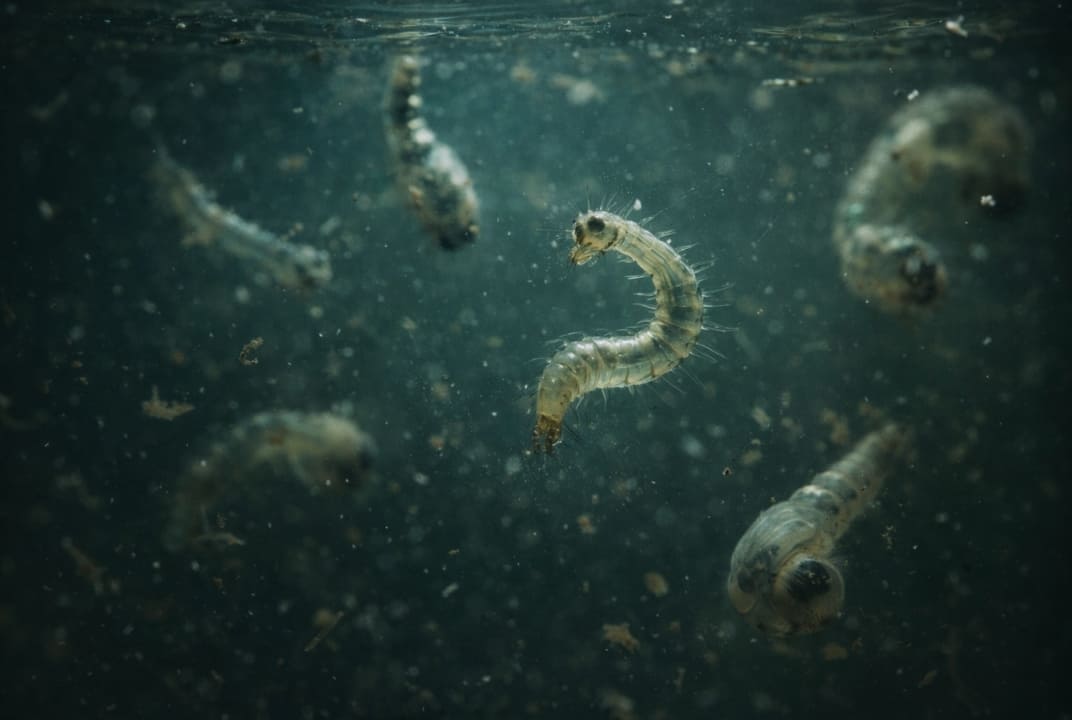
Image Courtesy: Illustration by Author
This mode of action is important for several reasons. Methoprene is highly selective for insects — it does not affect vertebrates or most non-target invertebrates because the juvenile hormone pathway is specific to arthropod development.
The Environmental Protection Agency (EPA) classifies methoprene as having a favorable environmental and toxicological profile for use in mosquito control, and it has been used in public health vector control programs for decades.
Why There Is No Instant Kill — and Why That Is Actually the Point
The IGR mechanism is not designed for rapid knockdown. Larvae don’t die immediately upon exposure. They continue feeding and developing through early instars, apparently unaffected — until the developmental transition that the juvenile hormone analog has been quietly sabotaging becomes impossible to complete.
This delayed mode of action is occasionally mistaken for ineffectiveness, but it is precisely how IGRs are supposed to work. The goal is population suppression through reproductive cycle interruption, not contact kill. Every larva that fails to emerge as an adult is a permanent removal from the reproductive pool.
How the Bucket of Doom Causes Mosquito Population Collapse
To understand the population-level impact, it helps to think in terms of generational mathematics. Mosquito populations grow exponentially because each reproductive cycle multiplies.
One female produces up to 300 eggs. If half survive to adulthood — 150 new mosquitoes — and half of those are females who then each produce 300 eggs, a single female’s output can become 22,500 mosquitoes within two generations. Under favorable conditions, with multiple generations per season, the numbers become ecologically significant very quickly.
Now reverse that logic. Every generation successfully intercepted in the larval stage removes not just those larvae from the equation — it removes all future generations those larvae would have produced. The effect is not arithmetic; it is exponential suppression. Each breeding cycle disrupted collapses an entire forward trajectory of population growth.
The Bucket of Doom Mosquito Trap compounds this effect by concentrating oviposition. Rather than eggs being scattered across unpredictable breeding sites where control is logistically difficult, gravid females are drawn to deposit in a treated container. The IGR then ensures that virtually no larvae complete development.
Repeat this across multiple breeding cycles, and the local mosquito population — which depends on continuous larval recruitment to replace short-lived adults — begins to show measurable decline.
Adult mosquitoes live only a few weeks. They are constantly dying. The population sustains itself only through continuous larval recruitment. Disrupt that recruitment consistently, and the population cannot maintain itself. This is why the suppression effect is cumulative rather than immediate — it operates over the generational timescale of the mosquito population itself.
Why Killing Mosquitoes at the Larva Stage Actually Makes Sense
Most mosquito control you see — trucks fogging neighbourhoods, aerial spraying — targets adult mosquitoes. It looks dramatic. It feels like something’s being done. But it’s actually the harder, less efficient way to fight them. By the time a mosquito is flying around biting people, she’s already survived the most vulnerable stage of her life.
That vulnerable stage is in the water. Mosquito larvae can’t fly away. Can’t hide. Can’t develop resistance the same way adults do to sprays. They’re stuck in whatever puddle, bucket, or drain they hatched in. This is why vector control scientists have been increasingly focused on targeting larvae — it’s simply more efficient, and it doesn’t require blanketing entire neighbourhoods with insecticide.
The World Health Organization calls this Integrated Vector Management. The core idea is straightforward: be precise, be targeted, and deal with the problem before it can bite anyone.
The Bucket of Doom concept fits neatly into this thinking. Aedes albopictus — the tiger mosquito — doesn’t breed in rivers or swamps. She breeds in your backyard. Old tires, flower pot saucers, blocked gutters, forgotten buckets with an inch of rainwater sitting in them. These small container habitats in residential areas are where the real amplification happens.
A treated oviposition trap — something that looks and smells like a perfect breeding site but delivers a larvicide — works with the mosquito’s own biology rather than against it. She’s not being ambushed randomly. She’s following instincts her nervous system has trusted for millions of years, straight into a trap designed specifically around those instincts.
That’s not just clever. It’s scientifically elegant.
📰 Must Read,
✔️ Mosquito Traps: Different Types and their Working Mechanism
✔️ Do UV Light Mosquito Traps Actually Work? Here’s The Shocking Reality
Conclusion: A System Built to Break the Mosquito Life Cycle
It’s not a spray. It’s not a trap that zaps mosquitoes on contact. The Bucket of Doom works by turning the mosquito’s own biology against her — three things happening at once, quietly, in the water.
First, every mosquito needs water to reproduce. No exceptions. Control what happens in that water and you control the next generation.
Second, the larvicide inside works by mimicking a hormone that governs larval development. Larvae exposed to it simply never complete the transition to adults. They don’t get poisoned in any dramatic sense — they just fail to develop. And because this hormonal pathway is insect-specific, it doesn’t affect vertebrates, pets, or wildlife using the same water.
Third — and this is the part that makes it genuinely clever — the trap is designed to attract egg-laying females. A gravid mosquito following her instincts toward what looks and smells like perfect breeding water flies straight into the mechanism built to stop her offspring from ever emerging.
The result isn’t instant. You won’t see dead mosquitoes piling up. What happens instead is cumulative — fewer adults emerge each generation, fewer bites happen, fewer eggs get laid, fewer larvae recruit into the next cycle. It compounds quietly over weeks.
The Bucket of Doom doesn’t fight mosquito biology. It weaponises it.
