
Table of Contents
That Purple Spot — Is It Something to Worry About?
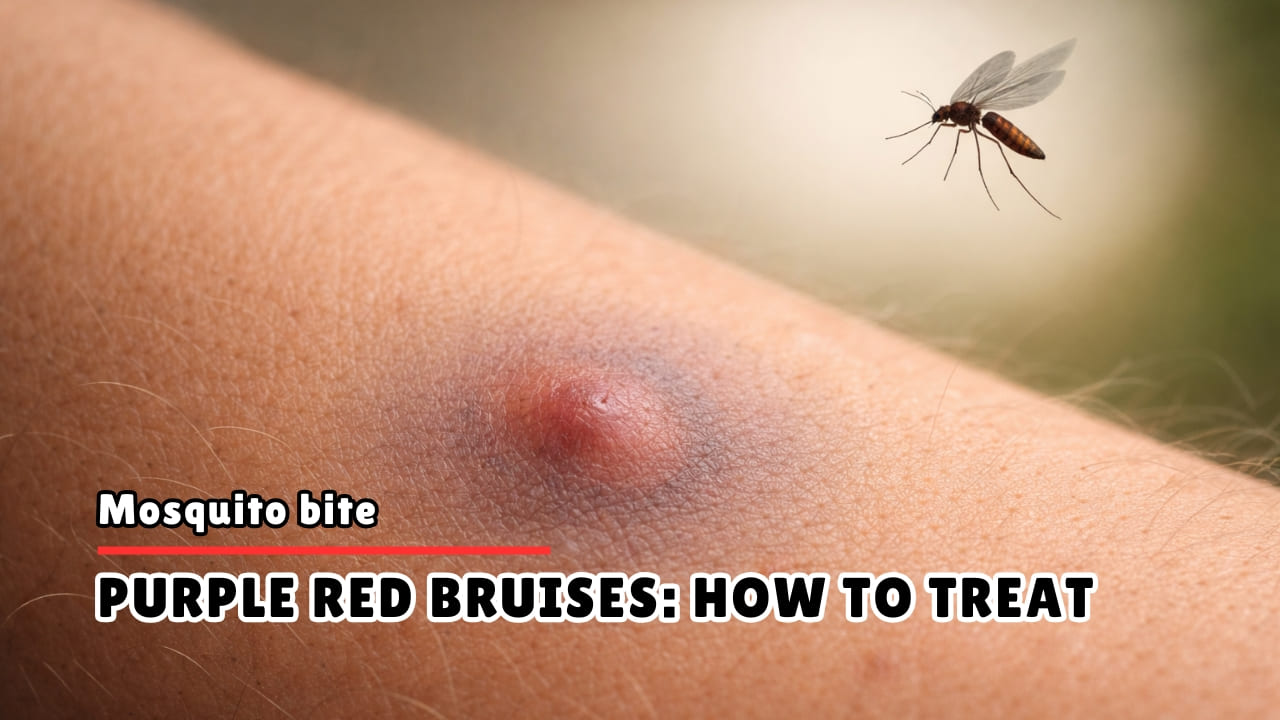
You’re going about your day and you glance down at your arm. There’s a mosquito bite you barely noticed yesterday — but now there’s this dark, almost bruised-looking ring spreading around it (Bruising around mosquito bite). Purple or maybe slightly blue. A little raised. And your brain immediately goes to worst-case territory.
First thing: take a breath. Bruising around a mosquito bite is more common than most people realize. It’s one of those things that looks alarming precisely because it looks like something else — and the visual of a spreading dark patch on your skin is hard to dismiss.
In the vast majority of cases, a mosquito bite bruise is a normal skin reaction with a perfectly boring biological explanation. But — and this matters — sometimes it can indicate a stronger immune response that’s worth paying attention to.
This article explains what’s actually happening under the skin, when you can manage it at home, and the specific signs that should send you to a doctor. No unnecessary alarm, but no sugarcoating either.
If you’re wondering why your mosquito bite bruised when others barely left a mark — you’re not imagining it. Some bites bruise and others don’t, and the difference usually comes down to how hard your immune system reacted, whether you scratched it, and how fragile your skin’s capillaries are at that spot. Purple bruising around a mosquito bite is the visible result of blood leaking out of those tiny vessels just under the skin surface. It looks dramatic. It’s usually not.
1. Why Bruising Around a Mosquito Bite Happens
When a mosquito bites you, it doesn’t just puncture the skin. It injects saliva containing anticoagulants — compounds that prevent your blood from clotting so it can feed more efficiently. That saliva is what triggers the reaction. Your immune system recognizes foreign proteins in the saliva and launches a localized inflammatory response.
That inflammation causes the characteristic swelling and redness. But it also causes small blood vessels called capillaries to dilate and, in some cases, to leak. When blood leaks out of capillaries and pools under the skin, it creates the same visual effect as a bruise — which is, technically, exactly what it is.
The process is similar to what happens with any minor skin trauma. Blood outside the vessels breaks down over time, changing color from red to purple to green to yellow as the hemoglobin degrades. A mosquito bite turning purple is usually just that process in motion.
Scratching accelerates everything. The mechanical trauma of fingernails against already-irritated skin ruptures more capillaries, pushes the inflammatory response harder, and can turn what would have been a minor pink welt into a darker, more defined bruise.
Why Your Mosquito Bite Turns Purple, Red, or Dark
The color of a bite reaction actually tells you something about where it is in the healing process. A mosquito bite that’s purple and red at the same time is usually in the early inflammatory stage — the red is active blood flow and histamine response at the surface, while the purple comes from blood pooling just beneath. As the immune reaction settles, the redness typically fades first, leaving the bruised purple tone behind.
A dark purple mosquito bite — deeper in color, maybe slightly firm — usually means a small amount of blood has pooled into one concentrated spot rather than dispersing. That’s a minor hematoma. It looks more serious than it is. The darker the color, the more sub-surface bleeding occurred, but color alone isn’t a warning sign. It’s the size, spread, and whether it’s getting bigger that matters.
2. Common Causes of a Bruised Mosquito Bite
i) Excessive Scratching
This is the most common reason a mosquito bite starts to look bruised. The skin around a fresh bite is already inflamed and the capillaries near the surface are dilated. Scratching — even briefly — causes additional micro-trauma that allows blood to seep into surrounding tissue. The bruise isn’t really from the bite itself. It’s self-inflicted.
The Itch-Scratch Cycle and Why It Makes the Purple Worse
An itchy purple mosquito bite is almost always a sign the inflammatory response is active and the scratching has already started — or is very tempting. Here’s the problem: the more you scratch an already-purple bite, the more capillary damage you add, and the more the bruising spreads. The itch itself is histamine-driven. The purple is blood under the skin. Scratching feeds both at the same time.
Breaking that cycle with an oral antihistamine early is genuinely the single most effective thing you can do to stop a minor discolored bite from becoming a large, dark bruise.
ii) Fragile or Sensitive Capillaries
As people age, capillary walls become thinner and more fragile. Older adults often notice that a mosquito bite looks like a bruise because even gentle pressure at the bite site causes visible sub-surface bleeding. This isn’t a sign of disease — it’s just a structural change in skin and vessel tissue that happens over time.
iii) Blood-Thinning Medications
This one matters and deserves its own mention. Anticoagulant medications — warfarin, aspirin (in regular doses), heparin, and some newer anticoagulants like rivaroxaban or apixaban — reduce the blood’s ability to clot. For people on these medications, even a minor skin puncture like a mosquito bite can cause noticeably more bleeding under the skin. If you’re on blood thinners and bruising around mosquito bites is new or has gotten worse, mention it to your prescribing physician.
iv) Allergic Skin Reactions
Some people have a heightened immune response to mosquito saliva. In these cases the inflammatory reaction is stronger than normal — more histamine release, more vascular permeability, more capillary leakage. The result is a more pronounced mosquito bite skin reaction that can include broader bruising, larger welts, and longer recovery time.
v) Minor Hematoma Formation
A mosquito bite hematoma is a small pocket of blood that collects under the skin. It typically appears as a firm, raised, dark bluish lump. This happens when capillary leakage is significant enough to pool blood in one spot rather than dispersing it into the surrounding tissue. Hematomas from insect bites are usually small and resolve on their own, but larger ones can take weeks to fully reabsorb.
vi) Immune Sensitivity in Children and Newcomers to Certain Mosquito Species
Children, who haven’t built up immune tolerance to mosquito saliva, frequently show stronger reactions than adults. The same is true for adults who travel to regions with different mosquito species — the immune system is encountering unfamiliar proteins and may overreact. Both groups can experience bruising around bites that would be minor in a locally-acclimatized adult.
3. Normal Mosquito Bite Bruising vs. Warning Signs
This is the section that actually matters for most people reading this. The difference between a normal bruised mosquito bite and something that needs medical attention comes down to a handful of specific signs. The comparison table below makes it clear.
Mosquito Bite Bruising: Normal Reaction vs. Possible Warning Signs
Based on dermatology guidance from the American Academy of Dermatology and Mayo Clinic
| ✓ Normal Mosquito Bite Bruising | ⚠ Possible Warning Signs |
|---|---|
| Small purple or pink discoloration at the bite site | Large bruise spreading well beyond the bite area |
| Mild swelling that peaks within 24–48 hours | Severe swelling, especially around the face or throat |
| Itching with slight warmth at the site | Intense burning pain rather than itching |
| Bruising fades naturally within 5–10 days | Bruise still expanding after 48 hours, not shrinking |
| Single localized reaction at one bite | Multiple bites all bruising significantly at once |
| No fever or systemic symptoms present | Fever, chills, or flu-like symptoms after the bite |
| Skin remains intact with no pus or discharge | Warmth, pus, or red streaks radiating from the site |
| Clears completely without medical treatment | No improvement after 2 weeks despite home care |
When to seek care: If you notice any warning signs on the right — especially expanding redness, fever, or pus — consult a healthcare provider promptly. This table is for informational purposes only and does not replace professional medical advice.
The American Academy of Dermatology notes that most insect bite reactions — including ones that look alarming — resolve without treatment. The signs that genuinely warrant concern are expansion of the reaction beyond 48–72 hours, systemic symptoms like fever, or any signs of infection including warmth, pus, or red streaking away from the bite site.
If you’re on blood thinners and notice a bruised mosquito bite, it’s reasonable to document the size and check it over 24 hours. Significant growth warrants a call to your doctor even if other symptoms are absent.
4. How to Treat Bruising Around a Mosquito Bite
For typical cases — a bit purple, a bit swollen, itchy but not painful — home treatment is entirely appropriate. The goal is to reduce inflammation, prevent scratching, and let the body reabsorb the pooled blood.
i) Cold Compress
Apply a cold pack or a cloth-wrapped ice pack to the bite for 10 to 15 minutes, two to three times in the first 24 hours. Cold causes blood vessels to constrict, which limits further leakage and reduces swelling. This is the most effective first step for bruised mosquito bite treatment and it works best when applied early.
ii) Antihistamines
Over-the-counter antihistamines (cetirizine, loratadine, or diphenhydramine) reduce the histamine-driven inflammatory response. Less histamine activity means less vascular dilation, less leakage, and less itching that leads to scratching. Oral antihistamines work systemically and are generally more effective for strong reactions than topical products alone.
iii) Topical Hydrocortisone
A mild 1% hydrocortisone cream applied to the bite site reduces local inflammation and the urge to scratch. The Mayo Clinic recommends this as part of standard home care for insect bite reactions. Don’t use it for more than a week continuously on the same area without medical guidance.
iv) Avoid Scratching — Seriously
This sounds obvious but it’s the instruction people most consistently ignore. Every scratch adds new capillary trauma and prolongs the bruised appearance. If the itch is genuinely unbearable, apply an antihistamine cream or take an oral antihistamine rather than scratching. The severe mosquito bite reaction that many people describe is often largely self-inflicted through repeated scratching of an initially minor bite.
v) Elevation
If the bruised bite is on a limb, keeping that limb elevated when possible reduces blood pooling in the area and helps the tissue drain. Simple, but genuinely helpful for bites on hands, feet, or lower legs.
5. Natural Remedies That May Help With Mosquito Bite Bruising
These home remedies are supportive options — they can help with discomfort and inflammation but they’re not medical treatments. If you have a significant reaction, these work alongside the options in the previous section, not instead of them.
- Aloe vera gel: Pure aloe vera has well-documented anti-inflammatory and cooling properties. Applied directly to the bite site it reduces surface irritation and the sensation of heat. Look for gel with minimal additives — some commercial formulations are more additive than aloe.
- Witch hazel: A natural astringent that tightens skin tissue and reduces surface inflammation. Applying witch hazel to a fresh, itchy bite can reduce the scratching urge and may slightly reduce superficial bruising over time.
- Cold green tea bags: Cooled used tea bags contain tannins with mild astringent properties and the temperature alone provides relief. Press against the bite for a few minutes. Low-effort, genuinely soothing.
- Oatmeal paste: Colloidal oatmeal has been studied in dermatology contexts for its skin-barrier and anti-inflammatory effects. A paste of plain oatmeal and water applied briefly to the bite area can reduce itching and calm redness — particularly useful for larger inflamed reactions.
- Calendula Cream: Calendula contains flavonoids with mild anti-inflammatory and skin-repair properties, making it one of the more evidence-adjacent natural options for irritated skin. Apply a diluted calendula cream directly to the bruised bite area to help reduce surface redness and support tissue recovery. Look for products where calendula is a primary ingredient — not a trace additive buried at the bottom of a long list. Supportive care, not a cure, but genuinely useful.
What doesn’t work, despite frequent online suggestions: toothpaste, neat essential oils, vinegar compresses, and banana peel. Some of these are harmless but ineffective. Others (certain essential oils) can cause contact dermatitis on already-irritated skin and make things considerably worse and even leaving permanent scars.
6. When Bruising Around a Mosquito Bite May Signal a Stronger Reaction
Skeeter Syndrome
Skeeter syndrome is an allergic hypersensitivity to mosquito saliva proteins. It’s not a diagnosis most people have heard of, but it’s a recognized condition in the medical literature. People with Skeeter syndrome develop severe mosquito bite reactions — significant swelling, pronounced bruising, warmth, and sometimes low-grade fever from a single bite. It’s more common in young children, the elderly, and people with compromised immune systems, though it can occur at any age.
The bruising with Skeeter syndrome is typically more dramatic than a standard reaction and can look genuinely alarming — a wide, purple, swollen area that develops within hours of the bite. It resolves on its own but may take longer than a typical reaction. A dermatologist or allergist can confirm the diagnosis.
Secondary Infection
Scratching through the skin creates an entry point for bacteria. A bite site that becomes infected will often develop more pronounced discoloration — but the accompanying signs distinguish infection from simple bruising: warmth, increasing pain (not just itching), pus, and in some cases red streaking moving away from the bite (this is a sign of spreading infection and needs prompt medical attention). The CDC advises keeping bite sites clean and avoiding further trauma to reduce infection risk.
Rare but Serious: Disease-Carrying Bites
In regions where mosquito-borne illnesses are prevalent, unusual bite reactions — especially with systemic symptoms like fever, headache, joint pain, or rash — should be evaluated medically without delay. Bruising at the bite site combined with systemic symptoms is not something to wait out at home.
7. How to Prevent Mosquito Bites in the First Place
The best bruised mosquito bite is the one that never happened. Prevention reduces your exposure enough to matter, particularly during peak activity hours at dawn and dusk.
- Use EPA-registered repellents containing DEET (20–30% concentration for adults), picaridin, or IR3535. These are the options with the strongest evidence base. The CDC endorses all three for effective mosquito protection.
- Apply repellent to exposed skin and clothing — not under clothing, not under sunscreen (apply sunscreen first, repellent second if using both).
- Wear long sleeves and long pants during high-mosquito-activity periods, especially in wooded or marshy environments. Light-colored, tightly woven fabrics offer the most barrier protection.
- Eliminate standing water around your home — birdbaths, pot saucers, blocked gutters, garden features. This is the source control piece; no standing water means far fewer local mosquitoes.
- Use window and door screens and repair any gaps. Air conditioning reduces the need to open windows during evening hours when mosquitoes are most active.
- Consider a propane CO2 trap for yard-level population suppression if you’re in a high-pressure environment. Position it between the garden edge and living areas for best results.
📰 Must Read,
✔️ Aloe Vera, a Natural Remedy for Mosquito Bites
✔️ Why do Mosquito Bites Itch More at Night Time?
Conclusion: Most Bruised Mosquito Bites Are More Alarming Than Dangerous
The sight of a mosquito bite turning purple or bruised understandably unsettles people. It looks like damage. It looks like something went wrong. In most cases, though, what you’re seeing is simply your immune system doing its job — a localized inflammatory response that causes a small amount of blood to pool just under the skin surface.
Cold compress, antihistamine, resist the scratch. That’s the treatment plan for the vast majority of bruised mosquito bite cases. A week or two later it’s gone and forgotten.
The cases that need attention are the ones where the reaction keeps expanding, where systemic symptoms develop, or where the site shows clear signs of infection. If that’s what you’re seeing, don’t wait it out — get it looked at.
And if you’re on blood thinners and noticing more pronounced bruising than usual around bites, it’s worth a mention to your prescribing physician. Not because it’s likely to be serious, but because it’s information they’d want to have.
Have you ever had a mosquito bite turn into a proper bruise? How long did it last, and what helped — or didn’t? Drop a comment below. Experiences like yours genuinely help other people who find this article panicking at 11pm about a purple spot on their arm and needing a reality check.
Sharing what worked (and what made it worse) is more useful than most people realize.
Frequently Asked Questions (FAQs)
Why does my mosquito bite look like a bruise?
Mosquito saliva triggers a localized inflammatory response. Combined with minor capillary leakage from the bite itself or from scratching, blood pools just under the skin — creating the bruised appearance.
Can mosquito bites actually cause bruising?
Yes. Especially in people with sensitive skin, thin capillaries, or those taking blood-thinning medications. The bite puncture and immune reaction together can cause enough sub-surface bleeding to look like a bruise.
Is a purple mosquito bite dangerous?
Usually not. A mosquito bite turning purple is a common reaction and typically resolves on its own within a week or two. If the purple area is expanding, painful, or accompanied by fever, see a doctor.
How long does a bruised mosquito bite last?
Most bruised mosquito bites fade within 5 to 14 days depending on the severity of the reaction. Larger hematomas may take slightly longer. Cold compresses and avoiding scratching speed up recovery.
Should I see a doctor for a bruised mosquito bite?
If the bruising is expanding rapidly, the area is hot and painful, you develop a fever, or there are signs of infection (pus, red streaks), yes — see a doctor promptly.
Why do I bruise so easily from insect bites?
Easy bruising from insect bites can indicate fragile capillaries, thin skin (more common with age), blood-thinning medications, or conditions like Skeeter syndrome. A dermatologist can help identify the cause.
What does a mosquito bite hematoma look like?
A mosquito bite hematoma appears as a firm, raised, dark purple or bluish lump at the bite site. It’s caused by pooled blood under the skin. Most resolve on their own; large ones may need medical evaluation.
Can children get bruised mosquito bites more easily?
Children often show stronger reactions to mosquito saliva because their immune systems haven’t developed tolerance. More pronounced swelling and discoloration — including bruising around the bite — is fairly common in kids.
Why did my mosquito bite bruise when others don’t?
It depends on where the bite landed, how strongly your immune system reacted, and whether you scratched it. Bites over thinner skin or areas with more superficial capillaries bruise more easily. A dark purple mosquito bite usually means more sub-surface bleeding occurred — from the bite itself, scratching, or a stronger-than-average allergic response to the mosquito’s saliva.
Why do I have purple dots around my mosquito bite?
Those small purple dots around a mosquito bite are called petechiae — tiny pinpoint bleeds caused by capillaries rupturing just under the skin surface. They usually appear from scratching too hard or from a stronger-than-normal immune response to the mosquito’s saliva. They look alarming but are generally harmless and fade within a week. If the dots are spreading rapidly or you notice them appearing elsewhere on your body without any bites, see a doctor.
Why did my mosquito bite turn purple?
When a mosquito bites, it injects saliva that triggers an inflammatory response — causing nearby capillaries to dilate and sometimes leak blood under the skin. That pooled blood is exactly what makes the bite turn purple. Scratching accelerates it significantly by rupturing even more capillaries around the site. In most cases it fades on its own within 5 to 10 days. If it’s expanding, painful, or accompanied by fever, get it checked.
