
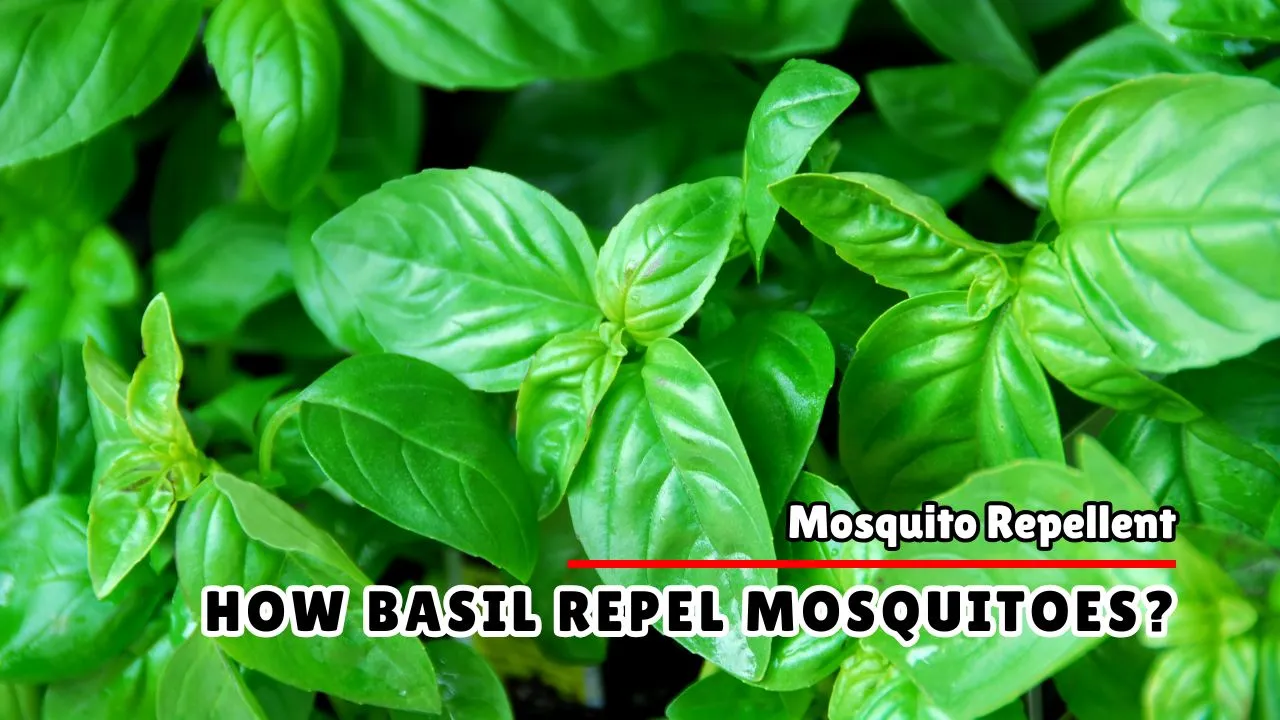
Basil (Ocimum basilicum) has been the top choice of nature due to the health benefits it grants and its repellent effects against pesky mosquitos. Yes, Basil does repel mosquitoes; thanks to the active chemical agent present in the plant leaves and their essential oil. Studies in several fields and traditional practices keep its reputation which applies equally for sweet basil and the Indian-sacred namely (Ocimum sanctum) Holy Basil, Tulsi.
Here below, how, and why basil works as a mosquito repellent are given through the modern-day researches that elaborate on the scientific mechanism of its activity and discuss cultural aspects as well.
Basil as a Mosquito Repellent: Overview
While there are many stories that people tell, there is also a truth that comes in the form of science in which both of them confirm the fact that the use of basil is a good way to save a yard or house from the mosquito problem.
The crisp scent emitted from basil plants, as well as the powerful volatile oils from cultivated leaves when they are broken or extracted, are the main agents that keep mosquitoes at bay. The effect is not only from myths—researches in laboratories have shown repellent and, to some extent, also larvicidal efficacy.
Chemical Composition Responsible for Repellency
The major factors that make basil a mosquito repellent is due to the presence of a few highly volatile organic compounds in basil especially:
- Eugenol
- Linalool
- Camphor
- Estragole (Methylchavicol)
- Citronellal
- Limonene
- Nerolidol
These substances are naturally present in plants and, when being released, they drive away insects that cause troubles to humans, e.g., mosquitoes whose neurological and olfactory systems are affected by these compounds and their ability to find and bite human hosts is thus decreased.
1. Eugenol
One common feature in both the basil and tulsi plants is the presence of eugenol as the primary bioactive molecule. It is effective against adult mosquitoes and larvae, thus providing preventive and repellent action.
By the action of eugenol on the mosquitoes when they are passing on the treated skin or when oil and other products have been released into the air, it is very hard for them to find a place on the skin where contact is made.
2. Linalool and Camphor
Linalool which is also found in lavender, and camphor are two of the most known insect repellent substances. They make mosquito sensory systems (particularly their heat and carbon dioxide sensors) to become irritated thus causing the mosquitoes to get confused and leave the area as a result.
3. Estragole and Citronellal
Methylchavicol, better known as estragole, is the main component in the majority of the Ocimum basilicum varieties. The characteristics of citronellal are well established in citronella grass, the most common mosquito repellent, as well as being present in basil. Working together, they prevent mosquitoes from monitoring human odors or body heat to feed on.
Mechanism of Action: How Actually Does Basil Repel Mosquitoes
The ways that mosquitoes use to find their victims are through chemicals, heat, and visual signs. They look for carbon dioxide, body heat, lactic acid in sweat, and even a few specific chemicals on the skin. The volatile oils in basil interfere with the mosquito’s (antennae and olfactory) sensory system, thus these signals are not identified by the mosquitoes and they cannot identify, approach, and attack humans.
- The potent odor of the plant forms a “chemical barrier” which is at times a means of blocking mosquito chemoreceptors or that overpowers them with non-host odors.
- If basil oil is spread on the skin, then the aromatic layer that is there can physically and chemically protect the user, thus reducing the chances of mosquito landings.
- Research from the Laboratory shows that the protection given by basil extracts can range from 90 to 100% for a maximum period of 70 minutes, varying according to the concentration of the extract.
Scientific Studies and Laboratory Evidence
1. Mosquito Repellency
In research papers, the usage of basil leaves and their oils were identified as repellents for various mosquito species in which Anopheles, Culex, and Aedes aegypti were the most mentioned. That species is the main vector for dengue and Zika viruses.
- One research report was emphasizing that basil essential oil even at a low concentration has shown a strong repellent effect which was particularly observed against male mosquitoes.
- Along with newly plucked leaves and crude extracts (ethanol, hexane-based) which were at the forefront of measurable protection, still, the oils and extracted compounds are reported to have stronger and longer-lasting effects.
2. Larvicidal Activity
Moreover, basil’s usage is also effective against mosquito larvae—the studies evidence the successful action of killing larvae of Anopheles and Culex species thus effectively cutting off their population growth.
- Basil extracts when used in the water can effectively kill larvae in the breeding areas such as ponds or tanks and this can be great for households that have standing water and thus can have a dual use.
Indian Basil (Tulsi): Traditional Uses and Cultural Relevance
Tulsi, or holy basil (Ocimum sanctum), is a great spiritual and medicinal marvel in Indian tradition.
- Often, tulsi leaves are grown near houses and temples as they are thought to be the air purifiers and the ones that drive away mosquitoes as well as other pests.
- Tulsi and sweet basil despite being two separate species, produce many similar phytochemicals as evidenced by studies, the main being eugenol that is efficient for larvae as well as adults of mosquitoes.
- Tulsi is highly recommended by Ayurveda and Unani practitioners not only for its potent mosquito repelling properties but also for the treatment of fevers, the improvement of immunity, and as an adaptogen.
- Several products made from the tulsi plant are on the market and include drops, agarbatti, essential oils, and creams for mosquito control that maintain the heritage of the past and at the same time provide convenience through the new packaging.
- People usually position tulsi plants at the doors and windows of their houses. In this way, they not only get spiritual but also practical protection.
Practical Methods for Using Basil as a Repellent
1. Garden and Potted Plants
- You can plant basil around your house, in the garden or yard to prevent the mosquitoes from coming inside.
- Also, pot plants with multiple basil can be put near windows or doorways to be really effective, since mosquitoes will avoid the rooms filled with the scent which is strong.
2. Direct Application
- Extract/basil oil can be applied to skin for personal protection, though caution is advised for sensitive skin or allergies.
- One can also make their own sprays and infusions from basil leaves which are first crushed, boiled, and then diluted with alcohol. These can be used as topical repellents or sprayed in clothing and household areas.
3. Larvicidal Use
- Basil infusions or extractions in the stagnant water reduce the mosquito breeding process and at the same time do not create any environmental pollution.
4. Incense and Essential Oils
- Homes or open areas usually burn basil oil or tulsi-based incense sticks as part of the mosquito-prevention strategy of the past, which is still the most popular method in South Asia.
Scientific Limitations and Duration of Effect
Despite the fact that the presence of basil and Tulsi can be very appealing to the users as they lead to an immediate drop in mosquito activity, their protective effects are generally of a temporary nature.
Due to the volatility of the active oils, reapplication or frequent refreshing of leaves or sprays is necessary—protection may last from 30 to 90 minutes per application in lab settings and may be less reliable outdoors or in windy conditions.
Advantages of Using Basil as Mosquito repellent
- Non-toxic and safe for children and pets (when not ingested in excessive amounts)
- Eco-friendly: Plant-based, no chemical runoff or residue
- Multipurpose: Not only adds taste to food and adds value to your garden but also works as a bug protector.
- Holistic benefits: Although coming from the same plant family, Tulsi is different from the other herbs that are also good for the environment (cleaning the air, used as medicine and is very much culturally revered in India).
Basil vs. Other Natural Repellents: Limitations and Considerations
- Short duration of effect compared to chemical repellents like DEET or permethrin.
- The effectiveness of basil also depends on the strength of the smells, the species of basil, and the place where it is used.
- May require the use of other methods (screens, nets) together with basil so that the needed protection is achieved in high-mosquito areas.
Comparison: Basil vs. Other Natural Repellents
| Plant | Key Repellent Compound(s) | Duration (Typical) | Added Benefits |
|---|---|---|---|
| Basil/Tulsi | Eugenol, estragole, linalool | 30–90 min | Edible, medicinal, easy to grow |
| Citronella grass | Citronellal | 30–60 min | Stronger scent, popular in candles |
| Lavender | Linalool, camphor | 30–80 min | Calming aroma, repels moths too |
| Neem | Azadirachtin, limonoids | 60–120 min | Also larvicidal, antiseptic |
| Marigold | Pyrethrin | 20–60 min | Ornamental, deters other pests |
Multiple scientific studies and resources validate basil’s efficacy as a mosquito repellent, including field tests and lab research on mosquito species around the world.
📰 Must Read,
✔️ How Does Citronella Repel Mosquitoes?
✔️ How Does Cinnamon Repel Mosquitoes?
Conclusion
A history dating back to numerous sources of the world combined with strong scientific studies shows that Basil (Ocimum basilicum) is a natural mosquito repellent. One or maybe more of these volatile essential oil constituents: eugenol, estragole, linalool and citronellal are not only responsible for the repelling effect but also for the aroma/scent barrier that masked the human odors making it confusing for insect senses to detect humans.
Tulsi (Ocimum sanctum) a.k.a Indian Basil is the most loved in Indian homes due to its strength as a mosquito repelling agent, larvicidal, and holistic health benefits thereby becoming one of the most essential plants in the field of natural pest control and indoor air quality improvement.
Basil and Tulsi, though not chemical repellents, provide a mosquito solution that is safe, easy to access, and offers multiple benefits; especially when integrated with other preventive measures.
You can use fresh plants, crush the leaves and then apply or use concentrated extracts in sprays and topical applications. In Indian tradition, the act of keeping Tulsi very close to the entrance is not merely a spiritual practice but also deeply rooted in science and it not only helps in making the house mosquito-free but also making the environment healthy all round.
Editorial Team & Contributors

Raashid Ansari, Founder, Content Researcher & Author - MosquiTalk
Not an entomologist — just a genuinely curious writer who started researching mosquitoes and couldn't stop. What began as casual reading about repellents and bite prevention gradually turned into a deep ongoing dive into vector biology, disease epidemiology, animal health impacts, and the real science behind mosquito control. Everything published here is carefully edited, and written with one purpose: giving readers accurate, accessible information they can actually trust and use to protect themselves, their families, and their pets, birds and cattle.
Active across social platforms, regularly publishes, and genuinely invested in spreading mosquito awareness where it matters most. Because informed readers make better decisions — and better decisions save lives.